
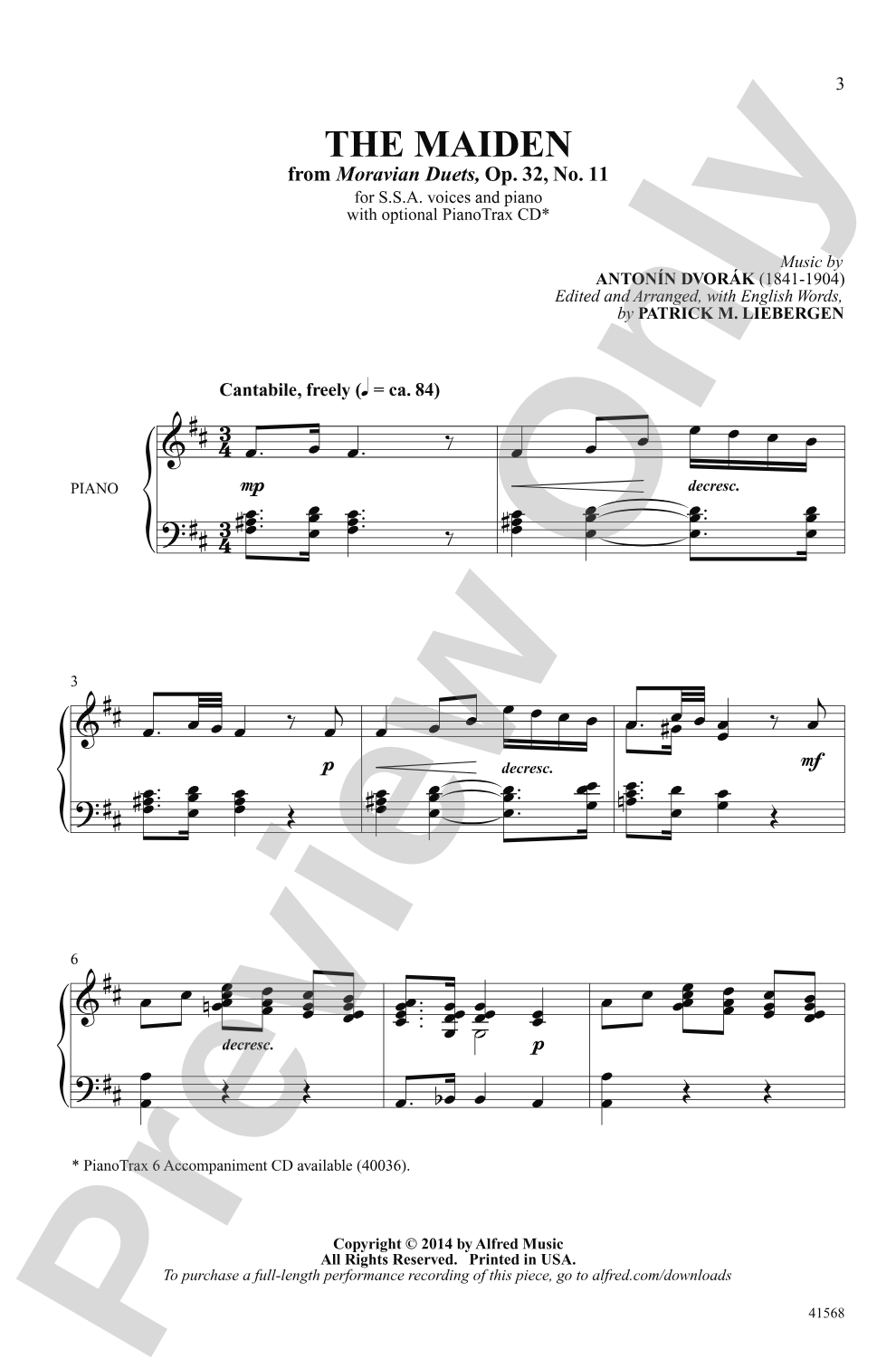

The Maiden (from Moravian Duets, Op. 32, No. 11): SSA Choral Octavo
From Moravian Duets, Op. 32, No. 11
Music by Antonín Dvorák / ed. and arr., with English words, by Patrick M. Liebergen
Item: 00-PO-0001804
$1.85
Minimum order quantity: 20 copies
Pickup currently not available
Related Items
The Maiden: PianoTrax Digital Download |
$9.99
|
View |
Description
A refreshing change of pace for SSA choirs. Dvorák's melody, inspired by the folk music of Moravia, delights the ear, and Dr. Liebergen's English text tells a whimsical love story. A fulfilling experience for singers and conductors alike.


The Maiden (from Moravian Duets, Op. 32, No. 11): SSA Choral Octavo isn't in MakeMusic Cloud just yet...but it could be. Let us know you'd like to see it, and you'll help shape what comes next. In the meantime, start a free trial and dive into thousands of interactive titles your students can play along with today.
Request This Title
Tell us you want it.
Start Your Free Trial
Explore everything that's ready to play right now.
Sample Audio
1
Audio File
--:--
0:00
0:00
Sample Video
No sample videos found.
Additional Details
Series:
Alfred Choral Designs
Publisher:
Alfred Music
Page Count:
12
SKU:
00-PO-0001804
More about this title
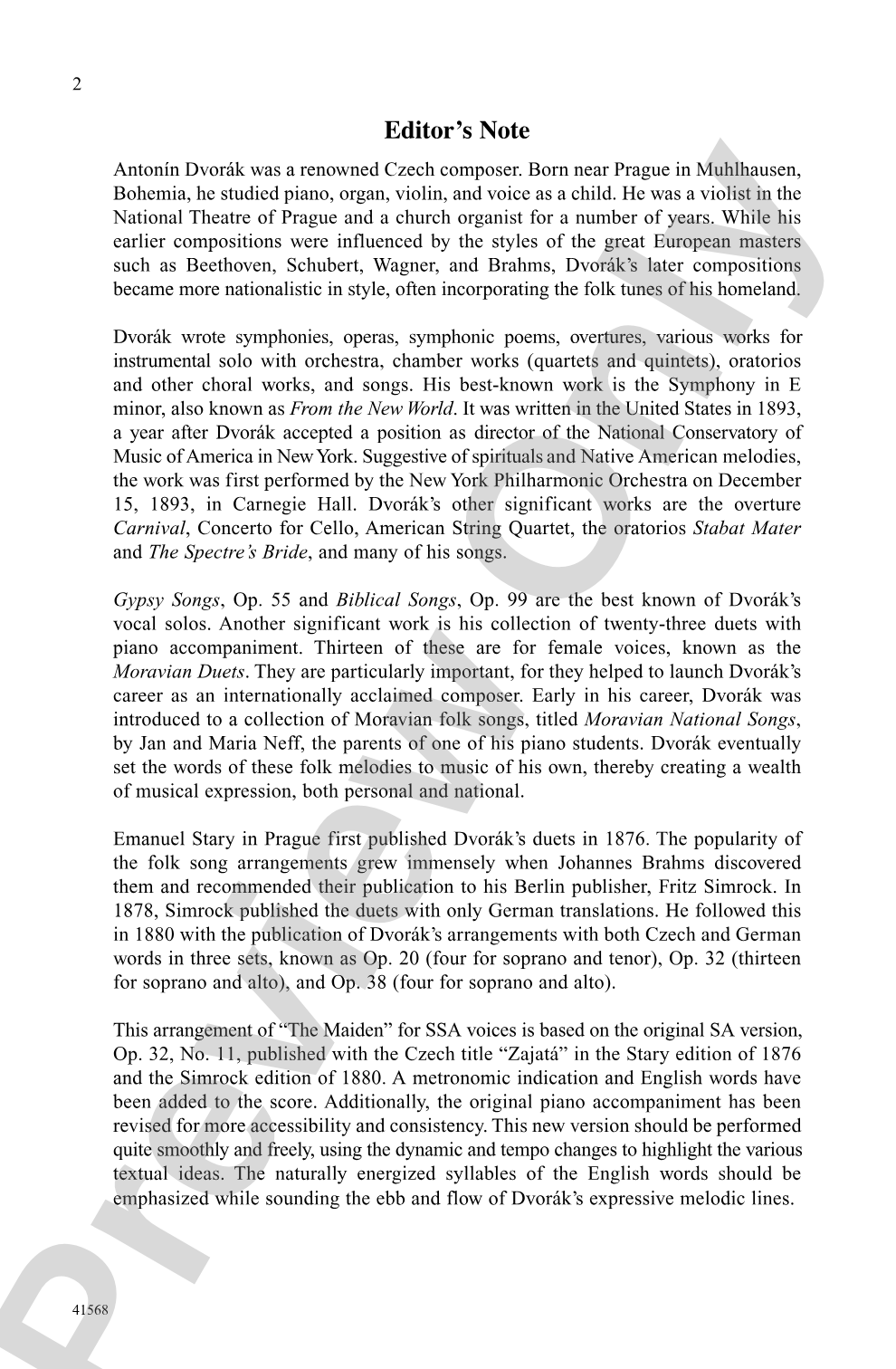
About the Composer: Antonin Dvorák
Antonín Dvořák (1841-1904) stands as one of the nineteenth century's most prolific and versatile composers. A Czech nationalist who drew deeply from the folk melodies and rhythmic patterns of his homeland, Dvořák wrote across every major genre while remaining rooted in the musical character of Moravia and Bohemia. His gift for memorable, singable melody made him a natural voice for choral writing, and his duets in particular showcase an intimate, accessible approach to composition that never sacrifices craft or emotional substance.
Dvořák's influence on music education remains substantial because his music invites singers into the joy of performance without requiring virtuosity beyond reach. His melodies teach themselves; his harmonies, though thoughtfully constructed, sit naturally under the voice. For SSA ensembles, his work offers the rare combination of folk authenticity and compositional sophistication.
Why we love this
Dvořák's original melody carries genuine warmth and folk character without ever feeling precious or overly sentimental. Liebergen's English adaptation preserves that directness while weaving in a narrative that keeps singers engaged across the piece, making this an ideal selection for choirs seeking repertoire that satisfies both the singers' musicality and a concert program's need for substance.
What to expect
Stepping into folk tradition without leaving the concert hall. The melody has the inevitability and warmth of music passed down through generations, yet the harmonic setting and English storytelling ground it in a specific dramatic moment. Singers feel the difference between arranging a folk tune and composing one that breathes like folk music.
Who it's for
SSA choirs at the intermediate level will find this piece within immediate reach while still offering rewarding musical substance. Directors programming festival seasons, spring concerts, or repertoire showcasing beloved masterworks will appreciate both the accessibility and the undeniable quality of Dvořák's voice.
How to get the most out of it
- Shape the melody with phrase arcs rather than puncturing the line with heavy attacks. This folk melody gains its character from continuity, and even in the SSA voicing, the outer voices should carry the line as a single breath whenever possible.
- Balance the inner voices carefully so they support rather than compete with the soprano line. The character parts add harmonic richness, but the tune must always sing through clearly.
- Allow the whimsy in Liebergen's text to breathe. A lighter touch on storytelling moments prevents this from becoming overly dramatic and honors the piece's gentle humor.
- Consider the acoustic of your performance space when judging blend and balance. Folk-inspired melodies can sound thin in bright halls or muddy in resonant ones; rehearse in your concert space if possible.
How to use it
This piece excels as a graceful contrast within a mixed concert, especially when programmed near more dramatic works or contemporary selections. Its twelve pages and moderate difficulty also position it well for festival adjudication or as a centerpiece of a program celebrating Romantic-era choral writing. It works equally well as a concert opener that draws listeners in or as a memorable closing piece on a lighter half of a program.
Skills your students will build
- Singing sustained melodic lines with phrase awareness and natural breathing
- Balancing three-part harmony while maintaining tonal clarity in SSA voicing
- Interpreting English text underlay idiomatically within a folk-influenced musical context
- Responding to folk melodic style with appropriate attention to line and story rather than technical display