
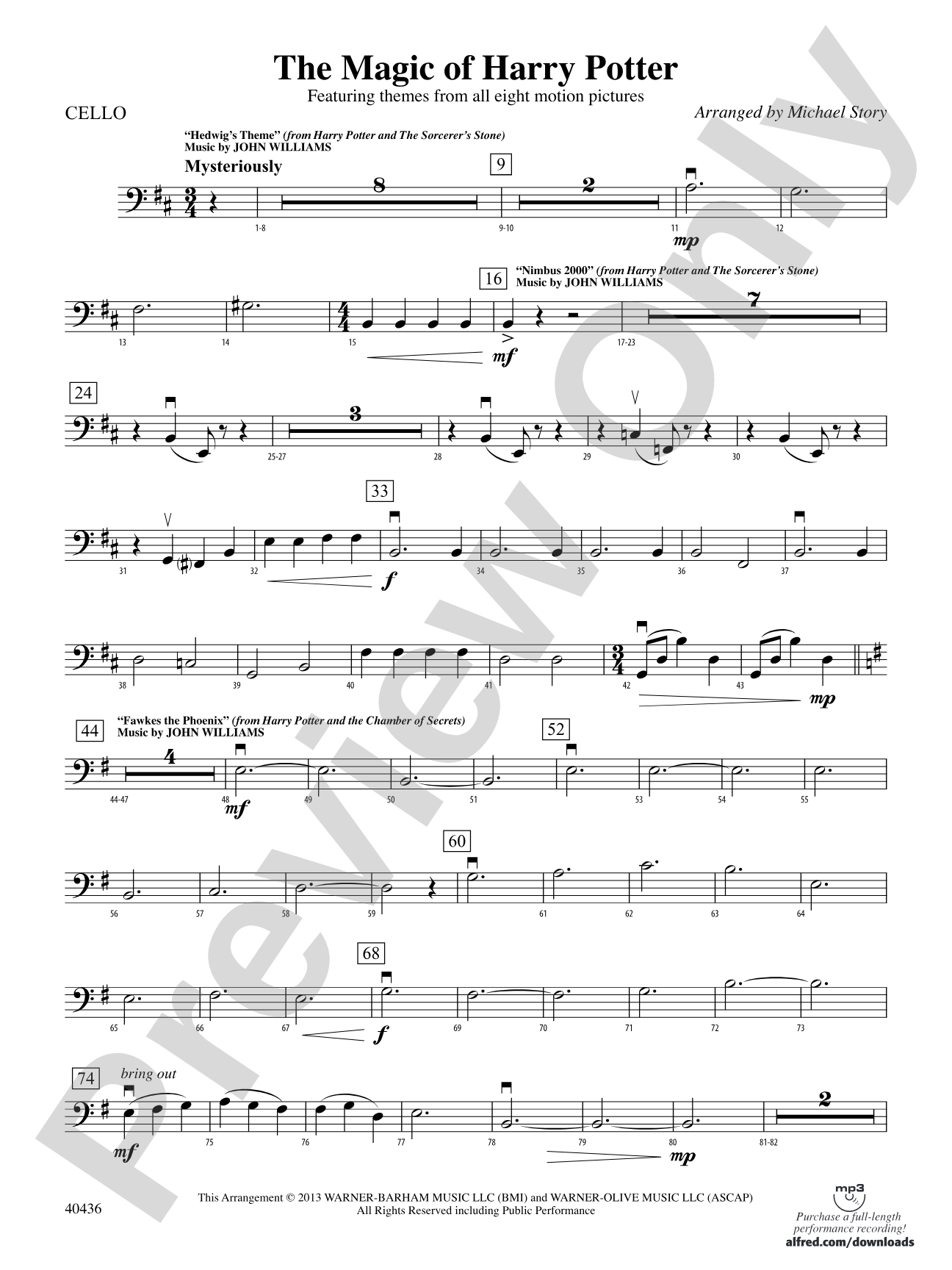

The Magic of Harry Potter: Cello
Featuring themes from all eight motion pictures
Arr. Michael Story
Grade: 3
Item: 00-PC-0015970_VC1
$5.99
Pickup currently not available
Description
The Magic of Harry Potter contains themes from all eight motion pictures in the Harry Potter series. The themes included are "Hedwig's Theme" and "Nimbus 2000" from Harry Potter and the Sorcerer's Stone, "Fawkes the Phoenix" from Harry Potter and the Chamber of Secrets, "Double Trouble" from Harry Potter and the Prisoner of Azkaban, "Hogwarts' Hymn" from Harry Potter and the Goblet of Fire, "Dumbledore's Army" from Harry Potter and the Order of the Phoenix, "Harry and Hermione" from Harry Potter and the Half-Blood Prince, "Ministry of Magic" from Harry Potter and the Deathly Hallows -- Part 1, "Showdown" from Harry Potter and the Deathly Hallows -- Part 2, and "Leaving Hogwarts," which appeared at the end of both the first and last movies. This arrangement is scored for full orchestra, but is completely playable by strings alone. (6:00)
This title is available in MakeMusic Cloud.
For educational usage/non-profit performances only; for professional arrangements, visit our rental library at alfred.com/rental.


This title is available in MakeMusic Cloud.
For educational usage/non-profit performances only; for professional arrangements, visit our rental library at alfred.com/rental.
Don't just read it, hear it, play along with it, and watch your students grow with it. In MakeMusic Cloud, The Magic of Harry Potter: Cello comes alive with professional accompaniment, adjustable tempo, and built-in practice tools that turn solo practice into real progress.
Open in the Player
Jump straight in and assign it today.
Start Your Free Trial
Open this title and explore the full library in minutes.
Sample Audio
1
Audio File
--:--
0:00
0:00
Sample Video
Additional Details
Series:
Pop Intermediate String/Full Orchestra
Publisher:
Alfred Music
Page Count:
248
SKU:
00-PC-0015970_VC1
More about this title
About the Arranger: Michael Story
Michael Story is a prolific composer and arranger whose work spans concert band, orchestra, and wind ensemble literature. His arrangements are known for maintaining the integrity of original themes while making them accessible to student musicians across multiple levels, and he has become a staple in school music programs nationwide.
Why we love this
This arrangement captures the cinematic grandeur of John Williams's iconic themes while staying true to Grade 3 accessibility. The flexibility to perform with full orchestra or strings alone means you can program it regardless of instrumentation, and the eight distinct movements give you options for concert pacing or thematic variety within a single work.
What to expect
A musical journey through eight films condensed into essential moments. The suite moves from wonder and mystery to triumph, loss, and ultimately bittersweet farewell, with Williams's unmistakable orchestral textures woven throughout.
Who it's for
Orchestra directors looking for engaging, recognizable material that speaks to student musicians at the intermediate level. This works equally well for schools with full orchestras or those relying primarily on strings, making it a flexible choice for diverse ensemble configurations.
How to get the most out of it
- Balance the thematic material between sections so that primary melodic lines cut through the orchestration. The familiarity of these themes means audiences expect to hear them clearly.
- Use the conductor score to shape the dramatic arc across all nine movements. Each theme has a different emotional weight; map your tempo and dynamic decisions from the first downbeat.
- Attend to the transitions between movements, especially when shifting from the triumph of "Dumbledore's Army" to the melancholy of "Harry and Hermione." Clean section releases and clear cueing keep the emotional narrative intact.
How to use it
Program this as a full concert centerpiece, or select individual movements to anchor thematic concerts or movie-night fundraisers. The nine-minute runtime and broad stylistic range make it particularly effective on a program with contrasting classical or contemporary works.
Skills your students will build
- Reading multi-movement orchestral works and maintaining ensemble cohesion across distinct sections
- Responding to nuanced dynamic and tempo changes within a narrative arc
- Balancing melody and accompaniment in full orchestral textures
- Executing stylistically appropriate articulation and phrasing for film-based composition