
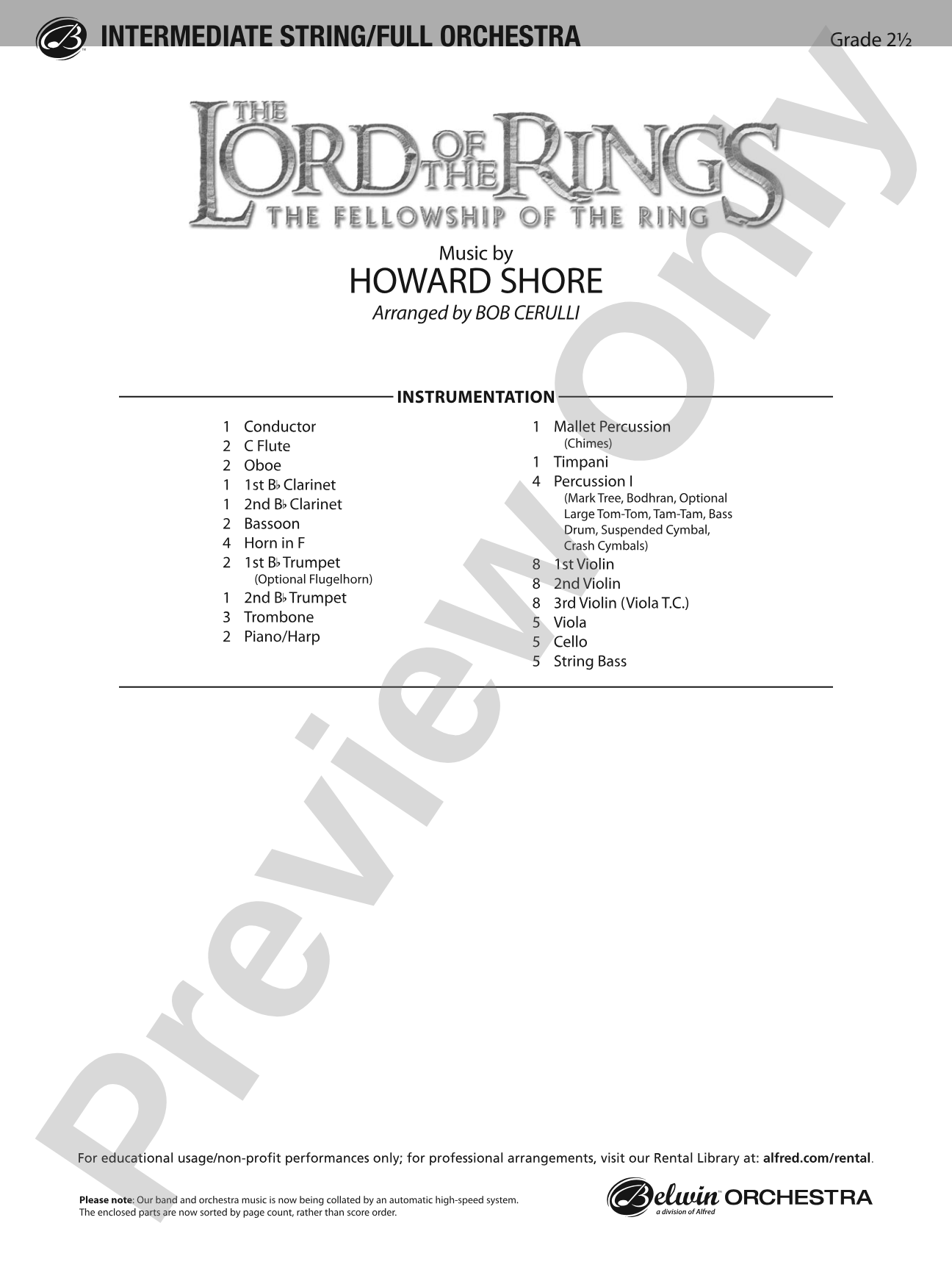

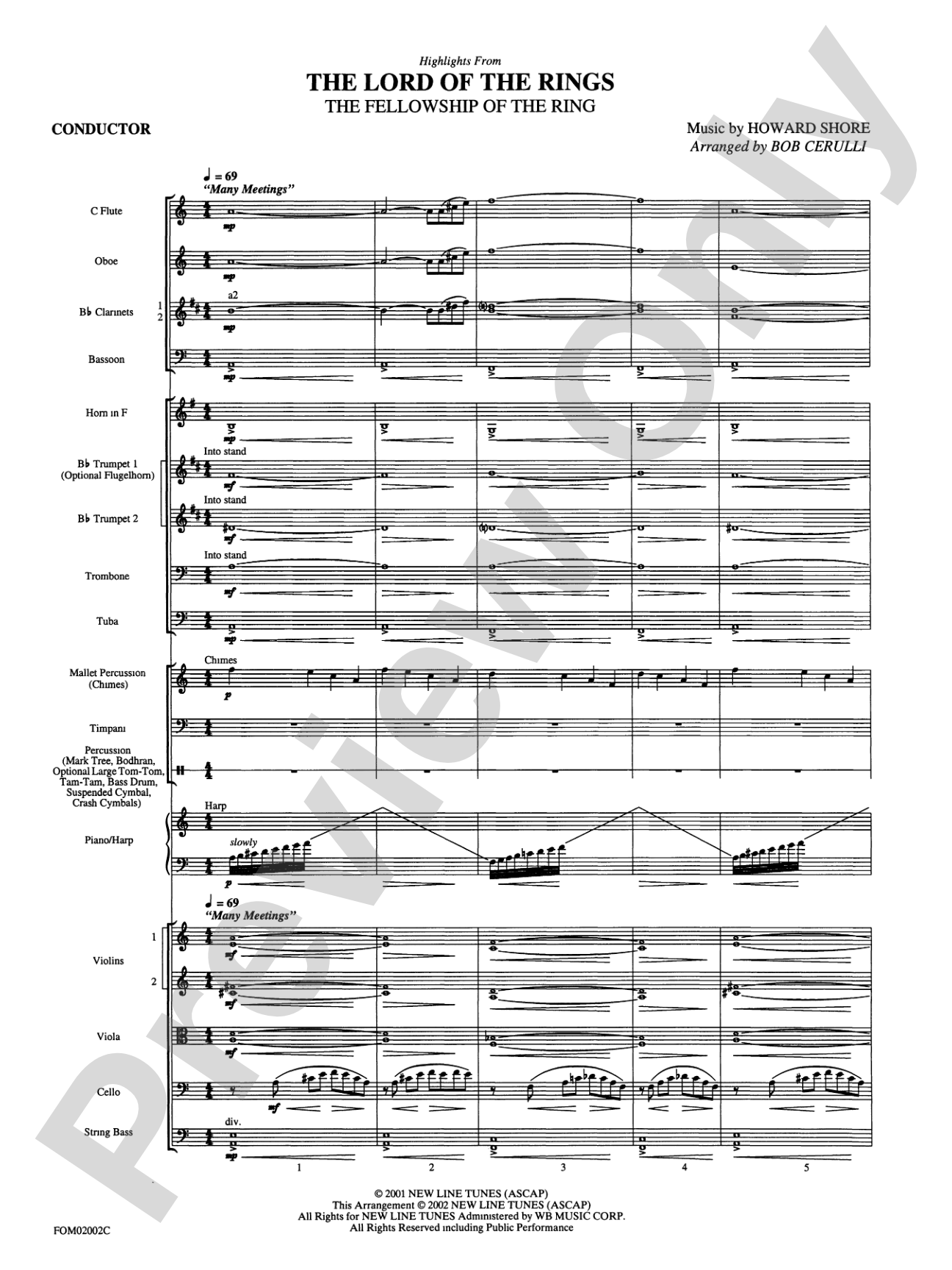
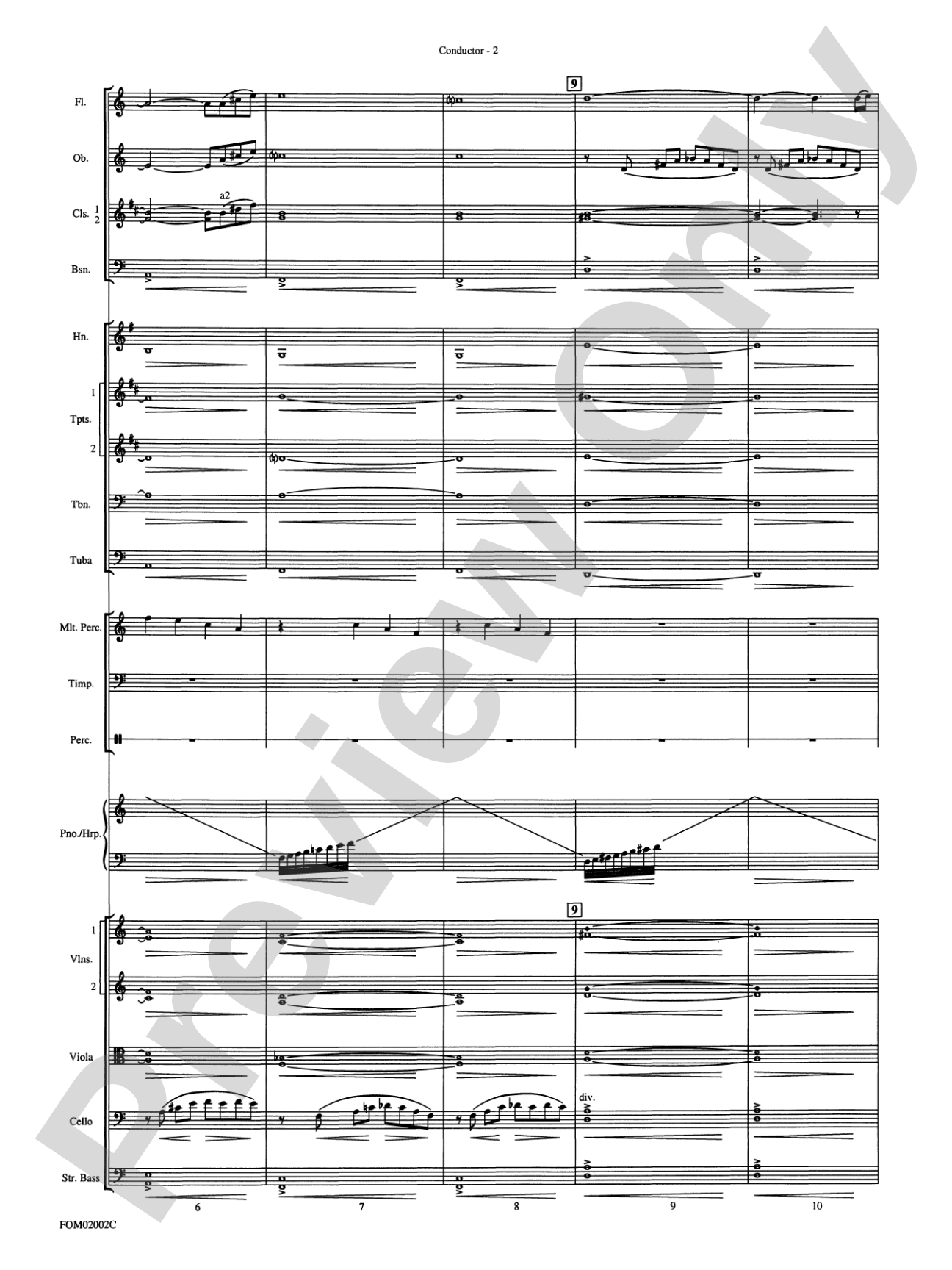
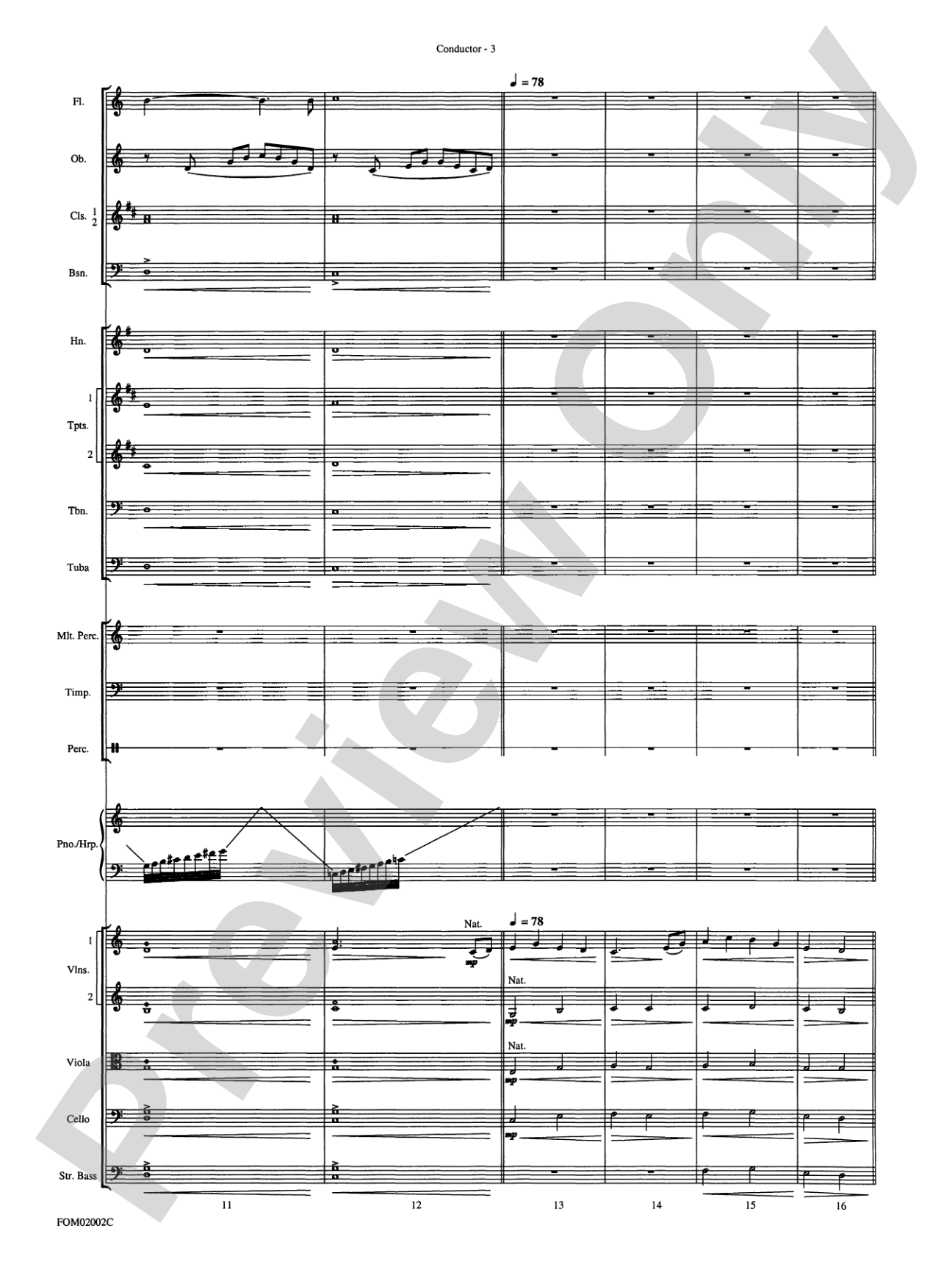
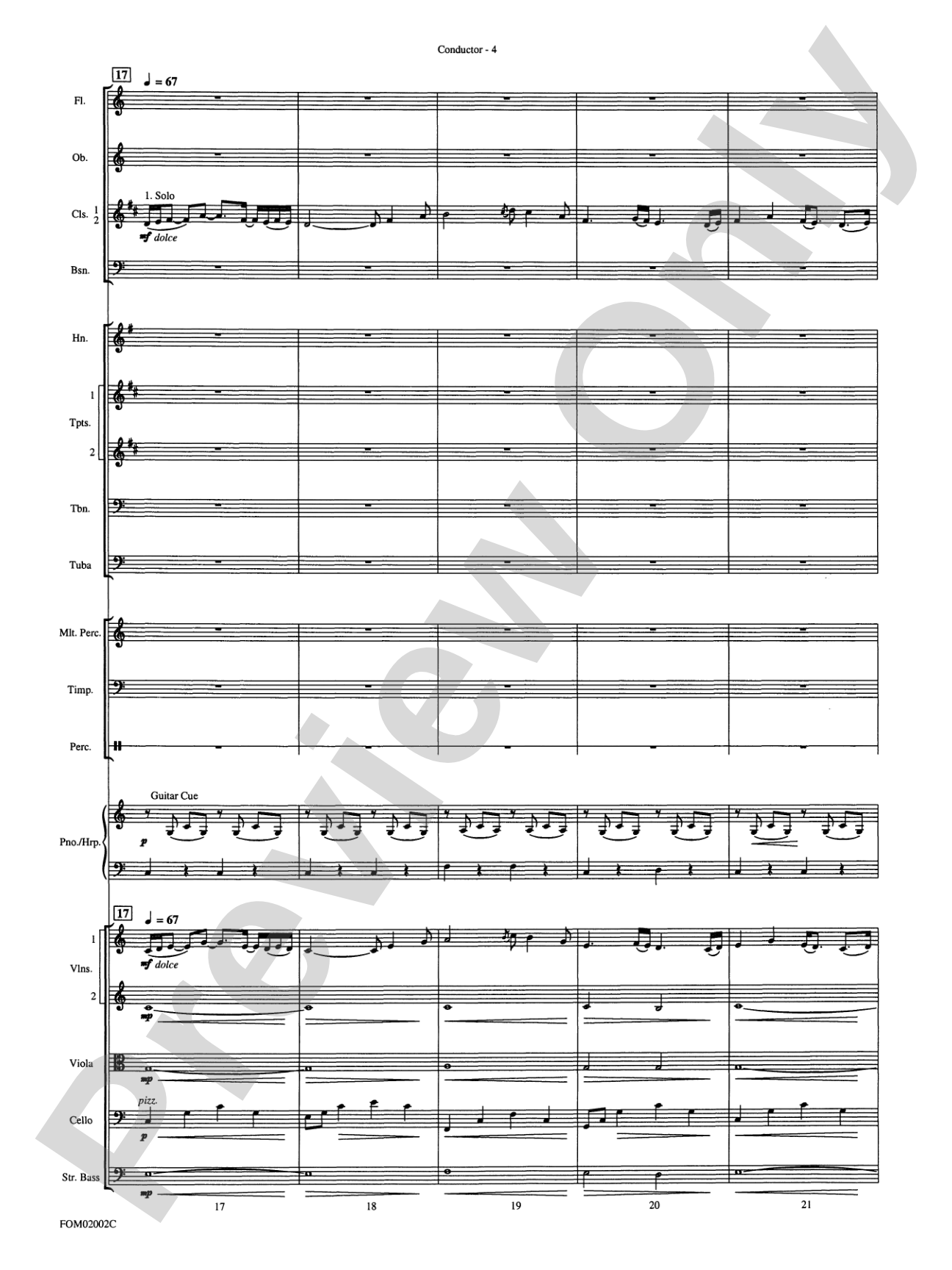
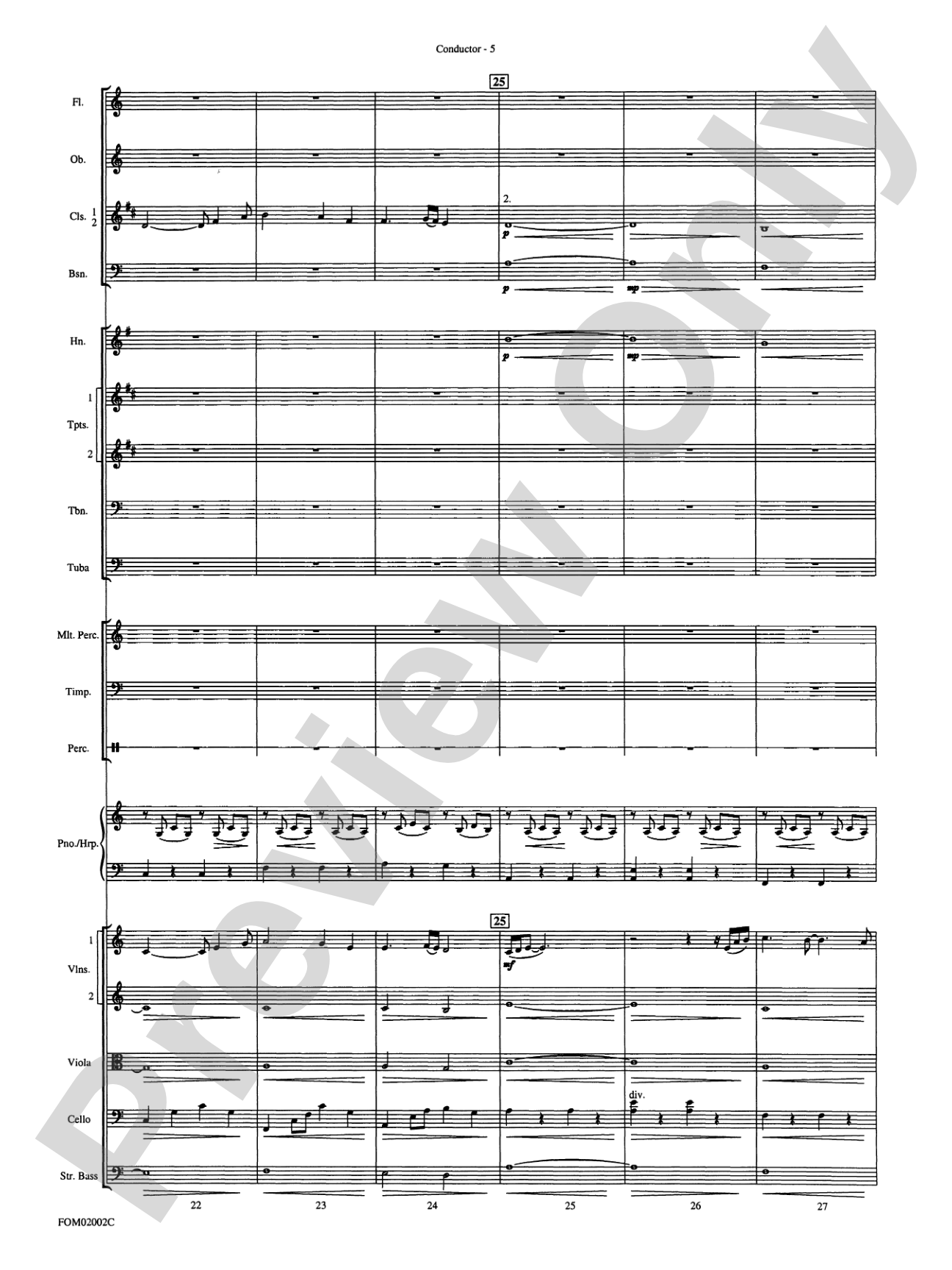
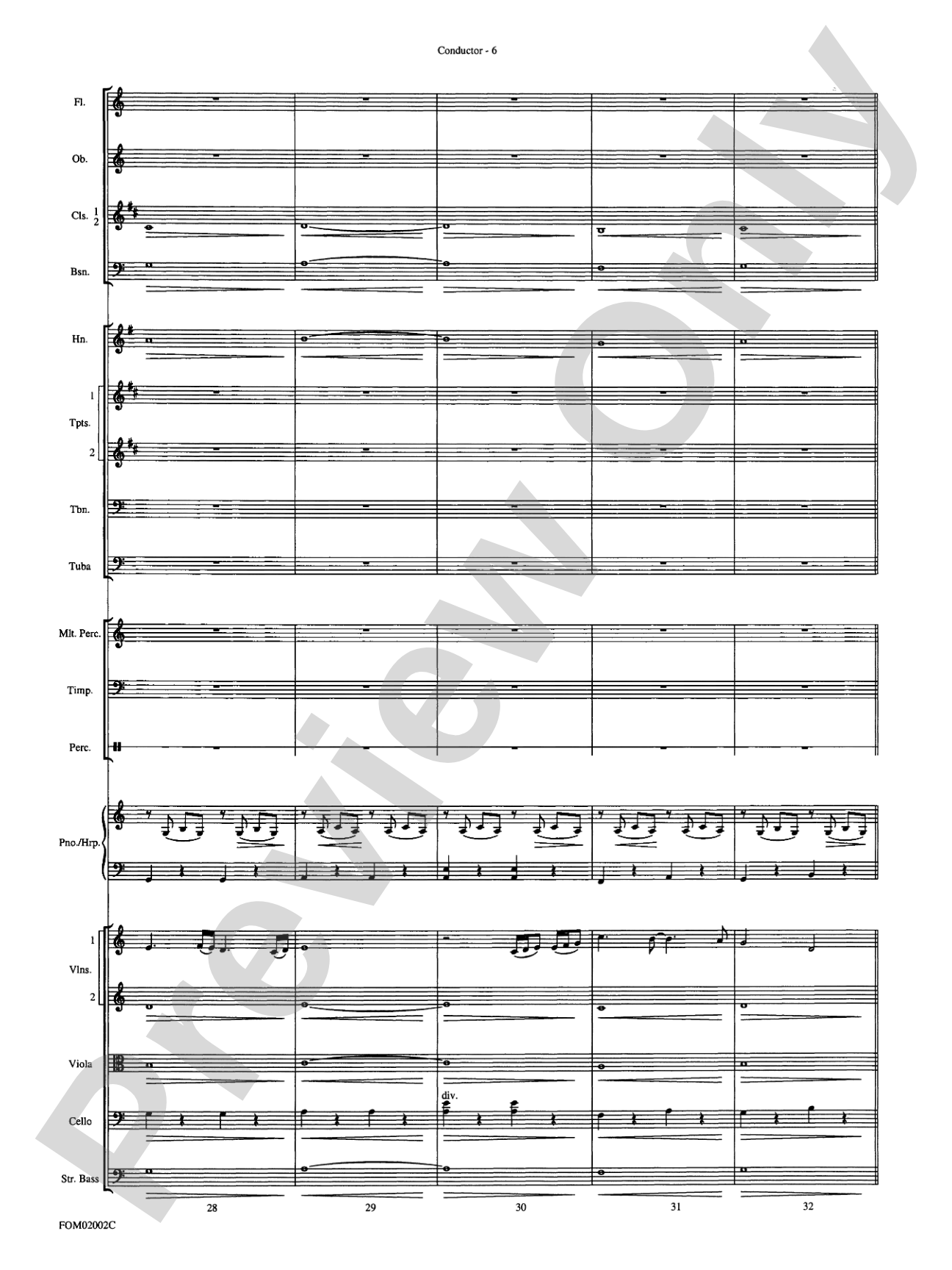
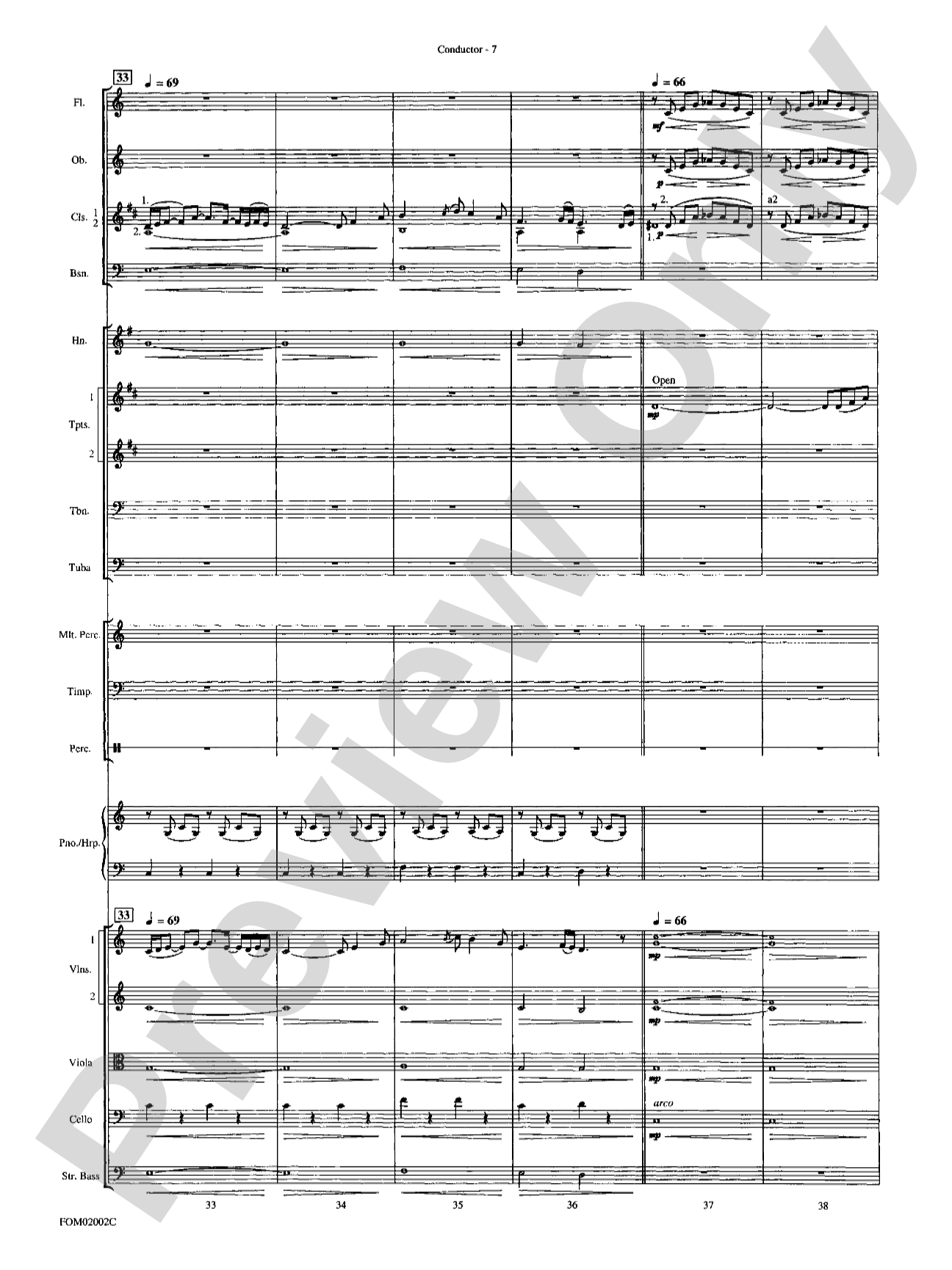
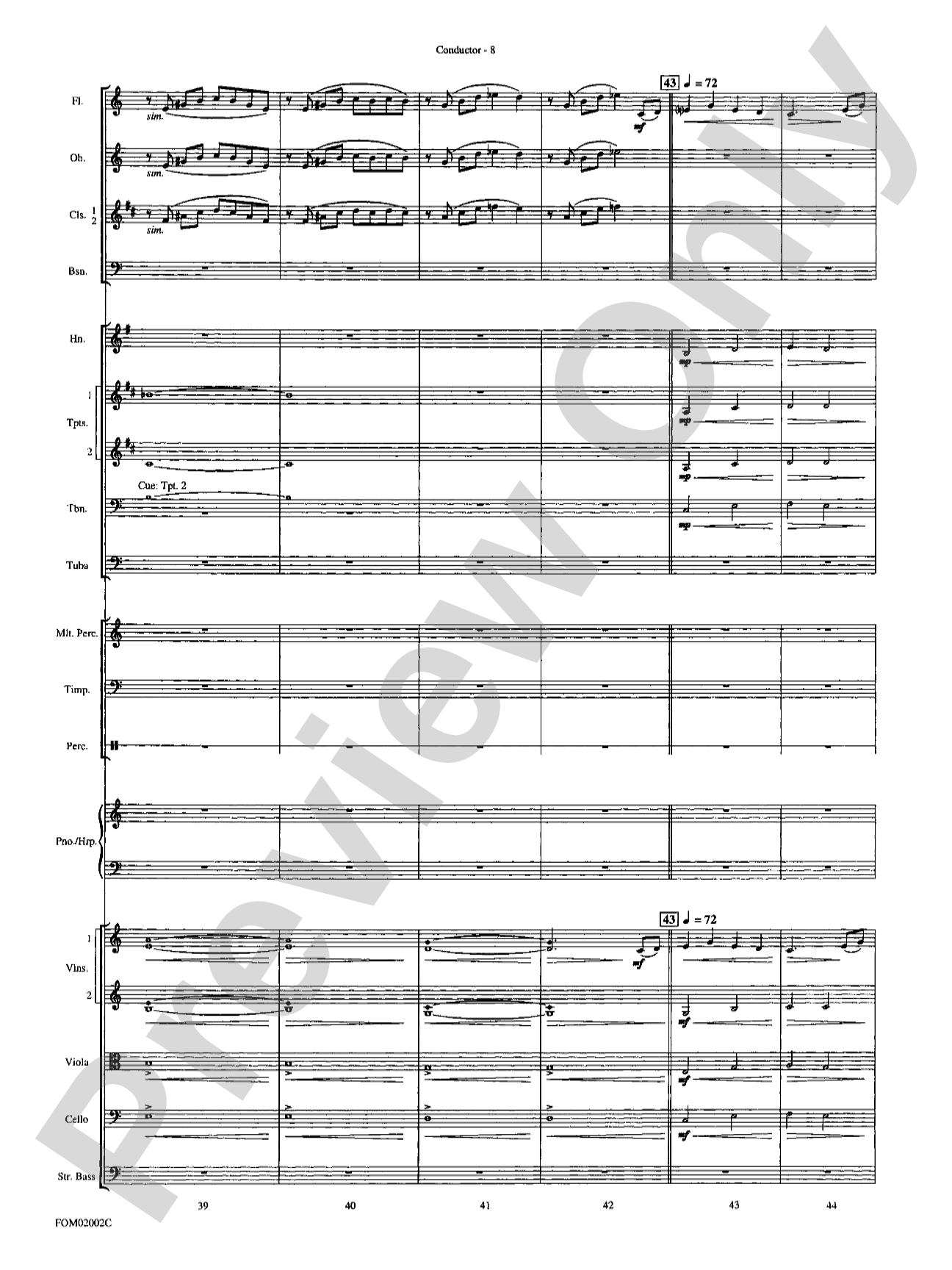
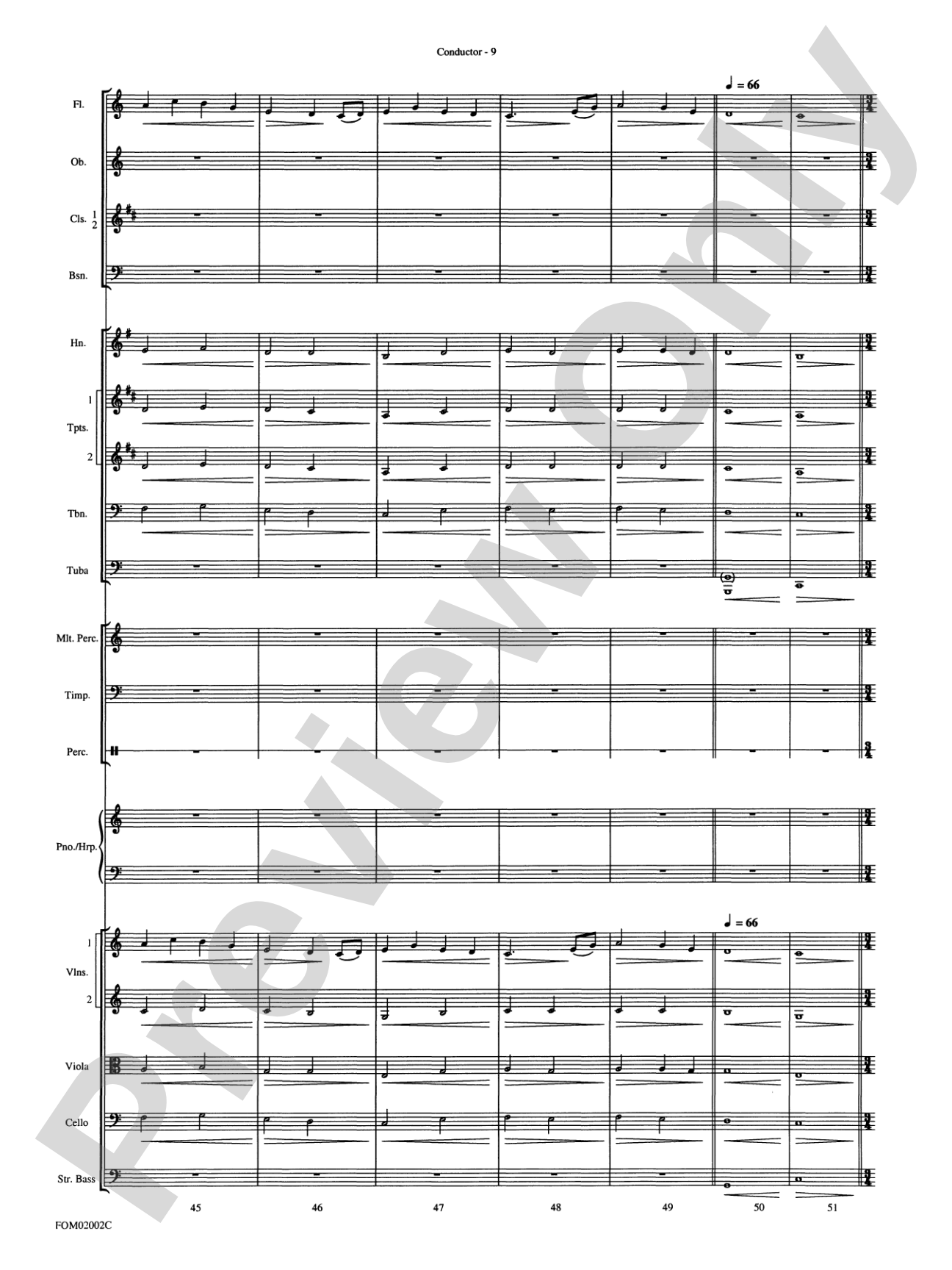
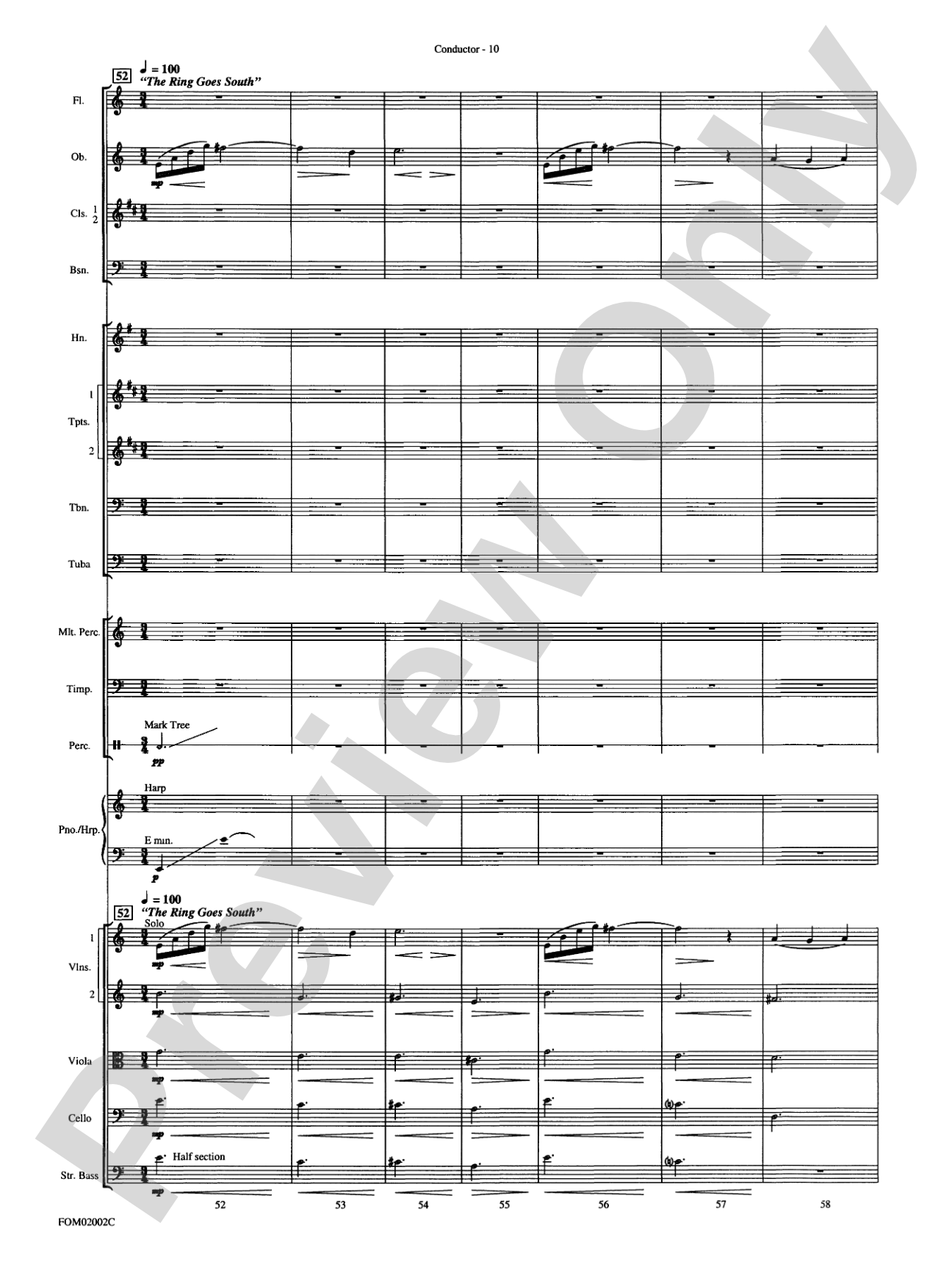
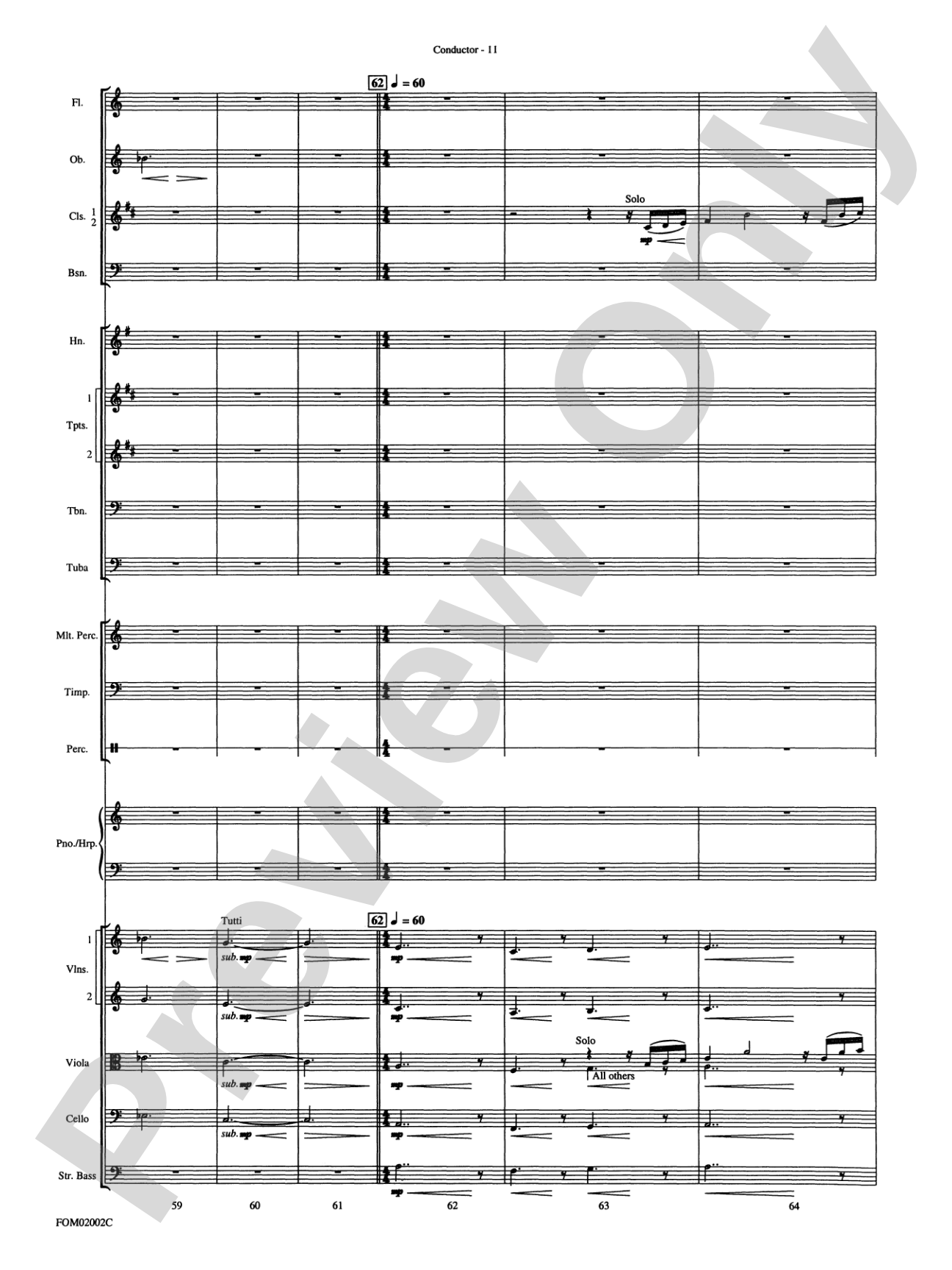
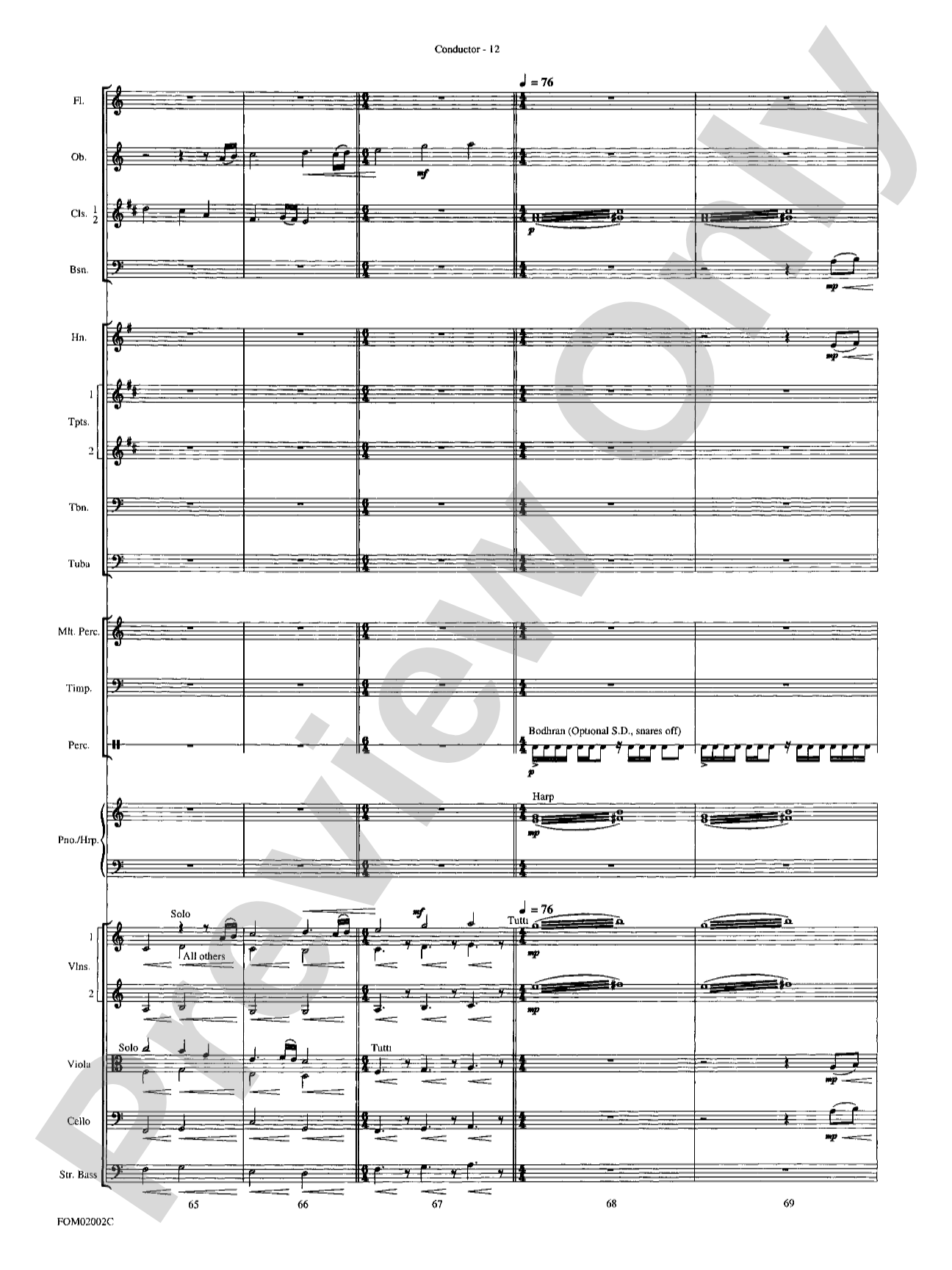
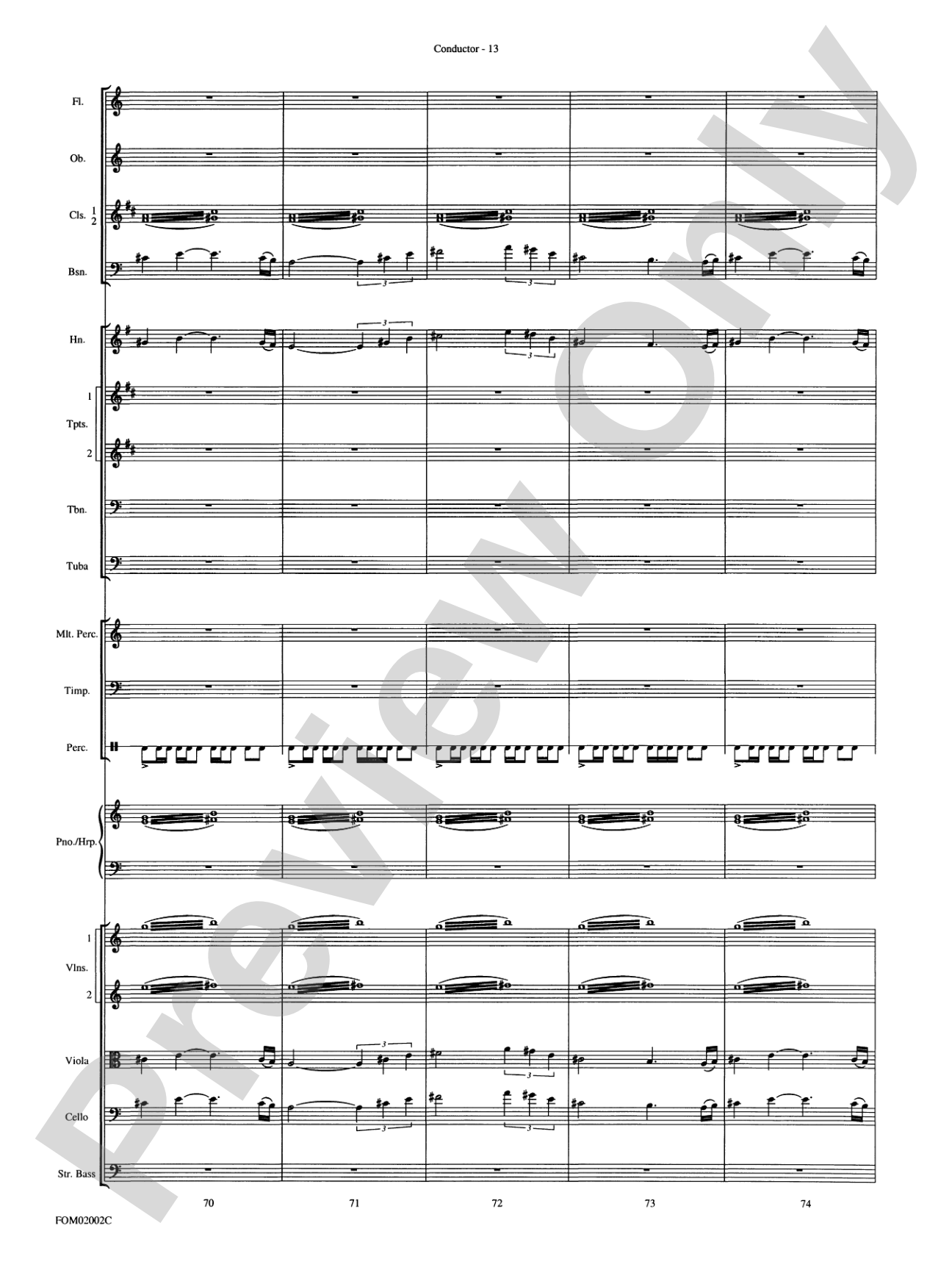
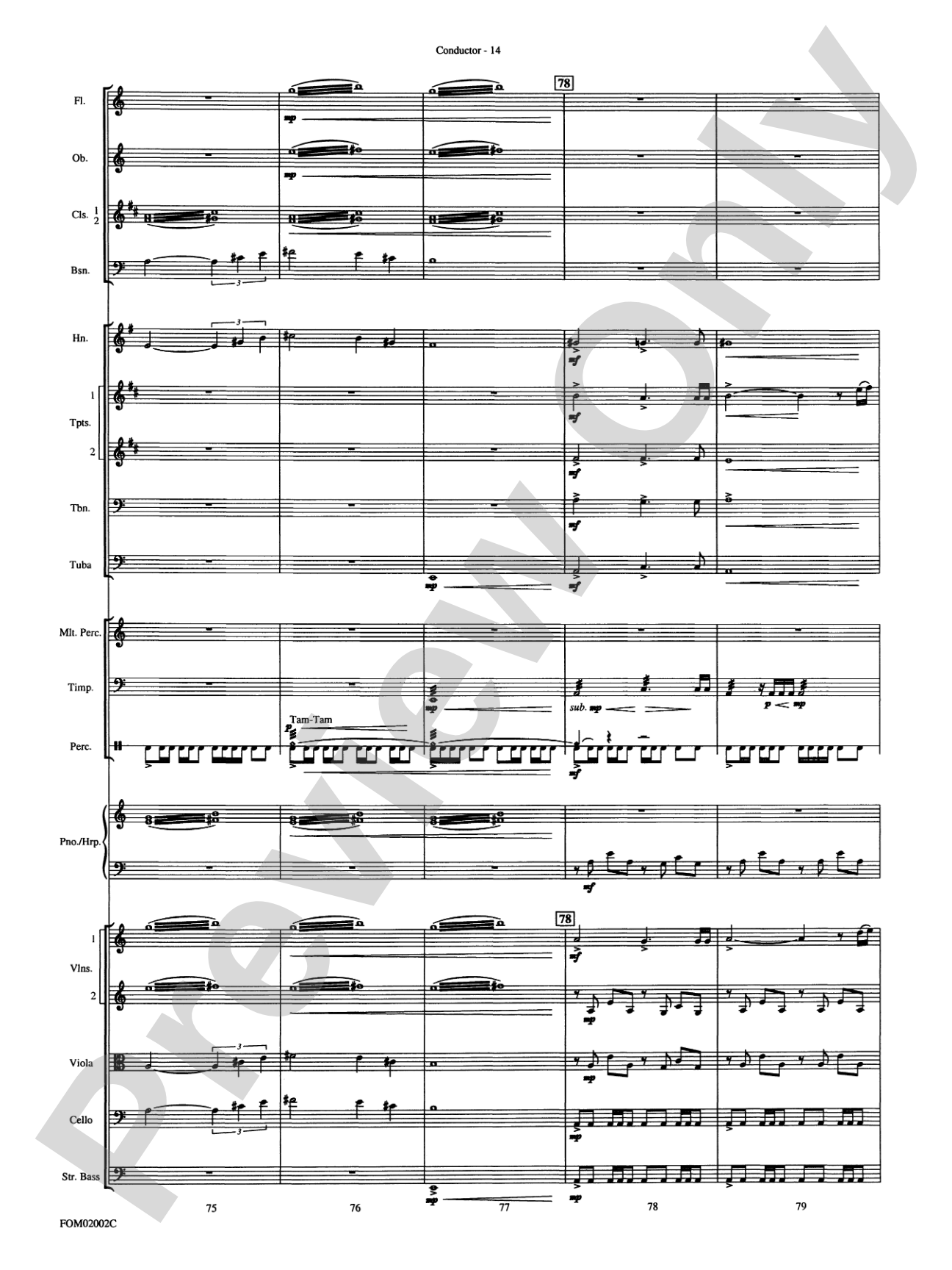
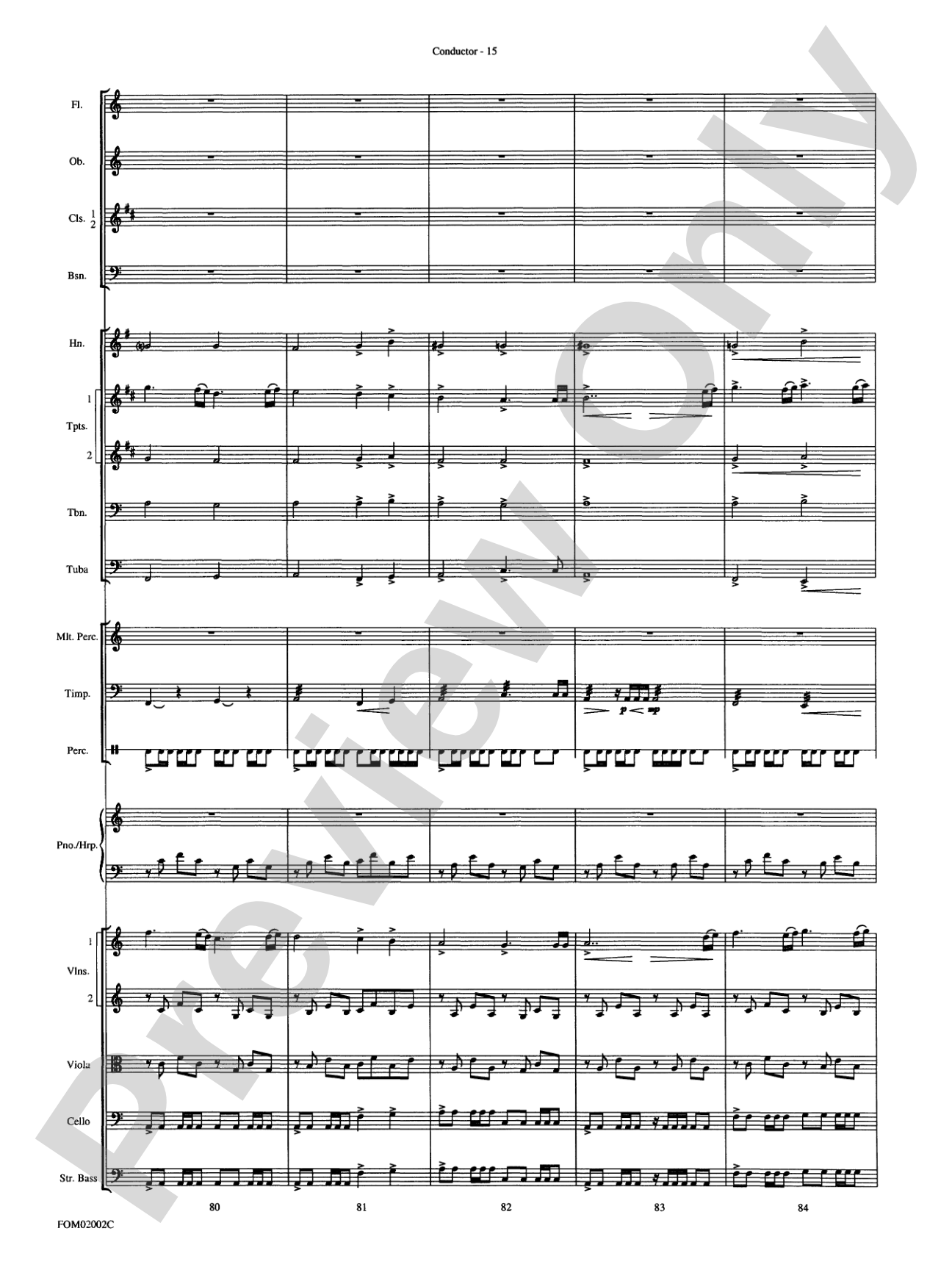
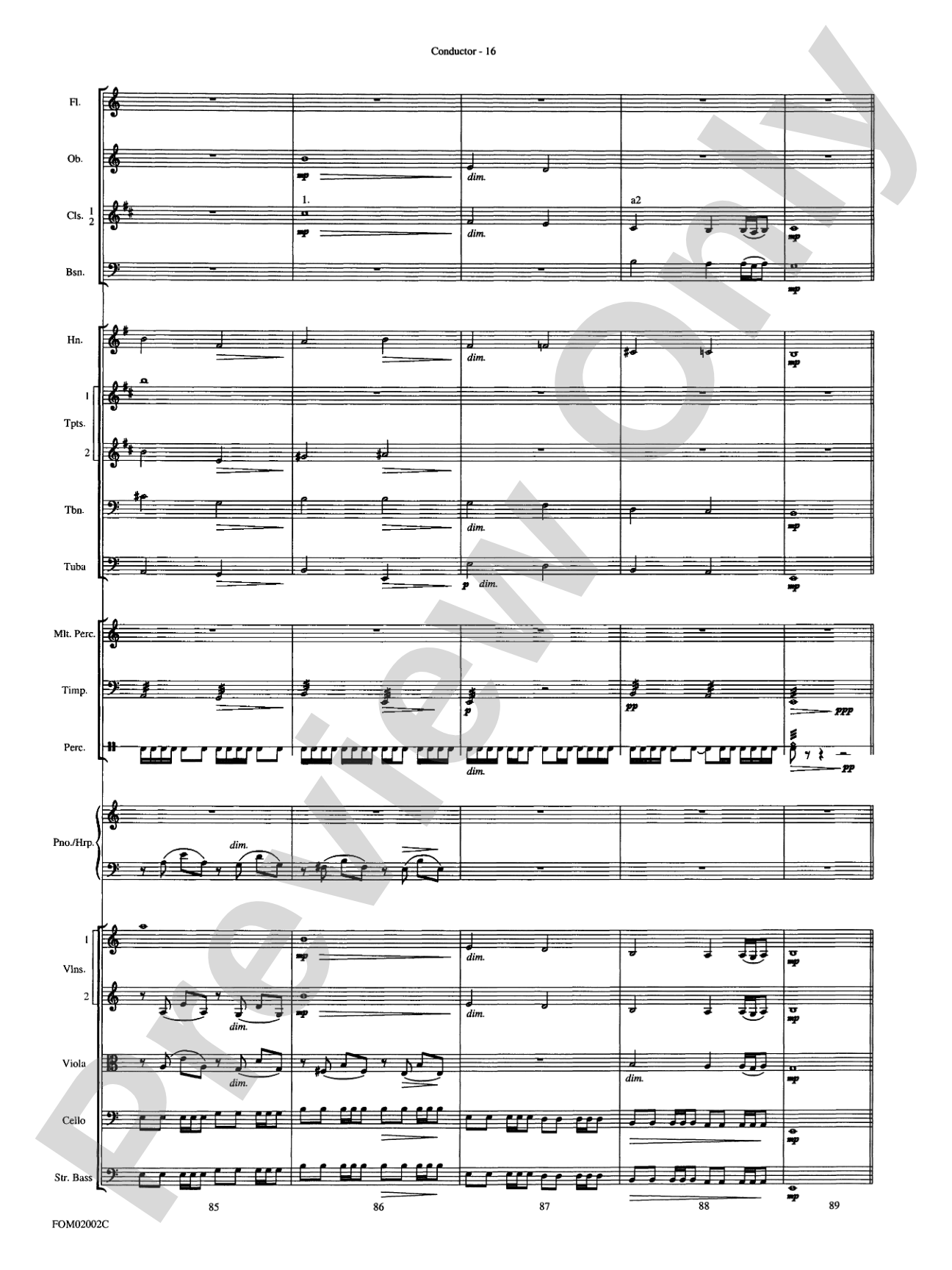
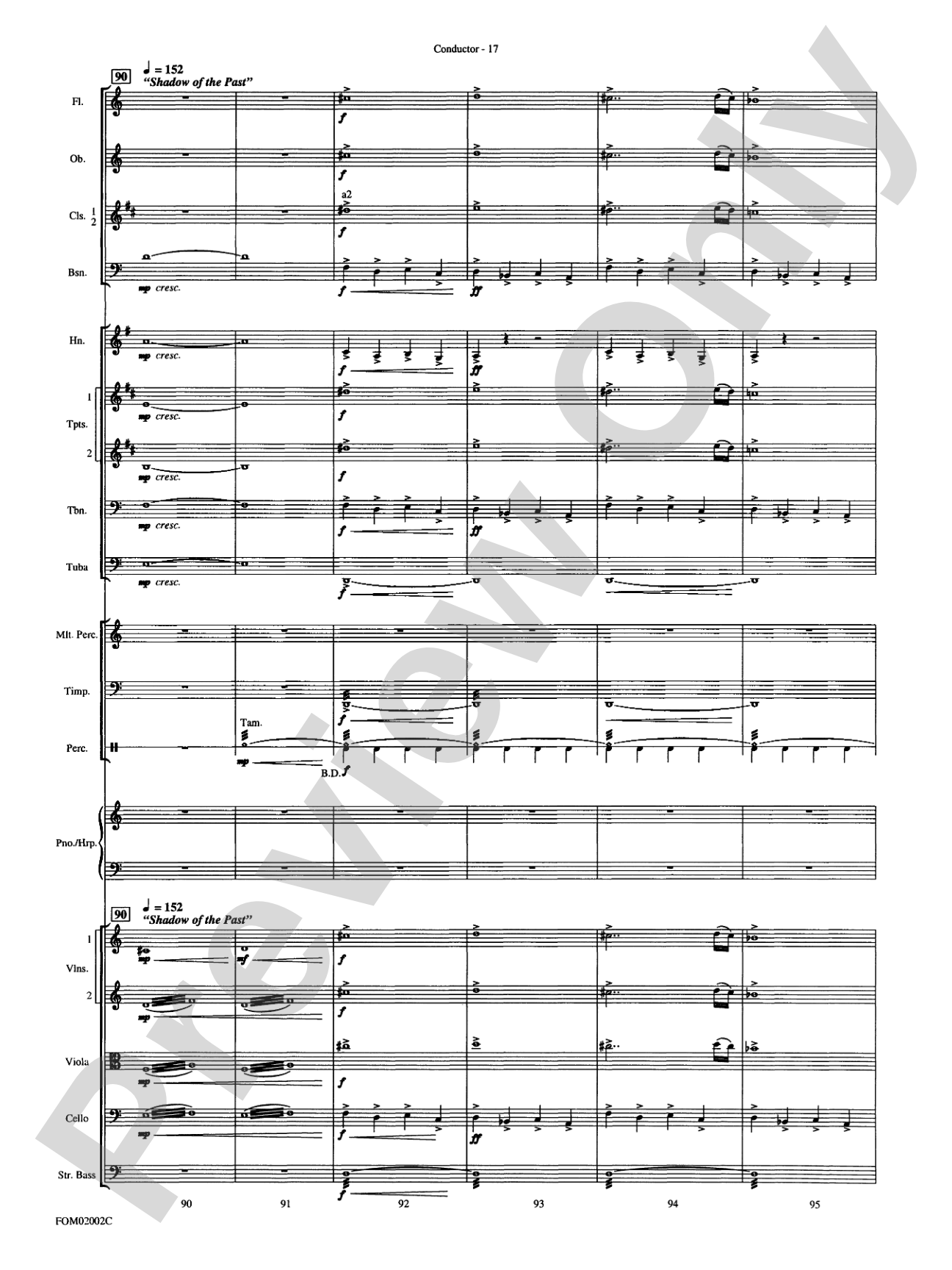
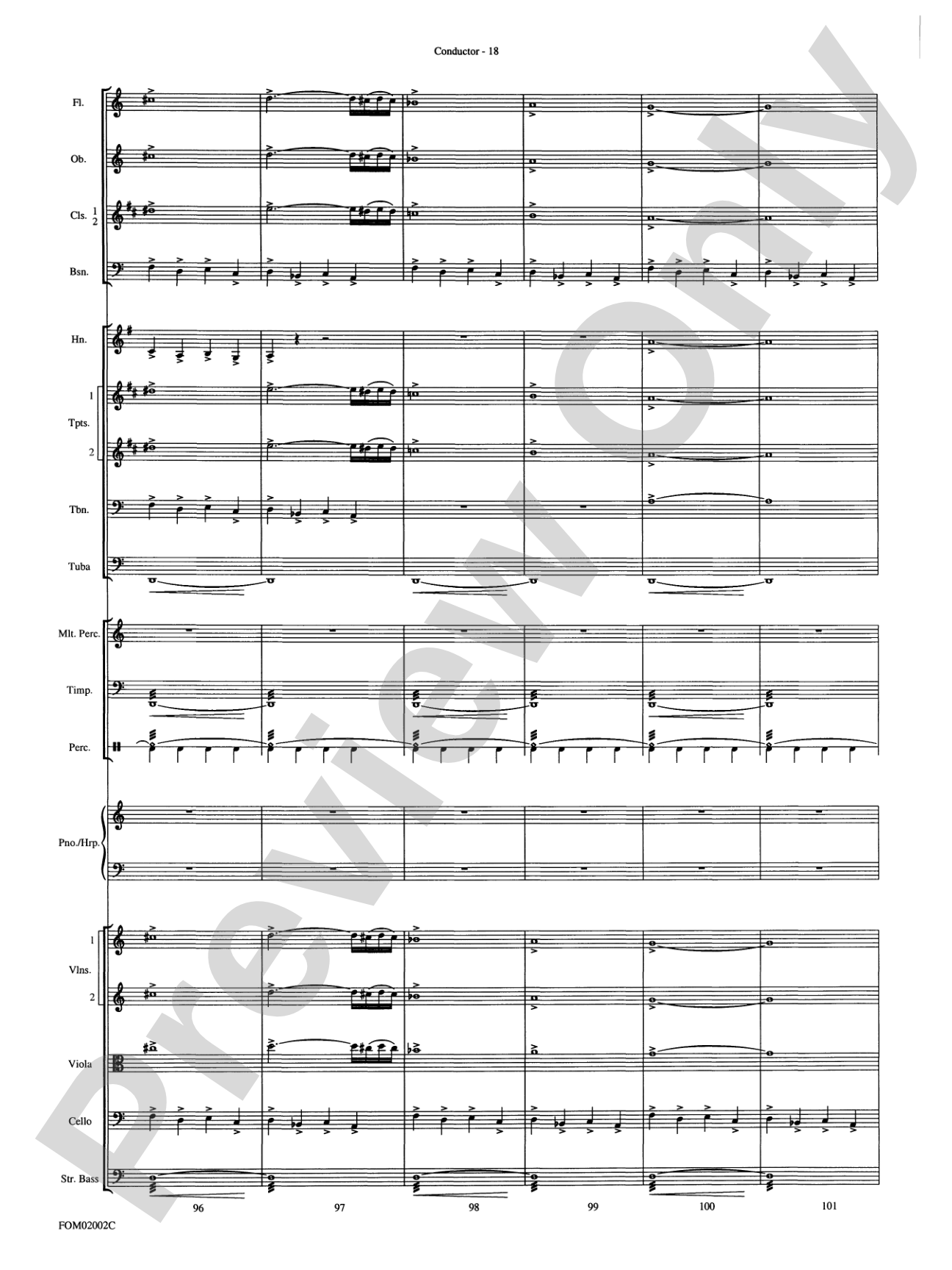
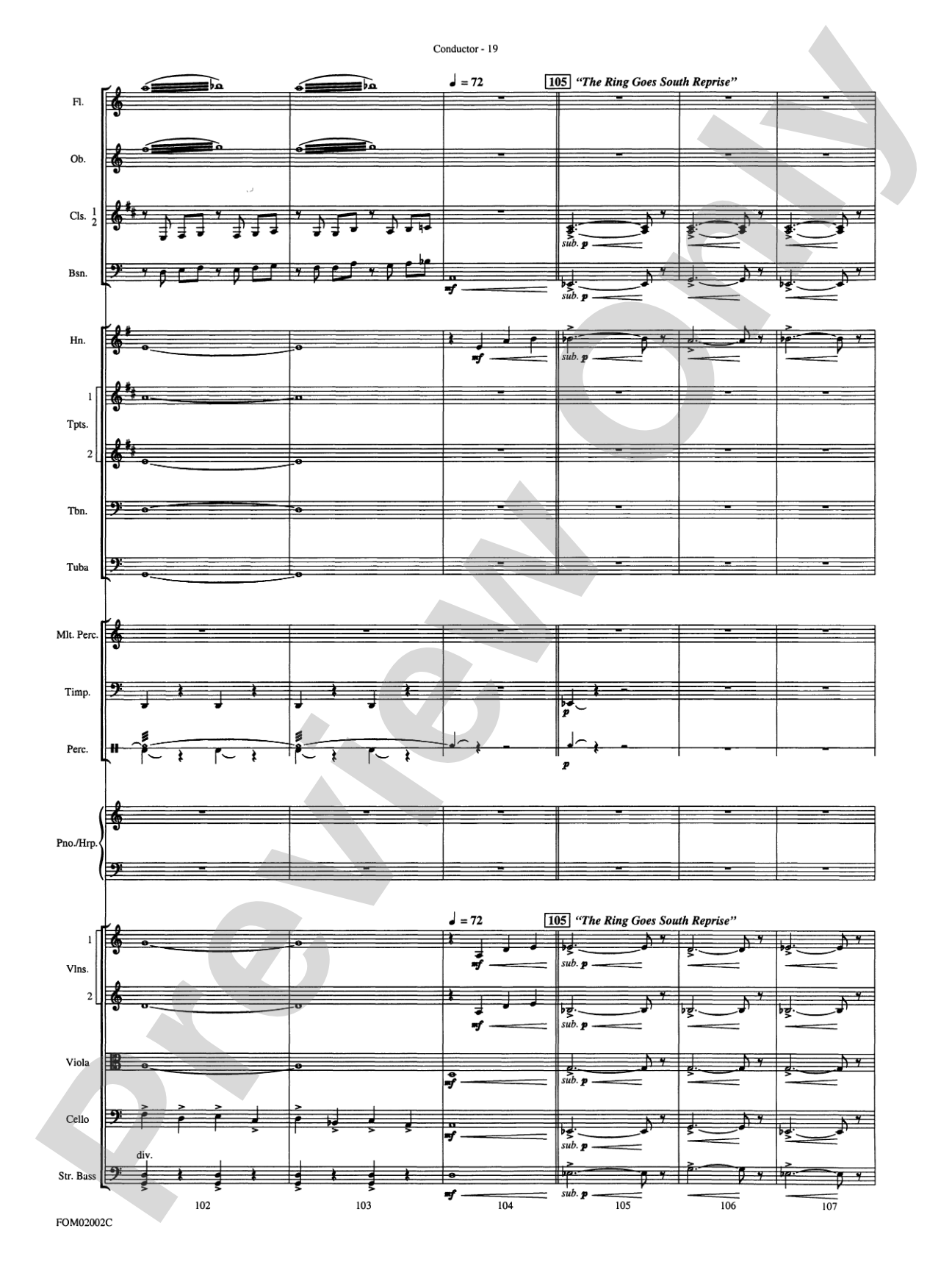
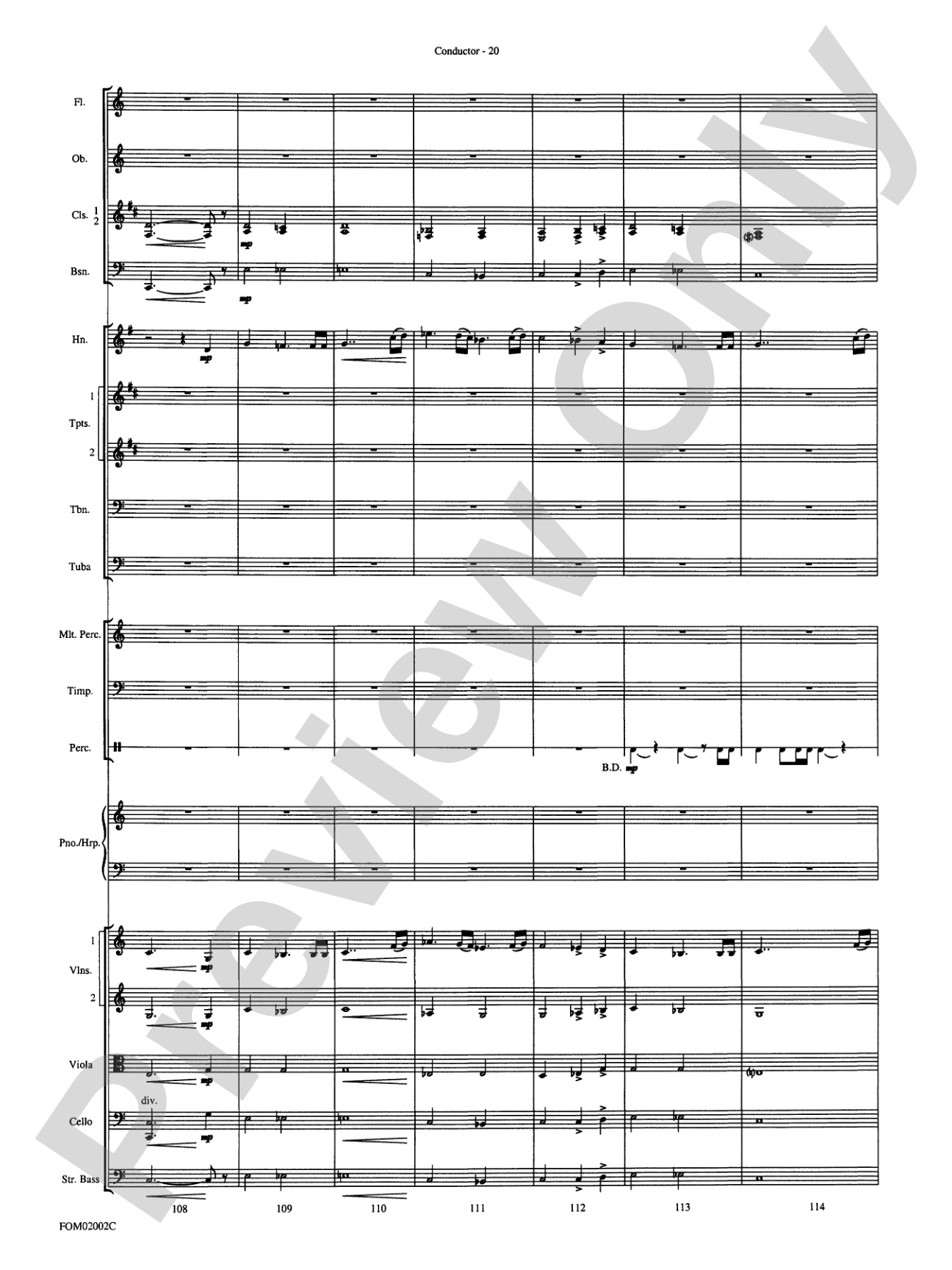
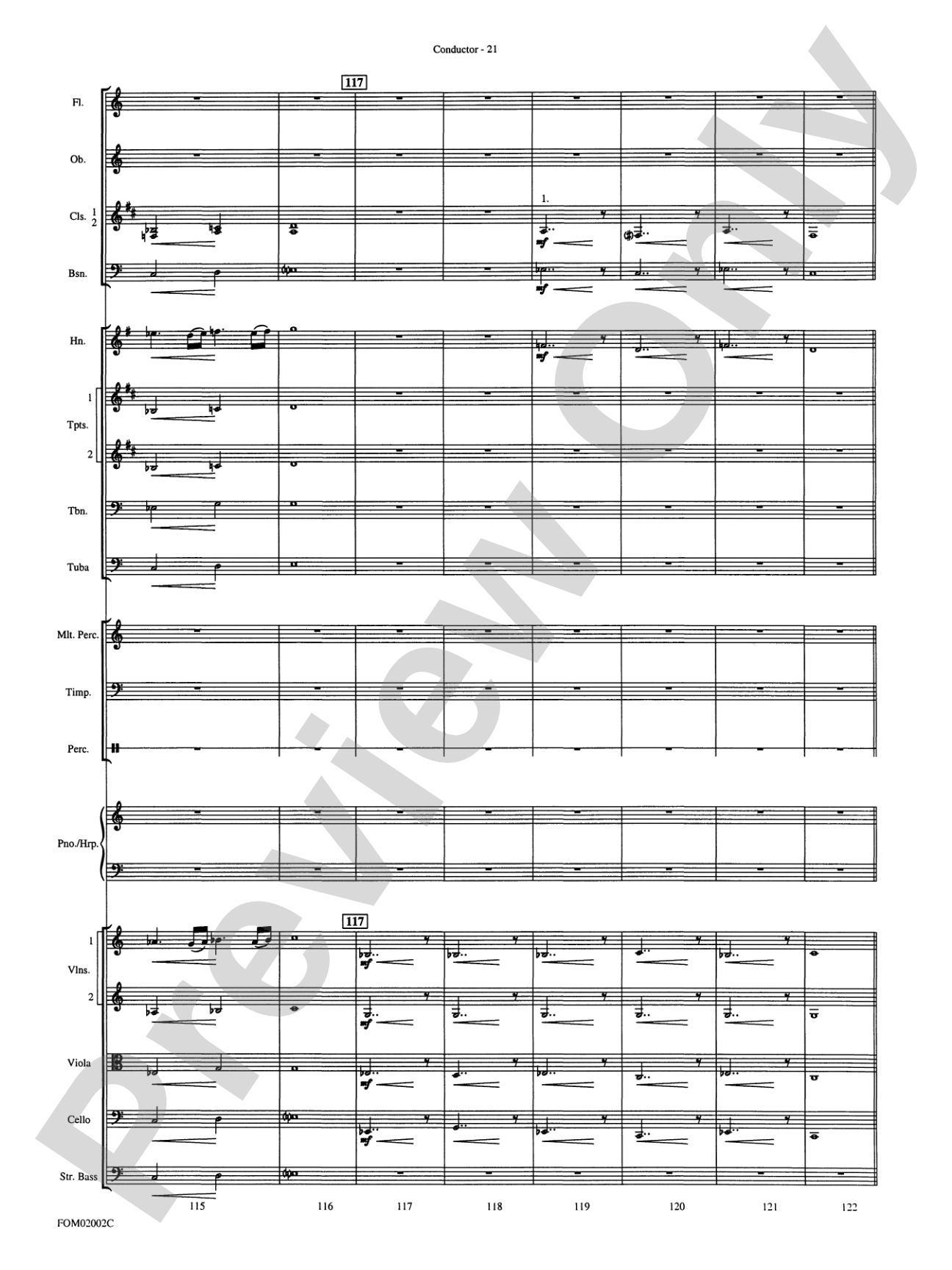
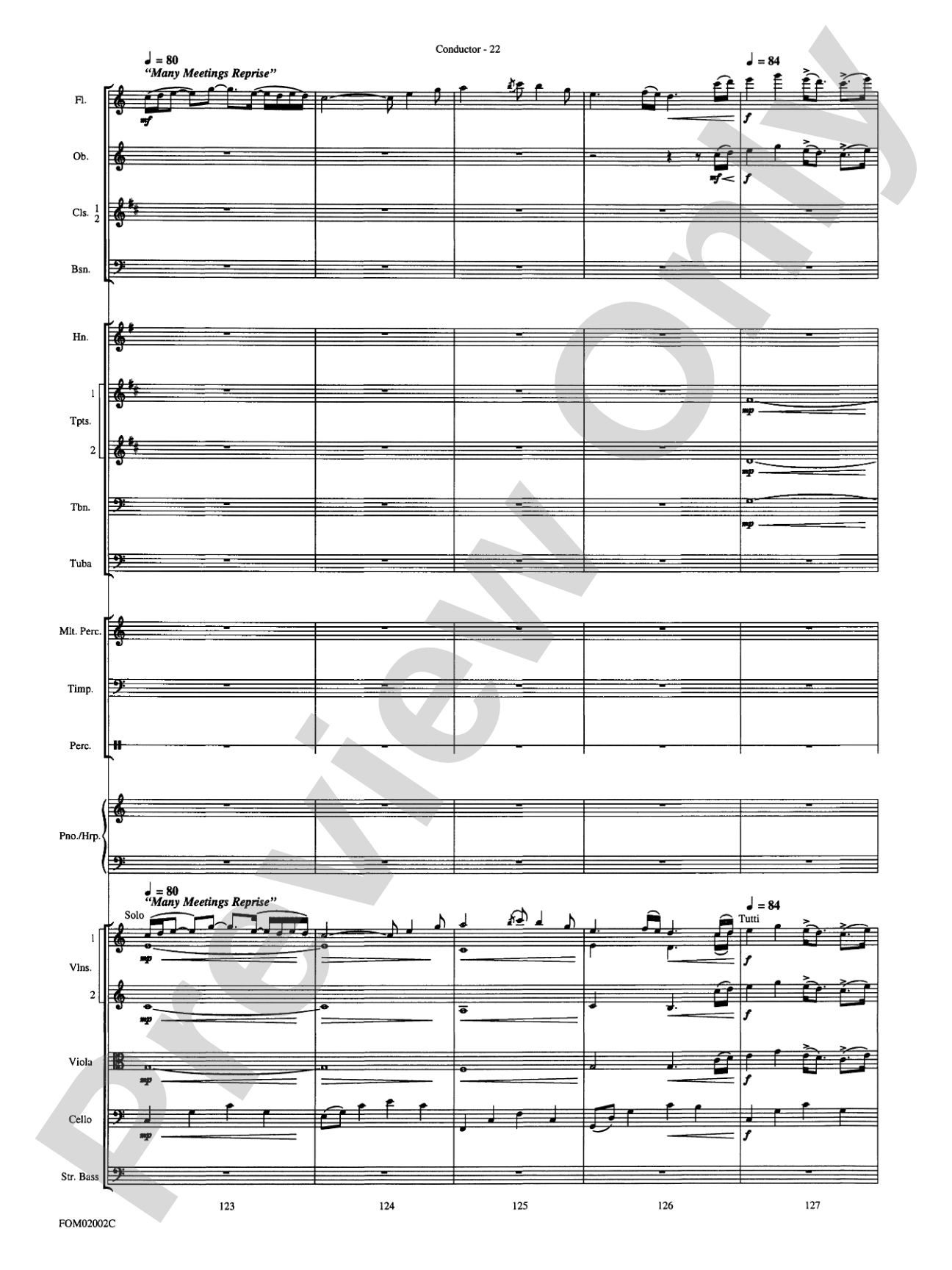
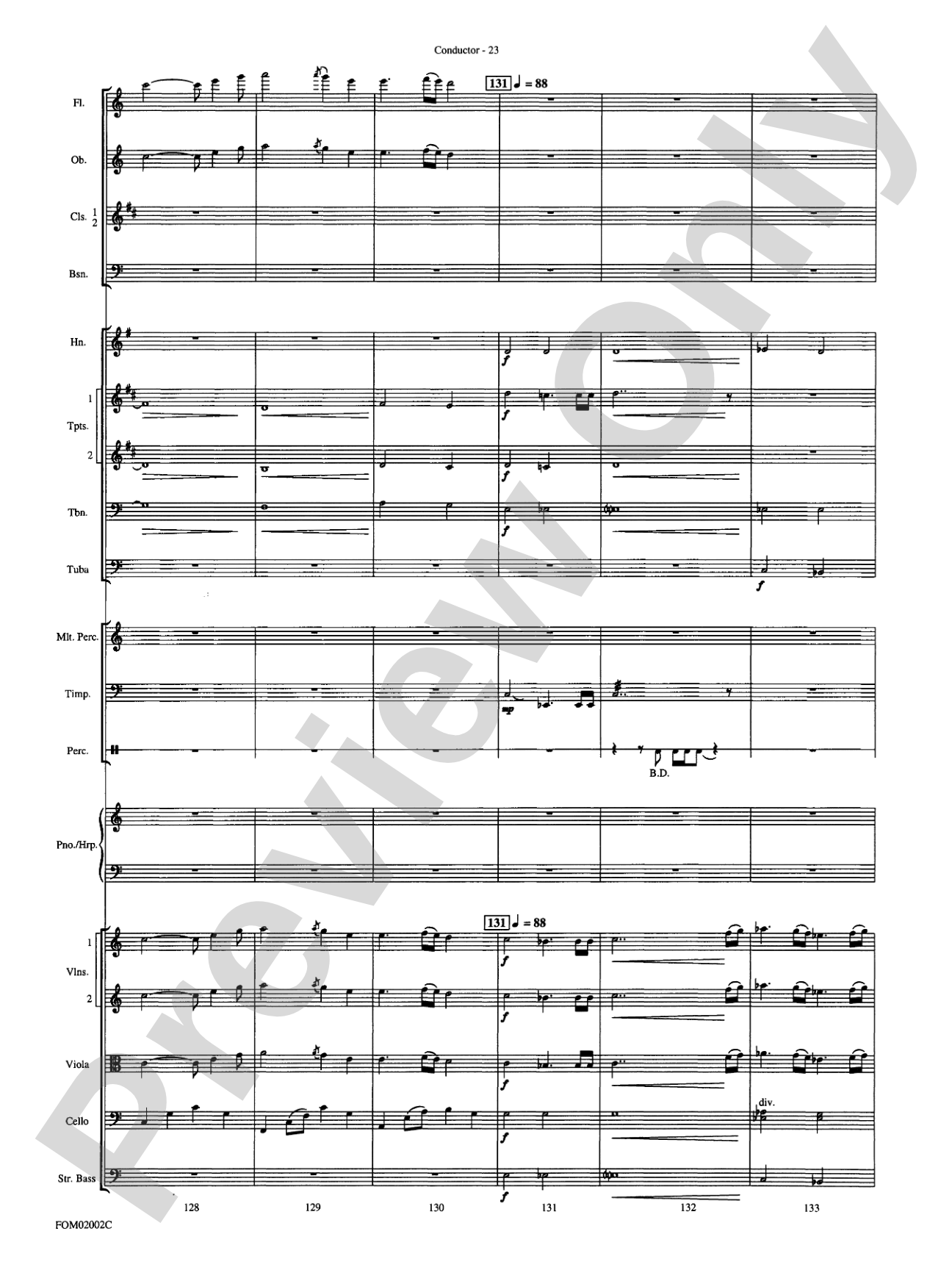
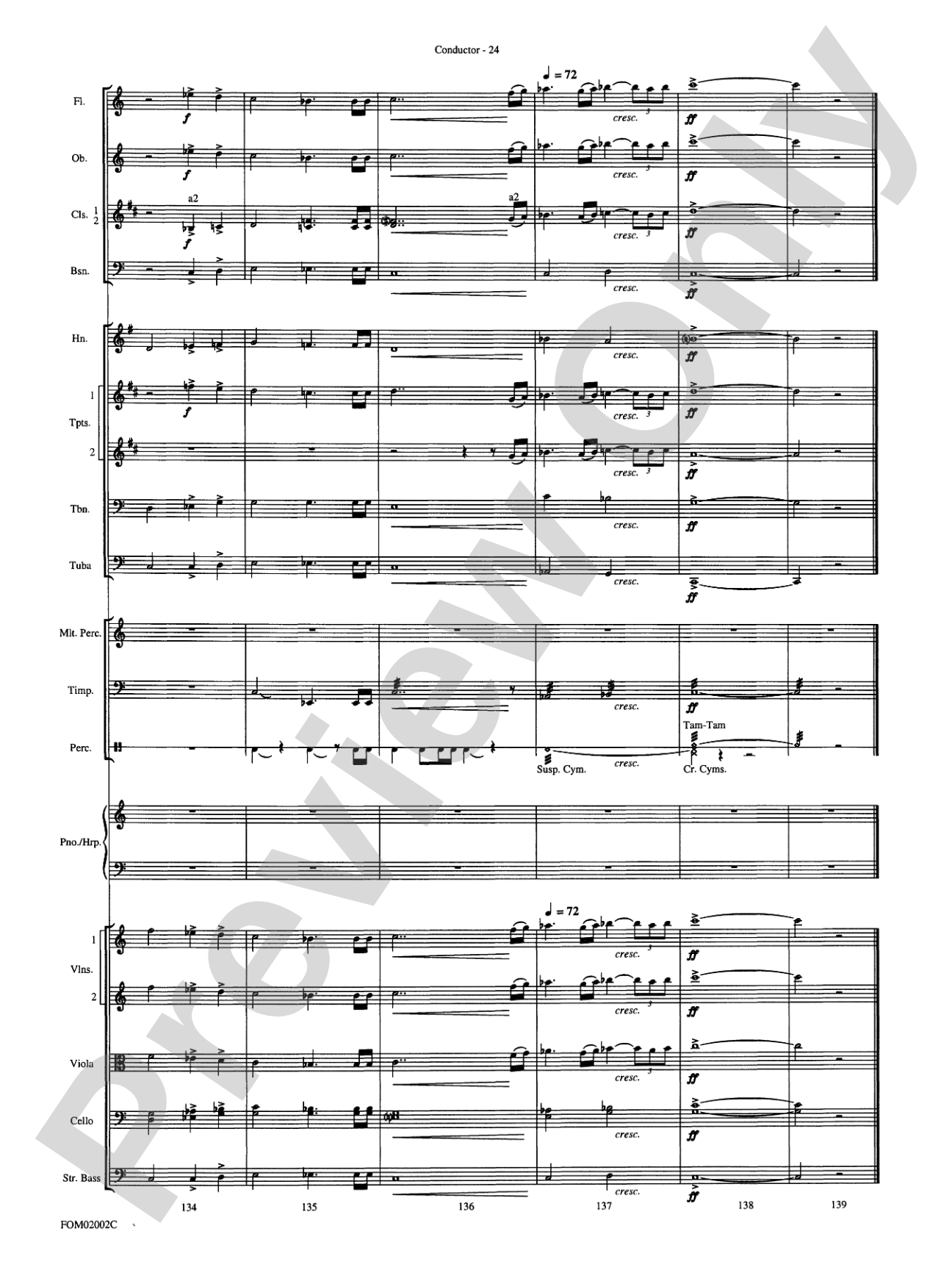



The Lord of the Rings: The Fellowship of the Ring: Full Orchestra Conductor Score & Parts
Music by Howard Shore / arr. Bob Cerulli
Grade: 2.5
Item: 00-PK-0005851

$70.00
Pickup currently not available
Buy Extra Parts (Digital PDF Download)
Parts Added to Cart!
Related Items
The Lord of the Rings: The Fellowship of the Ring: Full Orchestra Conductor Score |
$9.00
|
View |
Description
A wonderful adaptation! Many of the tuneful melodies from the award-winning motion picture have been expertly captured by veteran arranger Bob Cerulli for your intermediate orchestra. Playable by strings with percussion or you can add any combination of winds. Super movie scoring for your intermediate full or string orchestra. (6:30)
For educational usage/non-profit performances only; for professional arrangements, visit our rental library at alfred.com/rental.


For educational usage/non-profit performances only; for professional arrangements, visit our rental library at alfred.com/rental.
Don't just read it, hear it, play along with it, and watch your students grow with it. In MakeMusic Cloud, The Lord of the Rings: The Fellowship of the Ring: Full Orchestra Conductor Score & Parts comes alive with professional accompaniment, adjustable tempo, and built-in practice tools that turn solo practice into real progress.
Open in the Player
Jump straight in and assign it today.
Start Your Free Trial
Open this title and explore the full library in minutes.
Sample Audio
1
Audio File
--:--
0:00
0:00
Sample Video
Additional Details
Series:
Pop Intermediate String/Full Orchestra
Publisher:
Alfred Music
Page Count:
260
SKU:
00-PK-0005851
More about this title
About the Composer: Howard Shore
Howard Shore is an Oscar-winning composer whose film scores have defined modern cinema. His work on the Lord of the Rings trilogy established him as a master of orchestral storytelling, seamlessly blending thematic material with dramatic momentum across extended narrative arcs. Shore's compositional approach prioritizes clear melodic lines and functional harmony, making his music particularly valuable for music education contexts where students benefit from learning how professional composers serve dramatic storytelling.
Why we love this
Bob Cerulli's orchestration maintains the emotional core of Shore's iconic themes while making them genuinely playable by intermediate ensembles. This arrangement respects the source material without oversimplifying; students encounter real film scoring techniques and the satisfaction of performing recognizable, beautifully crafted material that sounds complete at this level.
What to expect
Cinematic grandeur with emotional resonance. Shore's themes unfold with sweep and drama, full of the yearning and adventure that define the source film, yet grounded in transparent orchestration that lets each voice sing.
Who it's for
Intermediate orchestra directors seeking substantial, recognizable repertoire that engages students and audiences alike. This score works for mixed string and full orchestras, making it accessible regardless of wind section strength or availability. It's equally valuable for concert programming or as a centerpiece for a film scoring unit within the music curriculum.
How to get the most out of it
- Balance the melodic voices carefully, especially when strings carry the primary theme; secondary parts support rather than compete for attention.
- Use the flexibility of the optional wind parts strategically. A strings-plus-percussion performance works for intimate settings, while adding winds increases volume and timbral richness for concert halls.
- Shape phrases according to the film's emotional beats rather than mechanical metering. Shore's themes reward subtle rubato and attention to lyrical phrasing.
- Align all sections on the major thematic entries. Conductor and parts must lock the ensemble when themes return, especially across different instrumental families.
How to use it
Program this as a feature piece on a concert celebrating film music and orchestral storytelling, or use it to introduce students to how composers build narrative through music. The 6:30 duration allows flexibility; it can stand alone or anchor a themed concert alongside other fantasy or adventure-scored works.
Skills your students will build
- Reading layered orchestral textures across multiple instrumental families
- Balancing melodic and accompaniment roles within a harmonic framework
- Responding to thematic material and emotional phrasing cues from the conductor
- Playing parts that work within flexible instrumentation (with or without winds)
- Understanding how film scoring uses leitmotif and harmonic stability to serve narrative