
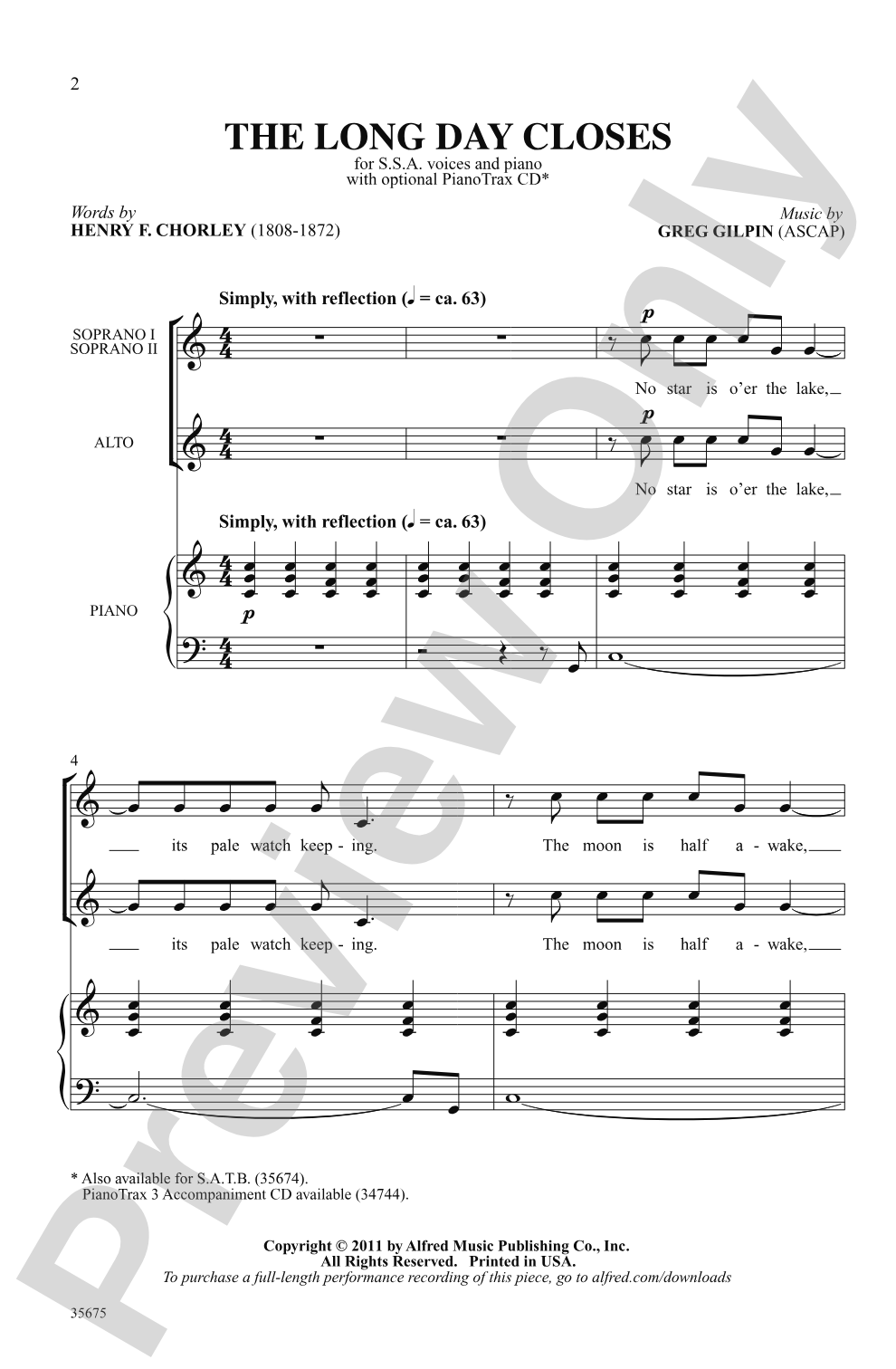

The Long Day Closes: SSA Choral Octavo
Words by Henry F. Chorley, music by Greg Gilpin
Item: 00-PO-0000941
$1.80
Minimum order quantity: 20 copies
Pickup currently not available
Description
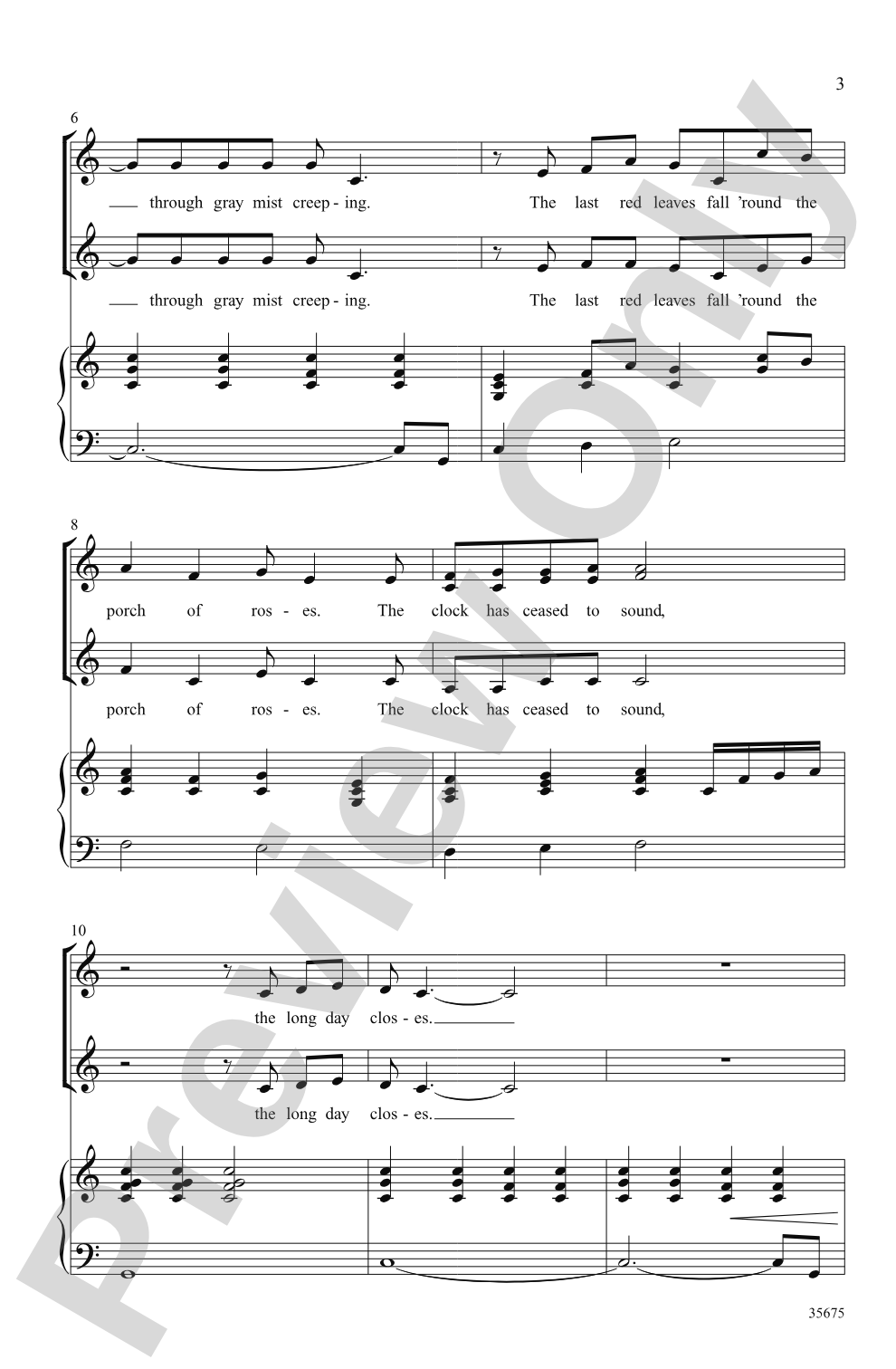
Greg Gilpin has carefully set this touching Victorian era poem in an uncomplicated choral style, allowing us to focus on the deep meaning of the text. Expressive, quality literature for today's choirs. Poignant. Featured on PianoTrax 3 Accompaniment CD (00-34744).


The Long Day Closes: SSA Choral Octavo isn't in MakeMusic Cloud just yet...but it could be. Let us know you'd like to see it, and you'll help shape what comes next. In the meantime, start a free trial and dive into thousands of interactive titles your students can play along with today.
Request This Title
Tell us you want it.
Start Your Free Trial
Explore everything that's ready to play right now.
Sample Audio
1
Audio File
--:--
0:00
0:00
Sample Video
No sample videos found.
Additional Details
Series:
Alfred Choral Designs
Publisher:
Alfred Music
Page Count:
8
SKU:
00-PO-0000941
More about this title
About the Composer: Greg Gilpin

Greg Gilpin has established himself as one of America's most prolific and performed choral composers, with his work heard regularly at prestigious venues including Carnegie Hall, Lincoln Center, and the Sydney Opera House. An ASCAP award-winning composer and conductor, Gilpin serves as Director of Educational Choral Publications for Shawnee Press and maintains active engagement with the choral community through ACDA and other professional organizations.
Beyond the concert hall, Gilpin has expanded his creative reach into film composition and additional professional endeavors. His 2021 score for the award-winning short film "Rosie's Rescue" earned Best Score recognition, and he has collaborated with notable singers on innovative arrangements that bring classical repertoire to new audiences. His versatility and ongoing commitment to music education reflect a career centered on creating meaningful experiences for singers at all levels.
Why we love this
Gilpin resists the urge to complicate this Victorian text with unnecessary musical gestures. His setting sits comfortably for SSA voices and never loses sight of what makes the poem resonate: the quiet contemplation of a day's end and the peace that comes with it. Directors will find the octavo teachable and artistically rewarding, with enough space for singers to inhabit the emotional content without wrestling with technical obstacles.
What to expect
The music unfolds with quiet dignity, offering singers a moment of stillness. There's an unhurried quality that allows words like "close" and "rest" to settle into the listener's ear, and the harmonic language feels both familiar and gently touched by something beyond the everyday.
Who it's for
This octavo works beautifully for treble choirs at the high school and community level, particularly those drawn to literature with textual substance and emotional depth. It suits directors seeking accessible yet artistically meaningful selections that don't require extensive rehearsal time to sound polished and unified.
How to get the most out of it
- Shape the phrases according to the text's punctuation and sense rather than melodic contour alone; let the words guide your breath and phrasing decisions.
- Explore dynamic contrast between sections to highlight the journey from day to rest; even modest shifts in volume can clarify the arc.
- Balance the inner voices with care; supporting harmonies should enhance rather than overshadow the primary melodic line.
- Pair this with the PianoTrax 3 accompaniment recording to hear how Gilpin envisions the harmonic foundation and to establish tempo and mood.
How to use it
Position this as a reflective contrast in a concert program that otherwise leans toward faster, brighter material. It pairs naturally with other Romantic-era texts or with contemporary settings that explore themes of peace and introspection. Consider it equally for a spring concert finale or as part of a program exploring poetry in music.
Skills your students will build
- Phrasing tied to text meaning rather than purely melodic shapes
- Singing with emotional restraint and nuance in a slower tempo
- Balancing part-independence with ensemble blend in SSA voicing
- Interpreting and sustaining harmonic colors across phrase lines