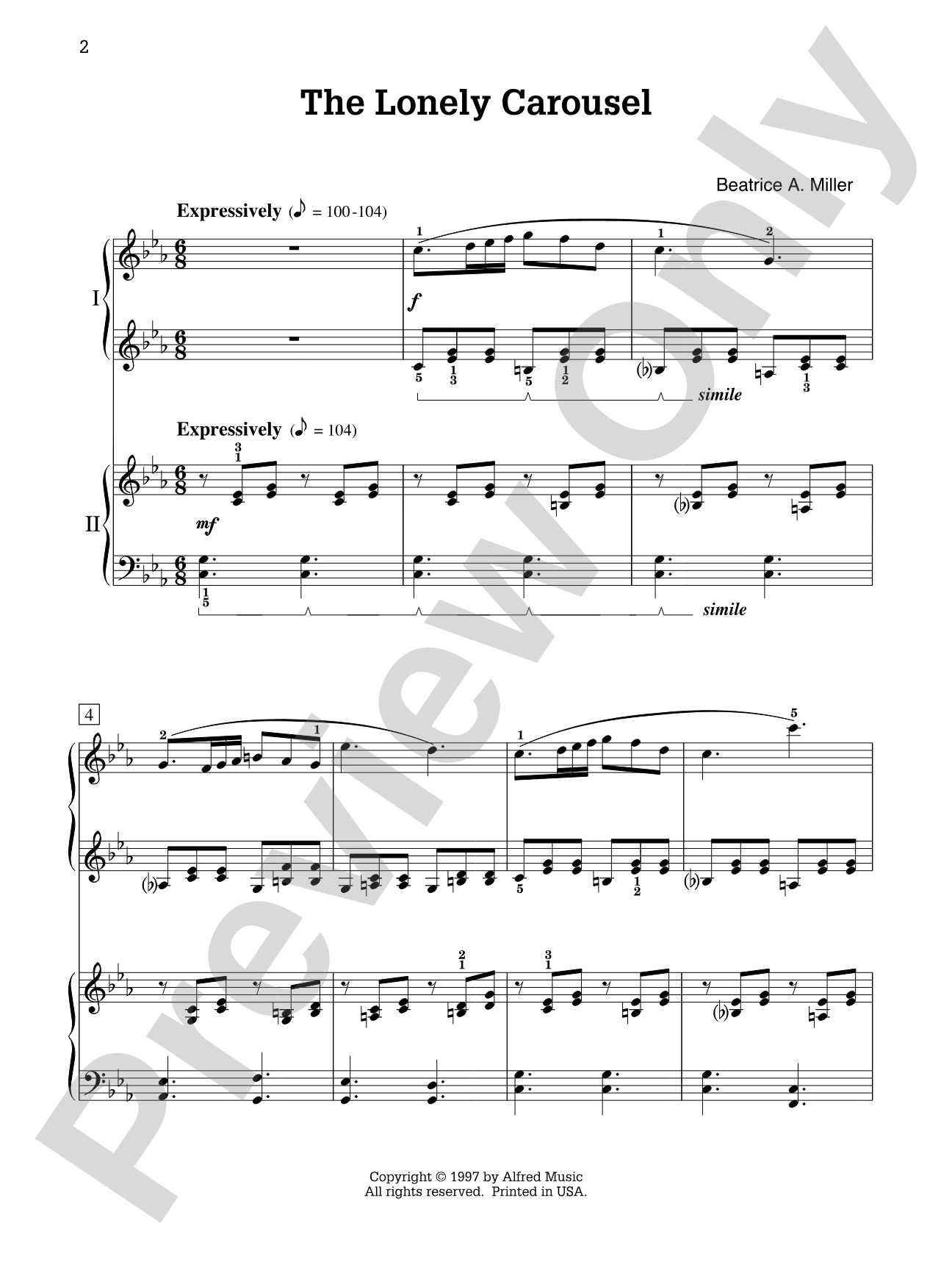
The Lonely Carousel - Piano Duo (2 Pianos, 4 Hands) Sheet Music Preview

The Lonely Carousel - Piano Duo (2 Pianos, 4 Hands): Piano Duets & Four Hands

By Beatrice A. Miller

Level: Intermediate

Item: 00-PB-0000803

Digital Download
$3.95
Description
Part II of this piece for intermediate two pianos, four hands ensemble plays the circus-like accompaniment in 6/8 meter while Part I plays the melody. This expressive four-page piece is in the key of C minor, portraying solitude in the midst of a festive atmosphere. Two copies are included. A Federation Festivals 2024-2028 selection.

The Lonely Carousel - Piano Duo (2 Pianos, 4 Hands): Piano Duets & Four Hands isn't in MakeMusic Cloud just yet...but it could be. Let us know you'd like to see it, and you'll help shape what comes next. In the meantime, start a free trial and dive into thousands of interactive titles your students can play along with today.

Sample Audio
No sample audio found.
Sample Video
Additional Details
Publisher: Alfred Music
Page Count: 4
SKU: 00-PB-0000803

More about this title

About the Composer: Beatrice A. Miller

Beatrice A. Miller

Beatrice A. Miller grew up in Detroit, Michigan, in a musical household shaped by her father's work as a Lutheran pastor, choir director, and accomplished musician. Church hymns formed the foundation of her musical identity from infancy; family lore recalls her responding to evening devotions with baby sounds that echoed the cadence of the hymns her reluctant brothers were singing, eventually sparking their enthusiasm for music.

Miller earned her Master's degree in music composition from Northwestern University and spent decades teaching piano, directing choirs, and serving as a church organist in Corvallis, Oregon before retiring from instruction in 1979. Her compositional career began in earnest after retirement, with her first publications arriving in 1987. The Oregon Music Teacher's Association recognized her as Composer of the Year in 1997.

Why we love this

Miller captures something genuinely affecting here: the contrast between solitude and spectacle comes through in the writing, not as obvious program music but as an emotional texture that intermediate pianists can actually feel while playing. The 6/8 rhythm in Part II creates genuine motion and energy without requiring virtuosic technique, making it rewarding for students who are still building their ensemble skills.

What to expect

Wistful and rhythmically alive at once. The steady 6/8 pulse carries a sense of forward motion and carnival brightness, but C minor and the expressive melody create an undercurrent of quiet reflection. The piece creates the feeling of watching celebration from a slight distance.

Who it's for

Intermediate piano students who play as a duo or in a piano ensemble program, and teachers preparing students for festival performances. This piece works equally well for two pianists at similar levels sharing one bench or two pianists at separate instruments.

How to get the most out of it

  • Rehearse the two parts separately first, then layer them gradually. Part II's circus-like accompaniment establishes the harmonic and metric foundation, so the second piano should feel secure before Part I enters.
  • Balance the melody in Part I so it sings above the rhythmic motion of Part II without either pianist forcing. The emotional weight of the piece depends on hearing both layers as equally important.
  • Use the key of C minor to set mood. Shape phrases with gentle dynamic waves rather than dramatic peaks; the "solitude in festivity" concept reads more clearly through subtle coloring than through contrast.

How to use it

Program this as a substantial intermediate offering on a spring recital or festival concert, where it stands well alongside lighter four-hands pieces or as a bridge between early intermediate and late intermediate repertoire. Its selection as a Federation Festivals 2024-2028 piece makes it ideal for students preparing for competitive festival play.

Skills your students will build

  • Ensemble balance and listening between two pianos
  • Reading and maintaining 6/8 meter with independent rhythmic responsibility
  • Shaping melody and accompaniment with contrasting expressive intent in the same key
  • Coordination across four hands sharing pianistic texture without collision
  • Maintaining emotional coherence across a four-page form

You May Also Like