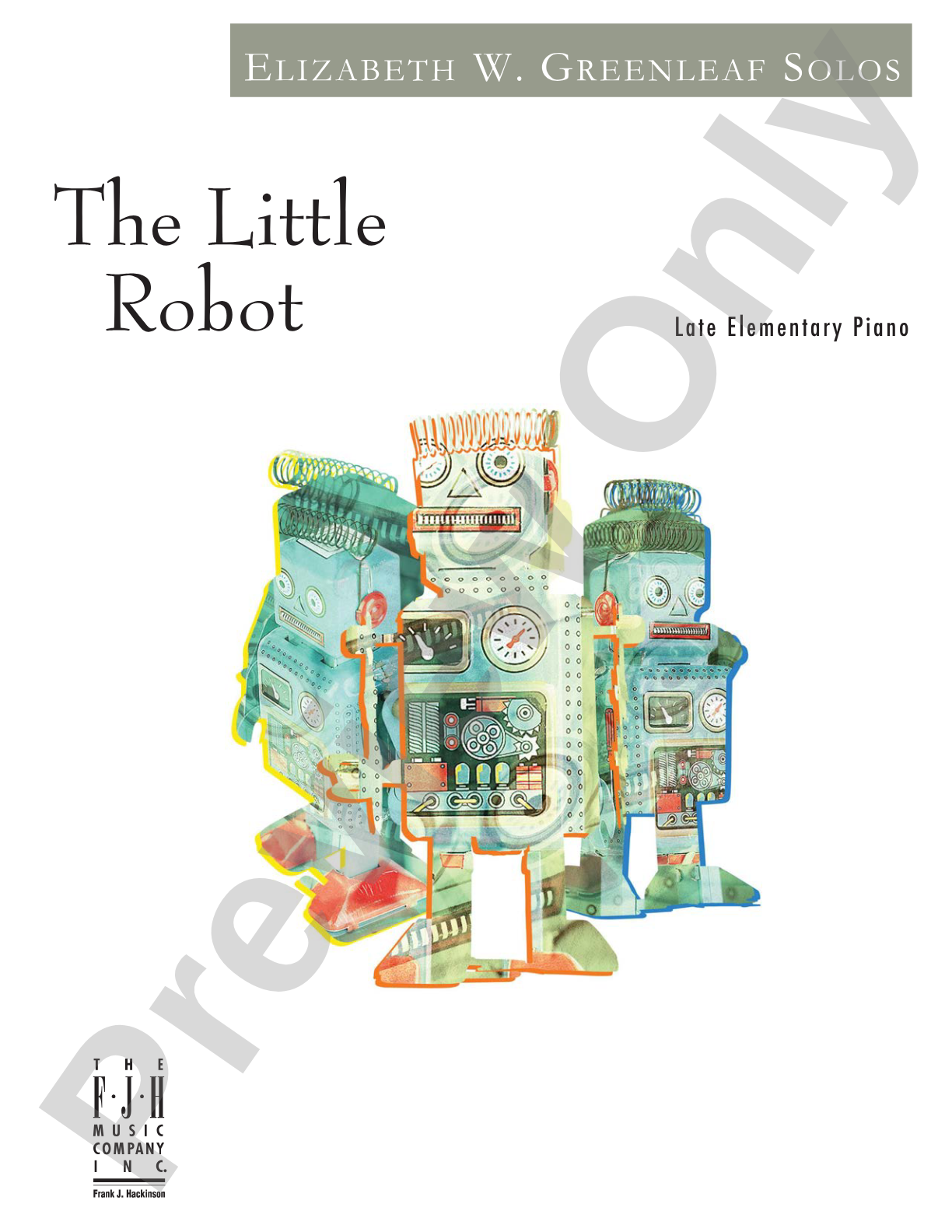
This fun late elementary piece utilizes staccatos in both hands. RH plays root position chords and intervals of up to 7ths, with the ending passage consisting of a C major descending scale. Your students will enjoy imagining the antics of this little robot.
Discover MakeMusic Cloud: thousands of interactive titles your students can play along with today.
Greenleaf writes with a clear understanding of what late elementary pianists can execute musically, not just technically. The staccato writing feels purposeful rather than decorative, and the robot narrative gives students a concrete image to animate their playing rather than just notes on a page.
What to expect
Quirky and mechanical, with quick bounces and precise articulation that mimic the jerky movements of a toy robot coming to life. The harmonic simplicity and scale passage provide moments of fluidity and release amid the more rigid rhythmic figures, creating a charming dynamic between motion and stillness.
Who it's for
Late elementary pianists who are comfortable with root position chords and can manage staccato articulation in both hands at a moderate tempo. Students ready to connect technique to character will thrive with this piece's narrative element.
How to get the most out of it
Establish a steady pulse before adding staccatos; the rhythmic precision of the articulation matters more than speed. A metronome helps pianists hear the mechanical quality without rushing.
Shape the staccatos with dynamic intention. Light, bouncy staccatos in the opening feel playful; heavier ones later can suggest the robot getting tired or moving differently.
Practice hands separately first, since both hands use staccato simultaneously. This builds independence and lets each hand settle into its own articulation before combining.
Treat the C major descending scale at the end as a moment of clarity or resolution. Decide whether the robot is winding down, escaping, or simply coming to rest, then let that inform your tempo and tone.
How to use it
This works well as a novelty opener for a student recital or informal performance, where its humor and character won't seem out of place. It also pairs nicely on a mixed program with other tone poem or character pieces, offering a lighter moment between more serious works.
Skills your students will build
Staccato articulation in both hands simultaneously
Root position chord recognition and execution
Interval reading (up to 7ths)
C major descending scale fluency
Character-driven interpretation and rhythmic precision
You May Also Like
Scan to Complete Your Purchase
Use your phone's camera to scan the code below
You'll log in on your phone and the order will be added to your account