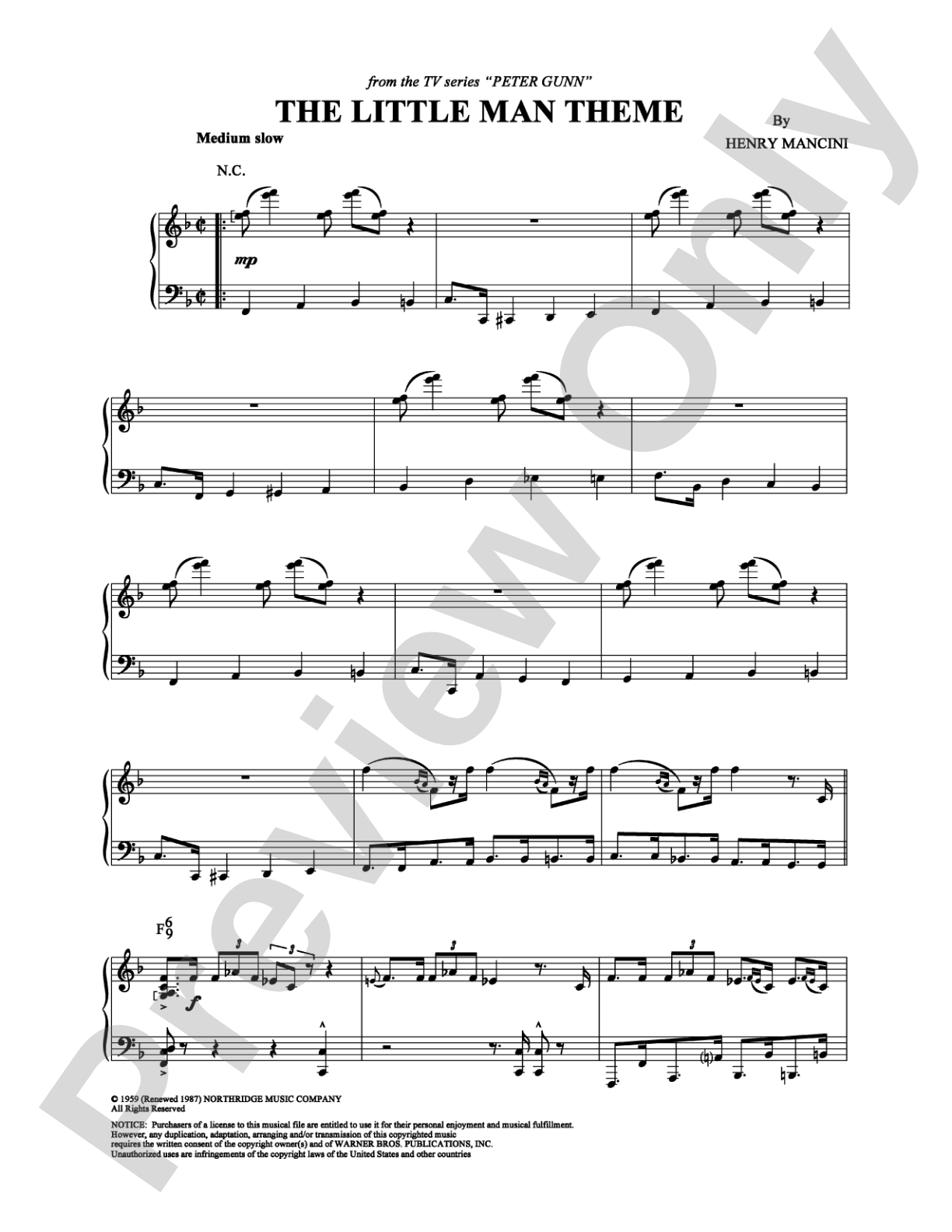
The Little Man Theme: Piano Digital Sheet Music

The Little Man Theme: Piano Digital Sheet Music

Henry Mancini

Item: 00-PS-0007521

Digital Download
$2.95
Description

The Little Man Theme: Piano Digital Sheet Music isn't in MakeMusic Cloud just yet...but it could be. Let us know you'd like to see it, and you'll help shape what comes next. In the meantime, start a free trial and dive into thousands of interactive titles your students can play along with today.

Sample Audio
No sample audio found.
Sample Video
Additional Details
SKU: 00-PS-0007521

More about this title

About the Artist: Henry Mancini

Henry Mancini (1924-1994) shaped American film music through a career spanning four decades. His gift for melody and orchestration made him one of the most recorded composers in history, with work across comedy, drama, and detective films that influenced generations of composers and arrangers.

Why we love this

Mancini's gift for crafting instantly recognizable melodies shines through in this theme, and having it arranged for solo piano makes it an ideal bridge between film music and concert repertoire. Students immediately connect with the tune because they've likely heard it, yet playing it reveals the sophistication underneath, smart voice leading, elegant harmonic choices, and a clear understanding of what makes a melody sing on the keyboard. It's the kind of piece that reminds young musicians that great film composers are serious musicians.

What to expect

A sprightly, witty tune that dances along with an almost conspiratorial charm. There's humor in the harmonic movement and a sketch-like quality that lets the performer show personality without technical display.

Who it's for

Pianists seeking character pieces with strong melodic appeal and a professional pedigree. This works well for intermediate to advanced students building recital programs that balance classical repertoire with accessible twentieth century material.

How to get the most out of it

  • Bring clarity to the melody by voicing it slightly ahead of the accompaniment; Mancini wrote these themes to sit on top, not blend into the harmony.
  • Observe the score's dynamic markings closely. Film themes live or die by their ability to shift character with modest changes in volume and articulation.
  • Shape the phrasing in two or four bar units rather than treating the entire line as one continuous breath; this creates forward momentum without rushing.
  • Let the accompaniment sit back rhythmically. The theme's appeal depends on it feeling light and almost conversational against a steady harmonic foundation.

How to use it

Pair this with other twentieth century light music (Gershwin, Rodgers, or Bernstein arrangements) for a recital section exploring American song traditions. It also makes an engaging encore after more substantial classical or contemporary works.

Skills your students will build

  • Balancing melody and accompaniment texture
  • Interpreting film-based character writing
  • Executing dance-like rhythmic phrasing
  • Voicing jazz-influenced harmonies at the keyboard

You May Also Like