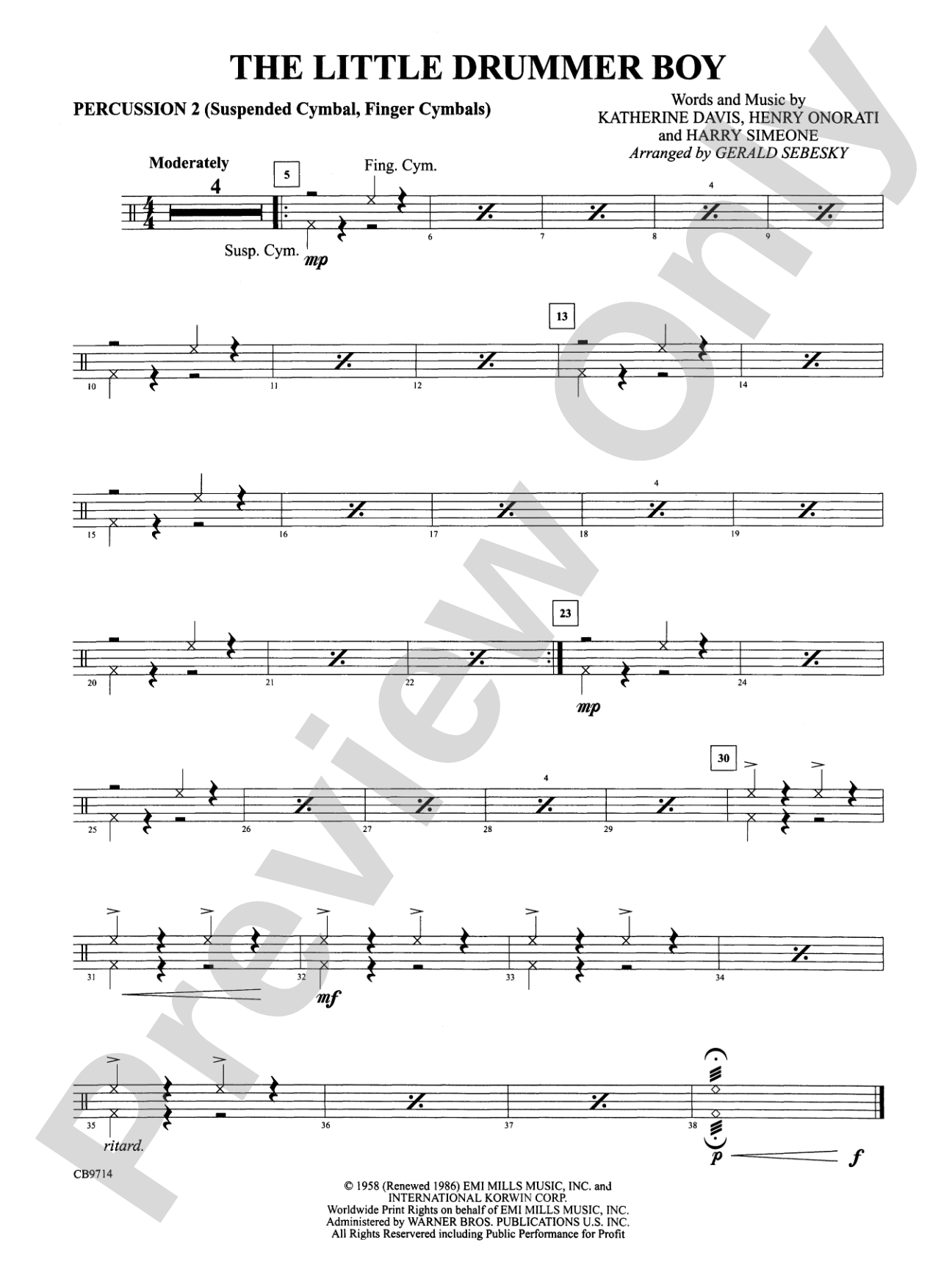
The Little Drummer Boy: 2nd Percussion Sheet Music Preview

The Little Drummer Boy: 2nd Percussion

By Katherine K. Davis, Henry Onorati, and Harry Simeone / arr. Gerald Sebesky

Grade: 1 (Very Easy)

Item: 00-PC-0014696_PC2

Digital Download
$3.00
Description
This song of the holiday season has become so much a part of that tradition that many people believe it to be a melody handed down through the ages. We hear it wherever we travel, and it typifies the atmosphere that surrounds us all during that festive time. For the youngest ensemble, this new and very simple scoring is perfect programming material. (2:06)

Don't just read it, hear it, play along with it, and watch your students grow with it. In MakeMusic Cloud, The Little Drummer Boy: 2nd Percussion comes alive with professional accompaniment, adjustable tempo, and built-in practice tools that turn solo practice into real progress.

Sample Audio
No sample audio found.
Sample Video
Additional Details
Series: Pop Beginning Band
Publisher: Alfred Music
Page Count: 104
SKU: 00-PC-0014696_PC2

More about this title

About the Composer: Katherine K. Davis

Katherine K. Davis (1892-1980) was an American composer and organist whose gift for melody made her a fixture in sacred and seasonal music. She composed "The Little Drummer Boy" in 1941, and the piece has since become one of the most recorded Christmas songs in history, performed by artists across every genre imaginable.

Davis's compositional voice was direct and singable. She understood how to craft melodies that lodge themselves in memory, and her work for voices and small ensembles shaped the sound of mid-century American church music and holiday tradition.

Why we love this

Grade 1 band programs rarely get repertoire this culturally significant. Sebesky's arrangement respects the melody's beauty while keeping the instrumentation and rhythmic demands genuinely accessible, so your youngest players get to own a piece that audiences actually know and love. The straightforward scoring means even developing musicians can execute the tune cleanly, leaving room for ensemble blend instead of fight.

What to expect

The piece carries the reverent simplicity of a lullaby. There's an almost medieval quality to the tune itself, which explains why so many people assume it's ancient, paired here with warm, uncluttered accompaniment that creates space for the melody to breathe. The overall effect is gentle and contemplative rather than bombastic or celebratory.

Who it's for

This arrangement serves bands at their earliest stage of development. Grade 1 players with limited technical facility will find parts that sit comfortably in their range and use rhythmic patterns they've already learned. Directors programming their youngest ensembles will appreciate material that requires no specialized technique yet still delivers a recognizable, emotionally resonant performance.

How to get the most out of it

  • Shape the melody with gentle dynamic contours rather than playing it at one volume; the tune invites a cradle-like quality that lifts it above accompaniment figuration.
  • Balance the percussion parts carefully so they mark the gentle heartbeat without dominating the band's sound; the rhythm section should feel supportive, not prominent.
  • Allow the rubato that the melody requests without losing cohesion; slight breath points and phrase bends will make the tune sing rather than march.

How to use it

Program this early in your winter concert to establish an intimate, reflective tone before moving into livelier seasonal fare. It also works beautifully as a prelude to a longer program, giving your youngest players a meaningful contribution while the rest of the ensemble prepares. The familiar melody invites audience connection immediately, making it an excellent opener for community or school holiday performances.

Skills your students will build

  • Sustaining long tones with consistent tone quality
  • Reading and executing simple rhythmic patterns in cut time
  • Balancing individual parts within a harmonic texture
  • Responding to dynamic and expressive shaping
  • Blending across the band in a non-march style

You May Also Like