The Little Drummer Boy: 2nd Percussion Sheet Music Preview

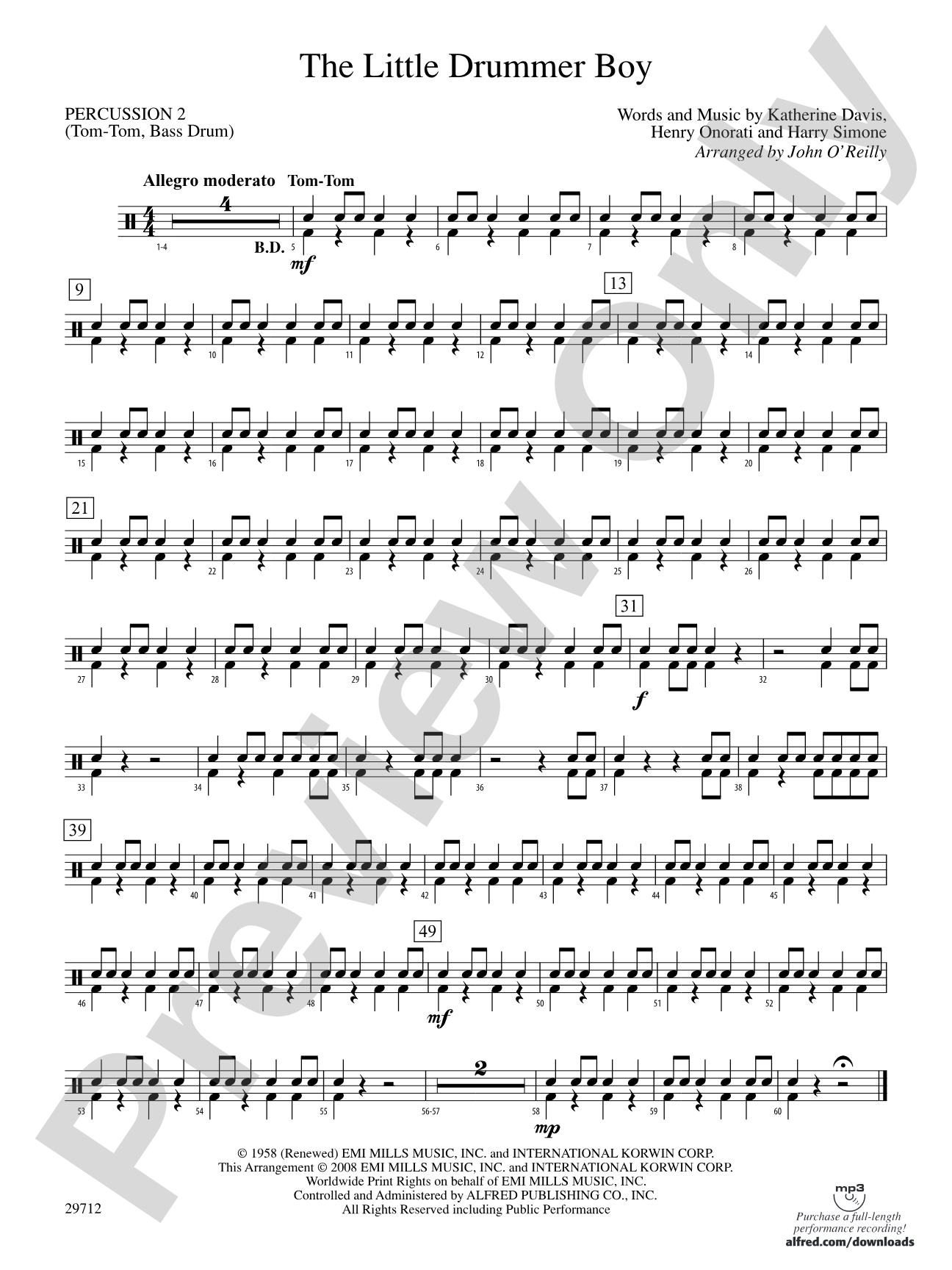
The Little Drummer Boy: 2nd Percussion

By Katherine K. Davis, Henry Onorati, and Harry Simeone / arr. John O'Reilly

Grade: 1.5

Item: 00-PC-0001566_PC2

Digital Download
$5.99
Description
A very special arrangement of the classic Christmas hit that will delight your beginners! Sleigh bells, triangle and tom-tom establish the processional style that is further enhanced by cello and bass open fifths. The upper strings get the first pass at playing this famous melody but all sections are featured as this delightful arrangement progresses. This title is available in MakeMusic Cloud.

Don't just read it, hear it, play along with it, and watch your students grow with it. In MakeMusic Cloud, The Little Drummer Boy: 2nd Percussion comes alive with professional accompaniment, adjustable tempo, and built-in practice tools that turn solo practice into real progress.

Sample Audio
0:00
0:00
Sample Video
Additional Details
Series: Highland/Etling Strictly Strings
Publisher: Alfred Music
Page Count: 80
SKU: 00-PC-0001566_PC2

More about this title

About the Composer: Katherine K. Davis

Katherine K. Davis (1892-1980) composed "The Little Drummer Boy" with Henry Onorati and Harry Simeone, creating one of the most recognizable Christmas melodies of the 20th century. Her gift for writing accessible, emotionally direct music made her work a staple in school and church settings for decades.

Davis understood what young musicians needed: music that was singable, memorable, and satisfying to perform. Her compositions appear regularly in educational repertoire because they balance melodic beauty with practical limitations, never talking down to students while respecting the constraints of developing ensembles.

Why we love this

John O'Reilly's arrangement captures the processional magic of the original while giving every section something to do. The instrumentation of sleigh bells, triangle, and tom-tom transforms the melody into an event rather than just a song, and the open fifths in cellos and basses ground the arrangement with genuine harmonic interest at Grade 1.5. Young musicians feel like they're playing something real and textured, not simplified.

What to expect

Reverent yet warm, with the quiet procession of a children's carol given texture and movement through careful orchestration. The sleigh bells and percussion evoke a gentle medieval scene while the string writing feels both intimate and festive, never maudlin.

Who it's for

String orchestras at the Grade 1.5 level, including school orchestras with developing players and community youth ensembles. This arrangement works equally well for holiday concerts, winter programs, or community performances where accessibility and clear audience appeal matter.

How to get the most out of it

  • Balance the tom-tom and triangle carefully during the opening processional sections. Young percussionists tend toward heaviness; encourage a light, almost delicate touch so these colors enhance rather than overpower the strings.
  • Bring out the cello and bass open fifths as a foundation layer. They anchor the harmonic language and give the arrangement its processional weight. Tune these intervals carefully in rehearsal.
  • When the melody passes between upper strings and the rest of the ensemble, use dynamic shaping to clarify the handoff. A subtle swell leading into the phrase helps audiences follow the story.
  • Reserve full ensemble dynamics for the final statements of the melody. The arrangement gains impact through gradual accumulation, so resist the urge to go forte too early.

How to use it

Program this as a centerpiece of a winter concert, where its Grade 1.5 accessibility signals confidence in your ensemble's musicianship without overreaching. It pairs well with other seasonal works at similar levels and gives audiences the familiar melody they're hoping to hear while showcasing your orchestra's growth.

Skills your students will build

  • Balancing multiple melodic lines while supporting the primary melody
  • Playing open fifths in tune and with consistent tone quality
  • Responding to dynamic and textural shifts between sections
  • Coordinating with percussion in a rhythmically driven arrangement
  • Sustaining phrasing across sectional entrances and handoffs

You May Also Like