The Little Drummer Boy: 1st B-flat Trumpet Sheet Music Preview

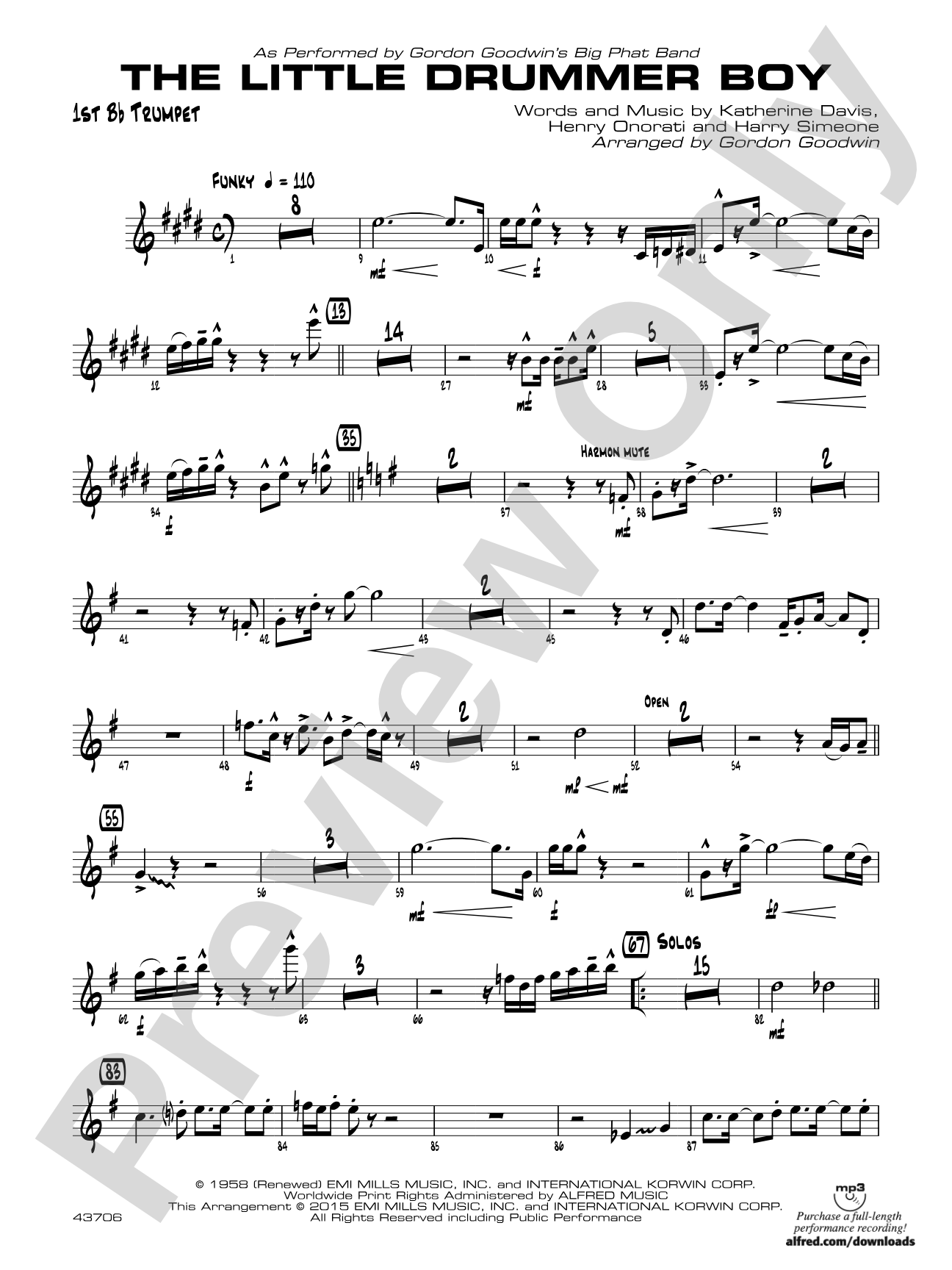
The Little Drummer Boy: 1st B-flat Trumpet

As Performed by Gordon Goodwin's Big Phat Band

Words and music by Katherine Davis, Henry Onorati, and Harry Simeone / arr. Gordon Goodwin

Grade: 6 (Professional / Very Advanced)

Item: 00-PC-0016834_T1

Digital Download
$3.00
Description
Introducing a slow, funky version of "Little Drummer Boy" that's very clever with the initial melody line played by bass trombone and bari sax. The tempo is 110 BPM, the chart has a soprano sax lead, and solo space for all saxes, trumpet 4, and trombones 1 and 2. The lead trumpet range is up to high A-flat. A very cool Gordon Goodwin chart! (2:28)

Don't just read it, hear it, play along with it, and watch your students grow with it. In MakeMusic Cloud, The Little Drummer Boy: 1st B-flat Trumpet comes alive with professional accompaniment, adjustable tempo, and built-in practice tools that turn solo practice into real progress.

Sample Audio
0:00
0:00
Sample Video
Additional Details
Series: Gordon Goodwin Series
Publisher: Alfred Music
Page Count: 78
SKU: 00-PC-0016834_T1

More about this title

About the Composer: Katherine Davis

Katherine Davis composed "The Little Drummer Boy" in 1941, creating one of the most enduring Christmas standards in American music. Her gift for melody and emotional clarity made the song an instant classic, recorded countless times across genres and generations. Davis balanced accessibility with genuine musicality, qualities that have made her work a staple in music education and holiday programming for over eight decades.

Why we love this

Gordon Goodwin's arrangement strips away sentimentality and reimagines the carol as a confident, groove-centered jazz vehicle. The clever choice to open with bass trombone and baritone sax signals immediately that this is no traditional take, and the range of solo opportunities across the saxophone and trombone sections gives players at this level a genuine showcase moment within a professional-quality arrangement.

What to expect

Relaxed and sly, like watching someone wink while nailing a joke. The funky groove undercuts the carol's traditional reverence without dismissing it, and the arrangement swings with enough modern sophistication to hold adult listeners while remaining unmistakably rooted in the original melody.

Who it's for

Jazz ensemble directors seeking repertoire that respects their players' abilities while delivering immediate audience appeal. This arrangement suits ensembles with strong section leaders, capable soloists, and enough maturity to execute Goodwin's syncopated rhythms with precision and style.

How to get the most out of it

  • Center the ensemble's sound around the laid-back 110 BPM pulse. Goodwin's funkiness depends on pocket playing, not rushing. Lock the rhythm section first, then layer in the horns.
  • Balance the soprano sax lead carefully against the ensemble. At this grade level, soloists often play too loudly. The lead should sit inside the harmonies, not on top of them.
  • Give soloists clarity on their allotted space before rehearsal. Mark exactly where trumpet 4, the four saxophones, and trombones 1 and 2 take their turns so everyone knows their moment and can prepare meaningfully.
  • Watch the lead trumpet's high A-flat passage for intonation and endurance. Build it in sectionals, and confirm the player can sustain it without fatigue before the full ensemble run-through.

How to use it

Pair this with a traditional carol arrangement earlier in the same concert to show the range of interpretive possibilities within jazz tradition. The 2:28 duration and clear structure make it ideal for mid-program placement, where it can reset audience energy before moving into deeper repertoire or as a memorable closer for a winter concert.

Skills your students will build

  • Soloing over a groove and navigating changes within an ensemble context
  • Reading and executing syncopated rhythms that blur jazz and funk vocabularies
  • Balancing individual voice with collective sound in a small-group setting
  • Negotiating high register demands (trumpet) while maintaining tonal control and intonation

You May Also Like