

The Lights of Diwali: 2-Part Choral Octavo
Words and music by Lois Brownsey and Marti Lunn Lantz
Item: 00-PO-0007203
$2.30
Minimum order quantity: 20 copies
Pickup currently not available
Description
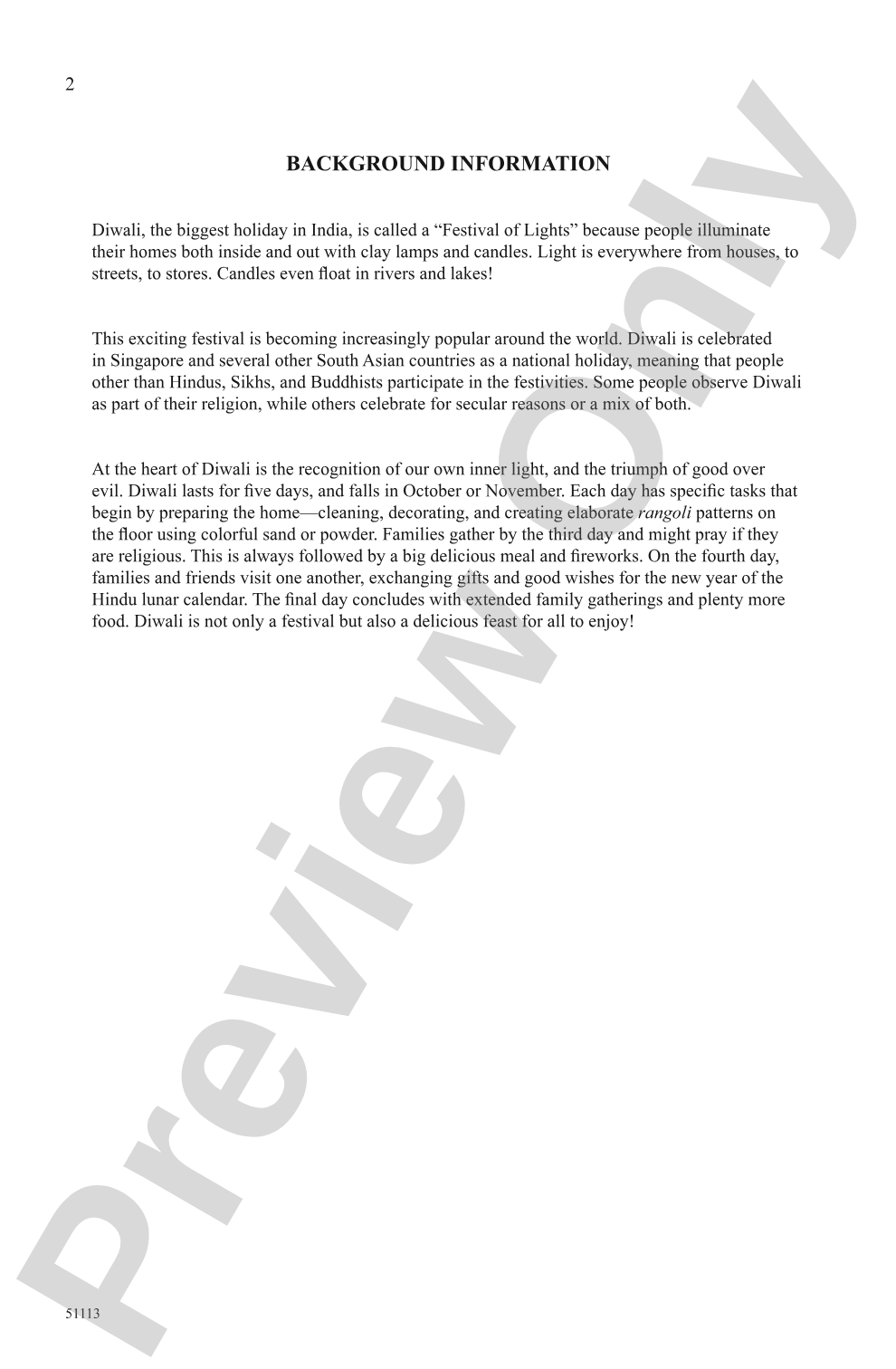
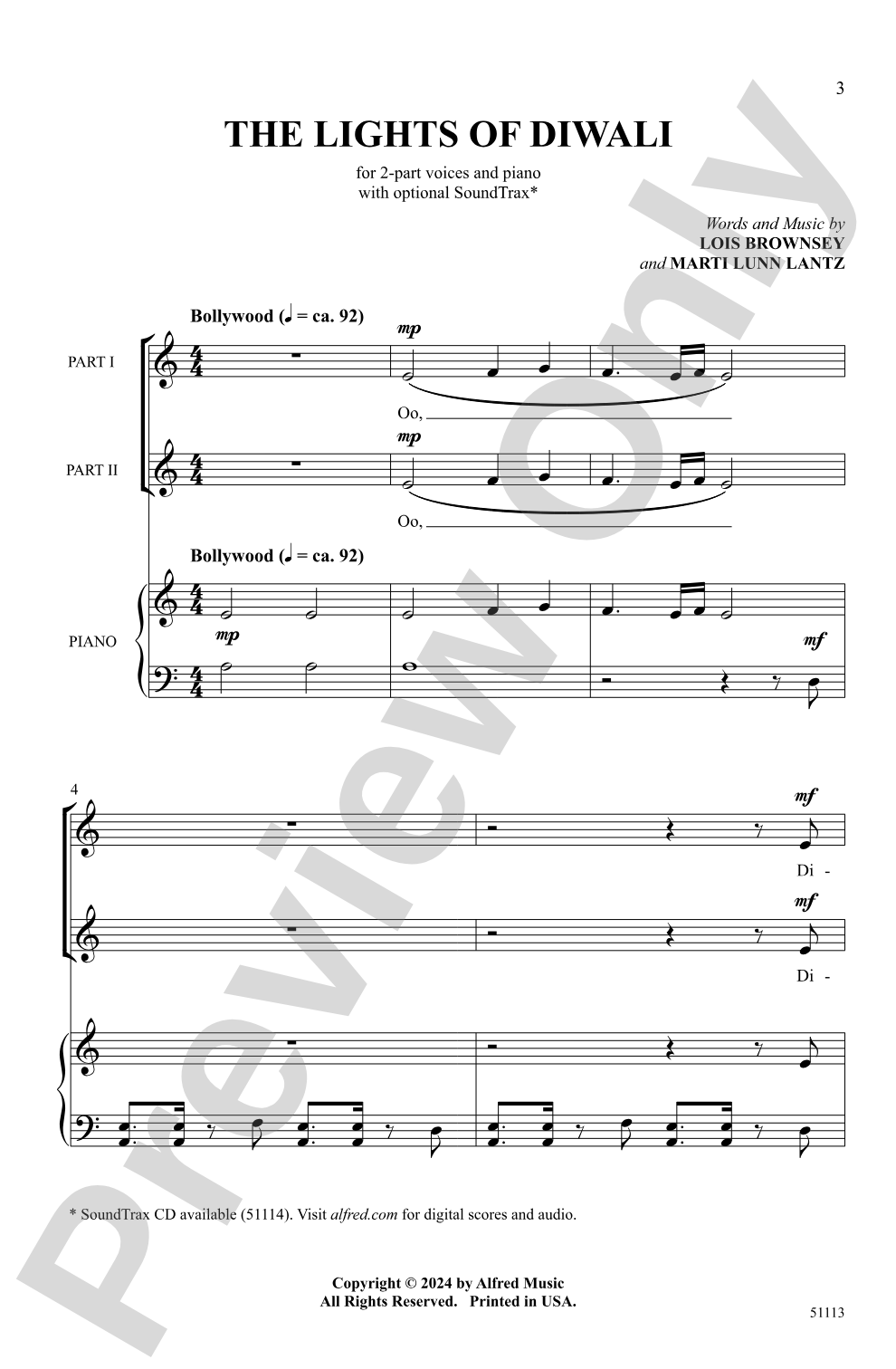
India's annual festival of lights is becoming increasingly popular around the world. This Bollywood-style original details various traditions associated with the celebration, including the food, fireworks, and colorful rangoli patterns made of sand. Plenty of unison phrases and simple call-and-response make it a joy to learn and perform. A great way to represent the diversity of your community!


Discover MakeMusic Cloud: thousands of interactive titles your students can play along with today.
Sample Audio
1
Audio File
--:--
0:00
0:00
Sample Video
Additional Details
Series:
Alfred Choral Designs
Publisher:
Alfred Music
Page Count:
12
SKU:
00-PO-0007203
More about this title
About the Composer: Lois Brownsey

Lois Brownsey studied music at Temple University in Philadelphia and trained at the Guitar Workshop while performing in musical theatre. Her collaborative partnership with Marti Lunn Lantz spans decades and has produced numerous choral works for Alfred, ranging from seasonal pieces to multicultural celebrations. Beyond choral composition, Brownsey has lent her voice and instrumental skills to commercial work, writing jingles for major corporations, and performed professionally across multiple genres including pop, rock, and blues both domestically and internationally until 1997.
Brownsey and Lantz have become known for their ability to weave cultural traditions and natural imagery into accessible choral literature, with published collections including Celebrations around the World and The Wonders of the Earth. She has also collaborated with Sally K. Albrecht on Hanukkah-themed works. Today, Brownsey resides in the Pocono Mountains of Pennsylvania, where she remains engaged in her community's political and arts life. Together with her husband Kent Heckman, a recording engineer, she operates Red Rock Recording Studios, which has hosted the production of many Alfred choral projects.
Why we love this
The writing balances cultural authenticity with genuine singability, using unison sections and call-and-response patterns that let singers absorb the material quickly while maintaining musical interest. This piece arrives at a moment when programming that reflects your singers' identities and communities has real educational weight. The Bollywood-influenced style gives your choir an opportunity to explore a musical language many have never encountered in a concert setting.
What to expect
The piece radiates warmth and celebration, with melodic gestures that feel both approachable and joyful. The Bollywood-influenced harmonic colors and rhythmic independence between parts create an energetic, festive soundscape that lifts naturally from the page.
Who it's for
This piece suits middle school through early high school choirs, particularly those with limited experience in non-Western musical styles. It works equally well for community choirs and sacred music programs seeking repertoire that honors cultural diversity without requiring specialized training.
How to get the most out of it
- Establish the rhythmic groove early in rehearsals. The Bollywood style depends on a confident, forward-moving pulse rather than precise metric precision, so emphasize feel over metronomic exactness.
- Highlight the call-and-response moments as opportunities for musical dialogue. Assign the phrases deliberately so each group hears the exchange as a conversation, not just separate lines.
- Connect the text to the visual imagery. Before rehearsal, show singers photos of actual Diwali celebrations, rangoli patterns, and fireworks so the music becomes a gateway to understanding the festival's meaning and color.
- If using the recorded accompaniment, listen to it together as an ensemble before singing. This familiarizes singers with the style and removes any mystery from the rhythmic and harmonic framework.
How to use it
Program this during a concert focused on world cultures, seasonal celebrations, or inclusivity themes. It pairs effectively with other multicultural selections or can anchor a concert section dedicated to festivals across traditions. The festive character and manageable length make it ideal for school assemblies or community events honoring Diwali.
Skills your students will build
- Singing in unison and independent two-part harmony
- Call-and-response phrasing and ensemble dialogue
- Rhythmic independence in non-Western popular music styles
- Text expression in a language and cultural context beyond their own
- Ensemble precision with a rhythmic, groove-based accompaniment