
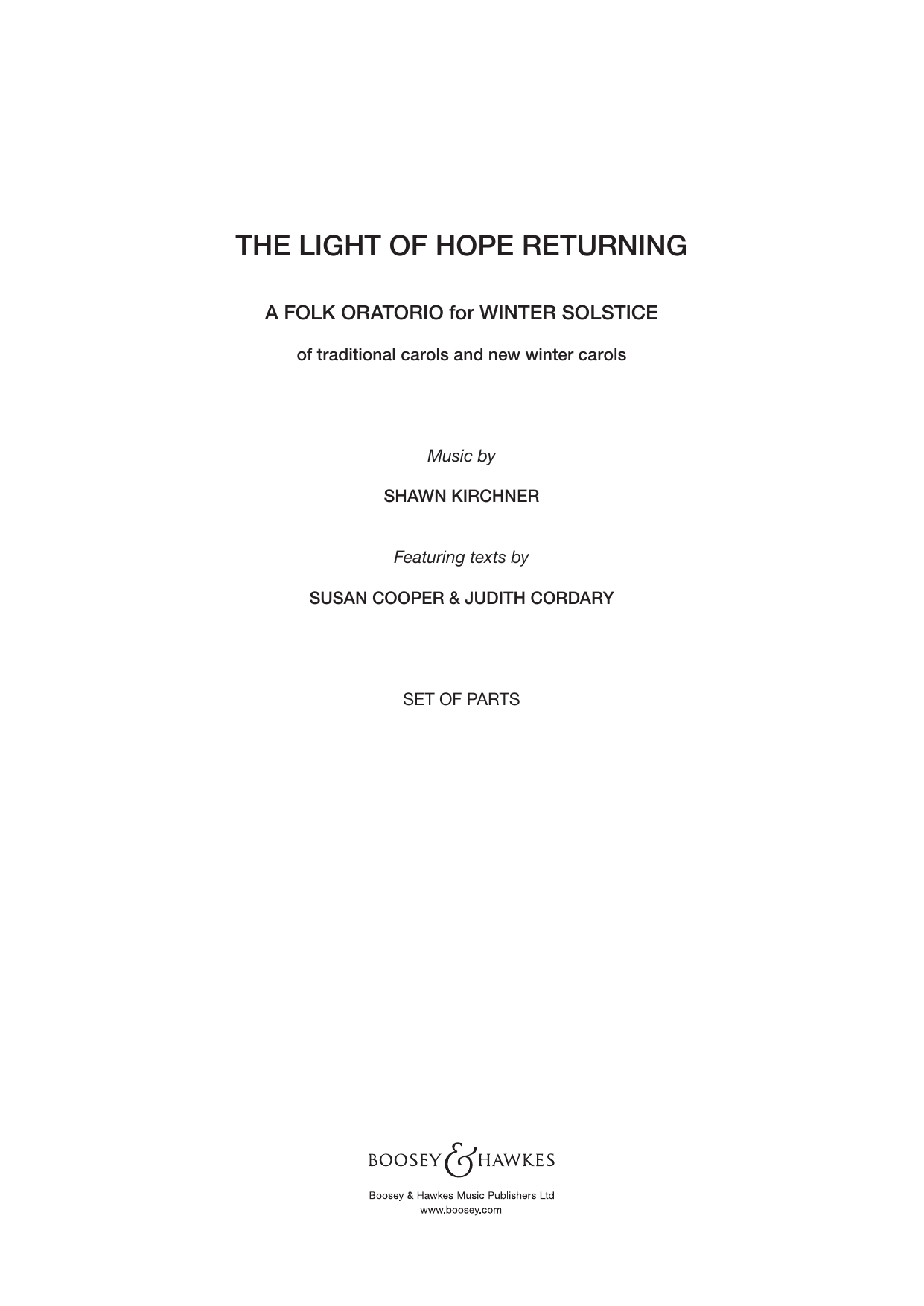

The Light of Hope Returning: Choral Instrumental Pak
By Shawn Kirchner / By Judith Cordary / By Susan Cooper
Item: 35-PK01874643
$150.00
Pickup currently not available
Buy Extra Parts (Digital PDF Download)
Parts Added to Cart!
Description
The Light of Hope Returning is a concert-length "ceremony" of folk carols in which a number of Kirchner's best-loved Christmas settings "Lo, How a Rose, Brightest and Best" are combined with newly-penned carols on Christmas, Winter Solstice, and New Year's themes. Together these carols form a dramatic arc that takes a listener on a journey from distant hope through darkness into the rebirth of light and true hope for the future!


The Light of Hope Returning: Choral Instrumental Pak isn't in MakeMusic Cloud just yet...but it could be. Let us know you'd like to see it, and you'll help shape what comes next. In the meantime, start a free trial and dive into thousands of interactive titles your students can play along with today.
Request This Title
Tell us you want it.
Start Your Free Trial
Explore everything that's ready to play right now.
Sample Audio
No sample audio found.
Sample Video
No sample videos found.
Additional Details
Publisher:
Hal Leonard
SKU:
35-PK01874643
More about this title
About the Composer: Shawn Kirchner
Shawn Kirchner has spent decades composing works that marry liturgical depth with genuine accessibility. His Christmas settings have become staples in American choral programs, valued equally by high school choirs and professional ensembles for their musicality and spiritual authenticity.
KirchnER's gift lies in his ability to layer meaning without overwhelming performers. His compositions invite singers into the music rather than demanding virtuosity as a prerequisite for musical truth. This sensibility shapes everything he writes, from intimate carols to large ensemble works.
Why we love this
Kirchner crafts a complete emotional narrative here rather than a simple carol medley. The architecture moves deliberately from yearning through struggle into genuine renewal, giving your choir a chance to inhabit dramatic arc instead of merely performing a collection. You'll find yourself conducting something with real stakes.
What to expect
The sound unfolds like watching light gradually return after the winter solstice. Early carols carry quiet longing and distant warmth; middle sections deepen into shadow and searching. By the final carol, you hear voices and instruments breaking through into genuine hope rather than seasonal sentimentality. The journey feels earned.
Who it's for
Directors seeking a unified concert program that transcends traditional carol compilation. High school through professional choirs with basic to intermediate capabilities will find genuine musical substance here. This works equally well for a full holiday concert or as the centerpiece of a winter solstice or New Year's program.
How to get the most out of it
- Shape the transitions between carols as carefully as you would shape a single piece. These moments of silence or instrumental passage exist to propel the journey forward, not to provide rest.
- Attend to text imagery in each carol's middle section. The shift from external winter setting to internal hope requires singers to adjust their vocal quality and emotional temperature accordingly.
- Balance the newly composed carols alongside the Kirchner classics. The familiar pieces anchor the listener; the new work deepens the thematic arc. Neither should dominate.
- Use the choral and instrumental parts to create textural variety across the full ceremony. A carol sung full ensemble followed by a sectional voicing creates the sense of discovery this work demands.
How to use it
Consider programming this as a complete first half, giving your audience a full ceremonial experience before intermission. Alternatively, pair it with instrumental works that echo its thematic journey through darkness and light. The work's architecture makes it a natural centerpiece for a December concert rather than one offering among many.
Skills your students will build
- Sustaining dramatic pacing across a multi-movement form
- Text expression that shifts between collective wonder and individual reflection
- Balancing familiar and new repertoire within a unified emotional arc
- Ensemble listening across mixed voicing and instrumental combinations
- Dynamic control in both climactic and intimate passages