The Letter (arr. Kirby Shaw) Sheet Music Preview

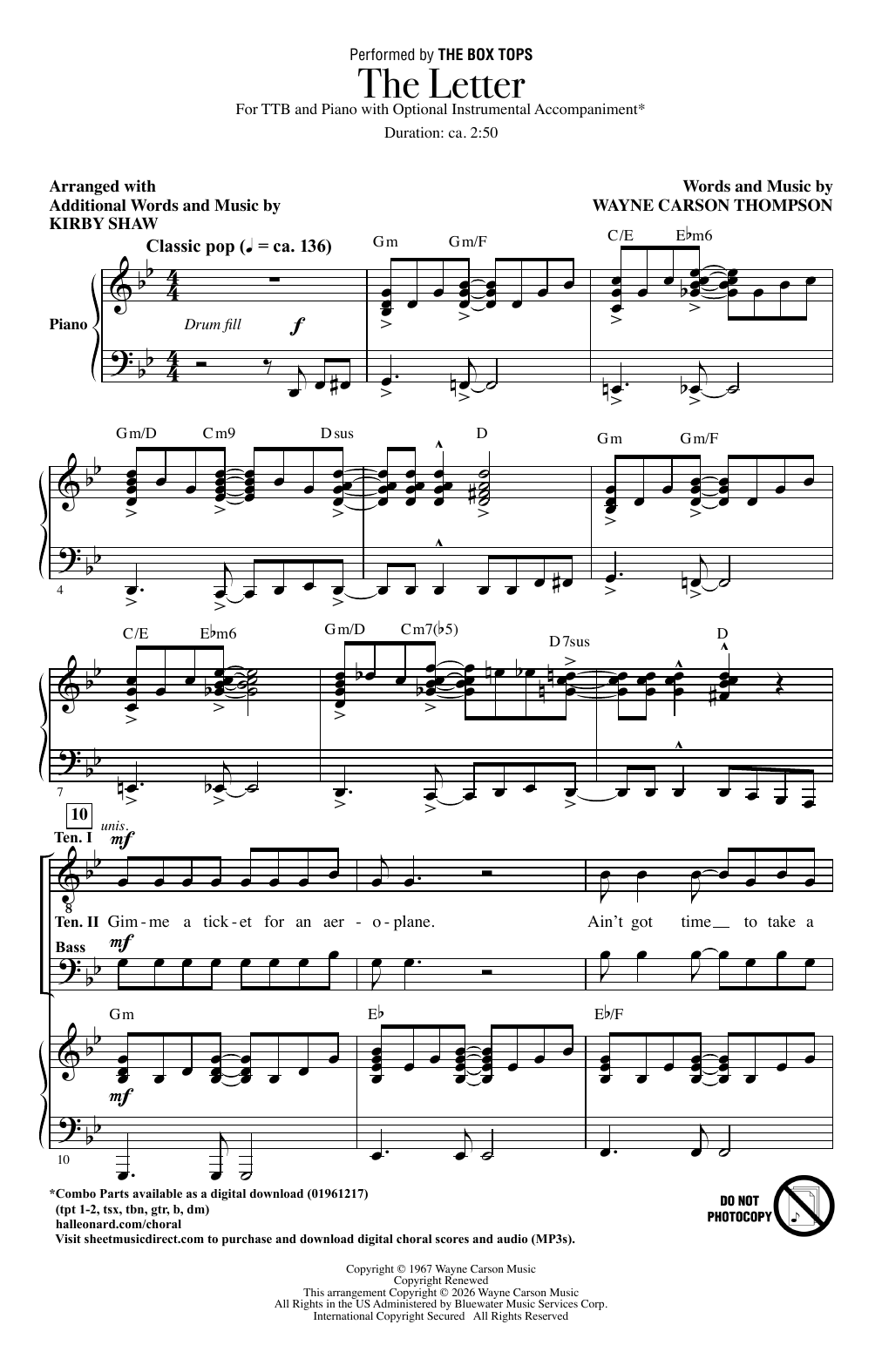
The Letter (arr. Kirby Shaw): TTBBB Choral Octavo

By Wayne Carson Thompson / As performed by The Box Tops / Arranged by Kirby Shaw

Item: 35-DS01863167

Digital Download
$2.50
Description

The Letter (arr. Kirby Shaw): TTBBB Choral Octavo isn't in MakeMusic Cloud just yet...but it could be. Let us know you'd like to see it, and you'll help shape what comes next. In the meantime, start a free trial and dive into thousands of interactive titles your students can play along with today.

Sample Audio
No sample audio found.
Sample Video
Additional Details
Publisher: Hal Leonard
Page Count: 7
SKU: 35-DS01863167

More about this title

About the Composer: Wayne Carson Thompson

Wayne Carson Thompson wrote "The Letter" in 1967, crafting one of the era's most infectious pop melodies. His gift for melody and hook-driven songwriting made him a prolific contributor to the American songbook, with compositions recorded across multiple genres and generations of artists.

Why we love this

Kirby Shaw's arrangement unlocks the infectious energy of this 1960s pop gem for five-part men's voices without sacrificing a single ounce of the original's swagger. The voicing sits naturally across the male range while keeping the rhythmic vitality and singability that made The Box Tops' version such a radio staple. You'll find your singers connecting immediately to material they recognize, which translates into engagement during rehearsals and authentic delivery in performance.

What to expect

Nostalgic but never dated. The arrangement captures the pleading, slightly desperate charm of the original while giving singers room to bring their own personality to it. There's a conversational intimacy here, even when sung full-voiced, that makes audiences lean in and listen.

Who it's for

Men's and mixed choirs seeking repertoire that bridges pop accessibility with legitimate musical craft. This works equally well for community choirs, show choirs, or academic ensembles looking to program something their audiences will recognize and enjoy.

How to get the most out of it

  • Let the rhythmic drive sit in the bass and baritone lines rather than forcing tempo. These voices anchor the groove, so their clarity matters more than brute volume.
  • Shape the narrative arc of the text through dynamic contrast. The urgency builds naturally if you treat the first verse as introspective and gradually open up the arrangement's full texture.
  • Keep diction crisp on the repeated "gimme" phrases to maintain the song's conversational tone and keep it from sounding overly precious.
  • Balance the solo section(s) with supportive background vocals. The arrangement likely features a featured voice, so coach the supporting parts to enhance rather than compete.

How to use it

Consider pairing this with other pop standards from the same era to build a themed set, or use it as a lighter moment in a longer concert program dominated by classical repertoire. It's the kind of piece that builds audience goodwill quickly and gives singers a genuine confidence boost once they've nailed it.

Skills your students will build

  • Rhythmic precision in syncopated pop idioms
  • Sustaining energy through repeated melodic phrases
  • Balancing solo and ensemble textures
  • Stylistically appropriate interpretation of contemporary lyrical content

You May Also Like