
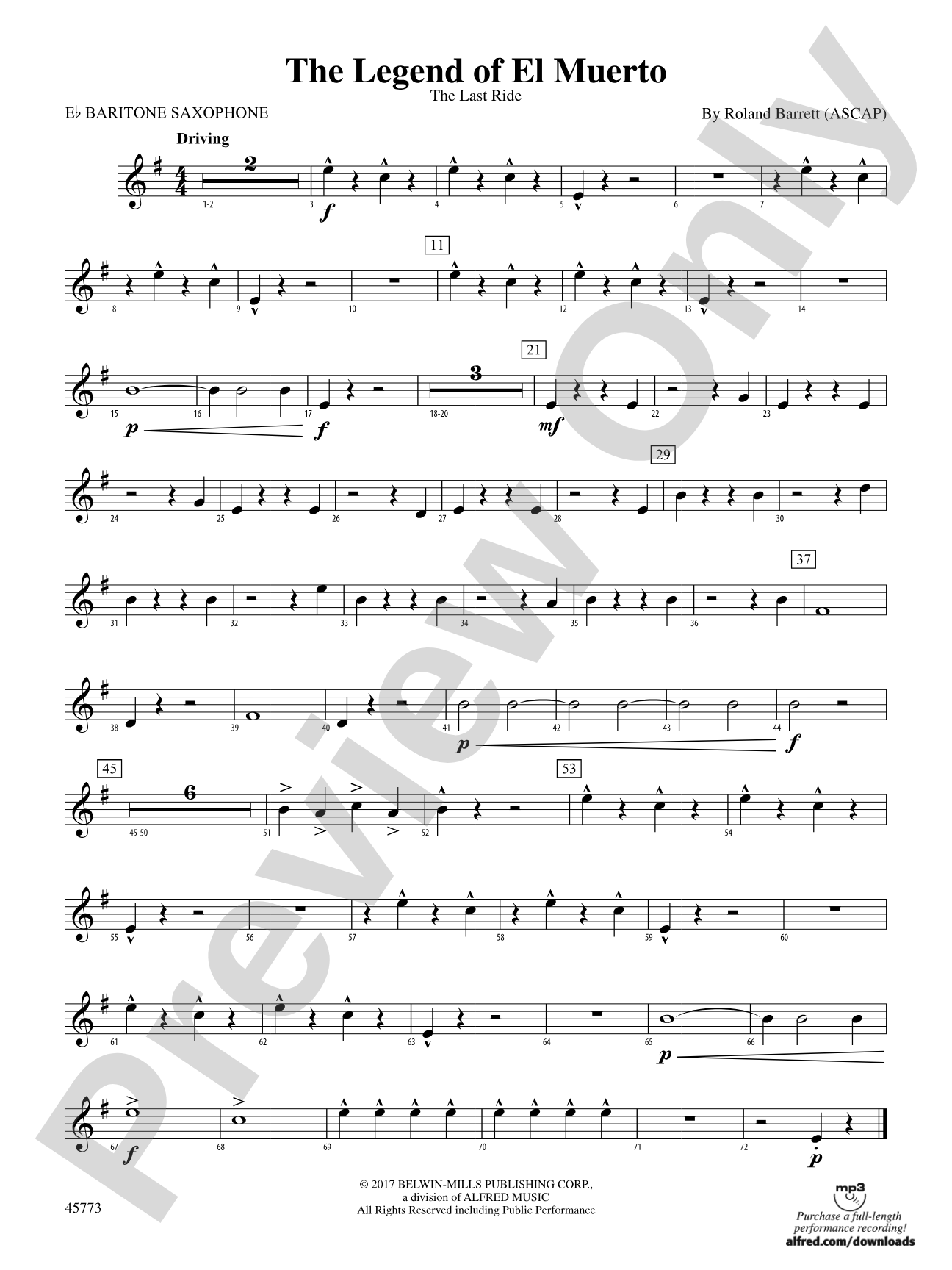

The Legend of El Muerto: E-flat Baritone Saxophone
The Last Ride
By Roland Barrett
Grade: 1.5 (Very Easy to Easy)
Item: 00-PC-0017584_BTX
$3.00
Pickup currently not available
Description
Based on a mid-1800s folk tale from "No Man's Land" in Texas, this engaging original composition captures the imagination, depicting sinister livestock rustling and even a little horse thievery. This compelling work uses shifting dynamics, an introduction to aleatoric notation to build the musical intensity, and a chance for one trumpet to depict the stolen horse's whinny. A delightful addition to beginning band literature. (2:15)


Don't just read it, hear it, play along with it, and watch your students grow with it. In MakeMusic Cloud, The Legend of El Muerto: E-flat Baritone Saxophone comes alive with professional accompaniment, adjustable tempo, and built-in practice tools that turn solo practice into real progress.
Open in the Player
Jump straight in and assign it today.
Start Your Free Trial
Open this title and explore the full library in minutes.
Sample Audio
1
Audio File
--:--
0:00
0:00
Sample Video
Additional Details
Series:
Belwin Beginning Band
Publisher:
Alfred Music
Page Count:
222
SKU:
00-PC-0017584_BTX
More about this title
About the Composer: Roland Barrett

Roland Barrett has been composing and arranging for concert band, chamber ensembles, and marching groups since the early 2000s, when he joined the University of Oklahoma's composition and theory faculty. His catalog exceeds two hundred published works, and his pieces have earned performances by the Dallas Wind Symphony, All-State Honor Bands across the country, and broadcasts on NPR and specialty music networks.
Beyond the concert hall, Barrett's arrangements have become integral to Oklahoma's Pride of Oklahoma marching band. His work has been recognized multiple times by ASCAP and has appeared at prestigious festivals including the Midwest Band & Orchestra Convention, the National Trumpet Competition, and the International Trumpet Guild convention.
Why we love this
Barrett writes for young musicians without sacrificing musicality or storytelling. The narrative framework of "The Legend of El Muerto" gives your band a concrete dramatic arc to follow, making the technical challenges (aleatoric notation, dynamic shifts, the trumpet solo depicting a horse's whinny) feel purposeful rather than exercises. At Grade 1.5, it's accessible enough for developing ensembles but substantial enough to feel like a real concert piece.
What to expect
Sinister and atmospheric, with moments of galloping urgency that capture the Texas frontier mythos. The orchestration sits comfortably for young musicians, but the drama—especially the trumpet's horse whinny breaking through—creates a vivid, slightly spooky soundscape that holds attention.
Who it's for
Beginning and developing concert bands ready to play music that has a genuine story to tell. Students at this level respond well to concrete imagery, and this piece gives them a reason to care about dynamic nuance and ensemble control beyond "getting it right."
How to get the most out of it
- Prepare the aleatoric section carefully in sectionals before full rehearsal; young musicians often need explicit instruction on how to read and execute flexible notation, and isolated work prevents frustration when ensemble synchronization matters most.
- Have the designated trumpet player practice the horse whinny passage separately so the effect lands with character rather than embarrassment; a confident, intentional solo moment transforms the entire narrative moment.
- Rehearse the dynamic contrasts deliberately: mark your score with exact dynamic targets and give students clear language ("darker," "sinister," "galloping away") that connects the markings to the story being told.
How to use it
This works beautifully as the opener on a concert program where you want to grab the audience immediately with something narrative and engaging. It's substantial enough to anchor a beginning band concert but short enough (2:15) to pair with other Grade 1.5-2 repertoire without pacing issues.
Skills your students will build
- Reading and performing aleatoric notation
- Executing sudden dynamic shifts for dramatic effect
- Ensemble balance and blend during sustained passages
- Solo confidence (trumpet feature)
- Connecting musical expression to narrative content