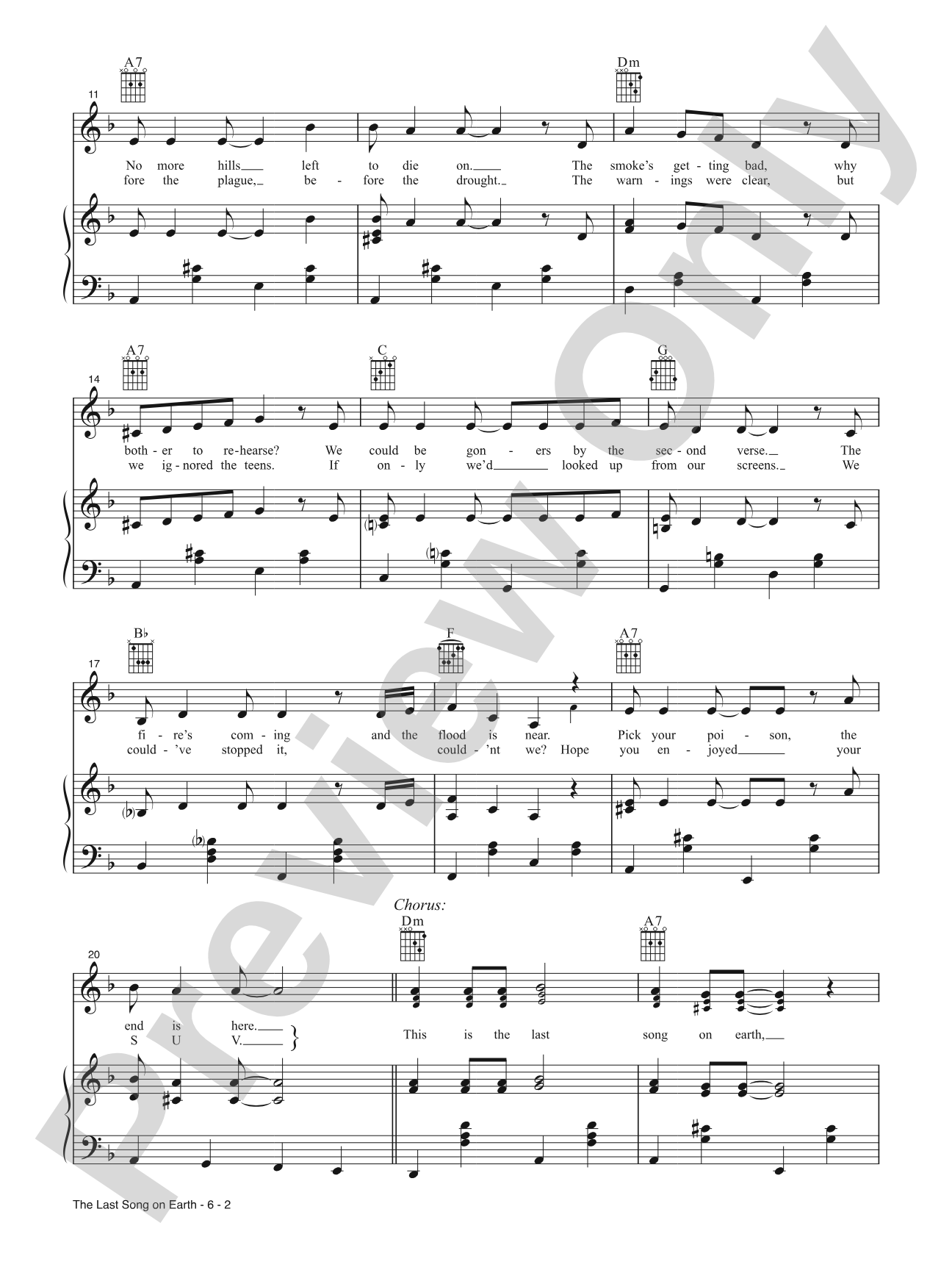
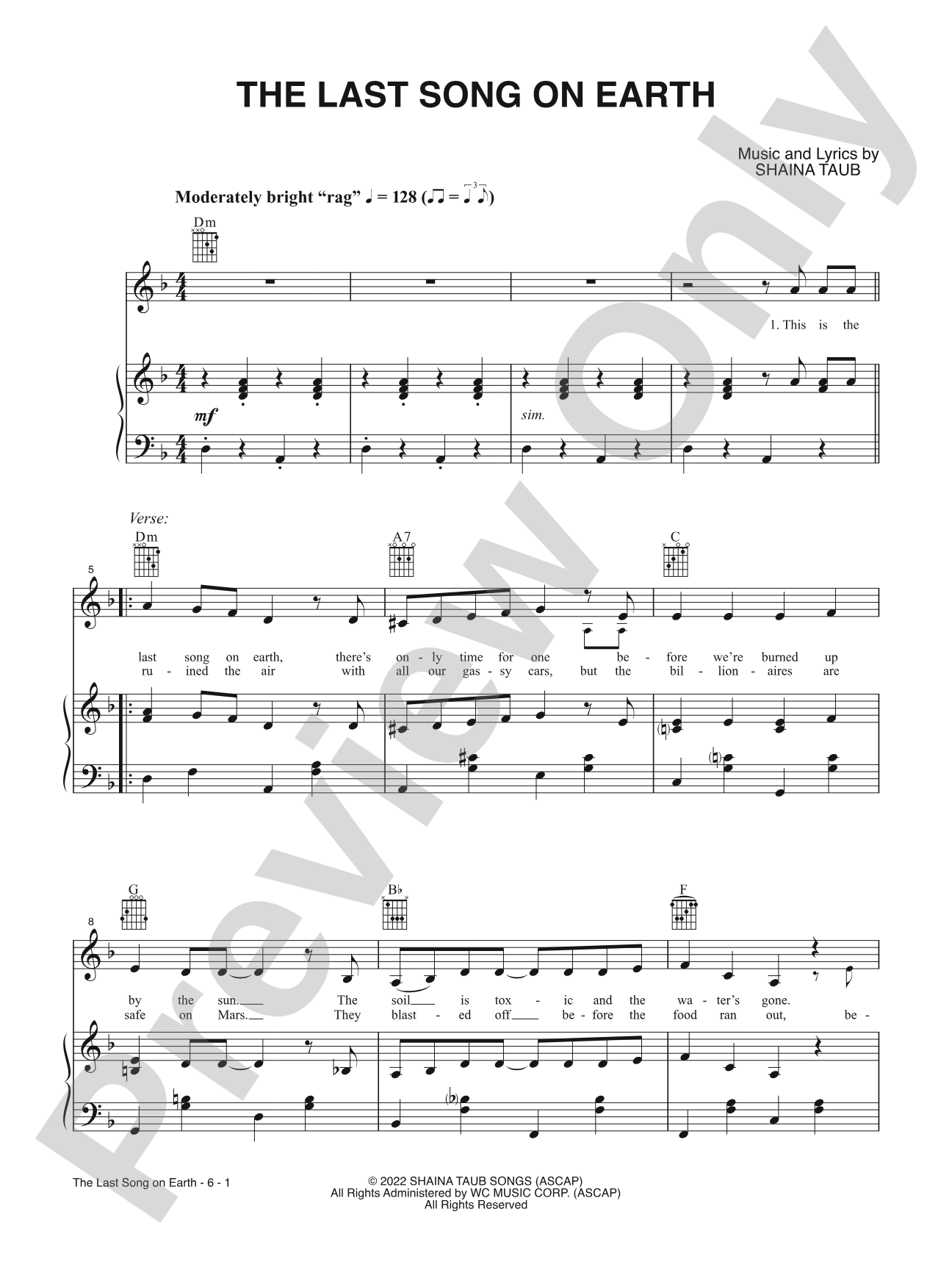
The Last Song on Earth Sheet Music Preview

The Last Song on Earth: Piano/Vocal

Shaina Taub

Item: 00-PS-0016709

Digital Download
$5.99

One moment…

Description
From Shaina Taub's album Songs of the Great Hill

The Last Song on Earth: Piano/Vocal isn't in MakeMusic Cloud just yet...but it could be. Let us know you'd like to see it, and you'll help shape what comes next. In the meantime, start a free trial and dive into thousands of interactive titles your students can play along with today.

Sample Audio
No sample audio found.
Sample Video
Additional Details
SKU: 00-PS-0016709

More about this title

About the Composer: Shaina Taub

Shaina Taub is a composer and lyricist whose work spans theater, concert music, and vocal repertoire. Her compositions are known for lyrical melody, emotional directness, and accessible yet sophisticated harmony. She has built a reputation for songs that connect deeply with singers and audiences alike, drawing from both classical training and contemporary songwriting sensibility.

Why we love this

This song sits at the intersection of art song and popular music, making it rewarding for singers who want to explore contemporary composition without stepping away from the vocal tradition. The piano part supports the voice without overwhelming it, and the emotional arc gives performers real dramatic work to do within a contained form.

What to expect

The song carries an intimate, reflective quality characteristic of Taub's style. It draws the listener into personal emotional territory through a combination of lyrical melody and harmonic subtlety, creating space for genuine expression without sentimentality.

Who it's for

This piece suits intermediate to advanced singers working on contemporary art song repertoire, whether in a studio lesson, recital, or vocal ensemble setting. It appeals to singers who want to explore modern composition that respects the vocal line and rewards musical maturity.

How to get the most out of it

  • Shape the vocal line in long phrases rather than stopping at bar lines; let the piano's accompaniment guide your breath points.
  • Listen for the harmonic movement in the piano part, especially underneath sustained notes in the melody. These shifts tell you where the song is heading emotionally.
  • Coordinate dynamics with the pianist so that your softest moments still project and your intense passages feel earned rather than forced.

How to use it

Include this on a recital that balances art song with accessible contemporary work, or program it in a chamber setting with other songs from Taub's catalog. It works particularly well in vocal recitals exploring themes of reflection or conclusion, and pairs naturally with both classical and modern repertoire.

Skills your students will build

  • Singing with stylistic awareness in contemporary vocal music
  • Interpreting harmonic movement and using it to shape phrasing
  • Collaborating with a pianist to balance melodic and accompaniment textures
  • Performing art song with emotional specificity and musicality

You May Also Like