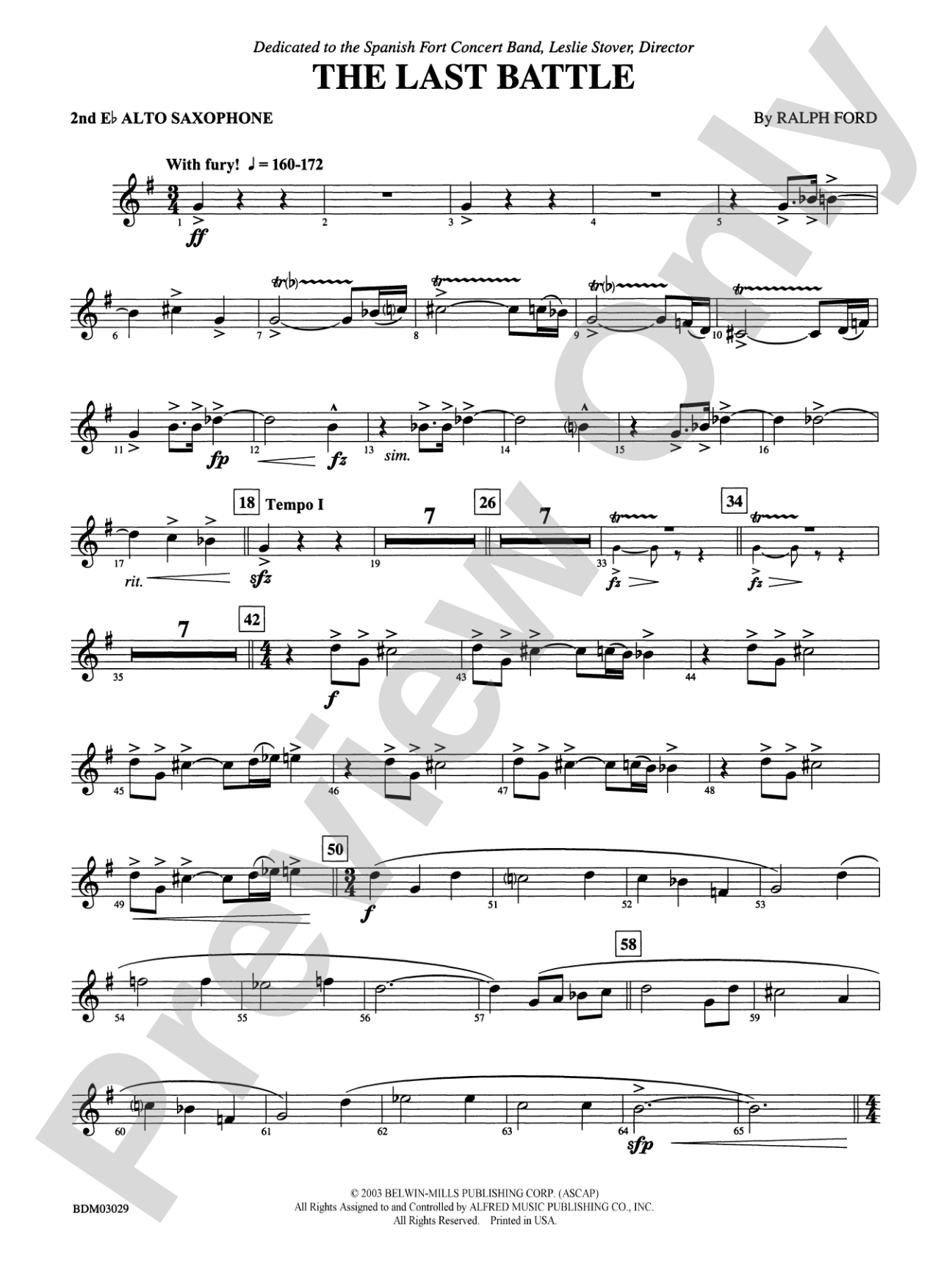
The Last Battle: 2nd E-flat Alto Saxophone Sheet Music Preview

The Last Battle: 2nd E-flat Alto Saxophone

By Ralph Ford

Grade: 3 (Medium Easy)

Item: 00-PC-0014677_AX2

Digital Download
$3.00
Description
A bit dark and mysterious, but engaging for your students to rehearse. The initial musical indication is "with fury" beginning with a bold fanfare section. Then, splashes of sound and vivid textures are presented throughout. A dynamic addition to your concert or contest program. (3:03)

Don't just read it, hear it, play along with it, and watch your students grow with it. In MakeMusic Cloud, The Last Battle: 2nd E-flat Alto Saxophone comes alive with professional accompaniment, adjustable tempo, and built-in practice tools that turn solo practice into real progress.

Sample Audio
No sample audio found.
Sample Video
Additional Details
Series: Belwin Concert Band
Publisher: Alfred Music
Page Count: 246
SKU: 00-PC-0014677_AX2

More about this title

About the Composer: Ralph Ford

Ralph Ford

Ralph Ford has spent nearly three decades on university faculties while maintaining a prolific career as a composer and arranger for film, television, and live broadcast. His work spans orchestration, jazz studies, and applied instruction, grounded in early professional experience that began at age fifteen. He earned his Master of Science degree in 1988 and has since become an exclusive composer and arranger for Belwin/Alfred Music, with over 250 published titles across orchestra, concert band, jazz ensemble, and marching band repertoire.

Beyond the concert hall, Ford has shaped broadcast and media production through jingles, news packages for national affiliates, and live recording sessions. His music has been premiered by university, military, professional, community, and school ensembles internationally. He has received recognition for advertising composition and animation work, establishing himself as a versatile voice in both educational and commercial music production.

Why we love this

Ford crafts visceral opening gestures that catch students' attention immediately. The 'with fury' indication and bold fanfare set a confident tone that makes learning rewarding, and the textural variety that follows keeps ensemble engagement high through rehearsal and performance without overwhelming a Grade 3 band.

What to expect

The piece opens with aggressive confidence before settling into darker, more introspective territory. Vivid orchestral textures and sudden dynamic shifts create a sense of drama and mystery that keeps listeners and performers emotionally invested throughout.

Who it's for

This score works well for concert bands at the Grade 3 level seeking repertoire with musical personality and contemporary energy. It serves directors who want to program something engaging for both students and audiences without excessive technical demands.

How to get the most out of it

  • Lock the tempo during the opening fanfare so the 'with fury' character lands with full impact; clarity here sets the tone for everything that follows.
  • Balance the splashes of sound by mapping dynamic peaks across sections before rehearsal; this prevents students from playing all vivid textures at the same volume.
  • Shape phrases through the mysterious middle sections by encouraging breath and articulation clarity rather than strict uniformity, which allows the darker character to breathe.
  • Record a section run-through to hear how the full three-minute arc holds together; Grade 3 ensembles often benefit from hearing the whole piece in context.

How to use it

Program this as an opener or centerpiece on a concert that pairs well with contrast; its darker energy and modern sensibility make it an excellent complement to both classic band repertoire and lighter selections. It also translates well to festival and contest settings where you want to showcase ensemble musicality and control.

Skills your students will build

  • Dynamic contrast and control across multiple registers
  • Ensemble balance within complex textural writing
  • Phrasing and expressive shaping in non-traditional harmonic contexts
  • Rhythmic precision during rapid texture changes
  • Stamina and focus across a full three-minute concert work

You May Also Like