The Lady In Red Sheet Music Preview

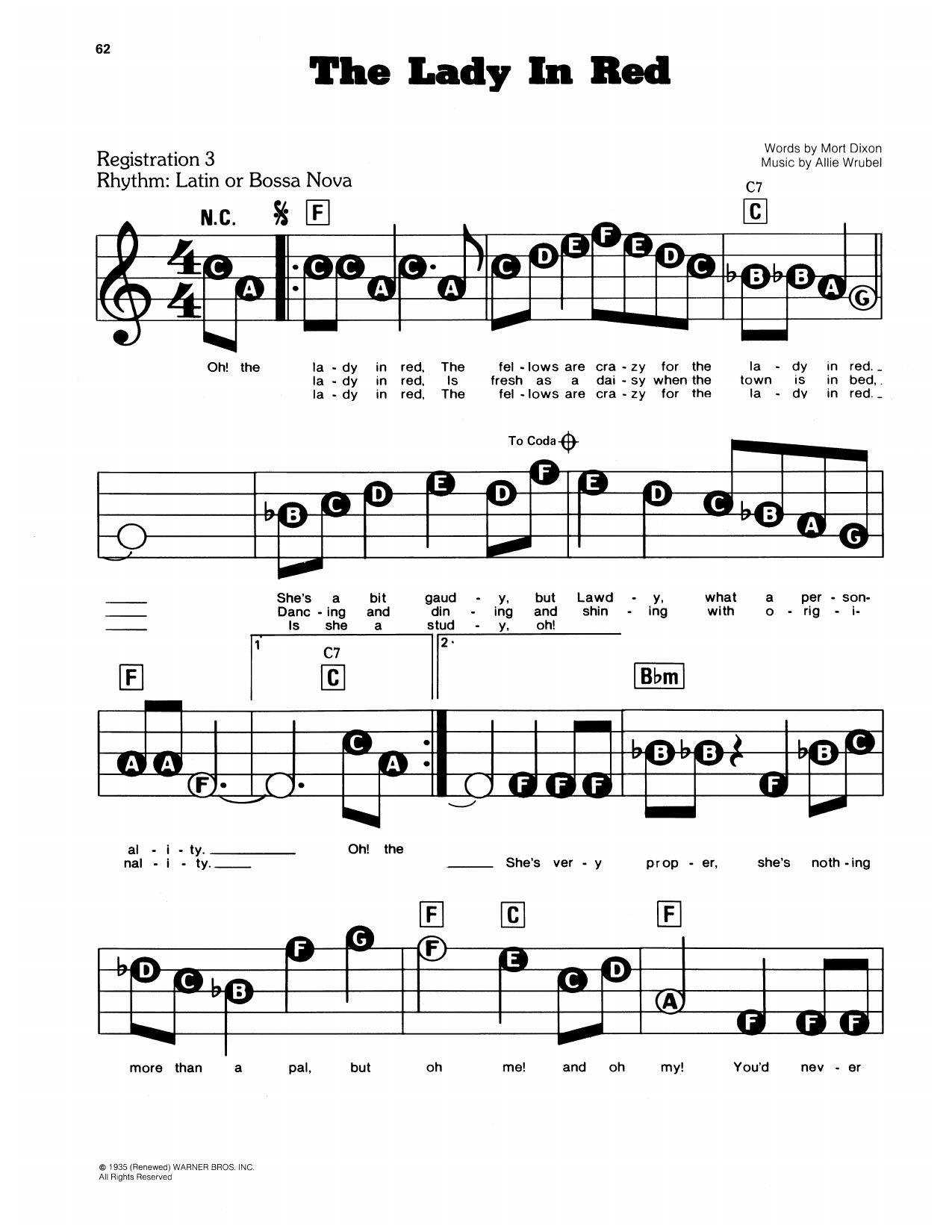
The Lady In Red: E-Z Play Today

As performed by Stan Getz

Item: 35-DS01914484

Digital Download
$4.99
Description

The Lady In Red: E-Z Play Today isn't in MakeMusic Cloud just yet...but it could be. Let us know you'd like to see it, and you'll help shape what comes next. In the meantime, start a free trial and dive into thousands of interactive titles your students can play along with today.

Sample Audio
No sample audio found.
Sample Video
Additional Details
Publisher: Hal Leonard
Page Count: 2
SKU: 35-DS01914484

More about this title

About the Artist: Stan Getz

Stan Getz (1927–1991) was the saxophonist who brought bossa nova to American audiences in the early 1960s. His breathy, lyrical tone and sophisticated harmonic sense made him essential to the genre's crossover success, particularly through his collaborations with João Gilberto and Astrud Gilberto. Beyond bossa nova, Getz was a consummate ballad player and improviser whose work spans swing, cool jazz, and Latin jazz.

Why we love this

This arrangement captures the romantic sophistication that made Getz's sound so influential. The two-page layout is approachable without sacrificing the harmonic subtlety and jazz voicings that give the tune its character, making it ideal for pianists developing their jazz vocabulary and interpretation skills.

What to expect

Smooth and intimate, with the kind of unhurried elegance that defines classic ballad playing. The piece invites you into a quiet room where every note choice matters and restraint is its own kind of expression.

Who it's for

Jazz pianists seeking accessible yet sophisticated arrangements that develop chord voicing skills and harmonic awareness. This works well for intermediate players ready to engage with real jazz harmony beyond lead sheets.

How to get the most out of it

  • Treat the melody with restraint; Getz's approach favored space and understatement over overplaying the tune.
  • Voice the chords with attention to jazz voicings rather than classical block harmonies; let inversions and extensions shape the harmonic texture.
  • Shape the phrasing around the lyrical contour of the vocal line, even though you're playing instrumentally.

How to use it

Pair this with other standards and jazz arrangements in a recital or concert setting where you want to highlight solo piano repertoire. It also serves as an excellent study piece for developing interpretation skills in a jazz combo or lab band context.

Skills your students will build

  • Jazz chord voicings and inversions
  • Interpreting melody in a sophisticated harmonic context
  • Balancing accompaniment with solo line
  • Lyrical phrasing in a ballad tempo

You May Also Like