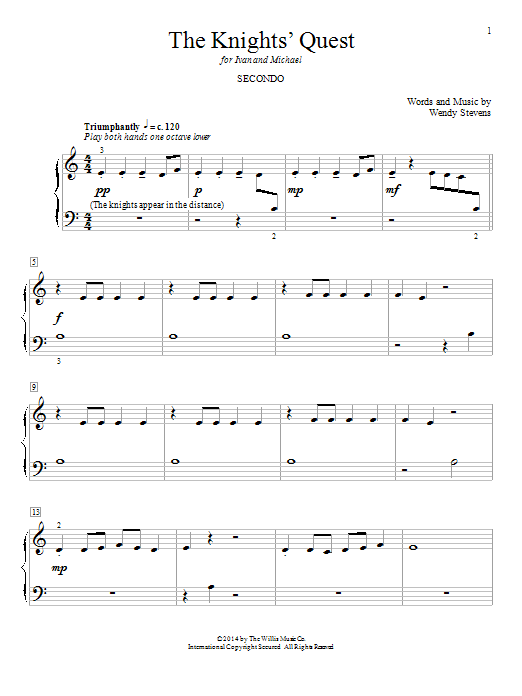
Stevens writes with a storyteller's sense of pacing and clarity. The narrative arc of a quest gives students something concrete to latch onto, making the four pages feel purposeful rather than episodic. Piano students get genuine musical substance without unnecessary technical bloat.
What to expect
Adventure unfolds with clear purpose. The piece captures the drama of a knight's journey through purposeful harmonic movement and rhythmic clarity, creating moments of both struggle and triumph that feel earned rather than imposed.
Who it's for
Piano students at the intermediate level who benefit from narrative structure and want to experience classical forms without abstract complexity. Teachers looking for literature that makes young pianists think about storytelling through music.
How to get the most out of it
Identify the thematic material early in your practice sessions. Return to the main idea whenever you feel lost, and the whole journey becomes much easier to navigate.
Let the harmonic language guide your phrasing. Stevens uses chord changes to signal moments of tension and resolution; follow those shifts rather than fighting them.
Shape the dynamic arc across the entire piece, not just within individual phrases. A quest needs momentum, not static dynamics.
How to use it
Program this as a recital solo that stands on its own or pair it with other narrative pieces to explore how composers use structure to tell stories. It works particularly well in a student showcase focused on contemporary classical writing.
Skills your students will build
Reading and interpreting narrative cues within a classical structure
Phrasing control across a four-page span
Harmonic awareness and voice leading
Dynamic shape and long-line thinking
You May Also Like
Scan to Complete Your Purchase
Use your phone's camera to scan the code below
You'll log in on your phone and the order will be added to your account