
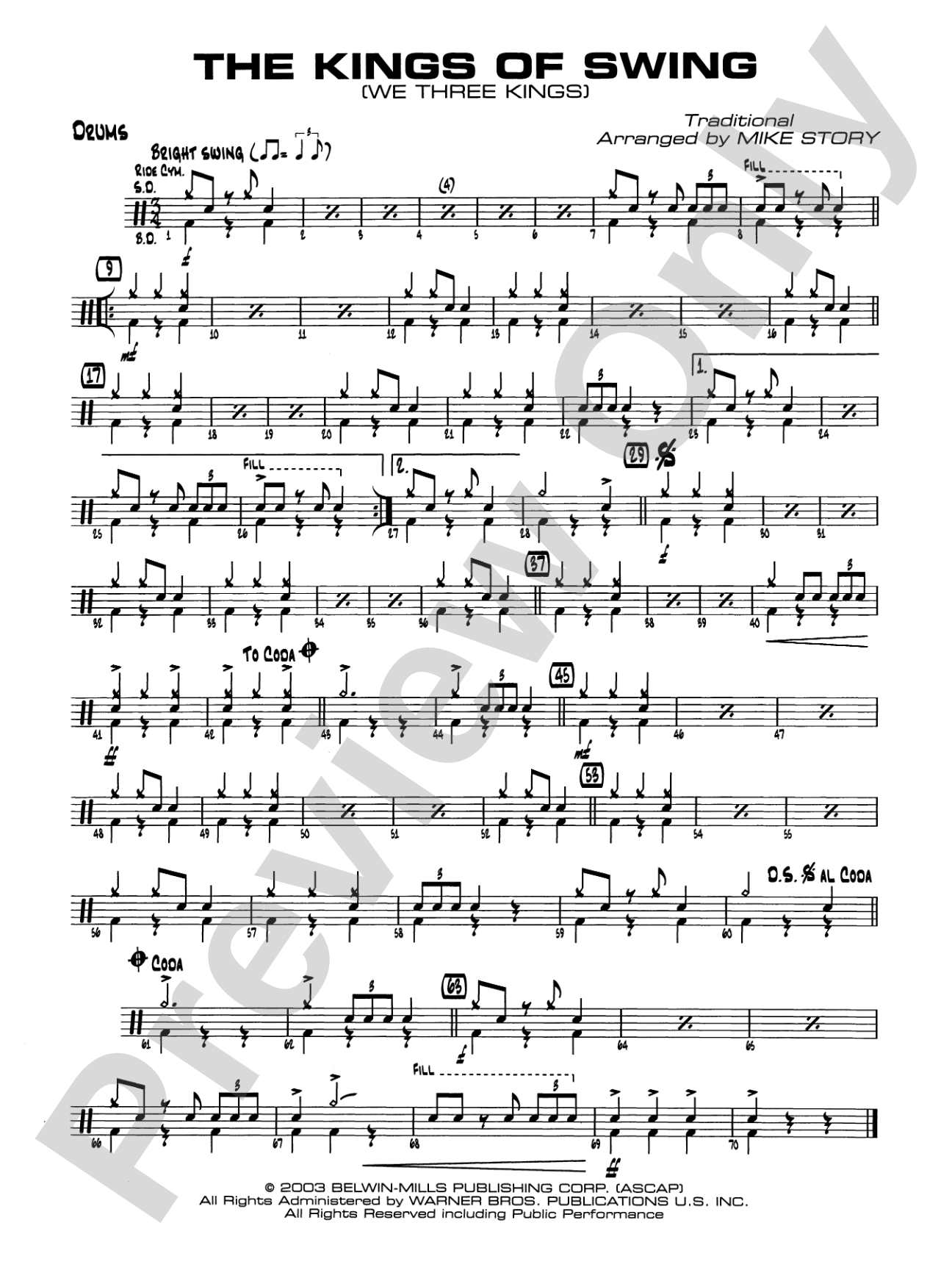

The Kings of Swing (We Three Kings): Drums
Traditional / arr. Mike Story
Grade: 1 (Easy)
Item: 00-PC-0002468_D
$3.00
Pickup currently not available
Description
Holiday swing for the younger player arranged by one of the best in the business, Michael Story. A jazz waltz setting of "We Three Kings" works perfectly to create a great chart for your young jazz ensemble. A brief written solo for tenor sax, some nice harmonies, and accessible ranges make a nice package. This one should come together quickly for the holiday program. Optional parts make it even better!


Don't just read it, hear it, play along with it, and watch your students grow with it. In MakeMusic Cloud, The Kings of Swing (We Three Kings): Drums comes alive with professional accompaniment, adjustable tempo, and built-in practice tools that turn solo practice into real progress.
Open in the Player
Jump straight in and assign it today.
Start Your Free Trial
Open this title and explore the full library in minutes.
Sample Audio
1
Audio File
--:--
0:00
0:00
Sample Video
Additional Details
Series:
First Year Charts for Jazz Ensemble
Publisher:
Alfred Music
Page Count:
42
SKU:
00-PC-0002468_D
More about this title
About the Arranger: Mike Story
Mike Story has established himself as one of the most prolific and trusted arrangers in jazz education. His work spans multiple ensemble levels and styles, consistently balancing accessibility with musical substance. Story's arrangements are staples in rehearsal rooms nationwide because they respect both the capabilities of young players and the intelligence of their audiences.
Known for crafting charts that come together efficiently without sacrificing musicality, Story understands what younger ensembles need: clear voicings, reasonable ranges, and parts that feel rewarding to play. His arrangements have become synonymous with quality first-year jazz literature.
Why we love this
This arrangement gives young jazz ensembles a legitimate holiday vehicle that doesn't rely on novelty or over-simplification. The jazz waltz setting transforms a familiar carol into something that feels fresh and swings naturally, while the optional parts mean you can customize the voicing to match whatever players you have available on any given rehearsal day.
What to expect
Warm and buoyant, with the gentle sophistication of a jazz waltz. The chart has an elegant lightness to it, balancing holiday familiarity with the sophisticated swing feel that draws young players into jazz in the first place. It sounds polished enough for a concert program yet remains grounded and unpretentious.
Who it's for
Beginning jazz ensembles and first-year jazz programs looking for a Grade 1 chart with actual musical substance. The accessible ranges and straightforward voicings mean players with one or two years of jazz experience can succeed, while the waltz swing feel and optional parts give directors room to grow the arrangement as their ensemble develops.
How to get the most out of it
- Establish the waltz lilt early in rehearsals. Lock the rhythm section into a relaxed triplet-based feel before adding the melody sections; this foundation makes everything else fall into place.
- The tenor sax solo is brief but prominent. Give that player a chance to develop their solo phrasing in small-group rehearsal away from the full ensemble; even a young soloist benefits from exploring how to shape the solo section.
- Balance the harmony parts so the melody cuts through cleanly. Young horn sections often play their harmonies at the same volume as the lead, which muddies the tune. A few minutes of blend exercises here pays immediate dividends.
- Take advantage of optional parts strategically. Use them to build ensemble texture as you approach the performance, not just to fill gaps in your instrumentation.
How to use it
This works beautifully as a mid-program piece in a winter concert, offering your audience a moment of elegance between more energetic charts. The familiar melody provides immediate accessibility for non-musicians while the waltz setting signals to your audience that this is a young ensemble doing real jazz work. It also serves as an excellent ensemble-building piece earlier in the fall, giving everyone a shared success before tackling more demanding literature.
Skills your students will build
- Swing feel and waltz phrasing in jazz idiom
- Reading lead sheet voicings and harmonic relationships
- Solo development and phrasing (tenor sax)
- Blend and balance within horn sections
- Interpreting optional parts and dynamic arrangement flexibility