The King's Jester (Le Buffon): Viola Sheet Music Preview

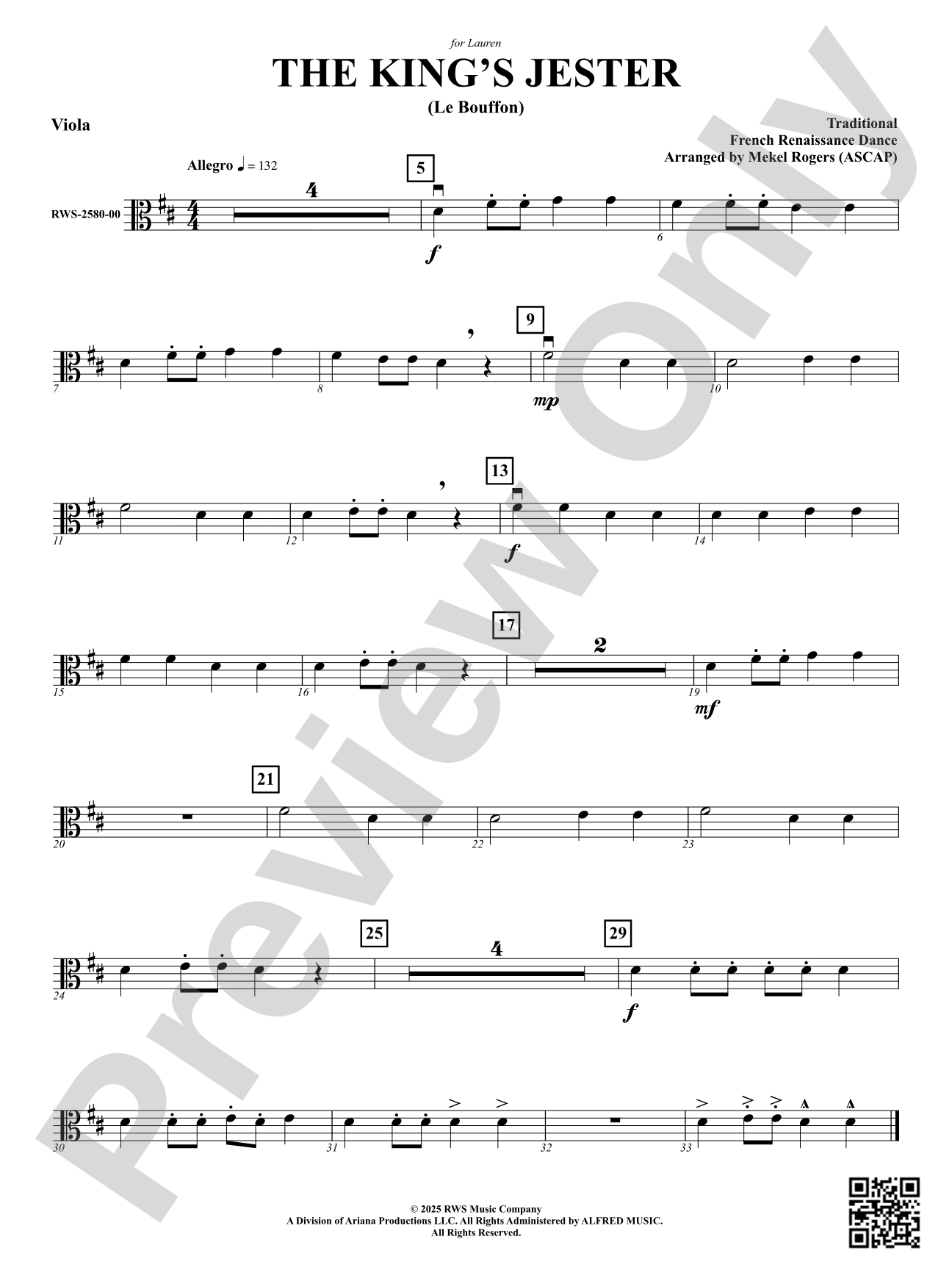
The King's Jester (Le Buffon): Viola

(Le Buffon)

Traditional French Renaissance Dance / arr. Mekel Rogers

Grade: 1.5

Item: 98-PC-RWS2580_VA1

Digital Download
$5.99
Description
Travel back to the age of castles and kings with this catchy dance music of the royal court jester. Easy notes and engaging rhythms make learning The King's Jester fun for young players, making it a great choice for a lighter concert piece.

The King's Jester (Le Buffon): Viola isn't in MakeMusic Cloud just yet...but it could be. Let us know you'd like to see it, and you'll help shape what comes next. In the meantime, start a free trial and dive into thousands of interactive titles your students can play along with today.

Sample Audio
0:00
0:00
Sample Video
Additional Details
Series: RWS - Beginning Strings
Publisher: RWS Music Company
SKU: 98-PC-RWS2580_VA1

More about this title

Why we love this

This arrangement captures the playful spirit of court music without overwhelming beginning string players. The straightforward rhythmic language and accessible note range let young orchestras focus on ensemble cohesion and character rather than technical struggle, making it an ideal choice when you want genuine musicality at the earliest levels.

What to expect

Bright, comedic, and rooted in dance. The rhythmic vitality and folk-dance character evoke the energy of a royal court entertainer, while the easy note choices keep the performance buoyant and fun rather than labored.

Who it's for

Beginning string orchestras in Grades 2-4 who are ready for a complete ensemble work but need straightforward technical demands. Directors seeking engaging, concert-ready repertoire that builds confidence in young players without requiring advanced technique.

How to get the most out of it

  • Bring out the character by encouraging players to imagine the physical comedy of a jester's performance; this lightness will naturally shape phrasing and articulation.
  • Balance the melodic line across sections so the tune remains clear and singable, even when accompanying voices move in rhythmic patterns.
  • Use the accompaniment figures as an opportunity to establish steady ensemble pulse; rhythmic precision here pays off when the melody enters.
  • Consider minimal vibrato to maintain the bright, direct quality suited to this dance-like material.

How to use it

Program this early in your concert when young orchestras are fresh and at their most confident. It pairs well with a more lyrical piece elsewhere on the program, giving the audience and performers alike a moment of lighthearted contrast.

Skills your students will build

  • Maintaining steady ensemble pulse across rhythmic accompaniment patterns
  • Singing through a simple melodic line with clear phrasing
  • Balancing melody against rhythmic accompaniment
  • Playing with articulation that serves character and style

You May Also Like