
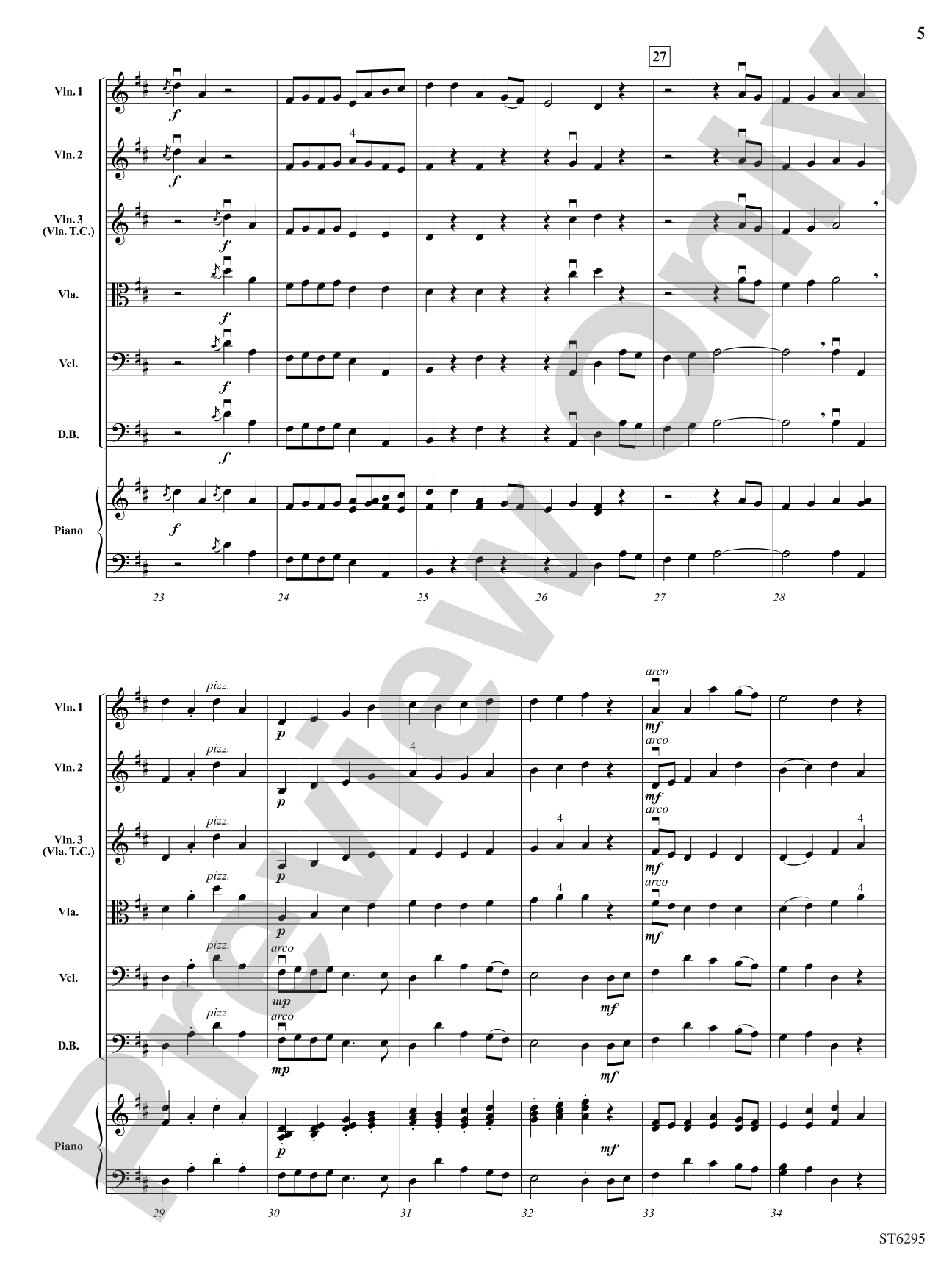
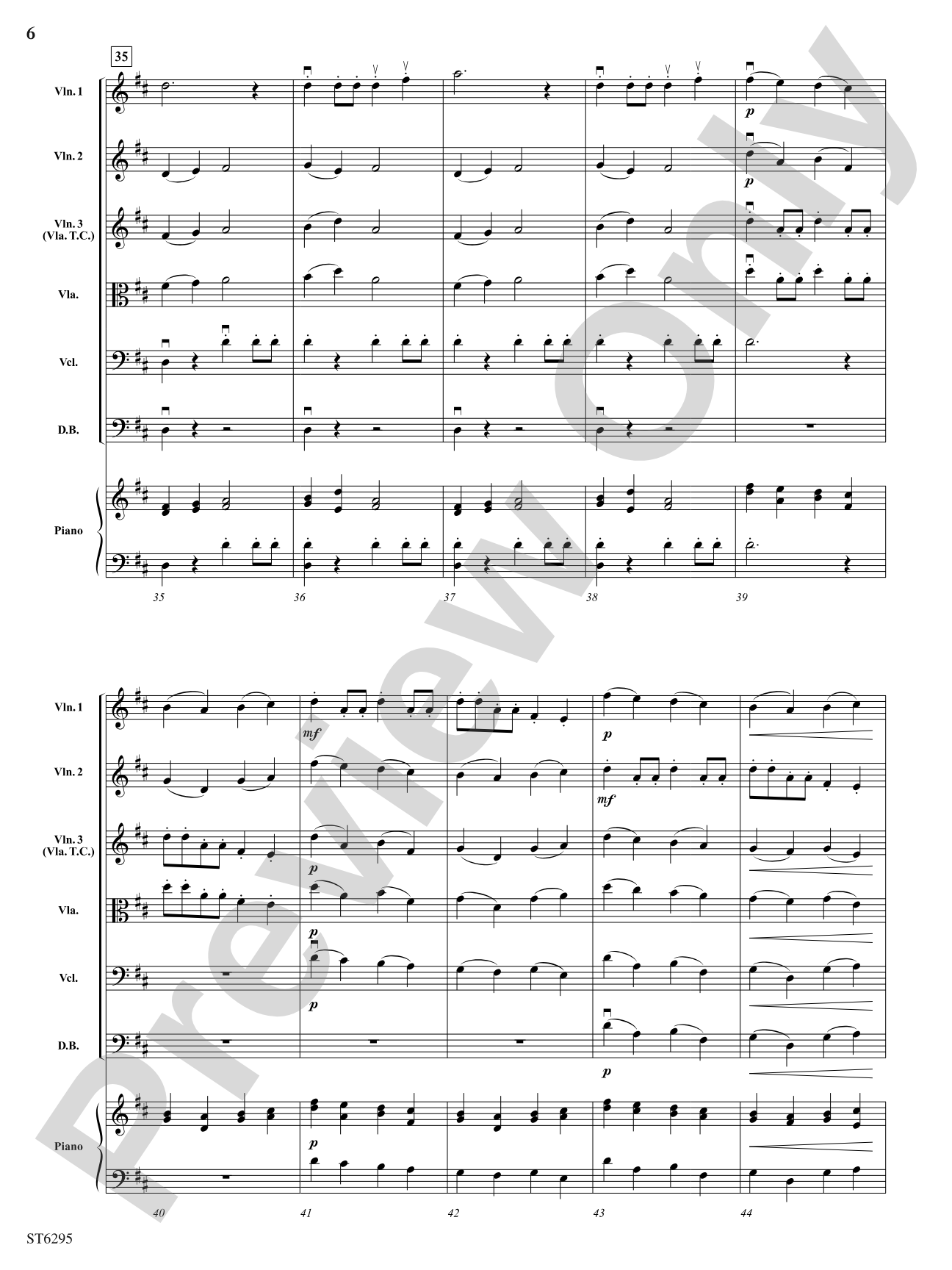
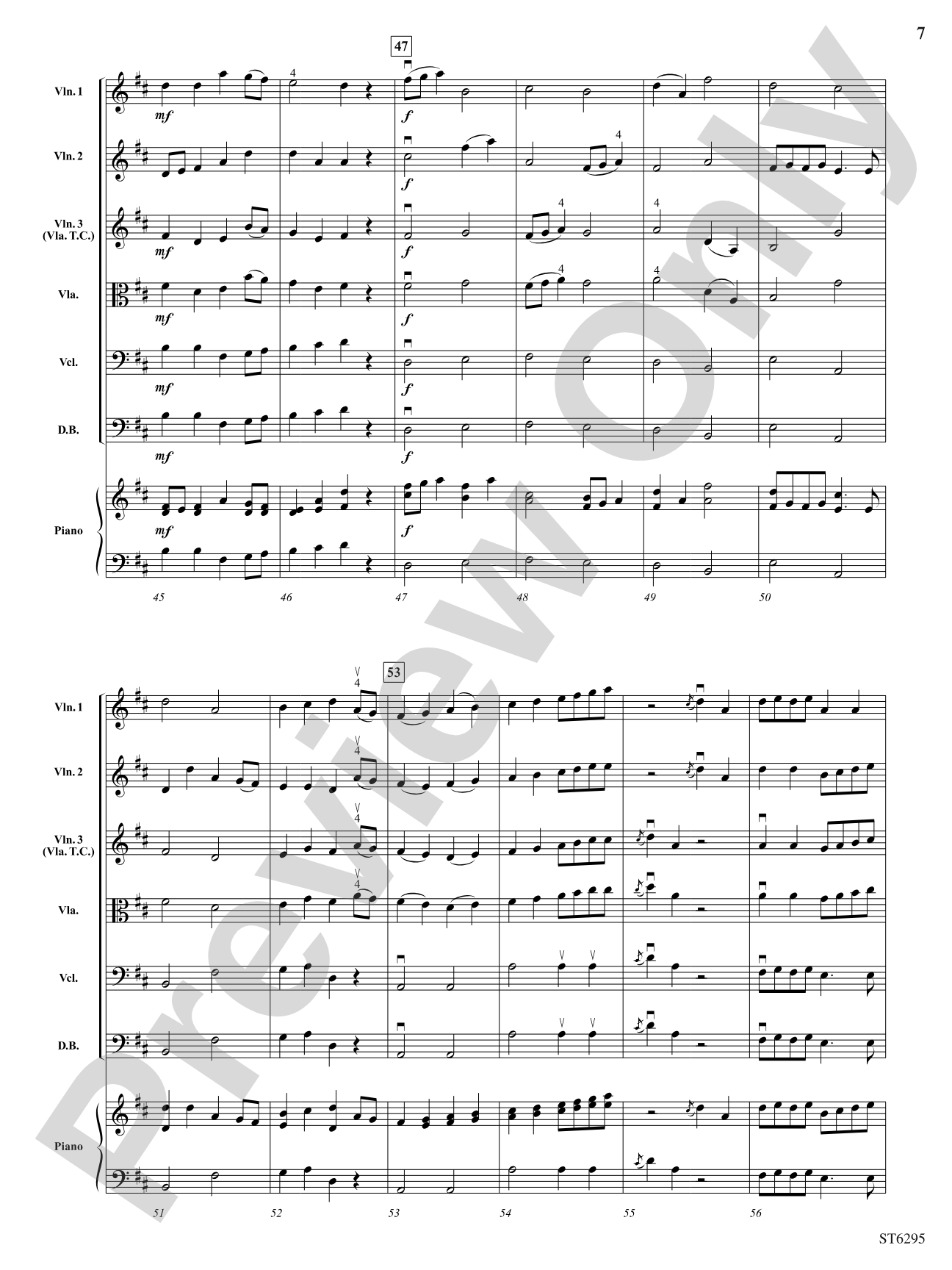
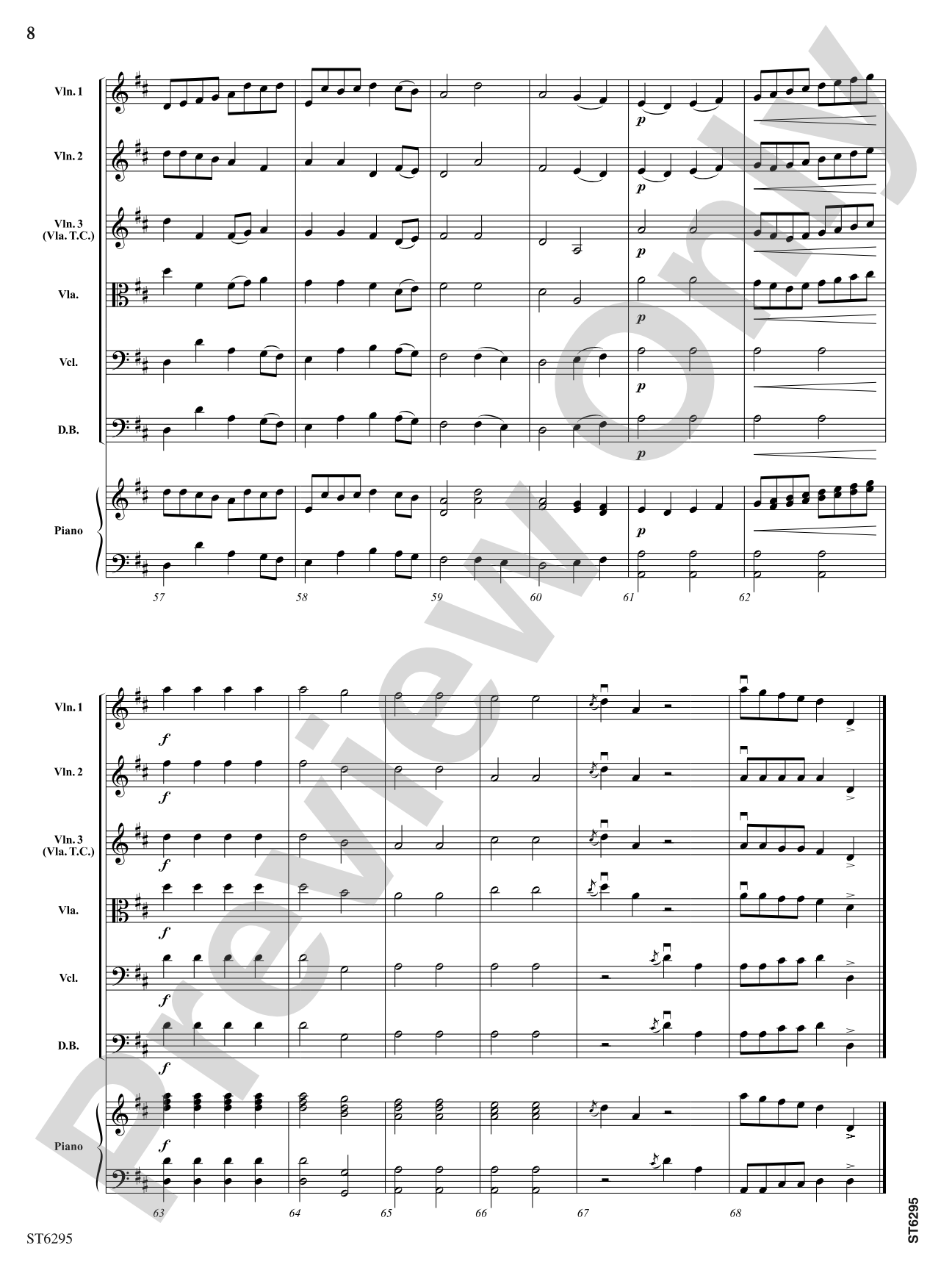

The Keeper Did A-Hunting Go: Score
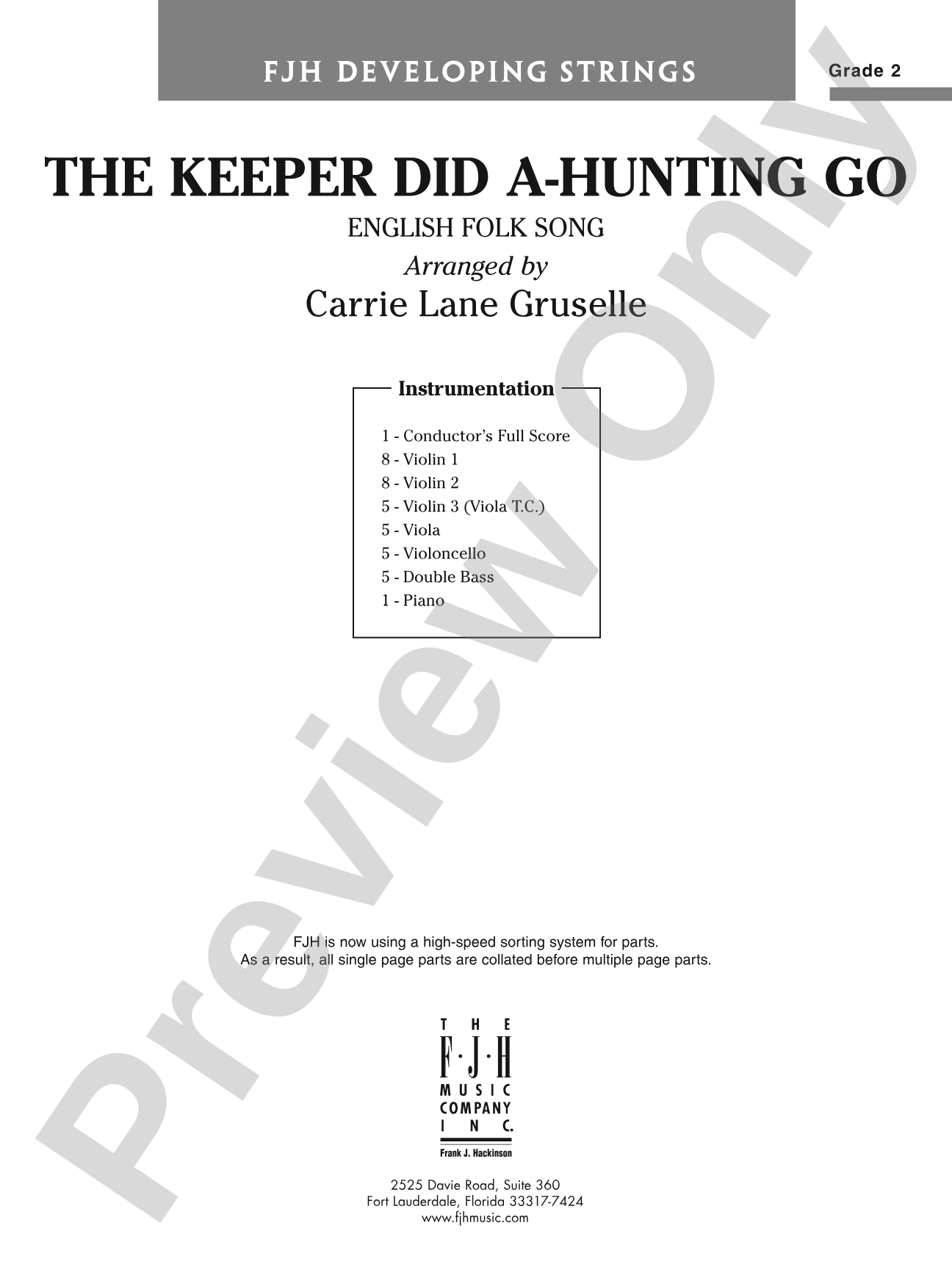
Arranged by Carrie Lane Gruselle
Grade: 2
Item: 98-DST6295S
$5.00
Pickup currently not available
Description
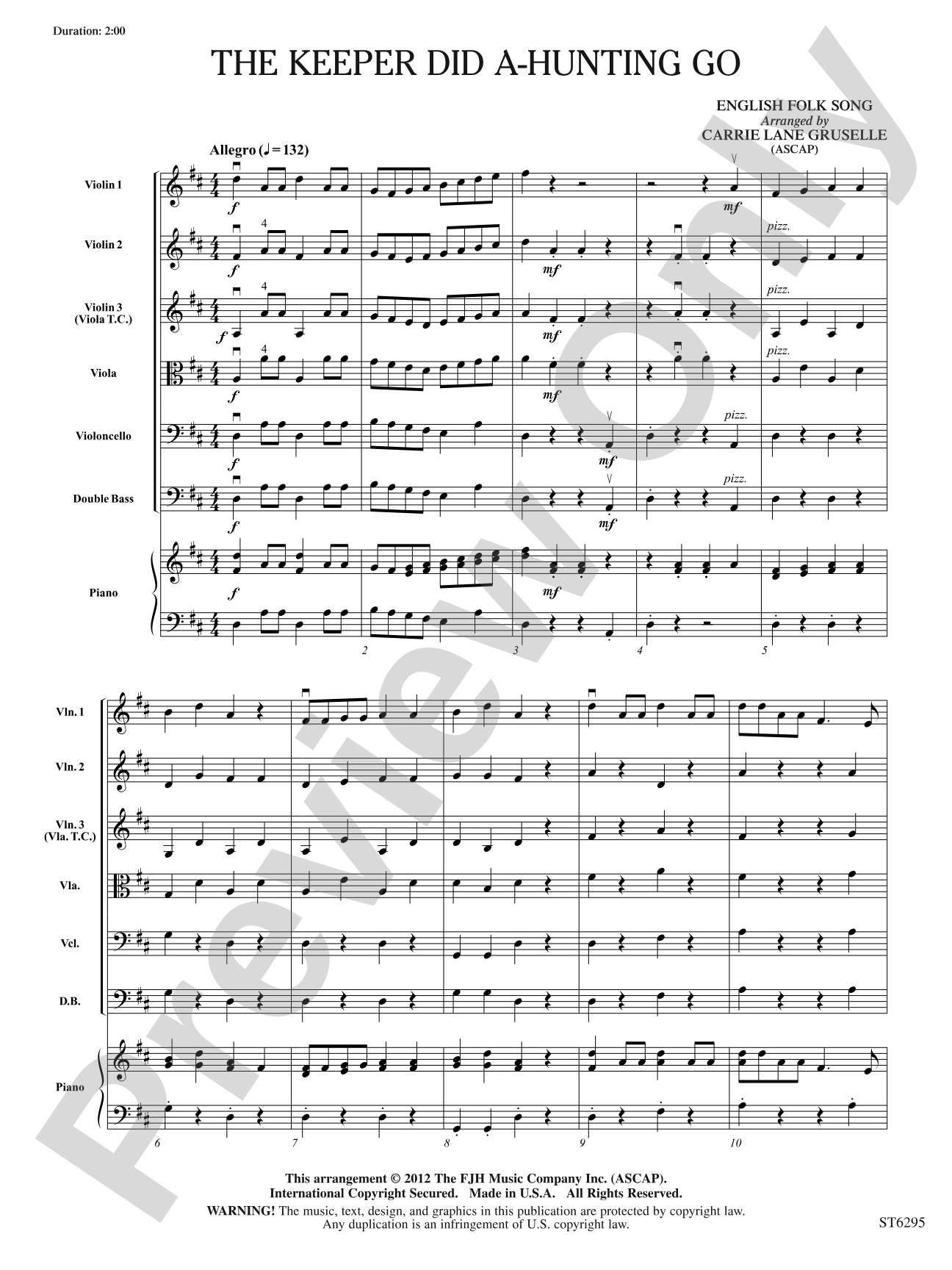
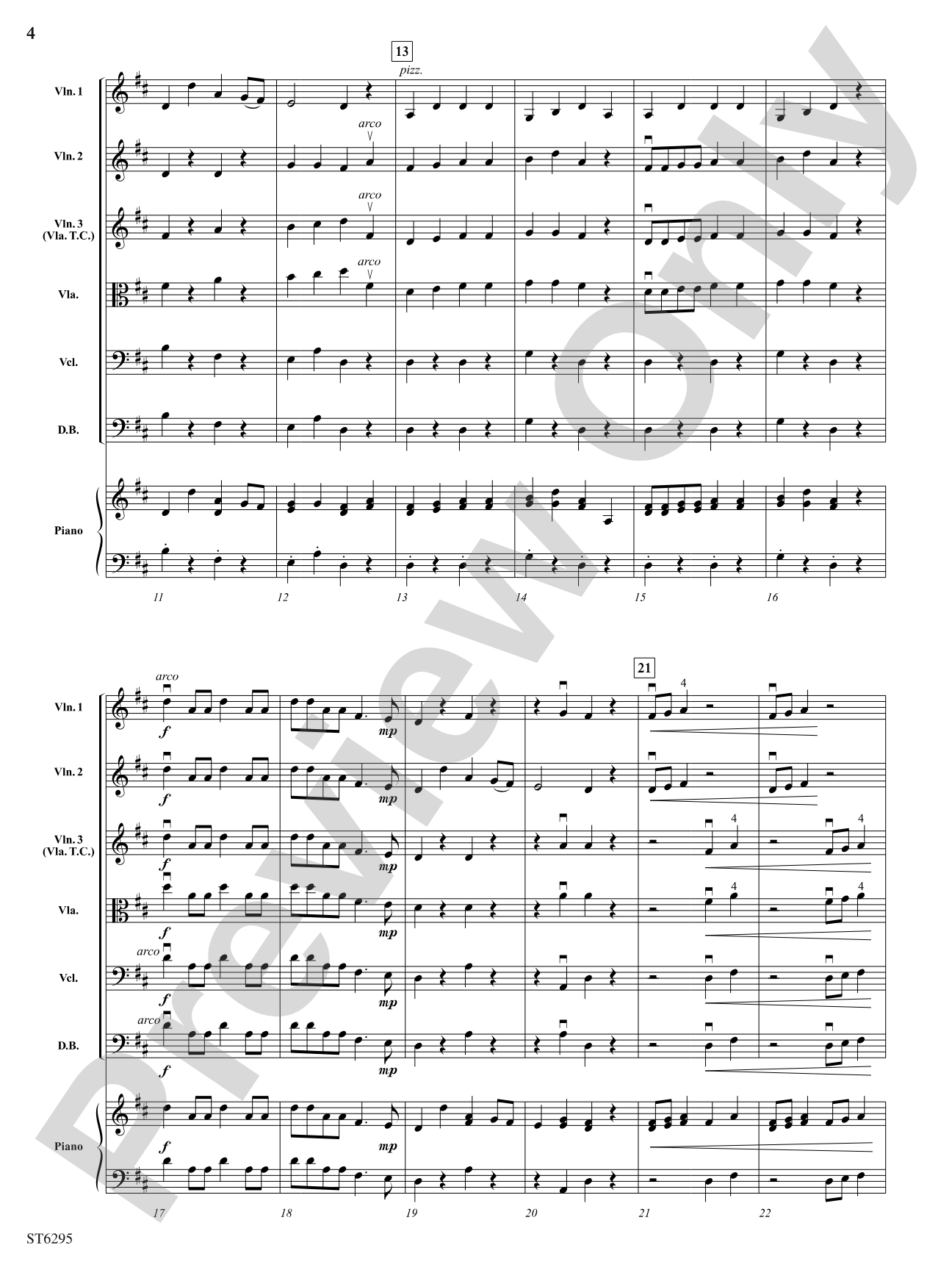
Light and cheerful, this charming arrangement of an English folk song stays in D major with low 2 fingerings only for violin 1. Independence of parts is challenged through varying textures including unison, melody with accompaniment, and a few contrapuntal moments. An excellent vehicle to instill confidence in your developing musicians!


The Keeper Did A-Hunting Go: Score isn't in MakeMusic Cloud just yet...but it could be. Let us know you'd like to see it, and you'll help shape what comes next. In the meantime, start a free trial and dive into thousands of interactive titles your students can play along with today.
Request This Title
Tell us you want it.
Start Your Free Trial
Explore everything that's ready to play right now.
Sample Audio
1
Audio File
--:--
0:00
0:00
Sample Video
No sample videos found.
Additional Details
Series:
FJH Developing Strings
Publisher:
The FJH Music Company, Inc.
SKU:
98-DST6295S
More about this title
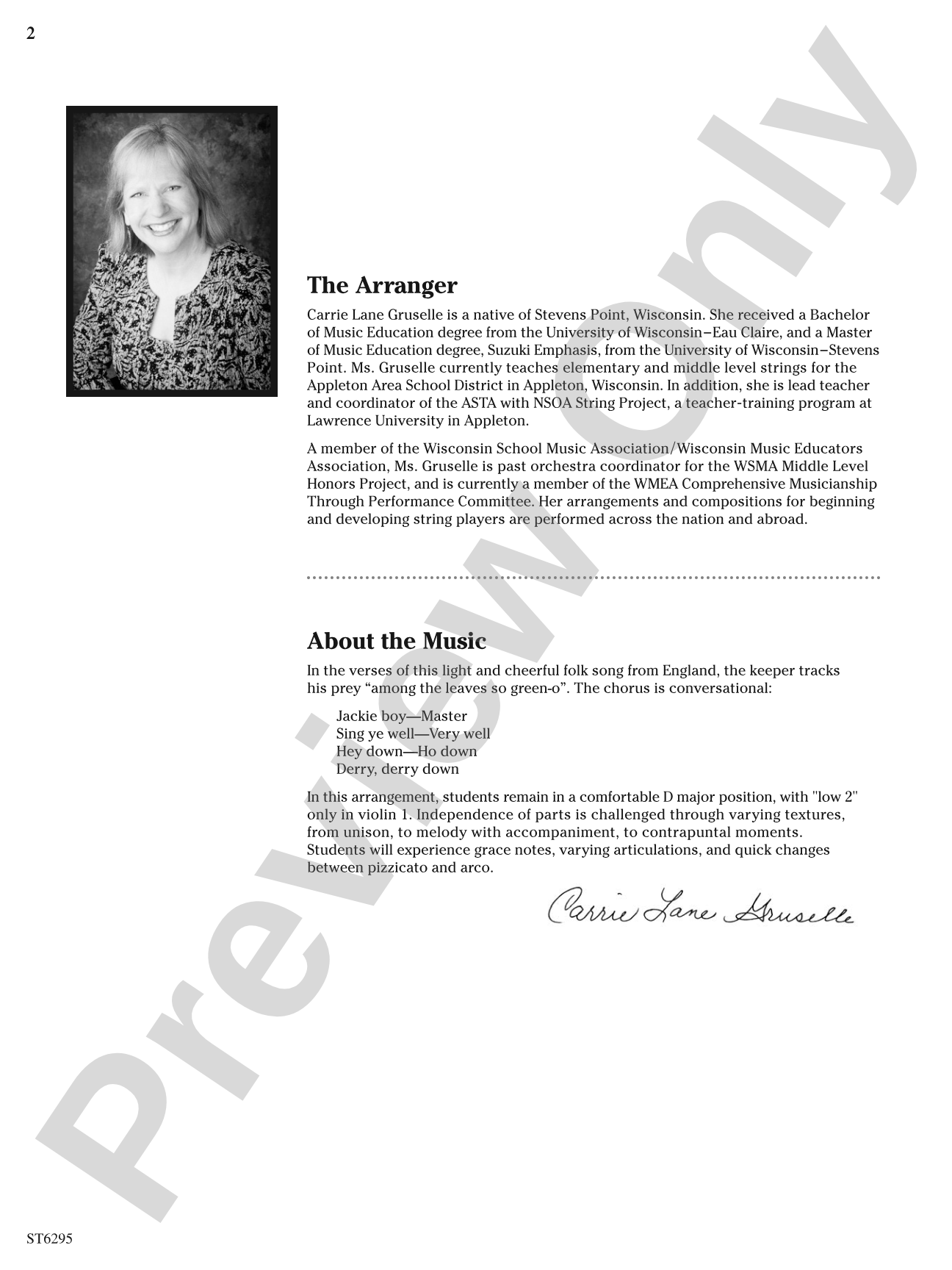
About the Arranger: Carrie Lane Gruselle

Carrie Lane Gruselle brings both classroom experience and advanced training to her arranging work. She earned her Bachelor of Music Education from the University of Wisconsin, Eau Claire and completed a Master's degree in Music Education with Suzuki emphasis at the University of Wisconsin, Stevens Point, giving her deep insight into how young string players develop.
In Appleton, Wisconsin, she teaches elementary and middle school strings for the Appleton Area School District while also serving as cello instructor for the Lawrence University Arts Academy. This dual role keeps her acutely aware of what young ensembles need: music that challenges them meaningfully without overwhelming their technical reach.
Why we love this
Gruselle's arrangement trusts developing musicians to handle real musical thinking without asking them to manage complex fingering patterns. By keeping violin 1 in low positions exclusively, she removes a technical barrier and lets your students focus on listening to each other, tracking independent lines, and responding to textural shifts. It's smart pedagogy wrapped in a folk tune your musicians will actually enjoy performing.
What to expect
Bright and unpretentious, like a folk melody carried across a sunny afternoon. The D major tonality stays warm and open throughout, while the shifting textures keep the piece from feeling static or repetitive. There's enough rhythmic clarity and harmonic simplicity that young musicians can focus on shaping phrases and supporting one another's sound.
Who it's for
Grade 2 string orchestras with players who have solid foundational technique but are still building confidence in their reading and ensemble listening skills. This arrangement works especially well for groups preparing contest or festival materials, where judges reward both musical maturity and appropriate difficulty levels.
How to get the most out of it
- Rehearse the unison sections with particular attention to bow direction and tone matching; small inconsistencies stand out when everyone plays the same line.
- Map the contrapuntal moments in advance so students understand where their line sits in relation to others, then isolate those passages in sectional rehearsals.
- Use the shift from melody-with-accompaniment to unison textures as a natural way to discuss how arrangement choices affect ensemble balance and listener focus.
- Record a run-through early and play it back so students hear how their individual parts combine; this reinforces why part independence matters.
How to use it
Include this on a concert devoted to folk arrangements or traditional music from multiple cultures, where it can sit comfortably alongside other Grade 2 repertoire. It also makes an ideal first-round or semifinal selection at regional string festivals, where its approachable difficulty and clear musical content resonate with adjudicators.
Skills your students will build
- Maintaining independence of parts while listening to ensemble texture
- Reading and performing in D major across all four string parts
- Distinguishing between unison, melody-with-accompaniment, and contrapuntal textures
- Playing in low positions on violin 1 with confidence and consistency
- Balancing individual responsibility with collective blend