
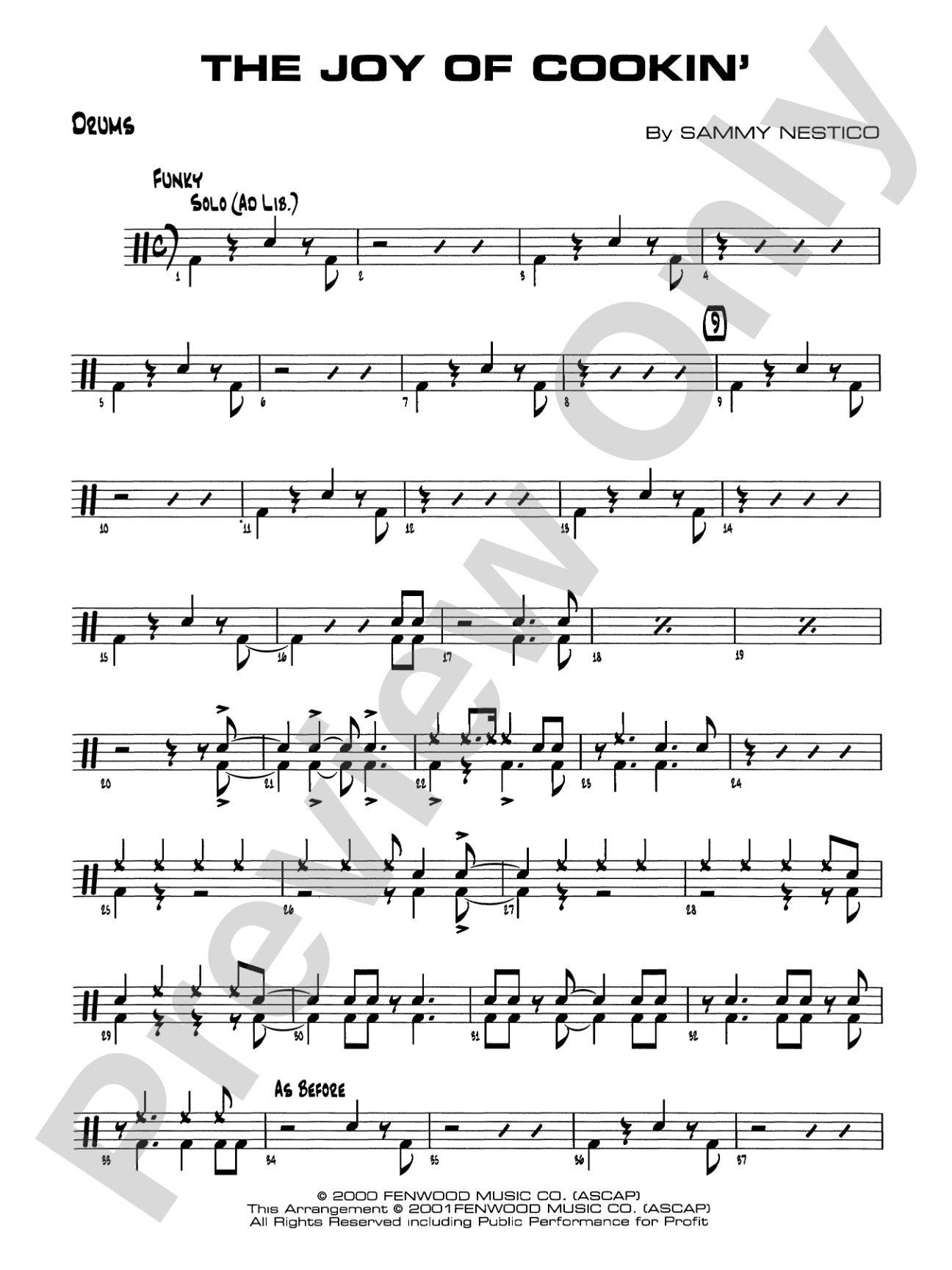

The Joy of Cookin': Drums
By Sammy Nestico
Grade: 4.5 (Medium Advanced / Difficult)
Item: 00-PC-0002445_D
$3.00
Pickup currently not available
Description
From the Quincy Jones and Sammy Nestico CD titled Basie & Beyond. Composed and arranged by the legendary Sammy Nestico, this chart begins with a funky drum groove and develops into a nice easy swing feel with solo space for trumpet and tenor saxophone. In Sammy style, he features a wonderful swingin' ensemble section that cooks hard, then goes back to a funky groove for the reprise. Trumpet range to high F. World class writing! (1:18)


Don't just read it, hear it, play along with it, and watch your students grow with it. In MakeMusic Cloud, The Joy of Cookin': Drums comes alive with professional accompaniment, adjustable tempo, and built-in practice tools that turn solo practice into real progress.
Open in the Player
Jump straight in and assign it today.
Start Your Free Trial
Open this title and explore the full library in minutes.
Sample Audio
1
Audio File
--:--
0:00
0:00
Sample Video
No sample videos found.
Additional Details
Series:
Quincy Jones & Sammy Nestico Premier Jazz
Publisher:
Alfred Music
Page Count:
146
SKU:
00-PC-0002445_D
More about this title
About the Composer: Sammy Nestico
Sammy Nestico stands as one of jazz's most prolific and respected arrangers, with a career spanning seven decades. His work with the Count Basie Orchestra, the Sinatra sound, and countless film and television projects established him as a master of big band writing and ensemble orchestration.
Nestico's arranging voice is immediately recognizable: he builds grooves methodically, balances soloist and ensemble with surgical precision, and writes horn sections that swing hard while remaining accessible to advancing musicians. His contributions to jazz education are substantial, both through his published charts and through his influence on how jazz ensembles approach style, phrasing, and collective musicianship.
Why we love this
Nestico's chart architecture here showcases his gift for proportional form and groove development. The funky drum introduction establishes character immediately, the solo section provides genuine breathing room for your trumpet and tenor players, and the final ensemble section delivers the swinging payoff that makes students understand why jazz ensemble is exhilarating. This is the kind of writing that teaches ensemble discipline while preserving the swagger jazz demands.
What to expect
The piece opens with attitude, funky and street-level, then rises into a buoyant swing that feels like the band has found its groove and is having the time of its life. The trumpet and tenor solos invite personality and risk; the ensemble section is pure celebration, the kind of moment that reminds students why they play jazz.
Who it's for
Jazz ensembles at the Grade 4.5 level with players capable of handling the trumpet's range to high F and confident in both straight and swinging feels. This is an ideal festival or contest selection for directors seeking a chart with real character, earned complexity, and showcase moments for section soloists without requiring college-level chops.
How to get the most out of it
- Lock the drum groove in the opening before rehearsing ensemble sections. The funky pocket is the backbone; everything else sits on top of it.
- Shape the trumpet solo space with clear form. The soloist needs to know where the song breathes, where the section re-enters, and what tempo relationship the groove maintains.
- Balance the ensemble's weight in the final section carefully. Nestico writes for full section sound, but clarity matters more than volume; blend and articulation precision will make the ensemble section cook harder than dynamic overpowering.
- Establish your swing feel early when transitioning from the funky groove to the swinging middle section. The two feels coexist in this arrangement, so rehearse the bridge deliberately.
How to use it
Program this as a contest selection where you want to show adjudicators that your band understands modern jazz language and can execute both funk and swing idioms with conviction. It also works beautifully on a concert program sandwiched between a ballad and a straight-ahead uptempo, giving the ensemble a moment to groove without the weightlessness of a pure shuffle number.
Skills your students will build
- Funk-to-swing feel transitions and maintaining pulse across contrasting rhythmic styles
- Solo phrasing and listening in call-and-response ensemble contexts
- Section blend and articulation precision at faster tempos
- Reading and executing Nestico-style syncopated ensemble writing