
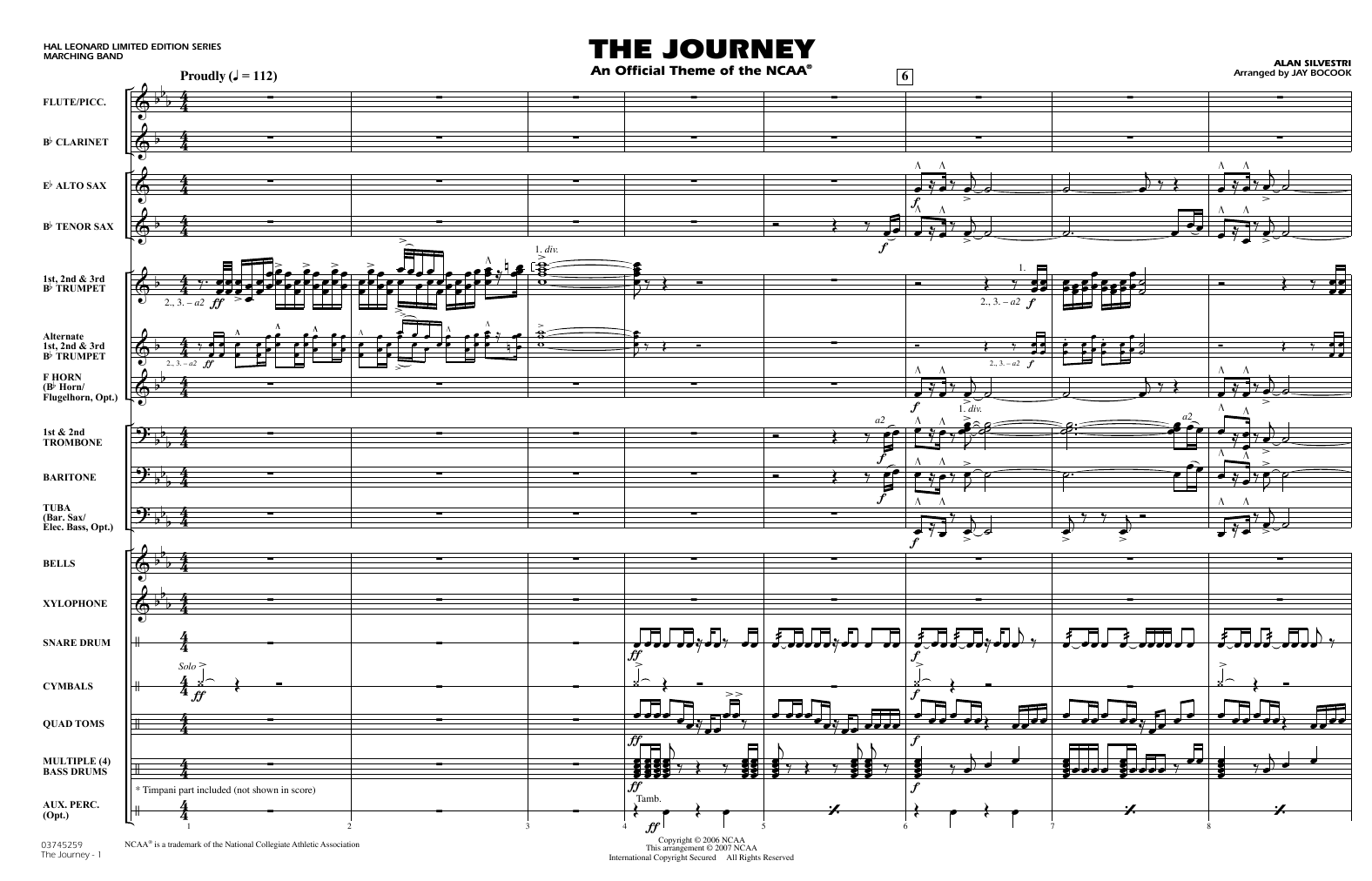

The Journey (An Official Theme of the NCAA) (arr. Jay Bocook): Marching Band Conductor Score & Parts
By Alan Silvestri / Arranged by Jay Bocook
Grade: 4
Item: 35-PK01611226
$65.00
Pickup currently not available
Buy Extra Parts (Digital PDF Download)
Parts Added to Cart!
Description
Well-known film composer Alan Silvestri (Back to the Future, The Polar Express, Night at the Museum) was asked by the NCAA to write a new official theme to be used for all their sporting events. This impressive new theme opens with a stunning trumpet fanfare and is propelled by a driving rock percussion groove. Sure to become classic stadium and fieldhouse fare! (This arrangement also includes optional easier trumpet parts for less experienced players.)


The Journey (An Official Theme of the NCAA) (arr. Jay Bocook): Marching Band Conductor Score & Parts isn't in MakeMusic Cloud just yet...but it could be. Let us know you'd like to see it, and you'll help shape what comes next. In the meantime, start a free trial and dive into thousands of interactive titles your students can play along with today.
Request This Title
Tell us you want it.
Start Your Free Trial
Explore everything that's ready to play right now.
Sample Audio
No sample audio found.
Sample Video
No sample videos found.
Additional Details
Publisher:
Hal Leonard
SKU:
35-PK01611226
More about this title
About the Composer: Alan Silvestri
Alan Silvestri has spent decades composing for film and television, building a catalog that ranges from science fiction epics to family adventures. His work for Back to the Future, The Polar Express, and Night at the Museum showcases his gift for writing memorable themes that capture both emotional resonance and broad appeal, qualities that translate powerfully to the marching arts.
When tasked with creating the official NCAA theme, Silvestri brought the same craftsmanship that defines his film scores: clear melodic architecture, strategic orchestration, and music designed to energize large audiences. His understanding of how themes function in live, public settings informed every phrase of this composition.
Why we love this
Silvestri crafted a theme that feels both cinematic and immediately stadium-ready. The opening trumpet fanfare grabs attention instantly, while the rock percussion groove gives your ensemble a contemporary energy that lands well with modern audiences. Jay Bocook's arrangement respects the original concept while building in flexibility through optional easier trumpet parts, making this accessible to programs at different technical levels.
What to expect
Bright, propulsive, and immediately engaging. The fanfare catches ears from the first note, then the rhythm section pushes the ensemble forward with infectious energy. This is music built to energize crowds at sporting events, and that charge translates to the experience of performing it.
Who it's for
Any marching band looking for repertoire that sounds polished and recognizable to audiences. This works equally well for a competitive program seeking a contemporary opener or a high school band wanting crowd-pleasing stadium music. The optional easier parts make it genuinely accessible across a range of technical abilities.
How to get the most out of it
- Balance the opening fanfare carefully. The trumpet section should cut through with clarity, but the supporting voices need definition too. Excessive volume often muddies the articulation that makes this opening sparkle.
- Lock the percussion groove early in rehearsal. The rock feel requires precision from your battery and front ensemble. Once that foundation is solid, the brass line sits naturally on top.
- Shape the melodic phrases with clear contour rather than playing through them as blocks of sound. Silvestri wrote this with film scoring sensibilities, so dynamic gestures and phrase breathing matter.
- Consider using the optional easier trumpet parts strategically during fall rehearsals or early in the season when your lead players are still building endurance.
How to use it
Open a football game or pep rally with this. Its official NCAA designation gives it natural relevance in athletic contexts, and the contemporary rock groove sits well between traditional ceremonial music and pop-influenced arrangements. It also works as a strong first piece at a concert, establishing energy and precision before shifting to contrasting material.
Skills your students will build
- Articulation control in high-register brass writing
- Rock-style groove coordination between percussion and melodic voices
- Balancing volume and cut in fanfare textures
- Phrasing with dynamic contour in contemporary idioms
- Reading and executing optional part substitutions