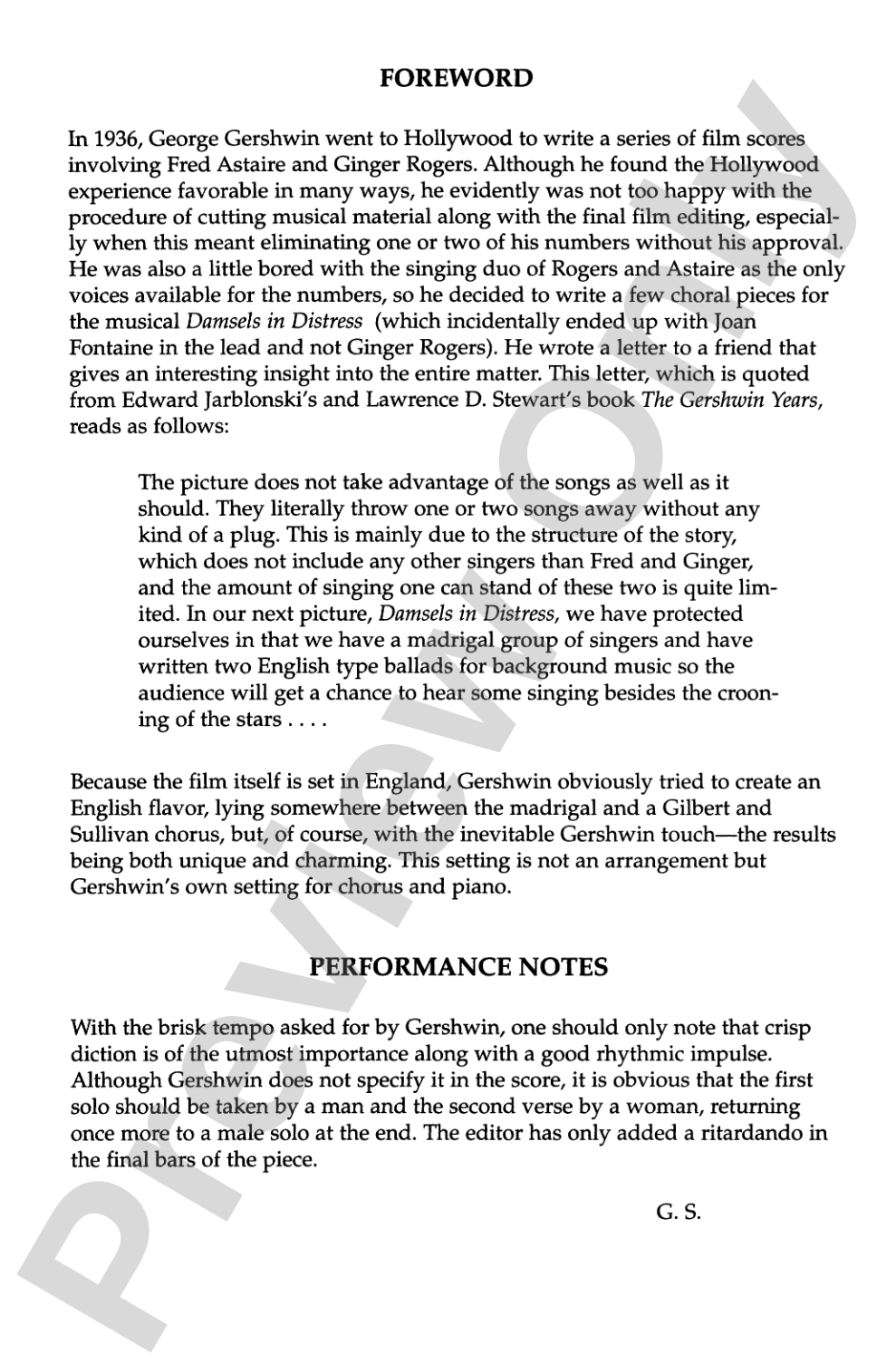
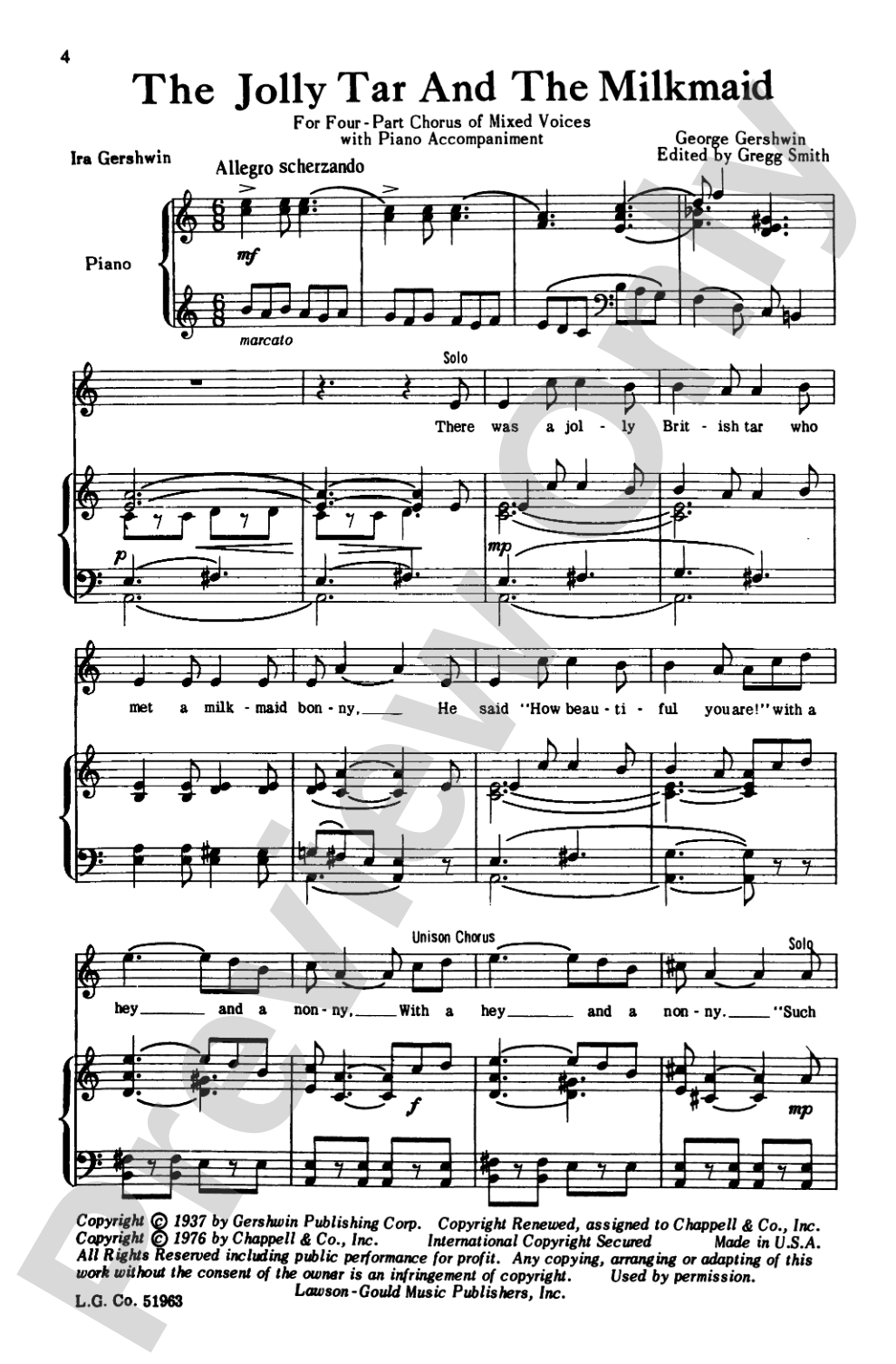
The Jolly Tar and the Milkmaid Sheet Music Preview

The Jolly Tar and the Milkmaid: SATB Choral Octavo

By George Gershwin / ed. Gregg Smith

Item: 00-PO-0005038

Digital Download
$2.25

Minimum order quantity: 20 copies

One moment…

Description

The Jolly Tar and the Milkmaid: SATB Choral Octavo isn't in MakeMusic Cloud just yet...but it could be. Let us know you'd like to see it, and you'll help shape what comes next. In the meantime, start a free trial and dive into thousands of interactive titles your students can play along with today.

Sample Audio
No sample audio found.
Sample Video
Additional Details
Series: Alfred Archive Edition: Lawson-Gould Music Publishers
Publisher: Alfred Music
Page Count: 12
SKU: 00-PO-0005038

More about this title

About the Composer: George Gershwin

George Gershwin (1898-1937) bridged classical composition and American popular music with unmatched sophistication. His gift for melody, harmonic innovation, and rhythmic vitality shaped twentieth-century concert music and continue to define what American classical composition sounds like.

Gershwin's work for choir remains underperformed in educational settings, yet it offers students immediate access to his distinctive voice: syncopation, jazz inflections, and singable lines that feel both contemporary and timeless. His choral pieces reward singers who embrace rhythmic clarity and textural balance.

Why we love this

Gershwin's gift for melody shines in every phrase of this piece, giving singers material that feels grateful to perform while sounding sophisticated. The harmonies sit comfortably for SATB voices without sacrificing harmonic interest, making it accessible to developing ensembles yet rewarding for advanced choirs. Programming a Gershwin choral work signals that your ensemble takes twentieth-century American song seriously.

What to expect

Charming and slightly cheeky, with the kind of tunefulness that gets lodged in singers' heads long after rehearsal ends. The piece carries narrative lightness while maintaining Gershwin's signature harmonic sophistication, creating a listening experience that feels both fun and musically substantive.

Who it's for

SATB choirs at the intermediate to advanced level seeking twentieth-century American repertoire that combines accessibility with genuine musical substance. Directors programming concert or festival performances will find this piece generates immediate audience engagement without compromising artistic integrity.

How to get the most out of it

  • Balance the humor and charm of the text with genuine vocal line integrity. Avoid treating this as novelty material; the craftsmanship underneath deserves respect.
  • Pay close attention to rhythmic precision, especially syncopated figures common to Gershwin's style. Ensemble members must feel the pulse together to capture the piece's energy.
  • Support the narrative quality by characterizing the soprano (or tenor, depending on voice assignment) as the protagonist. Clarity of solo lines within the ensemble texture matters.
  • Shape phrases into natural arcs rather than hitting every dynamic marking mechanically. Gershwin's lines breathe like songs, not recitations.

How to use it

Pair this with other American classics to celebrate twentieth-century vocal writing, or use it as a palate cleanser between heavier romantic or contemporary repertoire. The approachable character and modest length make it ideal for pops concerts, community performances, or festival competitions where you want to showcase stylistic range.

Skills your students will build

  • Syncopated rhythm reading and performance (Gershwin-style jazz inflections)
  • Balancing narrative character with vocal line integrity
  • SATB blend and balance in harmonic textures
  • Stylistic awareness of American twentieth-century vocal music
  • Precision in ensemble rhythmic coordination

You May Also Like