The Jitterbug Waltz: Piano Digital Sheet Music

The Jitterbug Waltz: Piano Digital Sheet Music

Fats Waller

Item: 00-PS-0005900

Digital Download
$3.99
Description

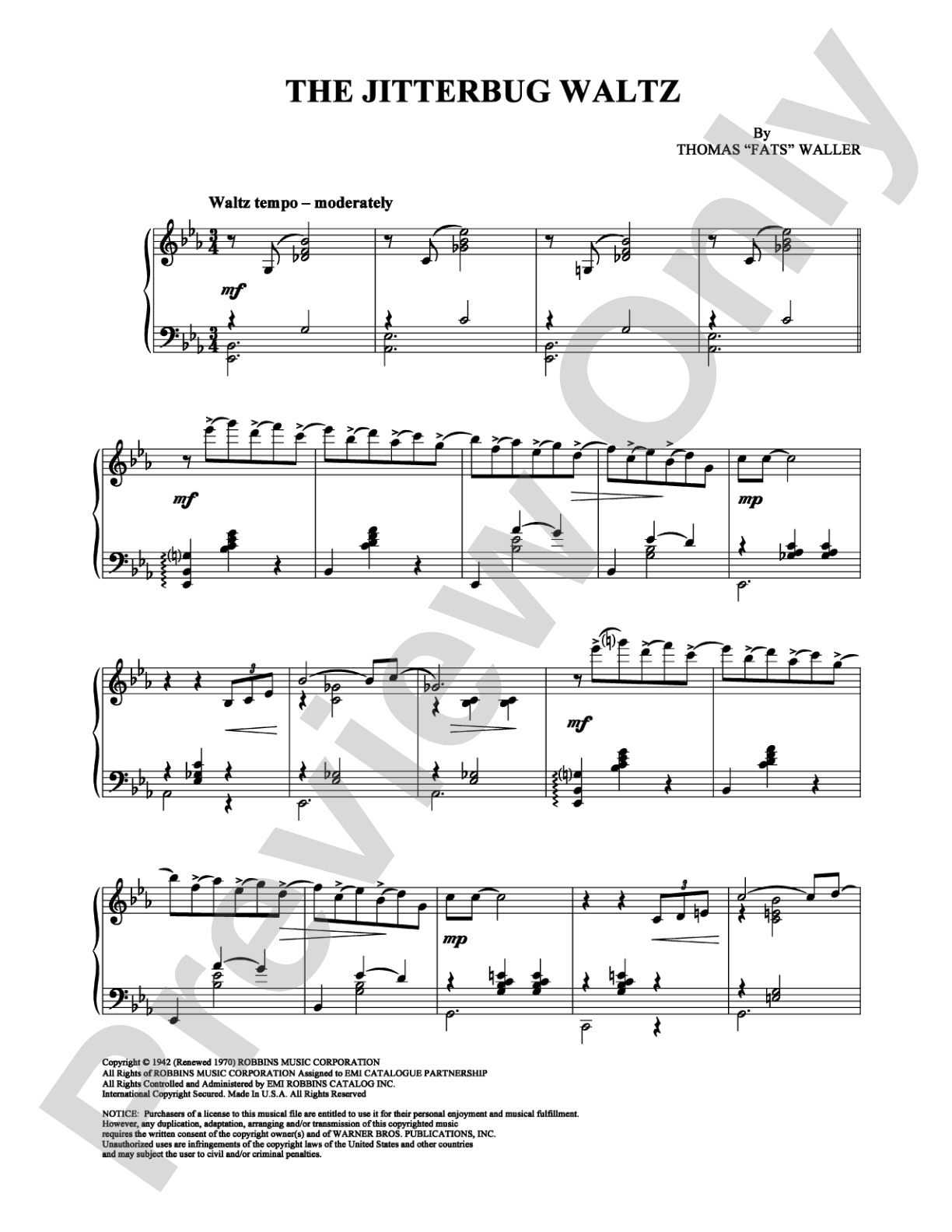
The Jitterbug Waltz: Piano Digital Sheet Music isn't in MakeMusic Cloud just yet...but it could be. Let us know you'd like to see it, and you'll help shape what comes next. In the meantime, start a free trial and dive into thousands of interactive titles your students can play along with today.

Sample Audio
No sample audio found.
Sample Video
Additional Details
SKU: 00-PS-0005900

More about this title

About the Artist: Fats Waller

Fats Waller (1904, 1943) was a pianist, organist, and composer whose virtuosity and wit shaped American jazz and popular music in the 1920s and 1930s. His technical command of the keyboard was matched only by his ability to entertain; he could play stride piano with breathtaking speed while delivering comic asides that kept audiences laughing. Waller composed hundreds of songs, many of which became standards, and his recordings remain essential listening for anyone studying jazz piano history.

Why we love this

The Jitterbug Waltz sits at that sweet intersection where technical display serves genuine musical joy. Waller's stride piano writing here is sophisticated without being inaccessible; it teaches pianists how to build rhythmic momentum while maintaining clarity in the left hand. Programming this piece signals to an audience that your pianist understands swing history and can swing hard.

What to expect

The piece bounces with infectious energy. The left hand creates a propulsive rhythmic engine while the right-hand melody dances above it with playful, syncopated lines. There's a lightness here despite the technical demands, an almost conversational quality that invites listeners into the joy of making music.

Who it's for

This piece belongs in the hands of intermediate to advanced pianists who want to understand how stride piano works in a swing context. It's ideal for students exploring jazz history through primary sources rather than simplified arrangements, and it rewards performers who can sustain technical control while maintaining a relaxed, swinging feel.

How to get the most out of it

  • Establish the stride pattern early in rehearsal as an independent rhythm, not as accompaniment. Practice the left hand alone until the swing feel becomes muscle memory, not a conscious effort.
  • Let the title guide your tempo choices. A true jitterbug waltz moves with spring and lift; resist the temptation to rush. The rhythm should dance, not scramble.
  • Shape the right-hand melody with the same articulation language as a jazz vocalist would use. Anticipate beats, catch phrases slightly before the printed note, and give space for the stride to breathe.
  • Balance your dynamics across the full keyboard. Stride piano can crowd the middle register; think of your bass notes as foundational and your melody as floating above them with independent weight.

How to use it

This works beautifully as a bridge between classical technique and jazz repertoire in a recital program. It can anchor a set of jazz standards or serve as a solo feature that demonstrates serious musical study. Consider pairing it with other stride piano pieces or Waller compositions to build a focused concert set around this transformative musician.

Skills your students will build

  • Stride piano technique (bass-note and chord patterns in the left hand)
  • Swing eighth-note articulation and phrasing
  • Rhythmic independence between hands
  • Syncopation and anticipation of melodic lines
  • Maintaining tempo and groove over extended passages
  • Jazz interpretation of a composed melody

You May Also Like