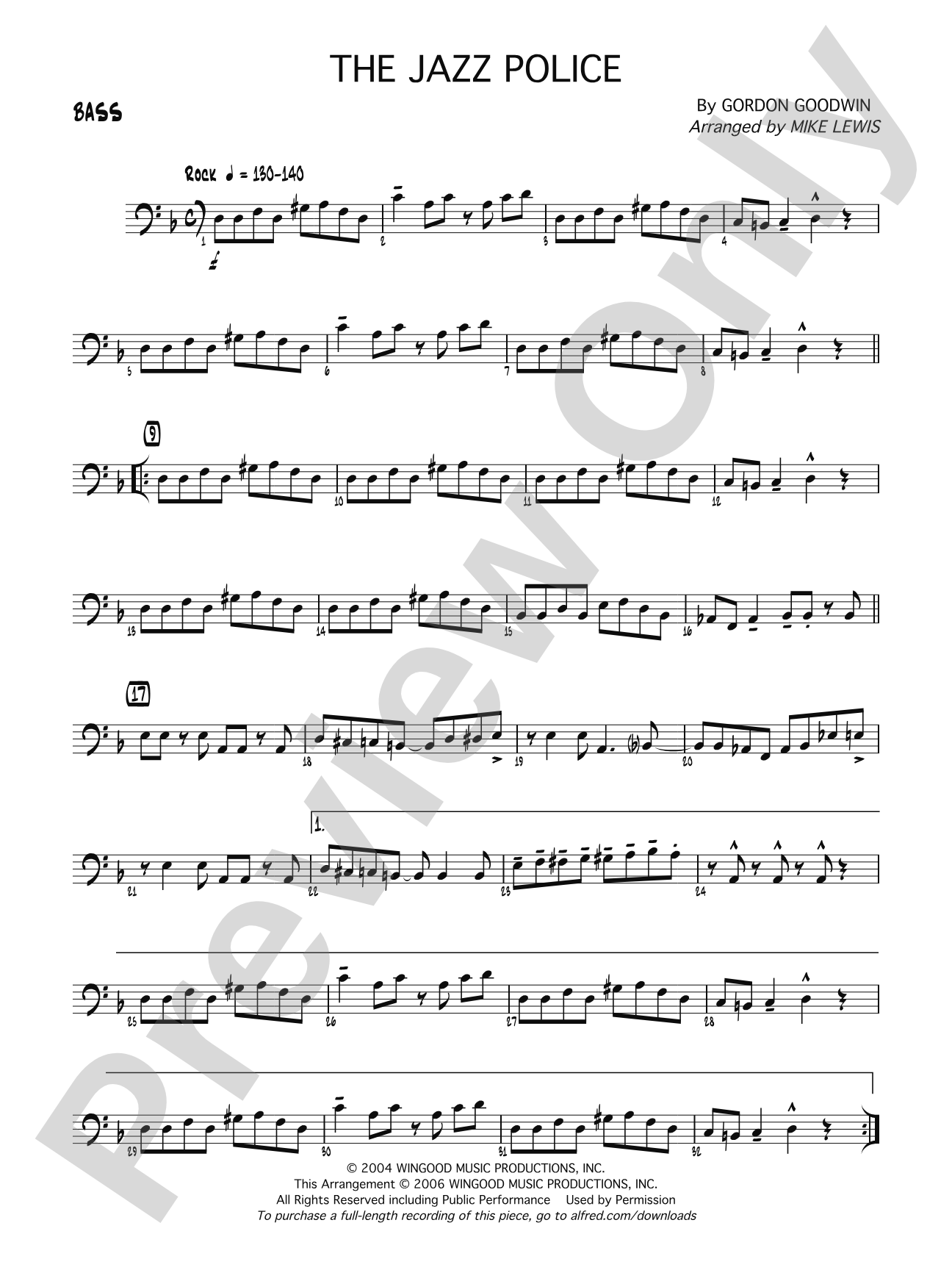
The Jazz Police: String Bass Sheet Music Preview

The Jazz Police: String Bass

By Gordon Goodwin / arr. Mike Lewis

Grade: 1 (Easy)

Item: 00-PC-0017107_SB

Digital Download
$3.00
Description
It's hot---way hot! This jazz-rock chart hits hard and keeps going. The young players will really dig into it. No individual solos, but plenty of action for everybody! Easy ranges. It will take some work but it's worth it. This title is available in MakeMusic Cloud.

Don't just read it, hear it, play along with it, and watch your students grow with it. In MakeMusic Cloud, The Jazz Police: String Bass comes alive with professional accompaniment, adjustable tempo, and built-in practice tools that turn solo practice into real progress.

Sample Audio
0:00
0:00
Sample Video
Additional Details
Series: First Year Charts for Jazz Ensemble
Publisher: Alfred Music
Page Count: 78
SKU: 00-PC-0017107_SB

More about this title

About the Composer: Gordon Goodwin

Gordon Goodwin

Gordon Goodwin wrote his first complete composition at five years old, capturing entire pieces rather than fragments. By thirteen, he had already completed a big band chart called Hang Loose, setting the stage for a career that would span film, television, and live performance. His Emmy and Grammy recognition stems from orchestrations heard in films including Bad Boys II, Remember the Titans, and Star Trek: Nemesis, alongside work with artists from Quincy Jones to Christina Aguilera.

Since founding Gordon Goodwin's Big Phat Band in 2000, he has solidified his reputation as both a bandleader and composer of substantial craft. The ensemble's recordings earned Grammy nominations and pioneered DVD audio releases in the commercial jazz market. Goodwin continues to conduct major symphony orchestras while maintaining an active presence in the Los Angeles big band scene, bringing three decades of film industry expertise and jazz sensibility to every project.

Why we love this

Goodwin's pedigree in film scoring means every brass hit lands with intention and every transition serves the groove. Young players respond to charts that have real energy and cinematic flair, and this one delivers both without requiring advanced technique. The arrangement balances accessibility with genuine musicianship, letting newer ensembles sound polished from the first rehearsal.

What to expect

A driving, high-energy chart that straddles jazz, funk, and rock with equal authority. The rhythm section powers forward while the horns deliver tight, syncopated hits that feel contemporary and urgent, creating momentum that carries through from start to finish.

Who it's for

First-year and second-year jazz ensembles with players ready to tackle ensemble funk and rock grooves. The straightforward ranges and no-solo format make it ideal for mixed-ability groups where you need everyone engaged without fear of individual performance pressure.

How to get the most out of it

  • Lock the backbeat tight between drums and bass before adding horns; this funk foundation makes everything that sits on top clearer.
  • Push the dynamics in the ensemble hits rather than pulling back. The chart thrives on confidence and attack.
  • Balance saxophone and trumpet voices during the main melody so neither section overwhelms the line.
  • Work rhythm section communication early; the piano, bass, and drums need to feel like one unit before the full band comes in.

How to use it

Program this as an opener or closer to a concert when you want to showcase ensemble cohesion and groove sensibility. It works equally well at jazz festival competitions where judges appreciate accessible writing that still demonstrates sophisticated arranging. Place it alongside standards to show your young players can handle modern jazz-rock language.

Skills your students will build

  • Reading syncopated rhythms in funk and rock contexts
  • Ensemble balance in sectional writing without solos
  • Articulation consistency across chord hits and unison passages
  • Groove pocket awareness and rhythmic precision
  • Dynamic shaping within energetic ensemble charts

You May Also Like