The Isle of Calypso (from The Odyssey (Symphony No. 2)): 3rd B-flat Clarinet Sheet Music Preview

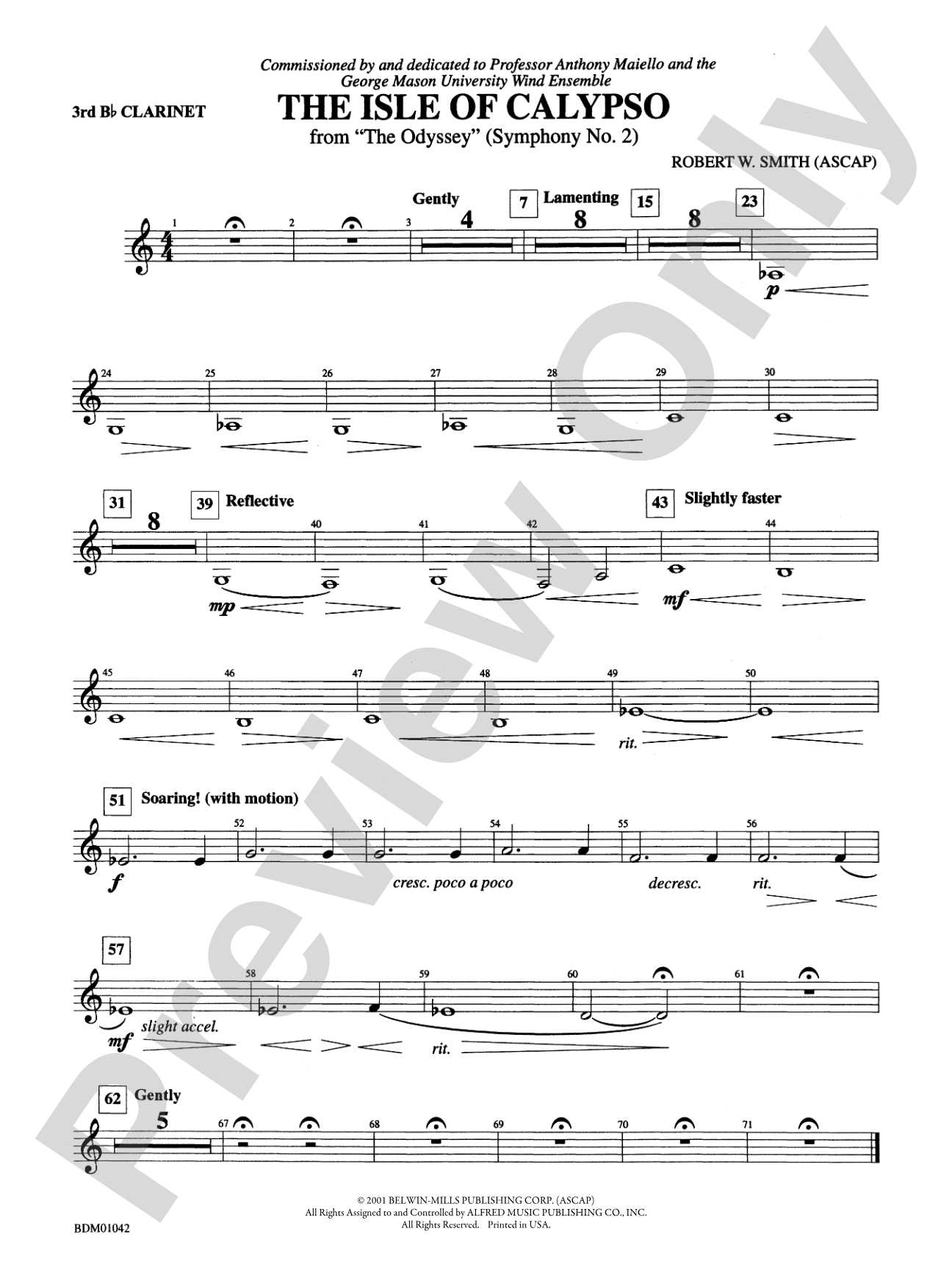
The Isle of Calypso (from The Odyssey (Symphony No. 2)): 3rd B-flat Clarinet

By Robert W. Smith

Grade: 4 (Medium)

Item: 00-PC-0015197_C3

Digital Download
$3.00
Description
The third movement of Robert W. Smith's second symphony The Odyssey, is serene in nature. Special effects depict the passing of time and add a mood of intrigue. Quiet and reflective, this is a sure winner on any program. Program it alone or with the other movements of The Odyssey, The Iliad (BDM00052) and The Winds of Poseidon (BD9923). (4:27)

Don't just read it, hear it, play along with it, and watch your students grow with it. In MakeMusic Cloud, The Isle of Calypso (from The Odyssey (Symphony No. 2)): 3rd B-flat Clarinet comes alive with professional accompaniment, adjustable tempo, and built-in practice tools that turn solo practice into real progress.

Sample Audio
0:00
0:00
Sample Video
Additional Details
Series: Belwin Symphonic Band
Publisher: Alfred Music
Page Count: 146
SKU: 00-PC-0015197_C3

More about this title

About the Composer: Robert W. Smith

Robert W. Smith

Robert W. Smith stands among America's most recorded and performed composers for concert band and orchestra, with over 400 published works to his credit. Educated at Troy State University (AL) and the University of Miami (FL), he has built a career spanning composition, arranging, conducting, and education. His symphonies, particularly The Divine Comedy and The Odyssey, have resonated with ensembles and audiences across North America, Europe, Australia, and Asia.

Beyond the concert hall, Smith's work has appeared in Olympic broadcasts, television network productions, major parades, and arena performances. As a guest conductor and clinician, he has worked internationally, bringing his distinctive compositional voice to musicians in the United States, Canada, Japan, Australia, and across Europe. His developing band works, including The Tempest, have become core repertoire for intermediate ensembles.

Why we love this

Smith's third movement achieves what many concert pieces struggle with: genuine serenity without sacrificing musical substance. The special effects he employs feel purposeful rather than decorative, using them to suggest the passage of time and deepen the emotional landscape. At Grade 4, the orchestration balances accessibility with sophistication, giving every section meaningful material while remaining technically manageable.

What to expect

Serene and contemplative, with an undercurrent of mystery. The movement unfolds like a traveler pausing on an island, taking in surroundings with both wonder and quiet reflection. Special effects create an almost impressionistic mood, suggesting the weight of time passing and the allure of an unknown place.

Who it's for

Concert bands at the Grade 4 level seeking repertoire that builds interpretive maturity without excessive technical demand. Directors looking to program a single, stand-alone movement or to build a thematic concert around the complete Odyssey symphony.

How to get the most out of it

  • Shape the dynamic contours deliberately through the reflective sections; let silence and restraint do as much work as the sustained lines do.
  • The special effects and time-passage elements need rehearsal isolation so students understand their dramatic function, not just their technical execution.
  • Balance the texture carefully so quieter background parts don't disappear; this movement's intrigue depends on all layers being heard.

How to use it

Program this movement as a standalone piece for a concert focused on lyrical, introspective band literature. Alternatively, pair it with the other movements of The Odyssey (The Iliad and The Winds of Poseidon) for a complete symphonic experience that showcases Smith's narrative ambition across the full work.

Skills your students will build

  • Sustaining long lines with controlled breath support and phrase architecture
  • Balancing texture and blend when playing accompaniment parts at soft dynamics
  • Interpreting special effects and extended techniques as dramatic rather than technical elements
  • Responding to flexible tempo and expressive conducting cues that shape the music's emotional arc

You May Also Like