
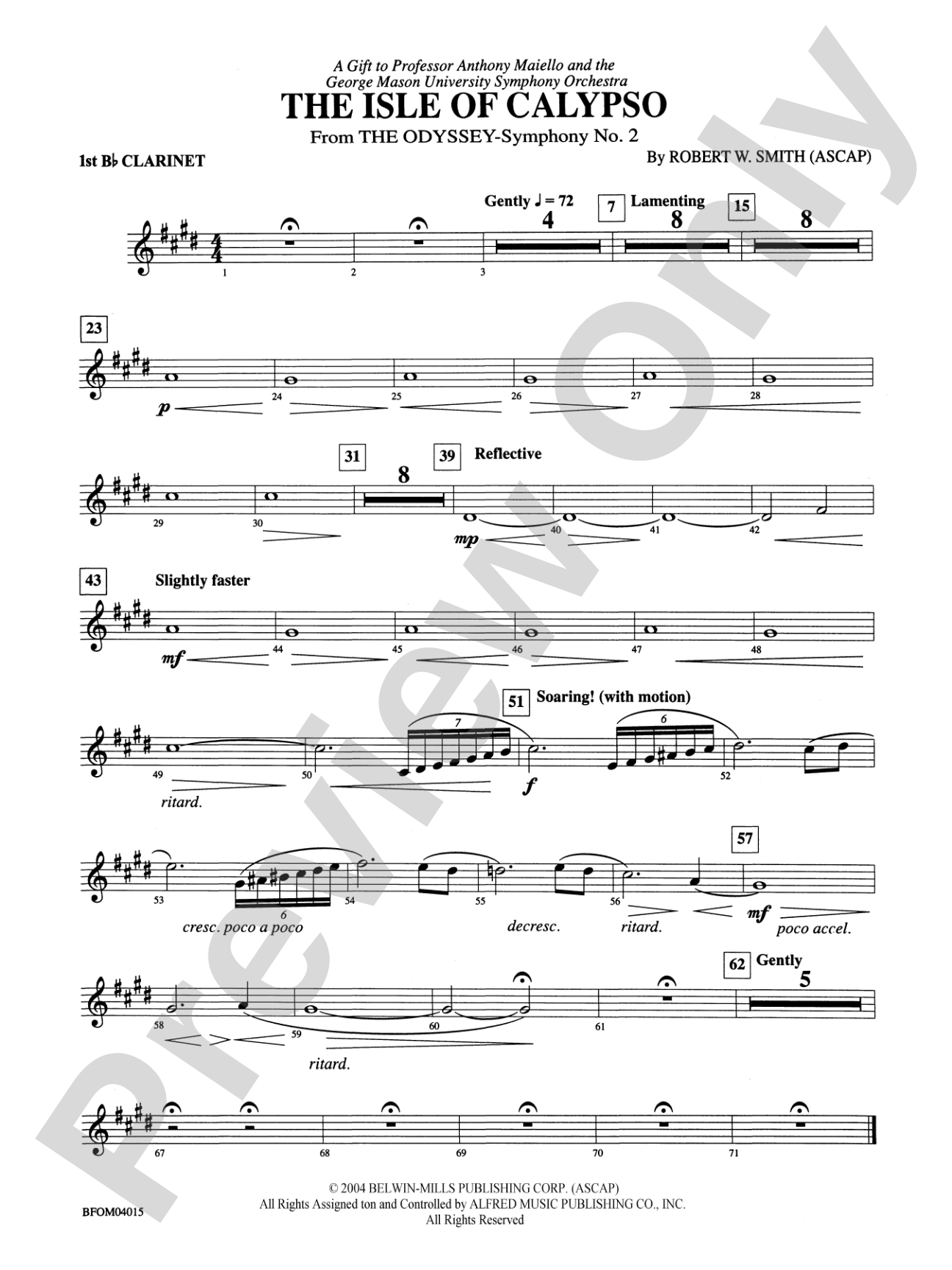

The Isle of Calypso (from The Odyssey (Symphony No. 2)): 1st B-flat Clarinet
By Robert W. Smith
Grade: 3
Item: 00-PC-0015604_C1
$3.00
Pickup currently not available
Description
The third movement of Robert W. Smith's second symphony, The Odyssey, is serene in nature. Special effects depict the passing of time and add a mood of intrigue. Quiet and reflective, this is a sure winner on any program. The moving solo is scored for violin solo or English horn. (4:29)


Don't just read it, hear it, play along with it, and watch your students grow with it. In MakeMusic Cloud, The Isle of Calypso (from The Odyssey (Symphony No. 2)): 1st B-flat Clarinet comes alive with professional accompaniment, adjustable tempo, and built-in practice tools that turn solo practice into real progress.
Open in the Player
Jump straight in and assign it today.
Start Your Free Trial
Open this title and explore the full library in minutes.
Sample Audio
1
Audio File
--:--
0:00
0:00
Sample Video
No sample videos found.
Additional Details
Series:
Belwin Concert Full Orchestra
Publisher:
Alfred Music
Page Count:
134
SKU:
00-PC-0015604_C1
More about this title
About the Composer: Robert W. Smith

Robert W. Smith stands among America's most performed orchestral and band composers, with over 400 published works spanning concert settings, educational ensembles, and broadcast media. He earned his Bachelor of Music Education from Troy State University and his Master of Music from the University of Miami, grounding his compositional voice in both pedagogy and craft.
Smith's symphonies have traveled globally, performed by musicians and audiences across North America, Europe, Australia, and Asia. Beyond the concert hall, his music has soundtracked major television broadcasts, Olympic ceremonies, and cultural events from the Macy's Thanksgiving Day Parade to Opening Day at Dodger Stadium. His ability to write music that engages developing musicians while satisfying audiences remains the hallmark of his prolific career.
Why we love this
Smith captures something rare here: a movement that is genuinely serene without sacrificing musical substance. The orchestration is transparent enough for Grade 3 ensembles to execute cleanly, yet sophisticated enough to hold the attention of accomplished audiences. The programmatic context (Calypso's island from Homer's Odyssey) gives your musicians something concrete to imagine, which translates directly into more informed phrasing and dynamic control.
What to expect
Quiet and introspective, this movement envelops the listener in the calm of an island setting. Smith's orchestration creates space around the solo voice, allowing it to float over hushed accompaniment while subtle effects puncture the stillness, reminding us of time's passage and the mystery beneath serenity.
Who it's for
Orchestra conductors programming shorter concert works at the intermediate level will find this movement sits comfortably for Grade 3 ensembles with developing string and wind sections. It works equally well for programs seeking a genuine lyrical moment without the technical demands of more virtuosic slow movements. This is ideal repertoire for musicians ready to explore programmatic writing and character development.
How to get the most out of it
- Balance the solo line with the accompaniment texture. Whether you assign the violin or English horn, ensure the soloist has enough projection to be heard over the sustained string background without requiring an unnatural push.
- Shape the special effects passages with deliberate control. Smith uses them to mark time and build intrigue, so resist the urge to rush through them; let each effect register clearly with the audience.
- Use the conductor score to map the harmonic progression. The serene quality depends on smooth voice leading and consistent tone quality across the ensemble, particularly in the sustained chords that anchor the movement.
- Rehearse the solo part separately with your designated player well before full orchestra readings. This movement's success hinges on a soloist who can sustain tone with confidence and shape the melodic line with clarity.
How to use it
Position this as a middle movement in a concert program, placing it between more energetic works to provide contrast and breathing room. The movement's four-and-a-half-minute runtime and serene character make it an excellent palate cleanser after a vigorous opening piece, setting up a strong final work with renewed ensemble and audience focus.
Skills your students will build
- Sustaining even tone across long melodic phrases
- Balancing solo voices with orchestral accompaniment
- Responding to programmatic imagery to shape musical interpretation
- Reading and executing special effects notation
- Maintaining consistent intonation in sustained harmonic passages