
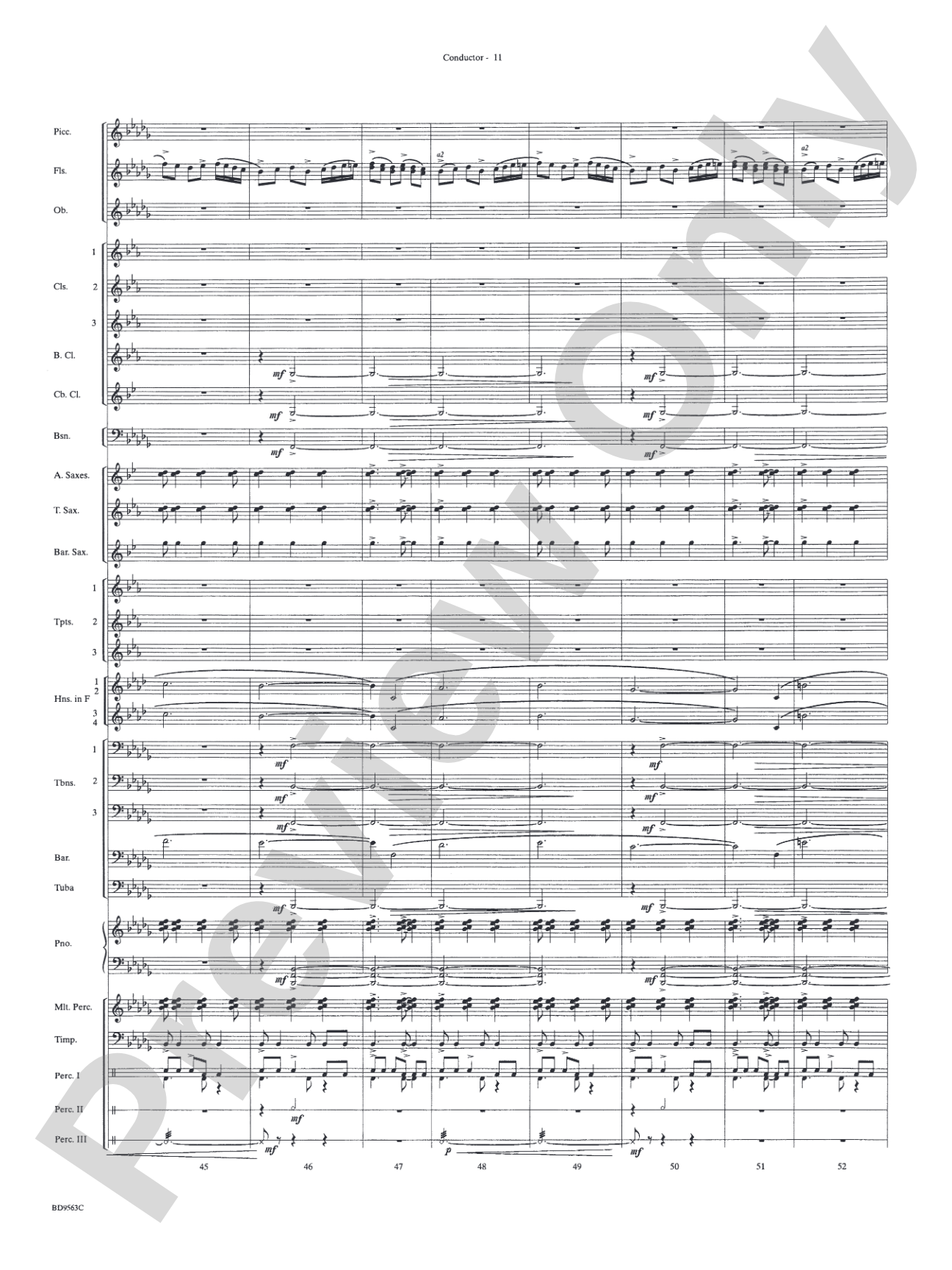
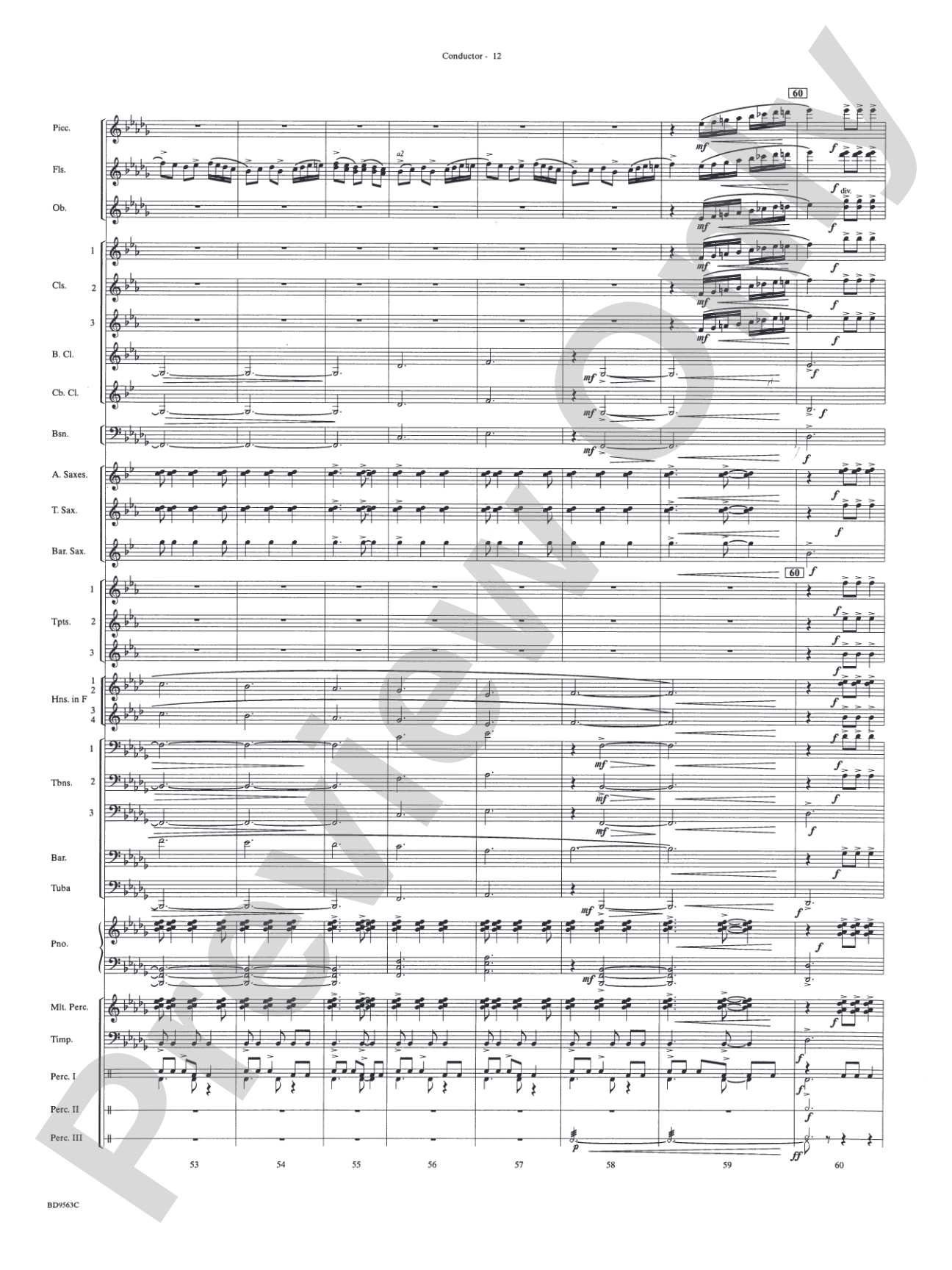
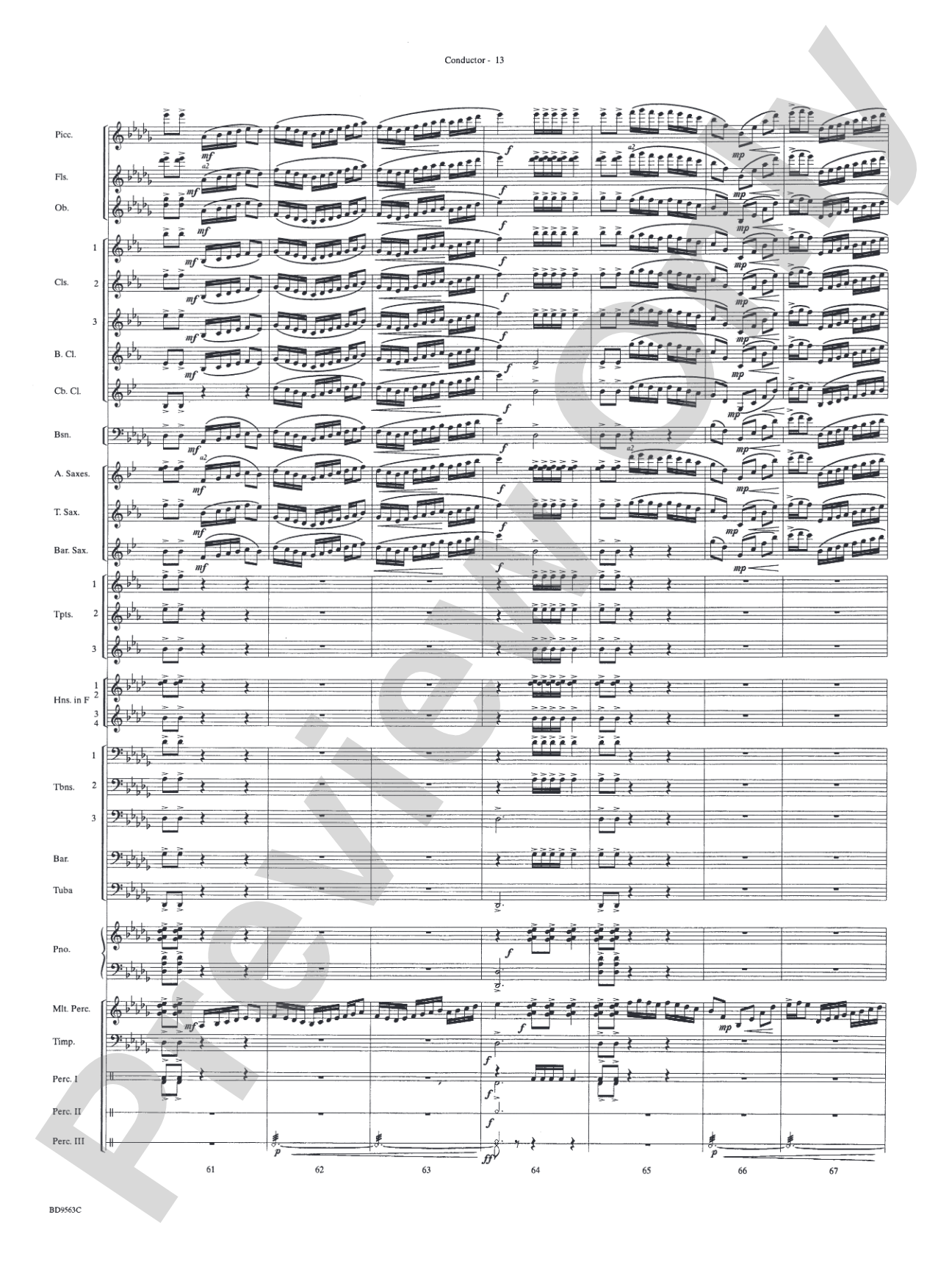
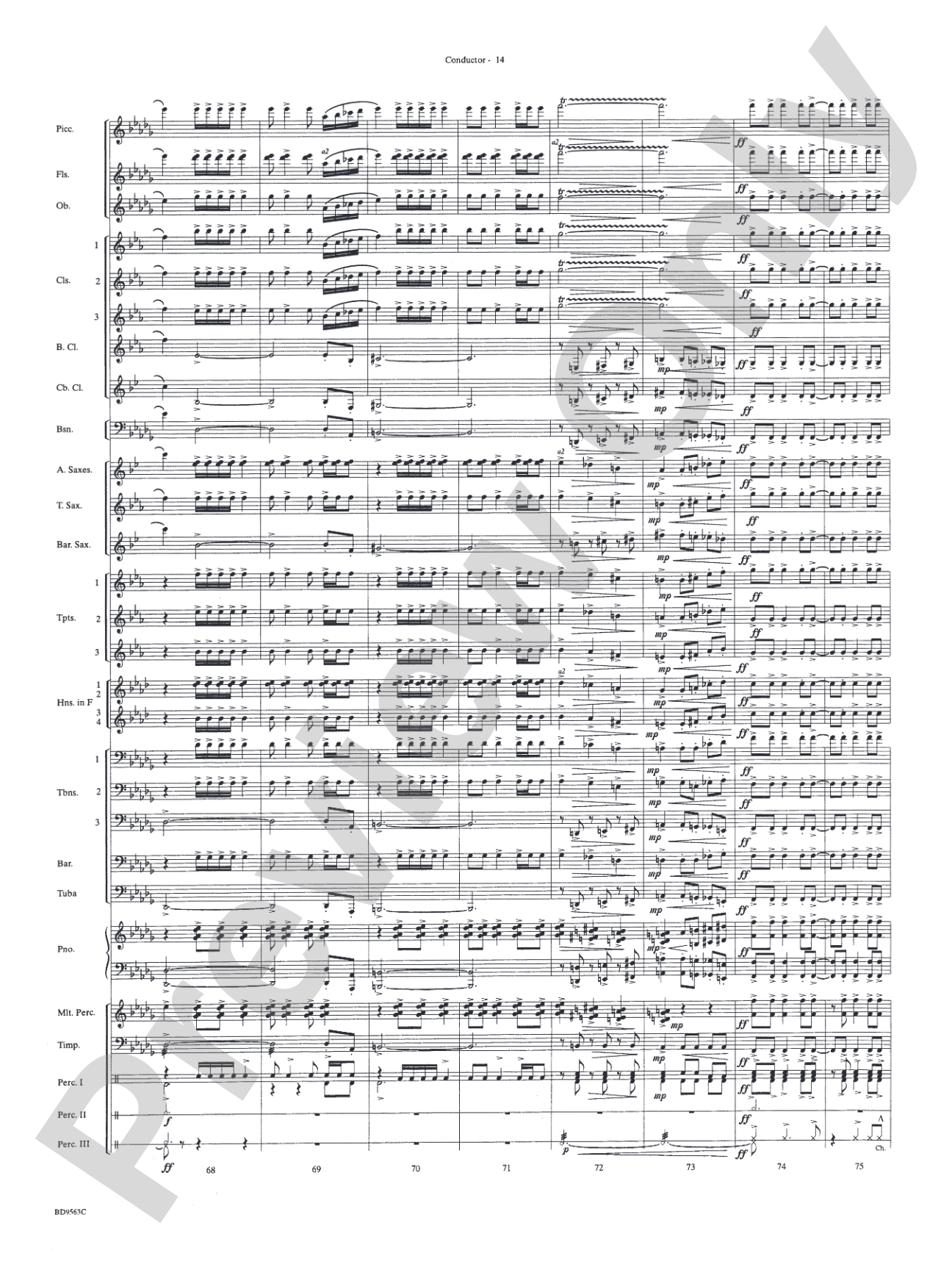

The Inferno: Concert Band Conductor Score & Parts
From The Divine Comedy
By Robert W. Smith
Grade: 5 (Medium Advanced)
Item: 00-PK-0004356

$87.00
Pickup currently not available
Buy Extra Parts (Digital PDF Download)
Parts Added to Cart!
Description
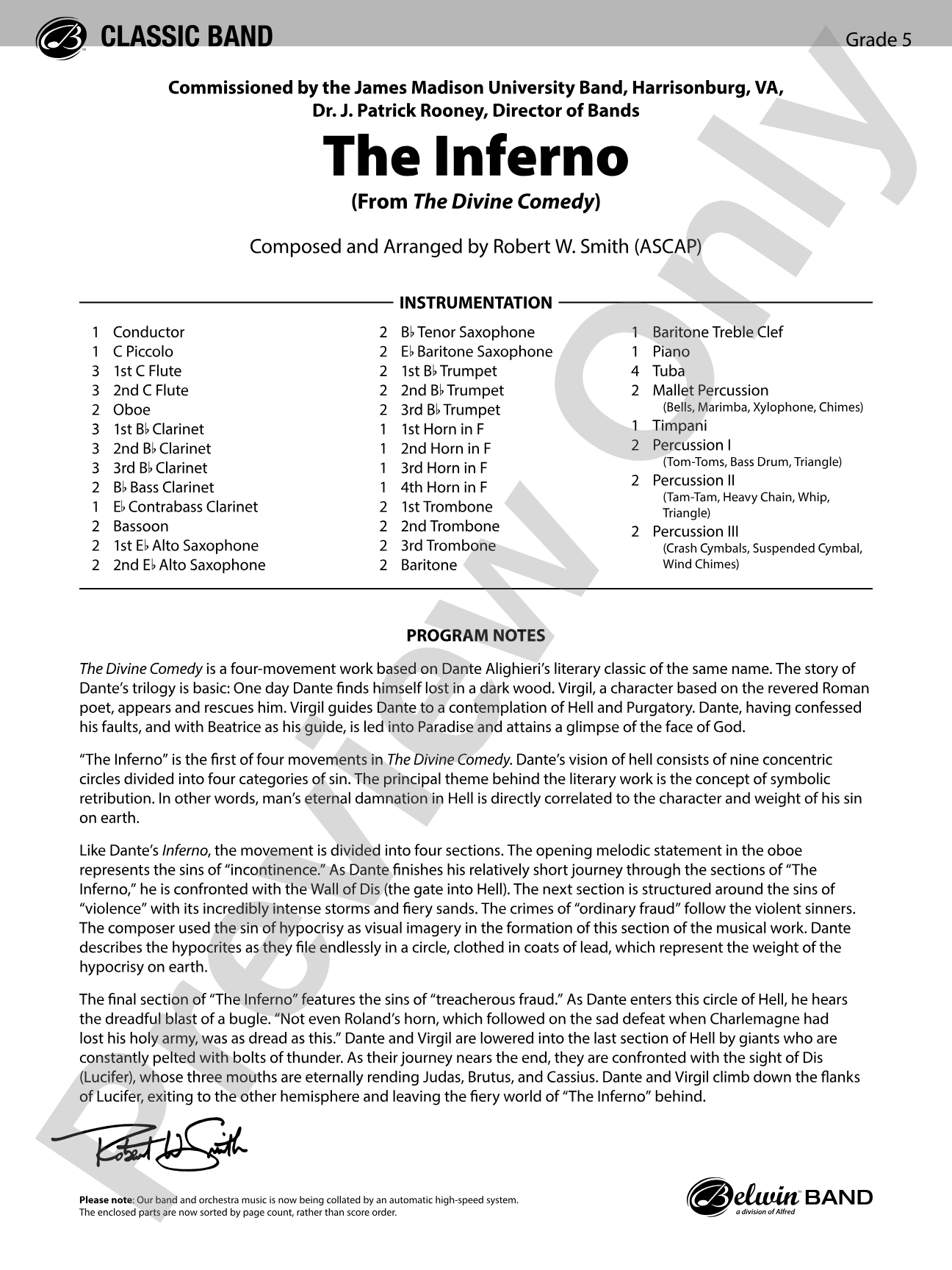
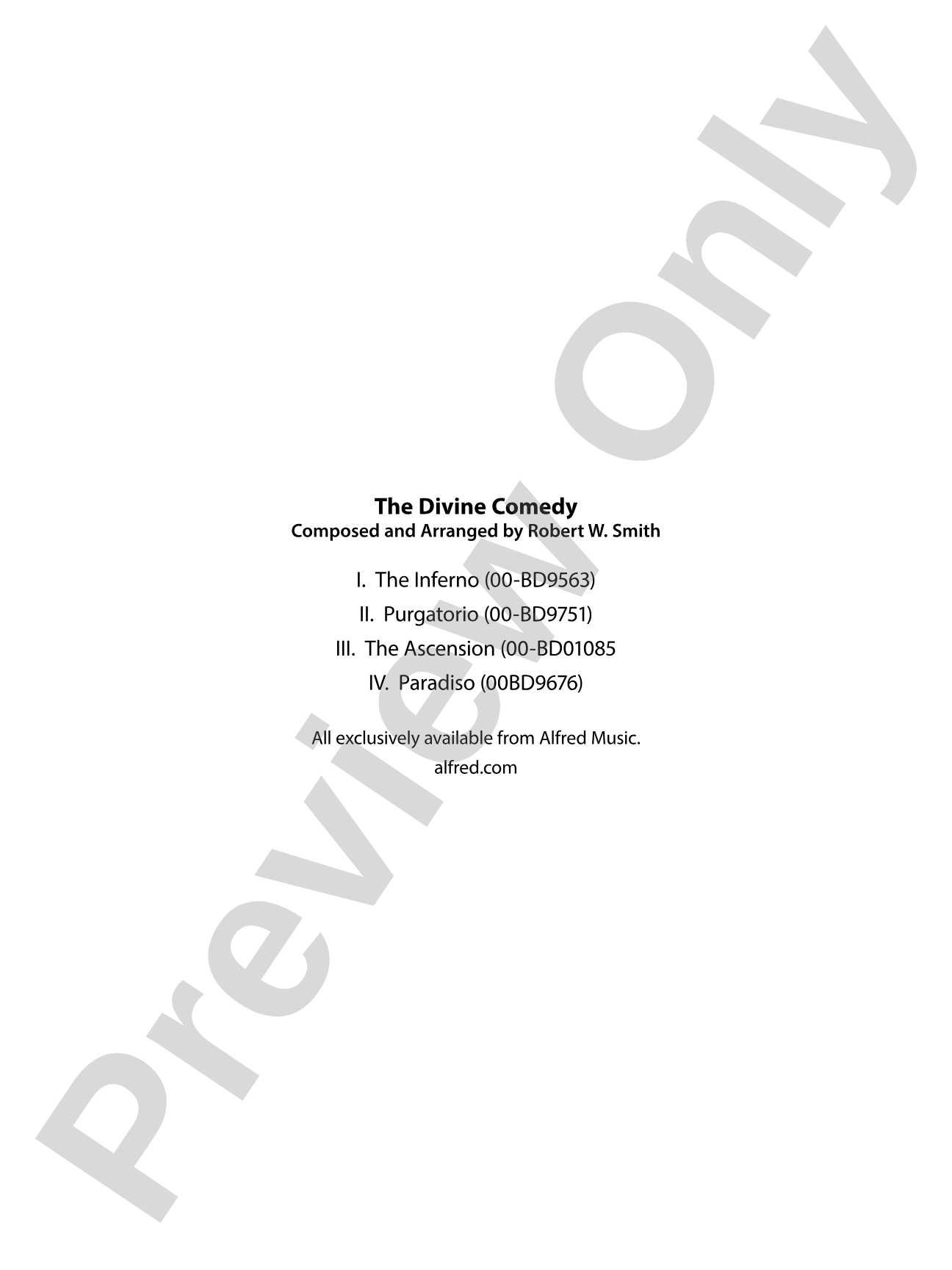
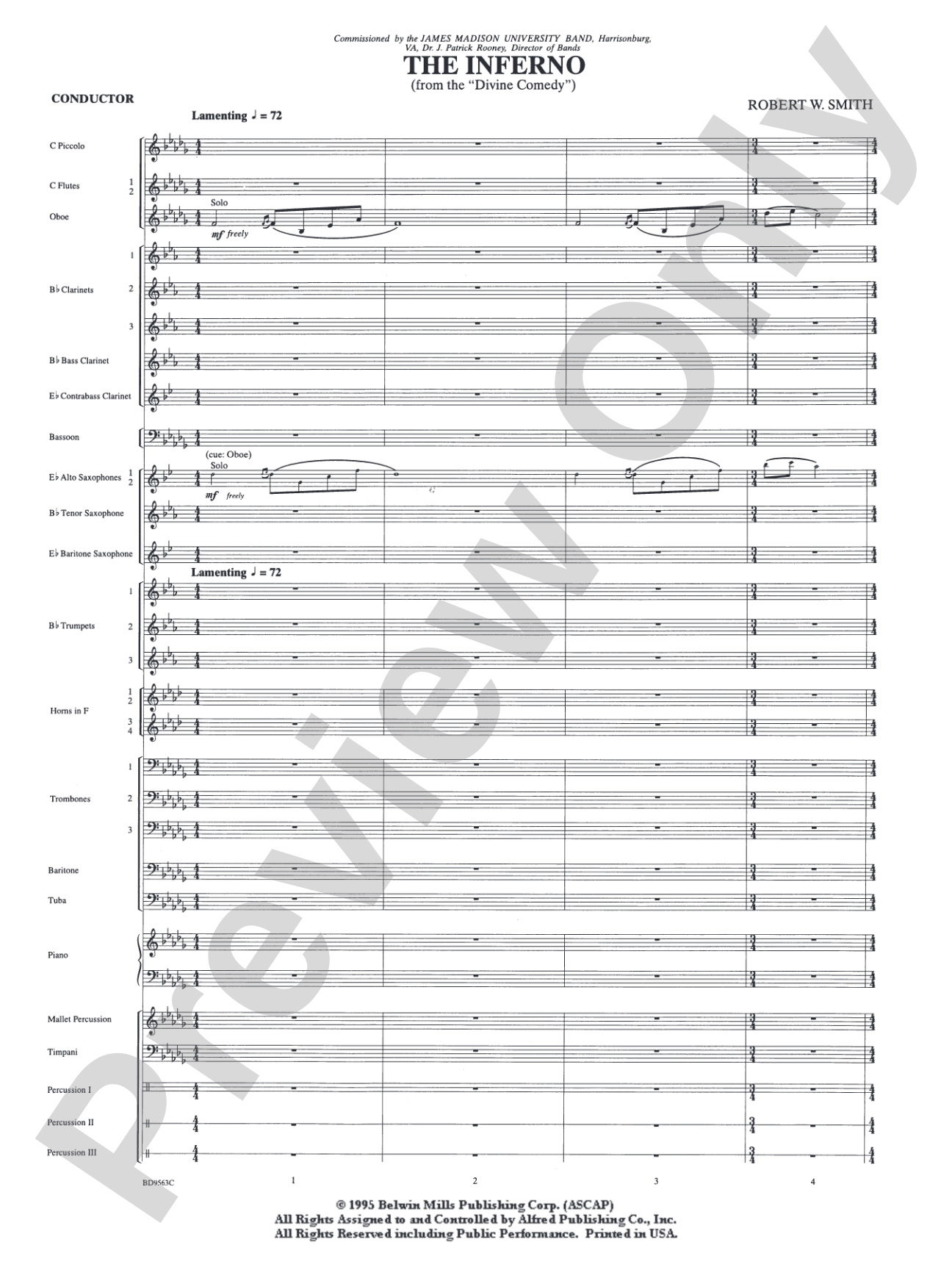
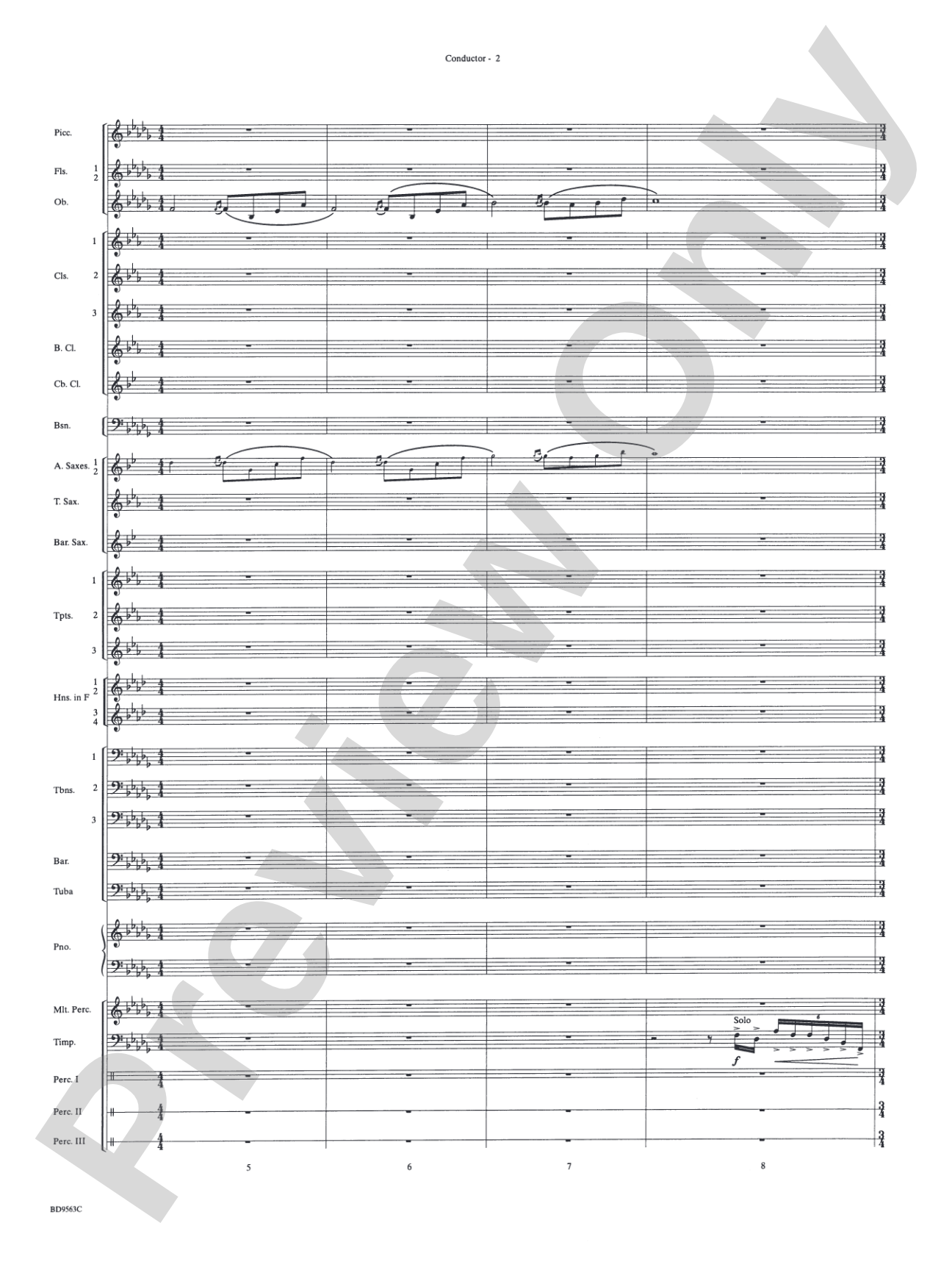
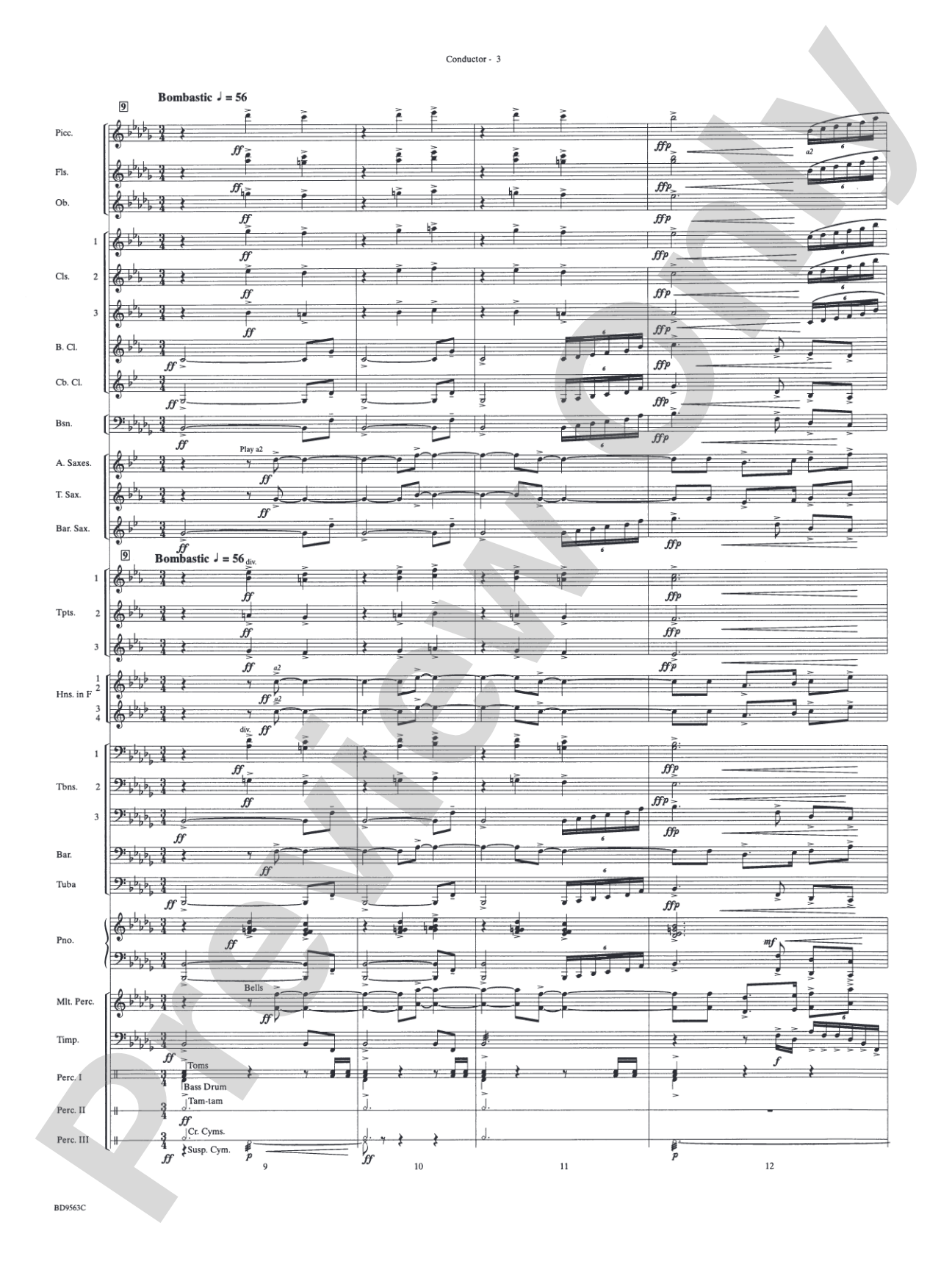
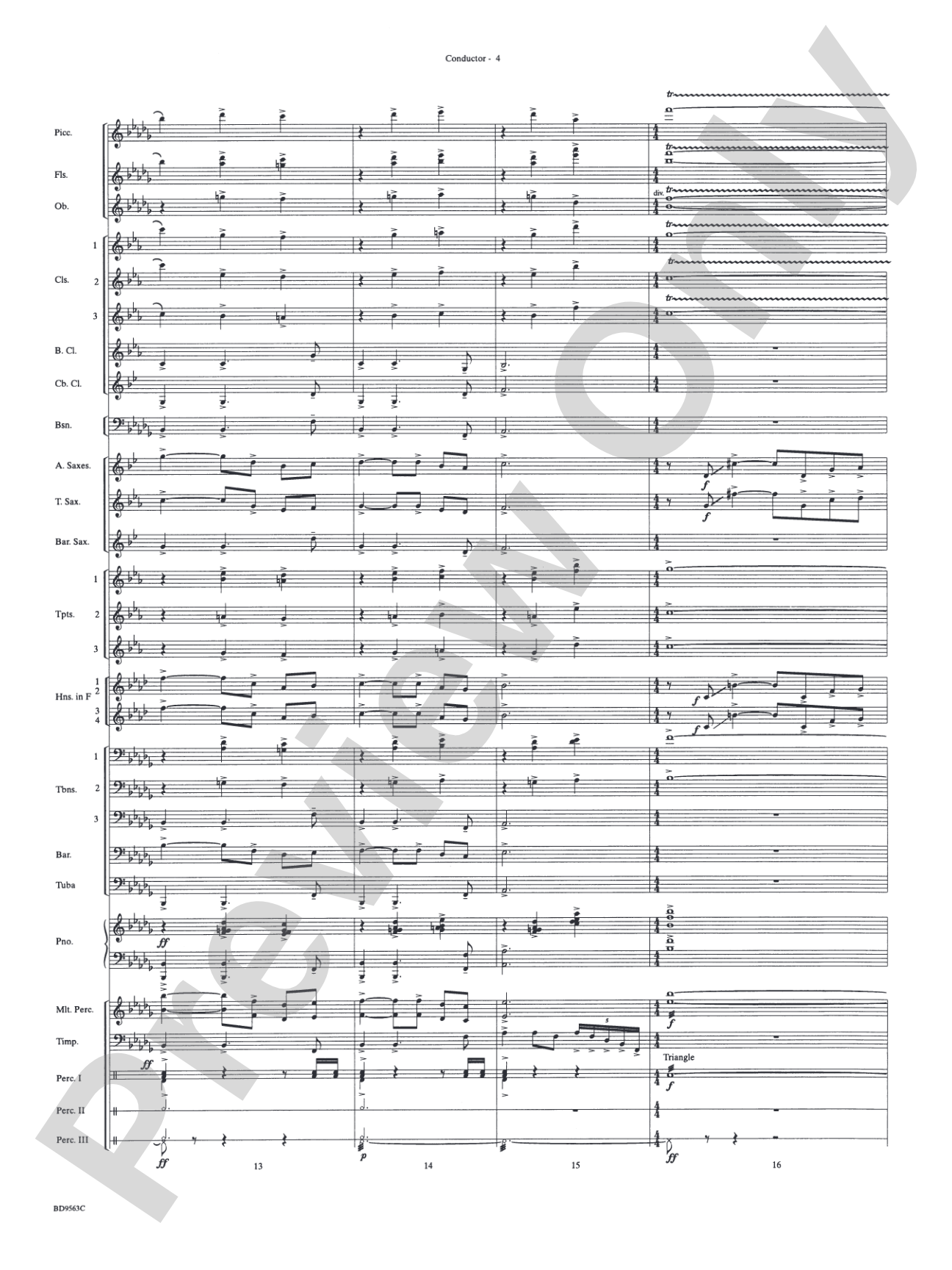
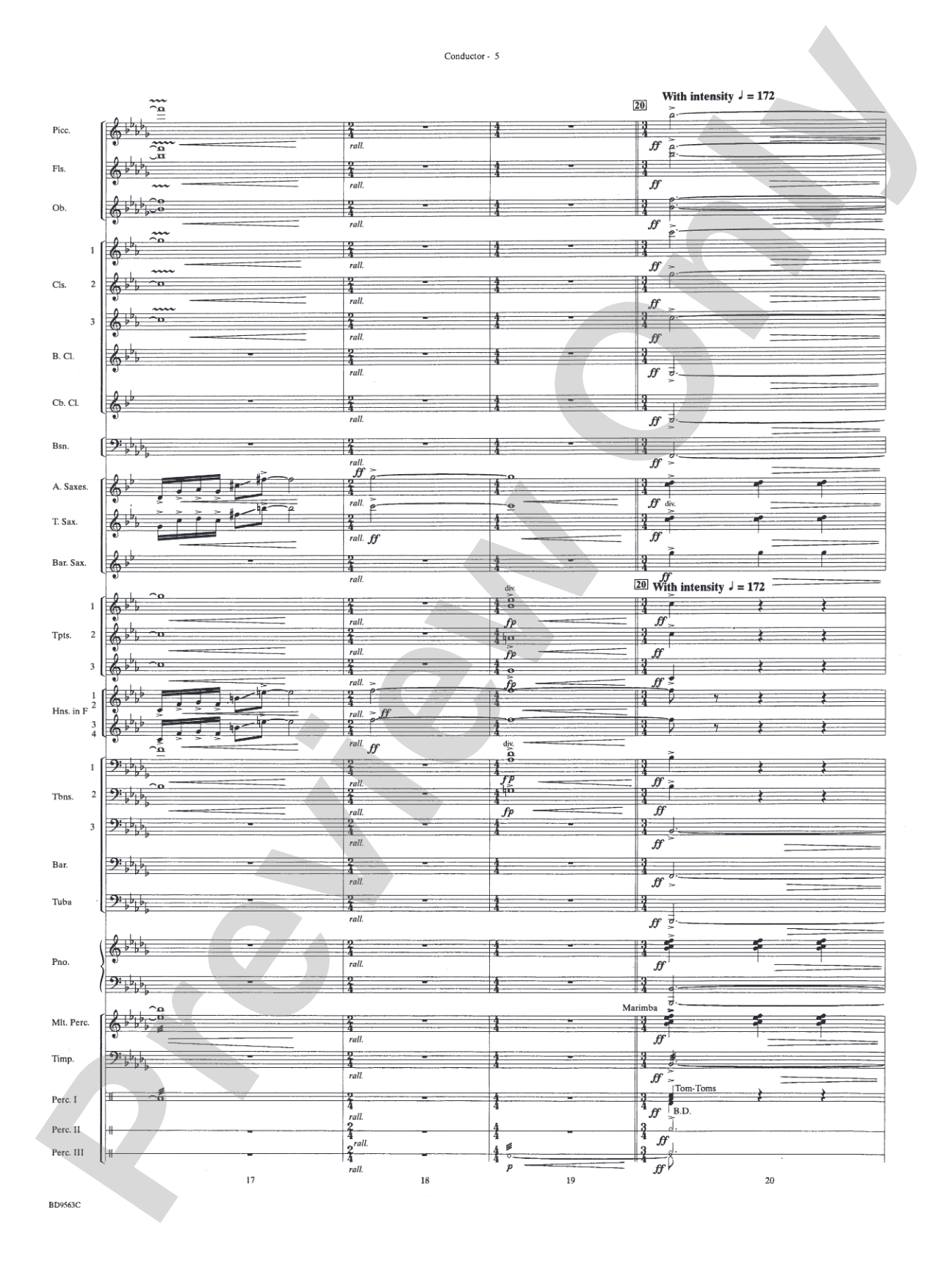
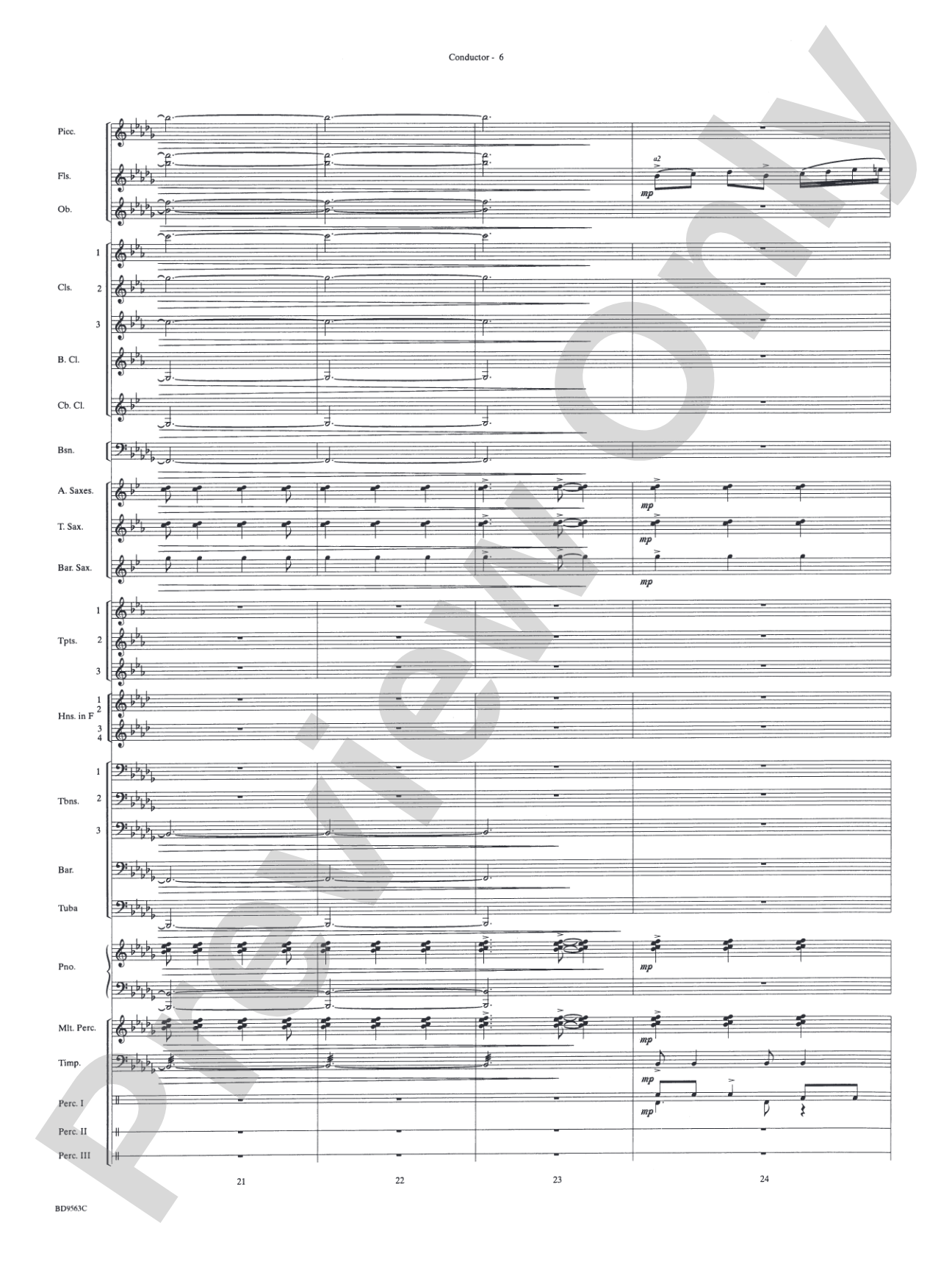
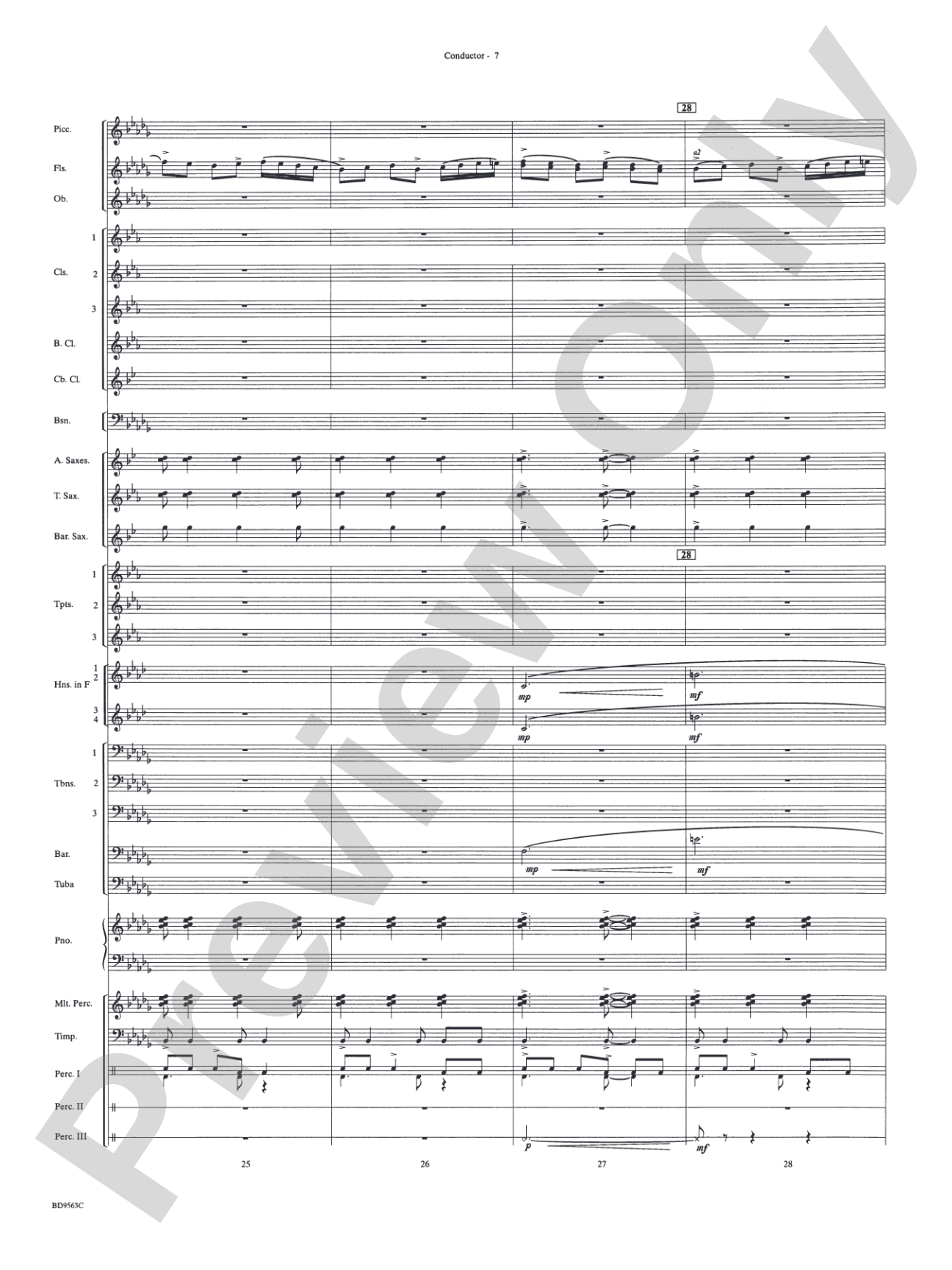
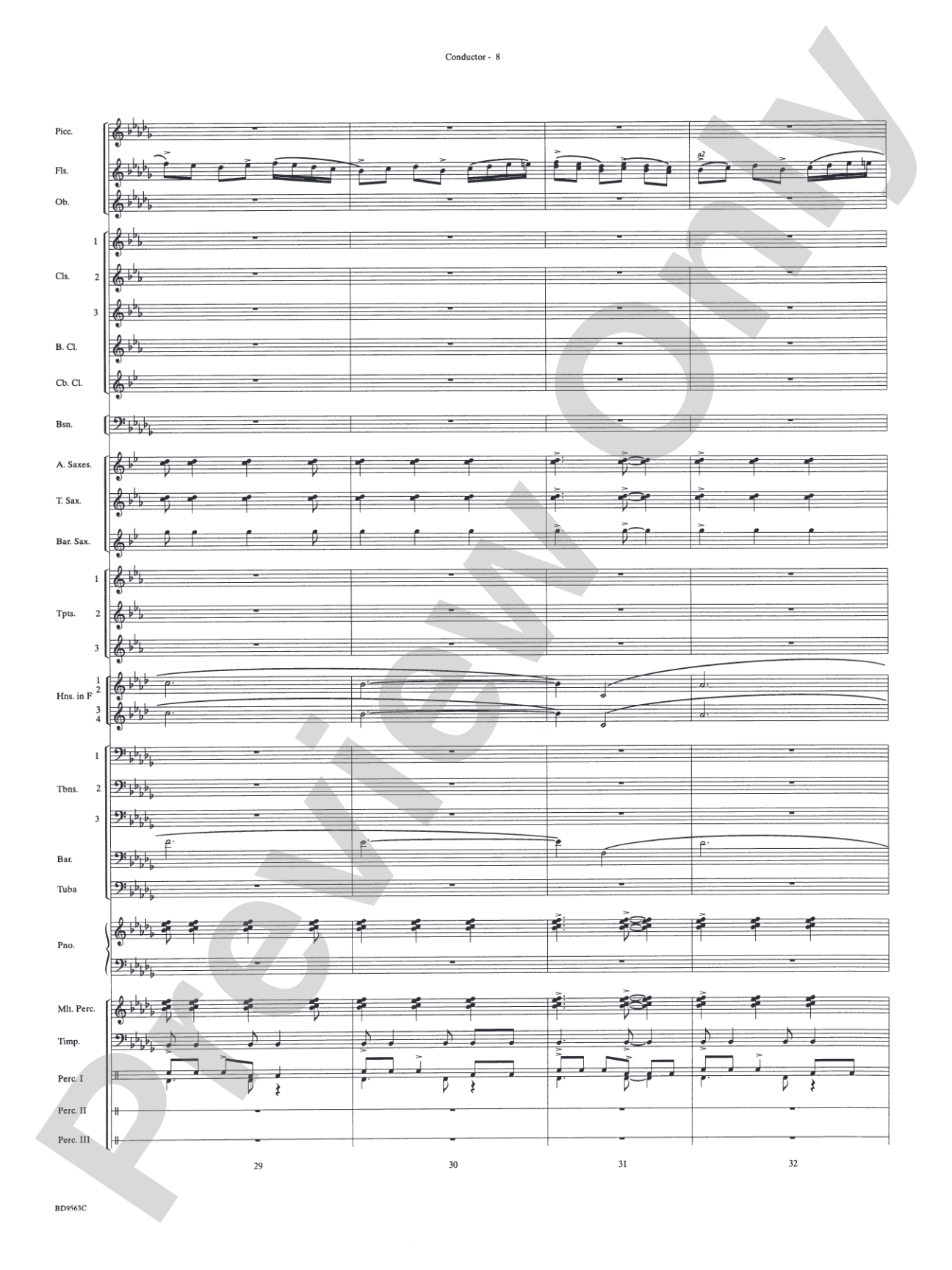
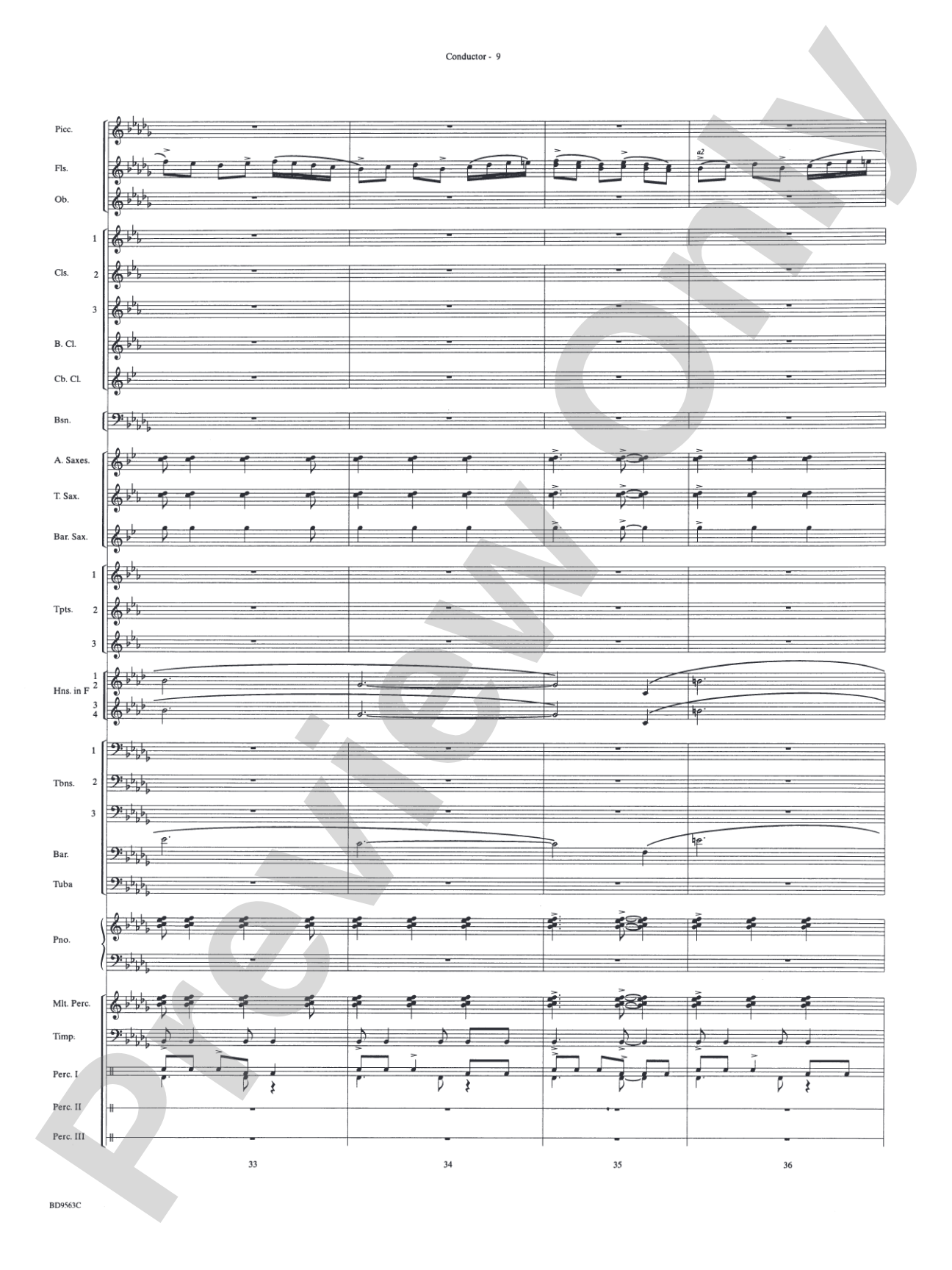
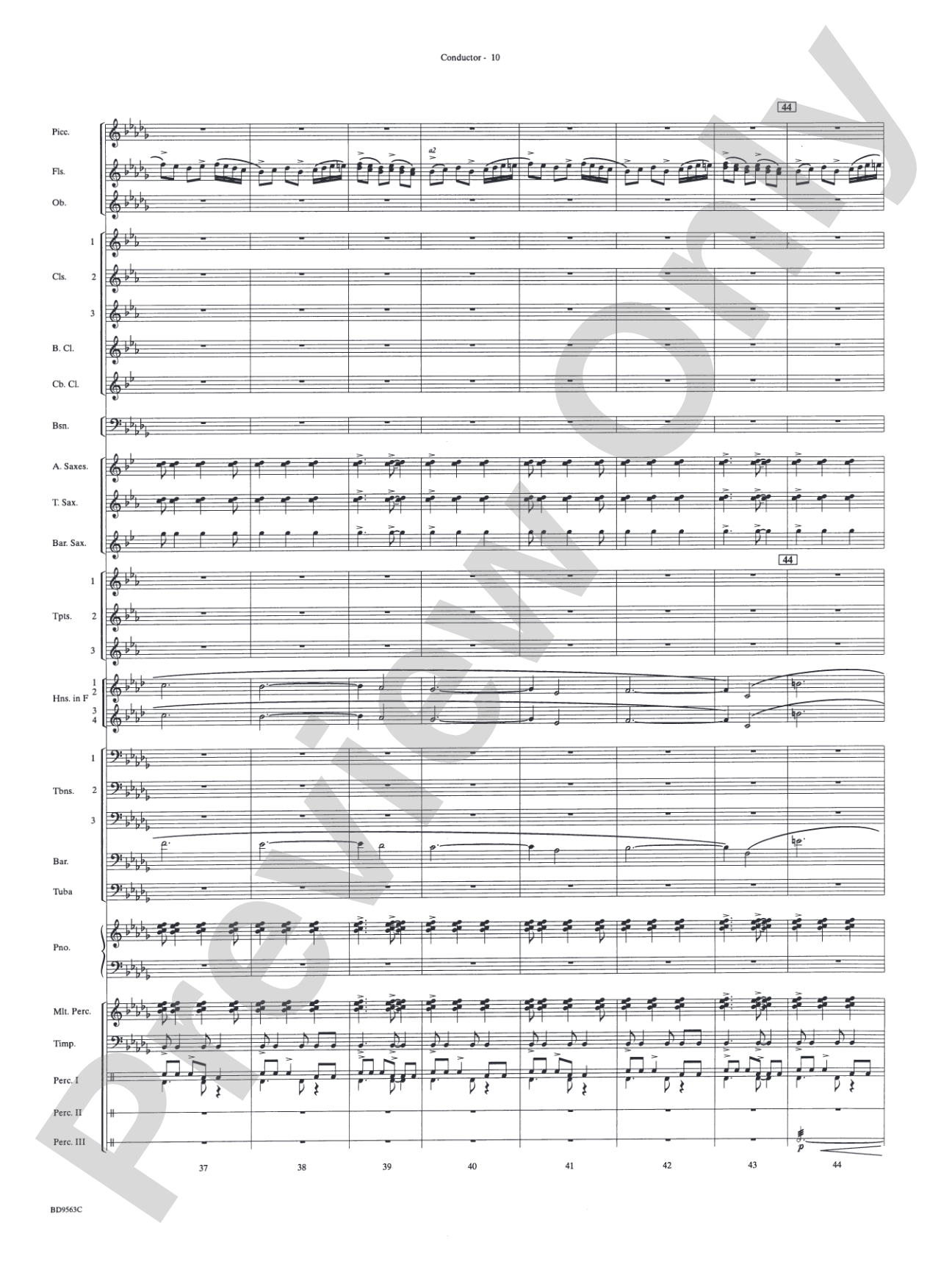
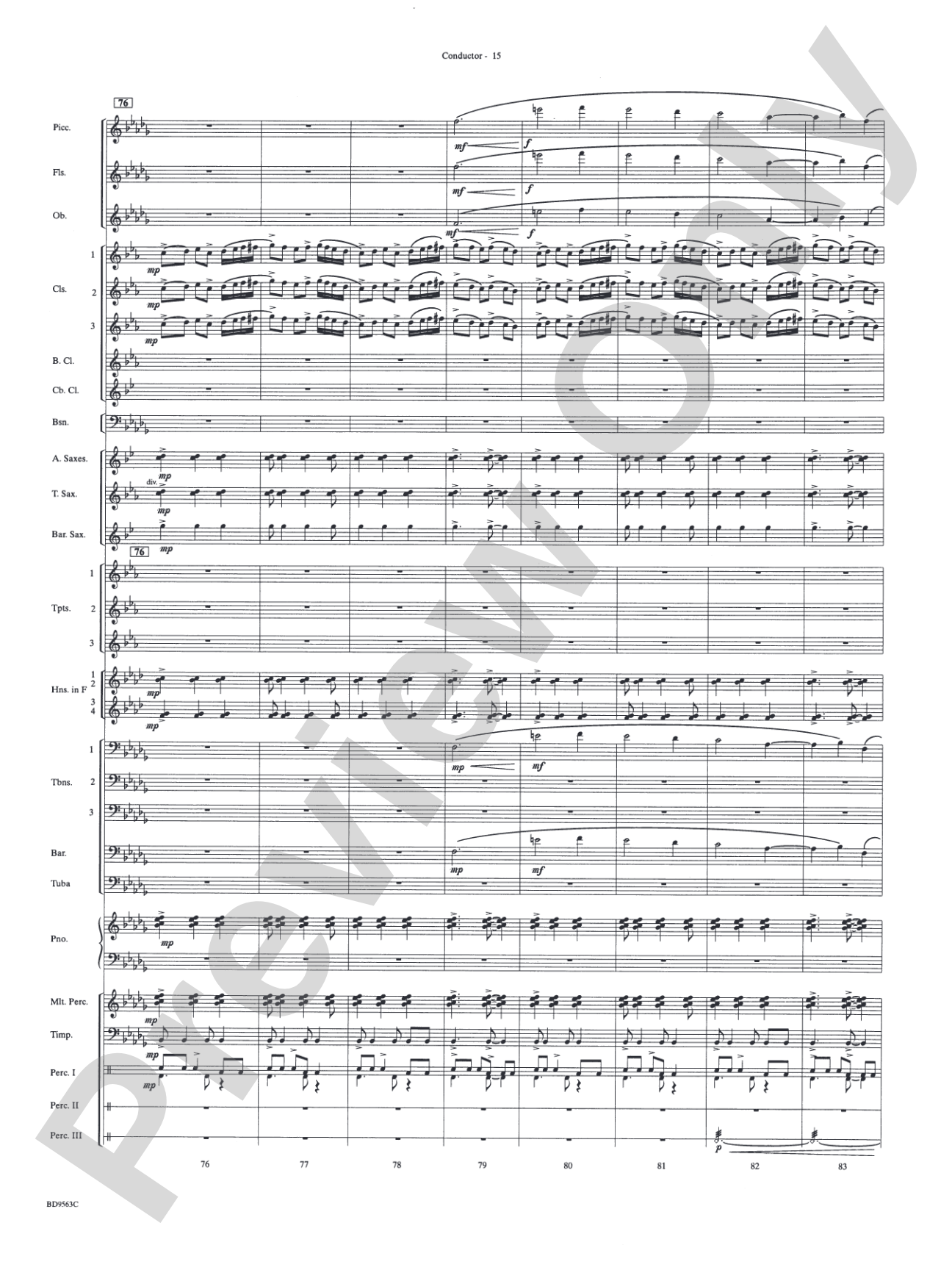
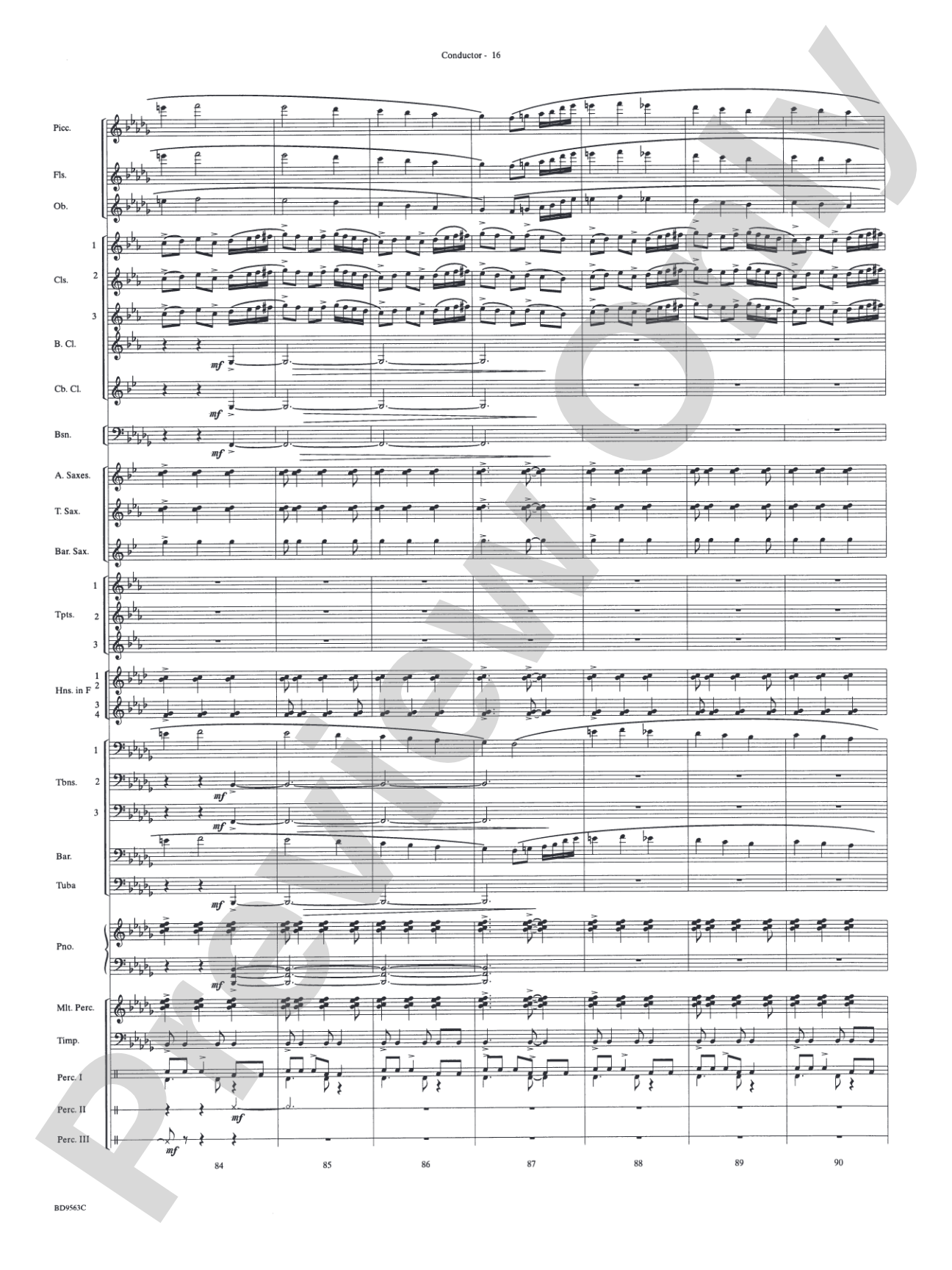
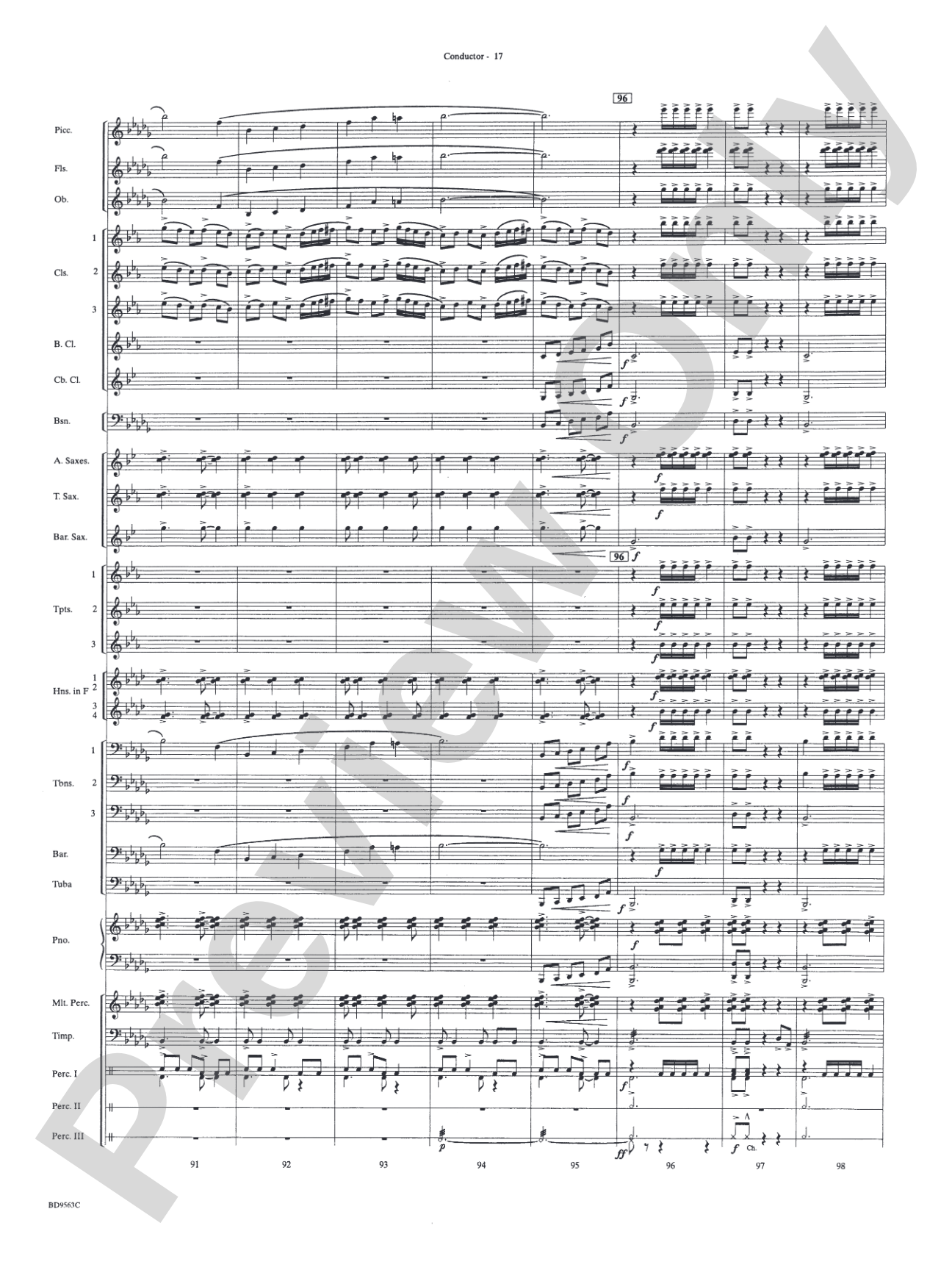
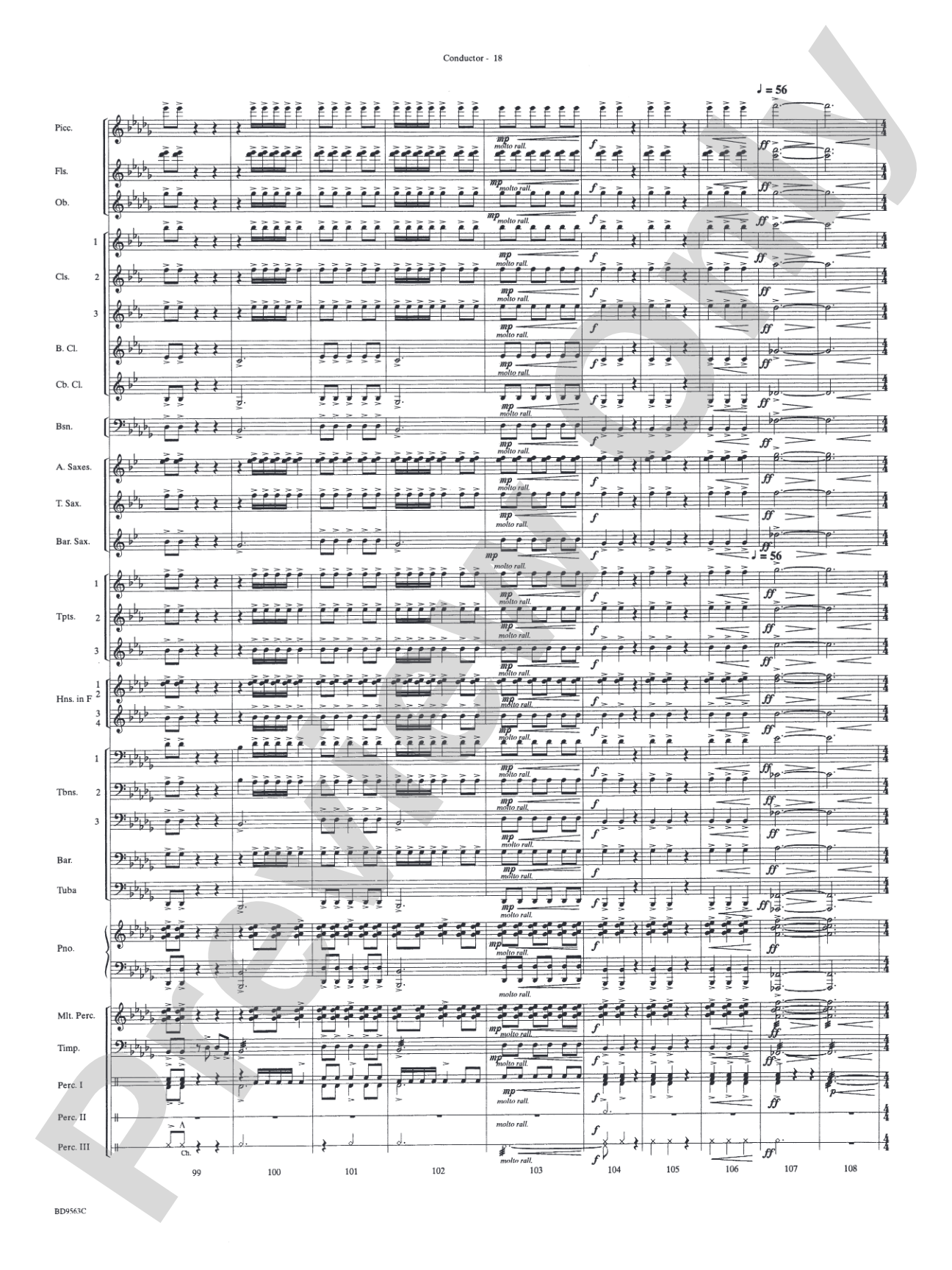
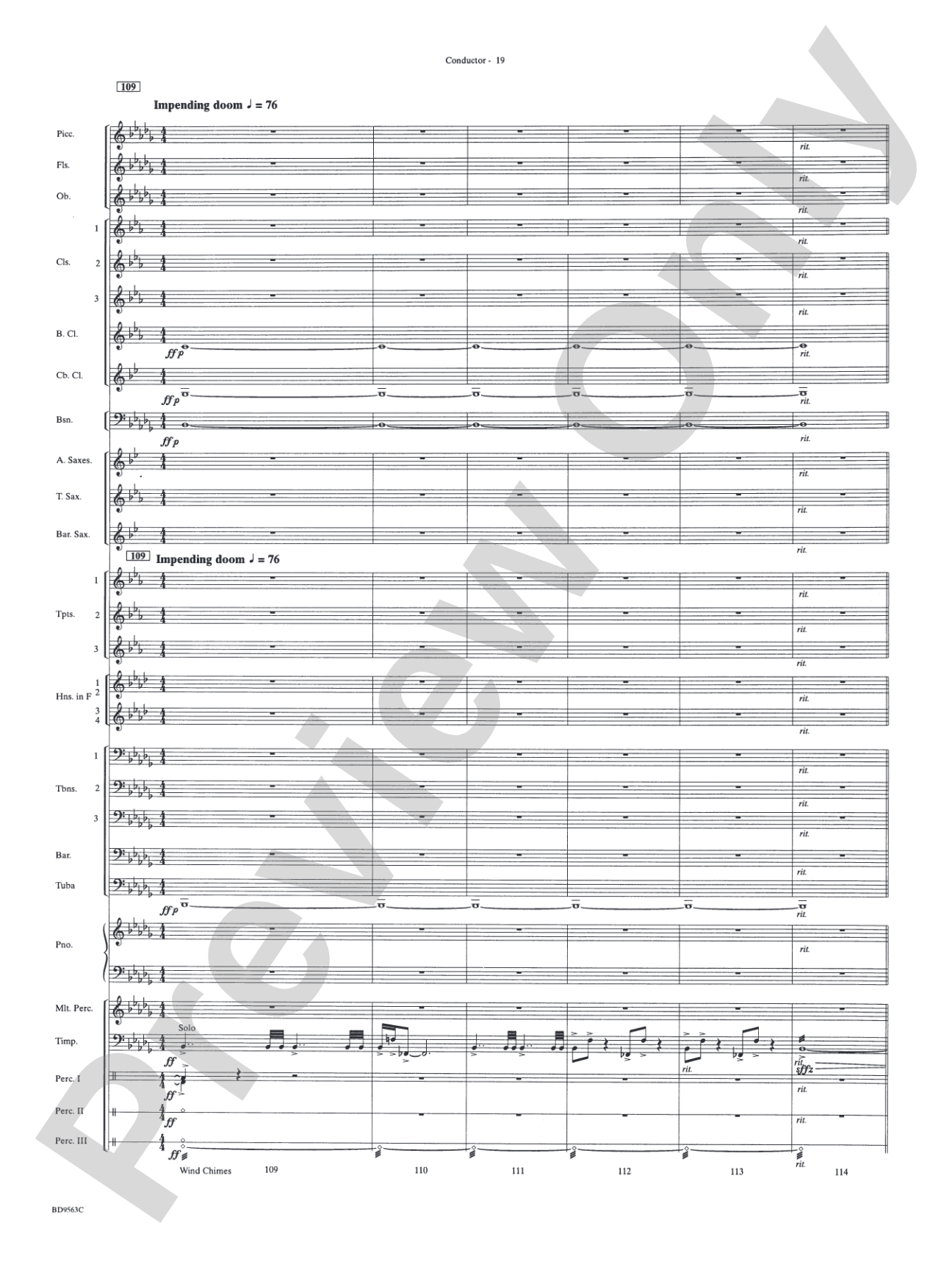
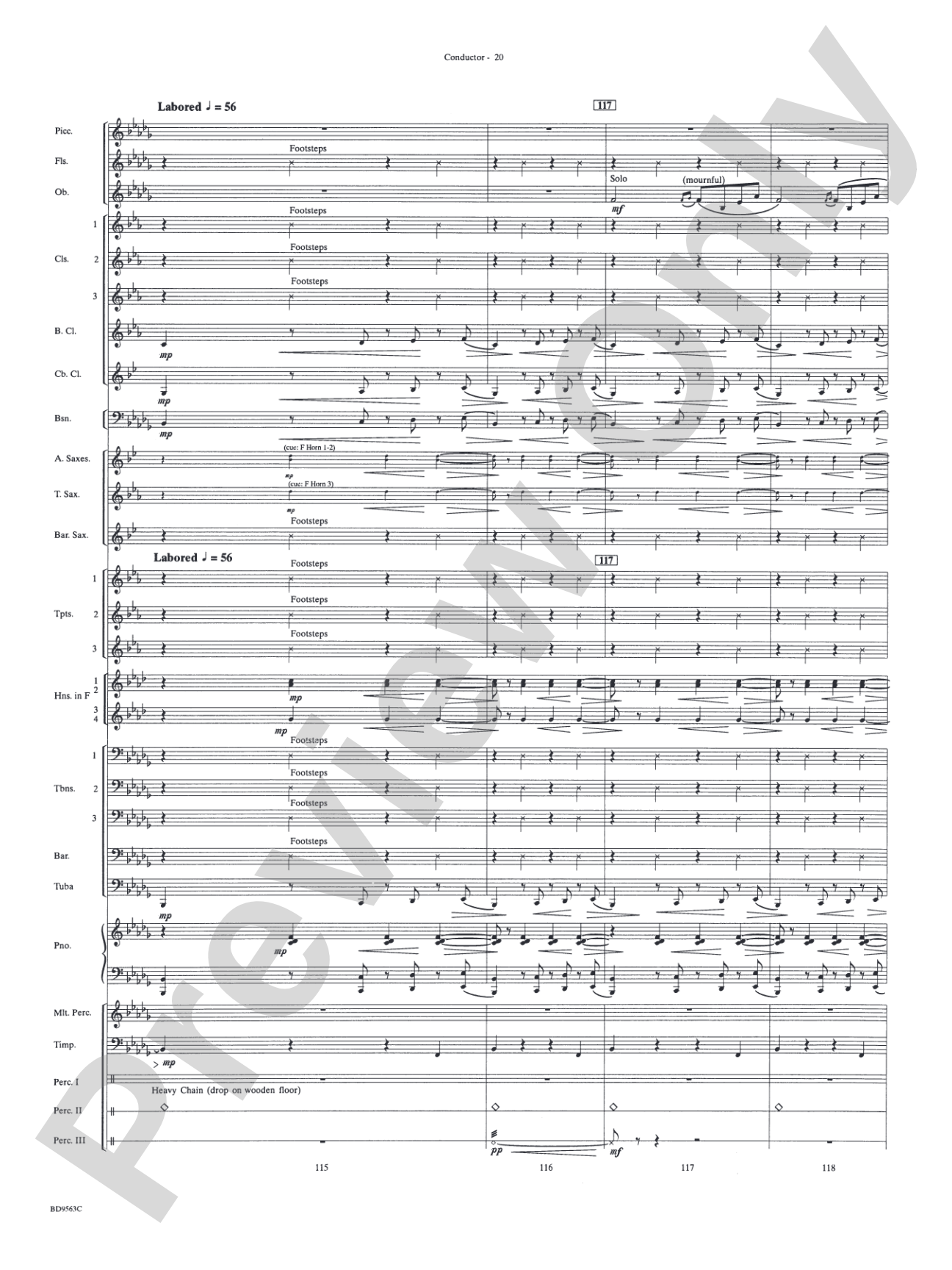
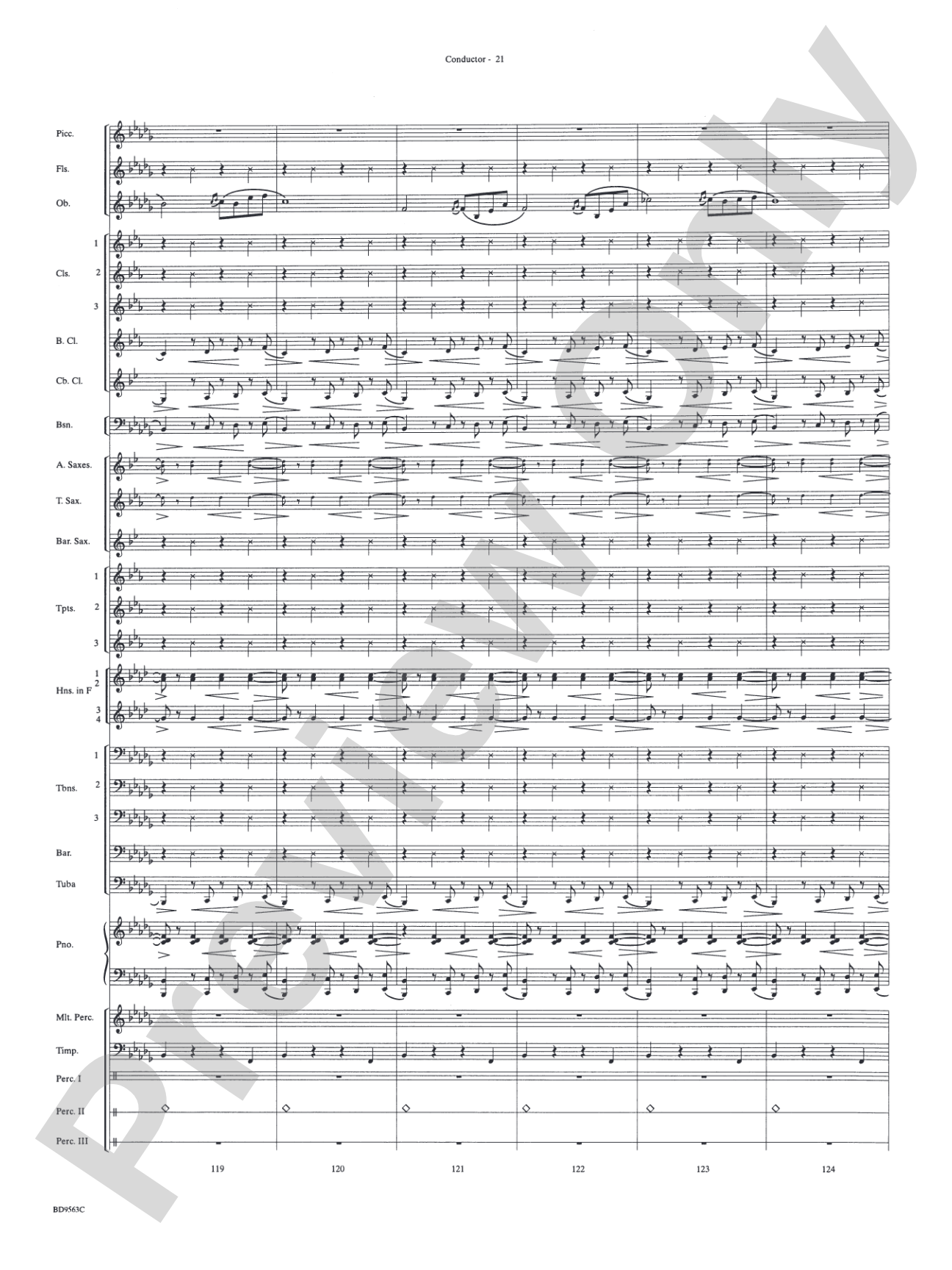
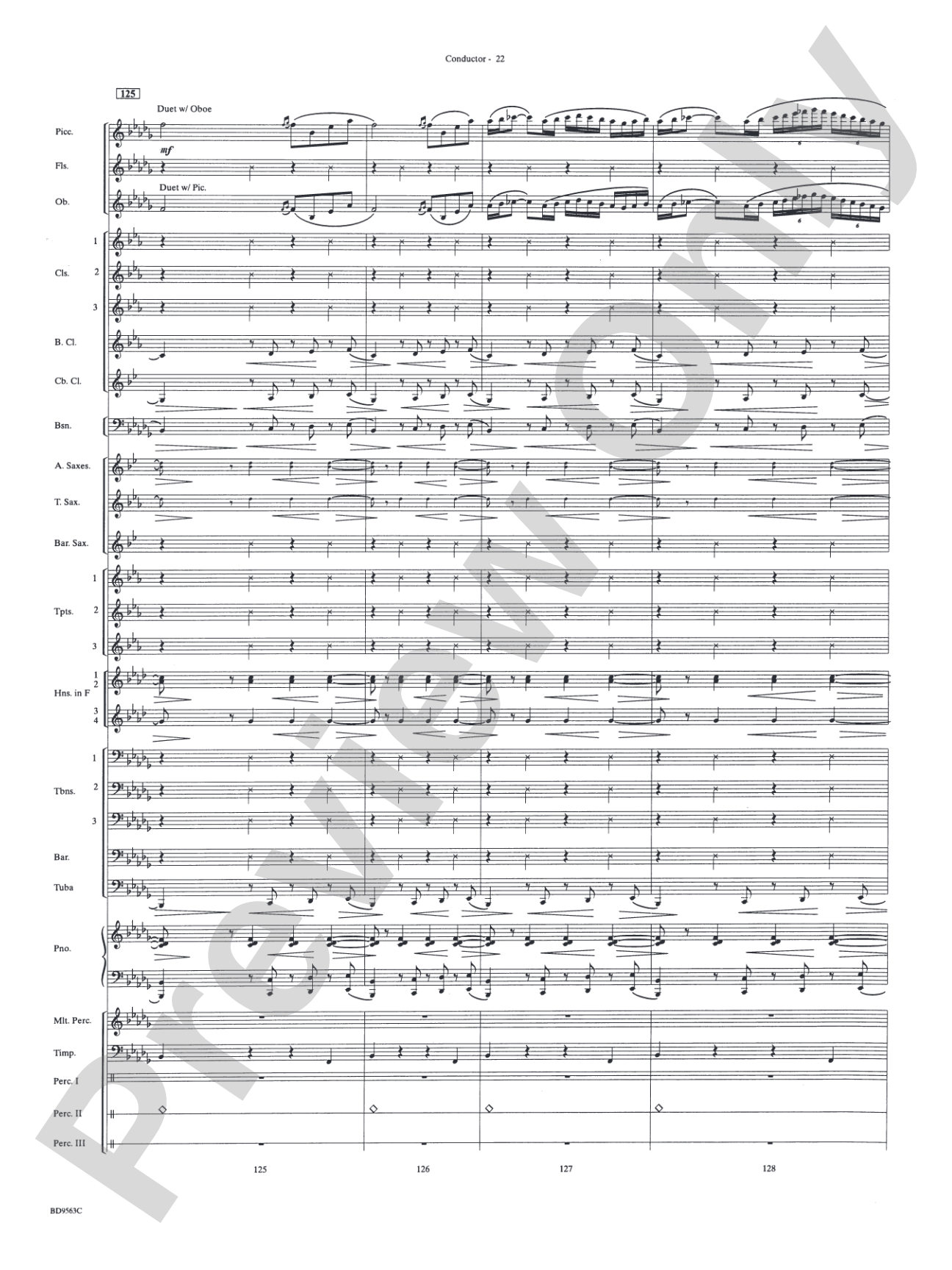
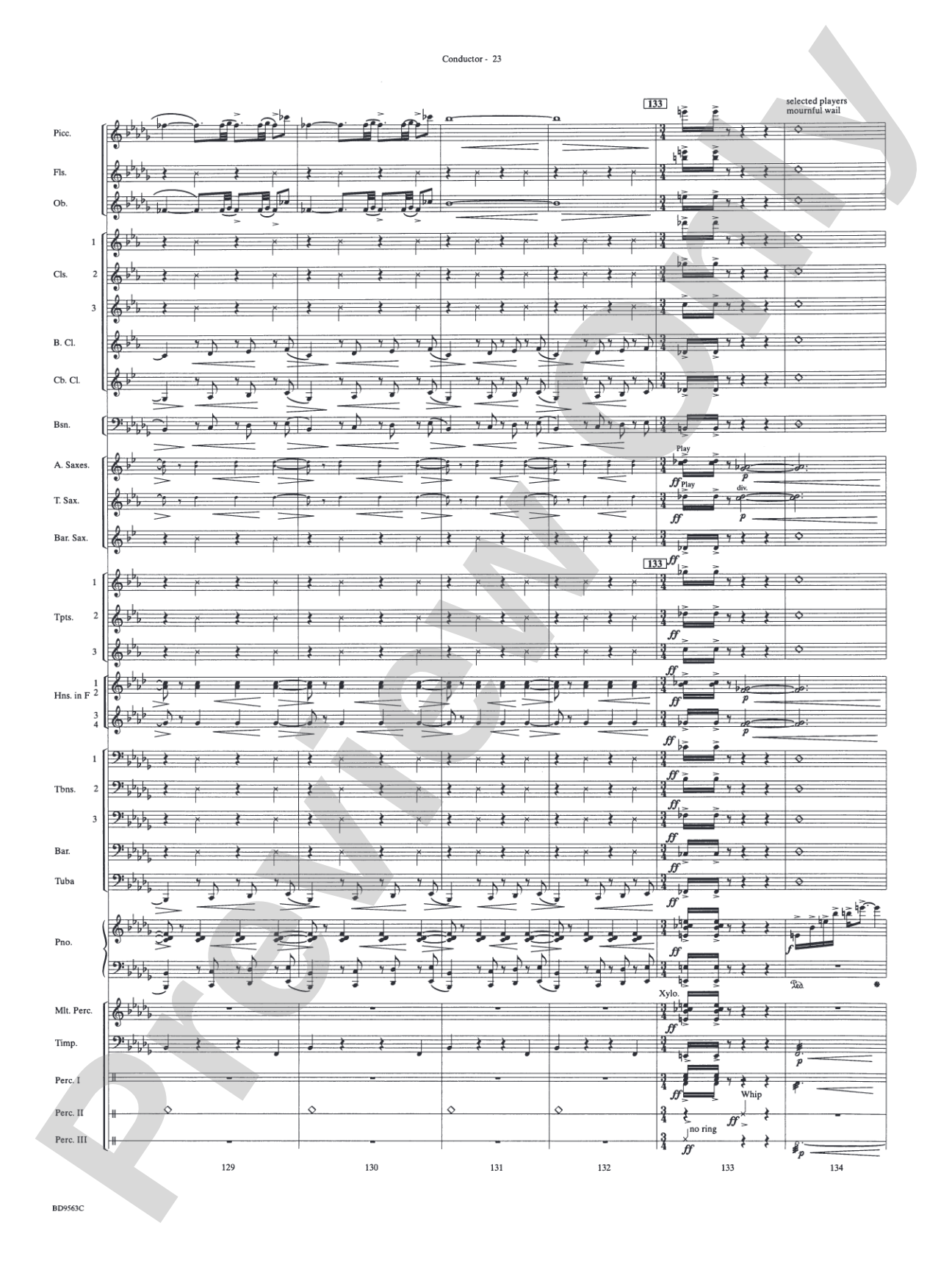
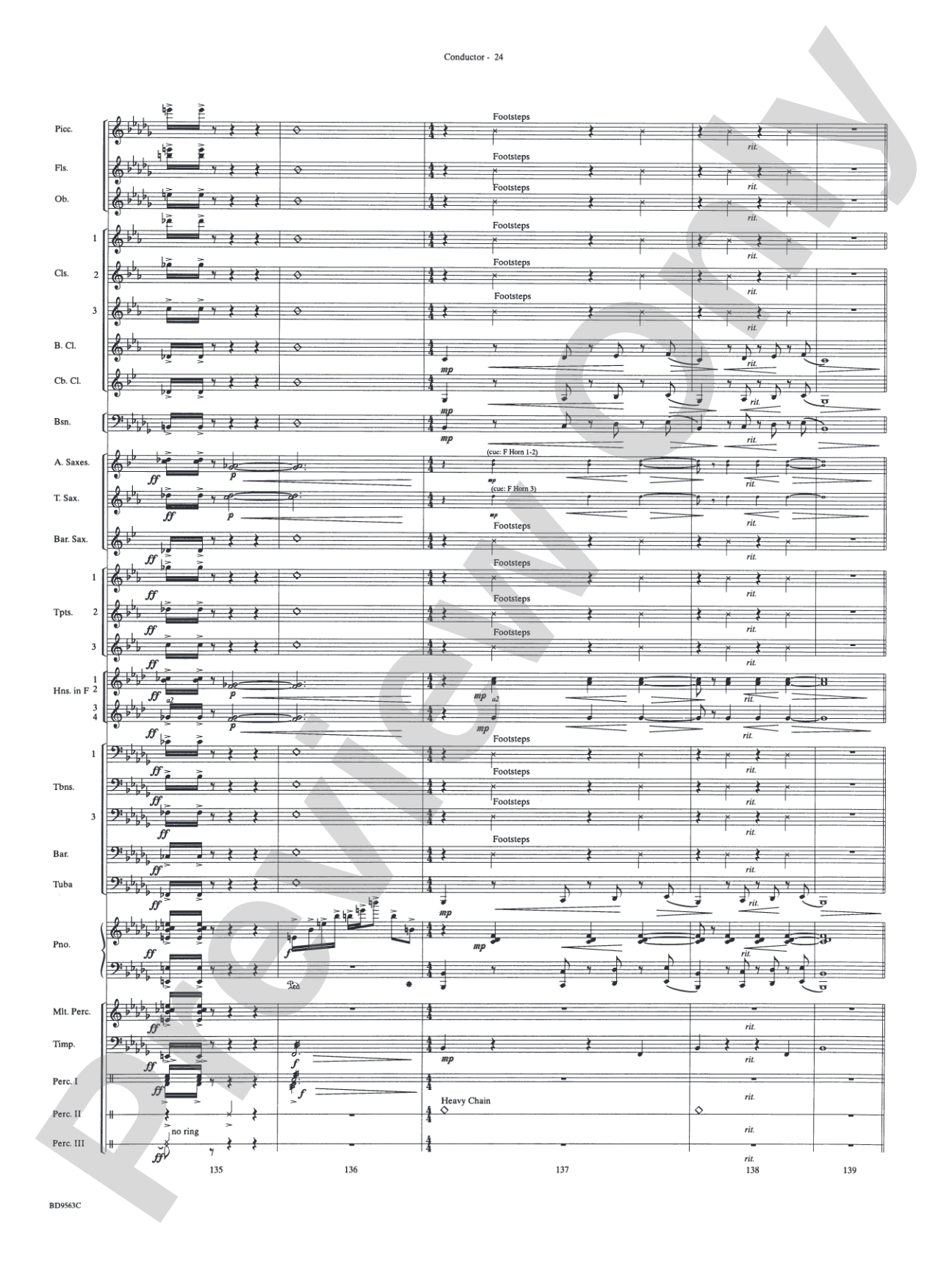
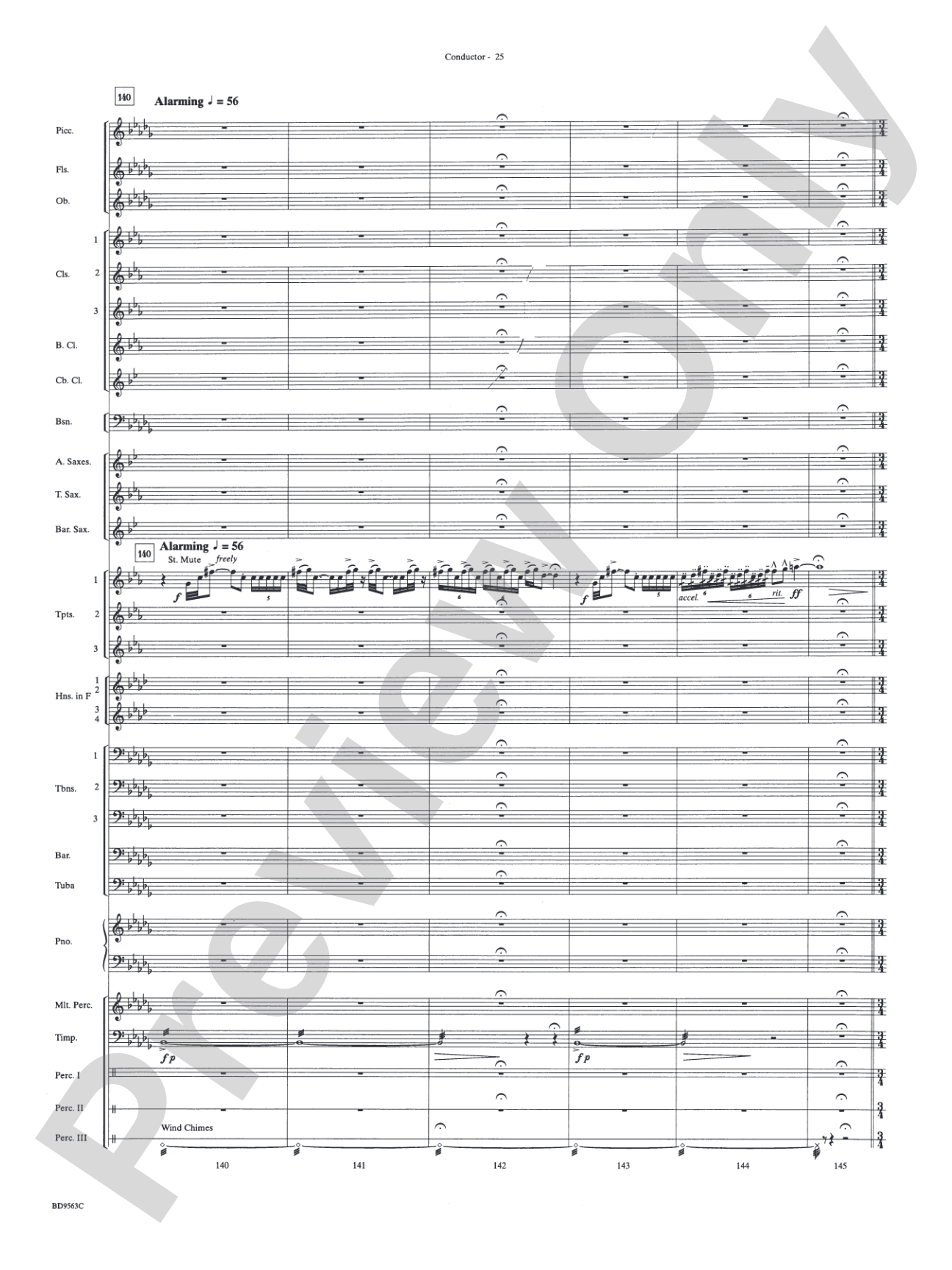
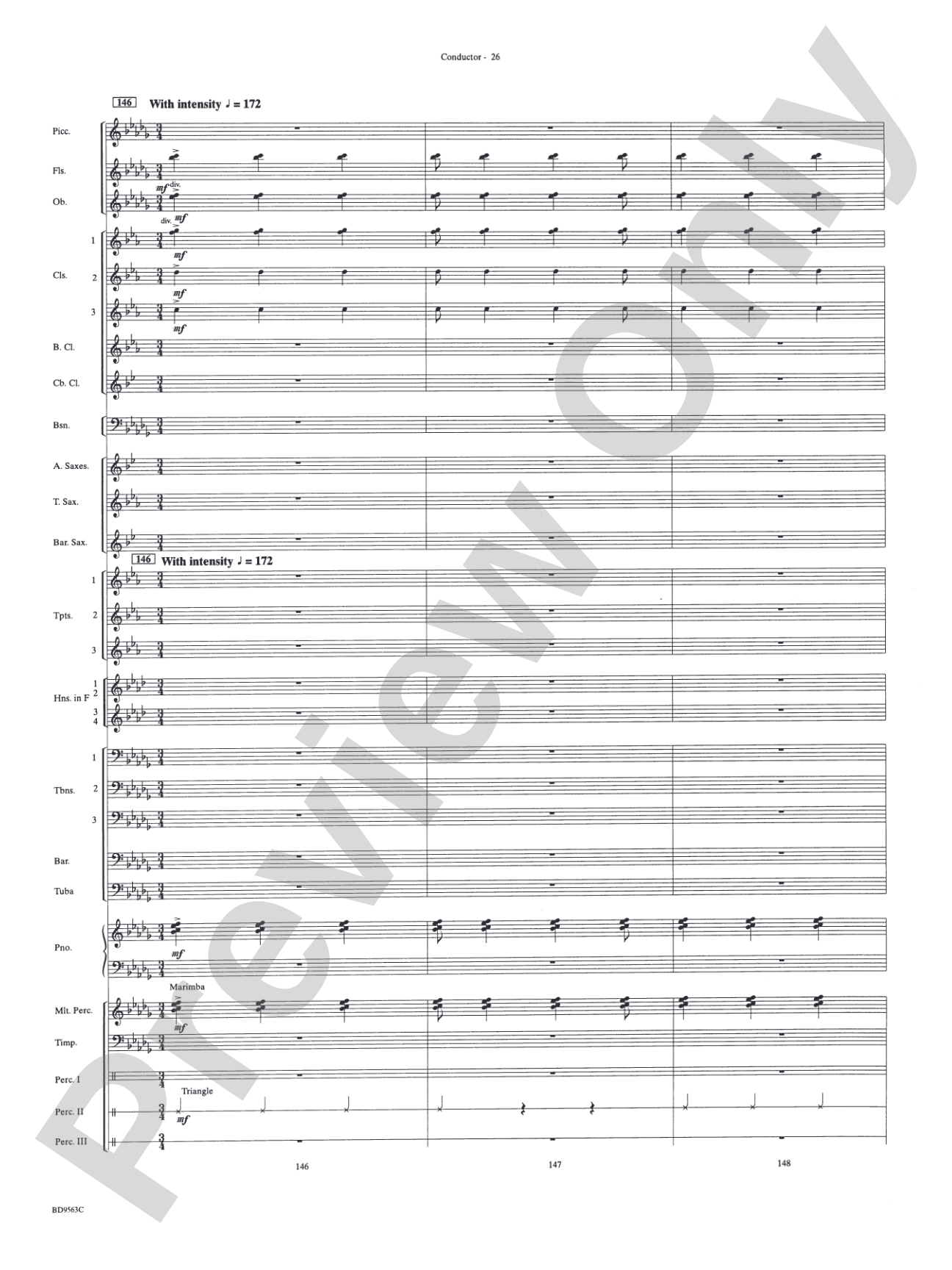
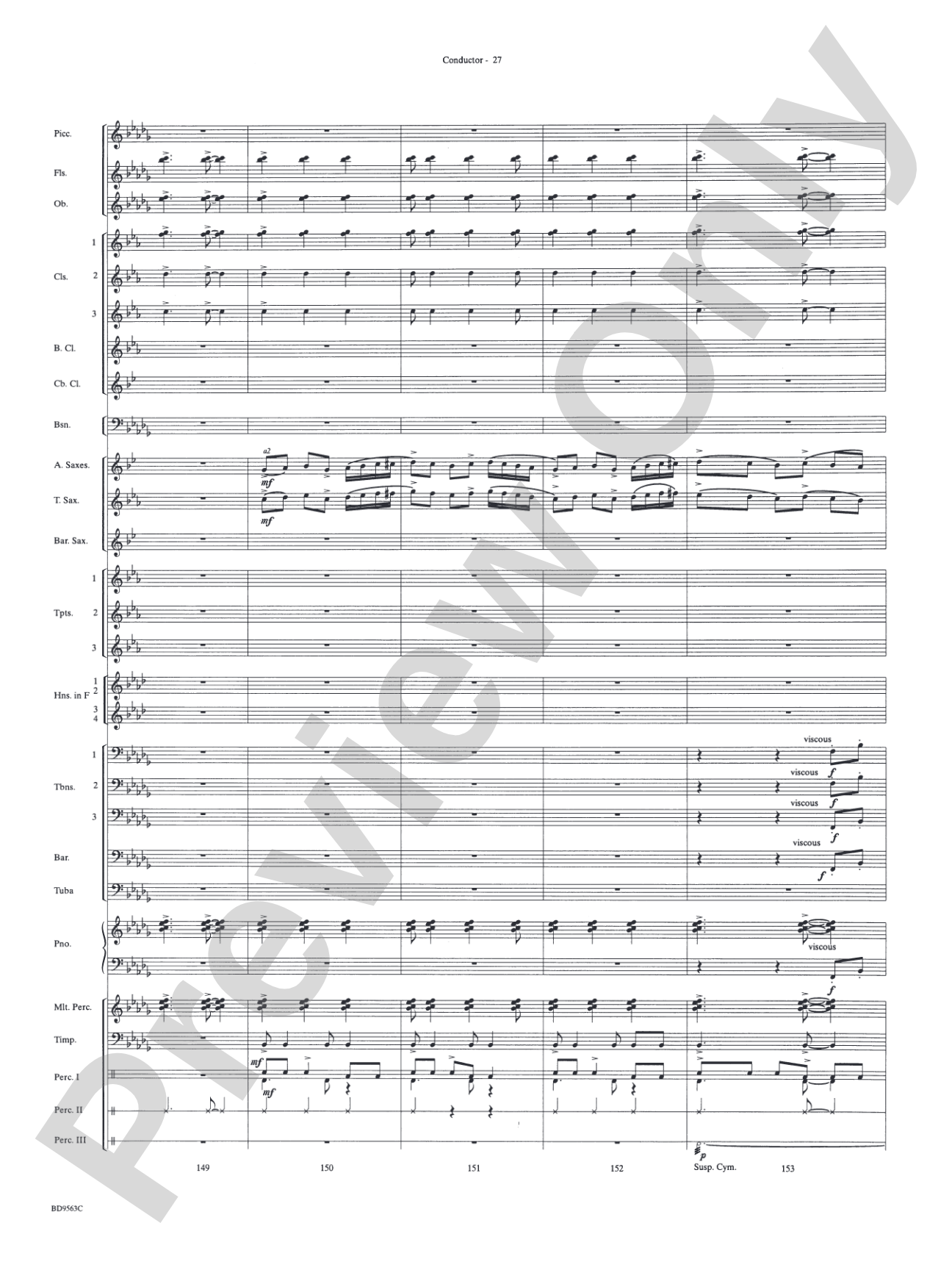
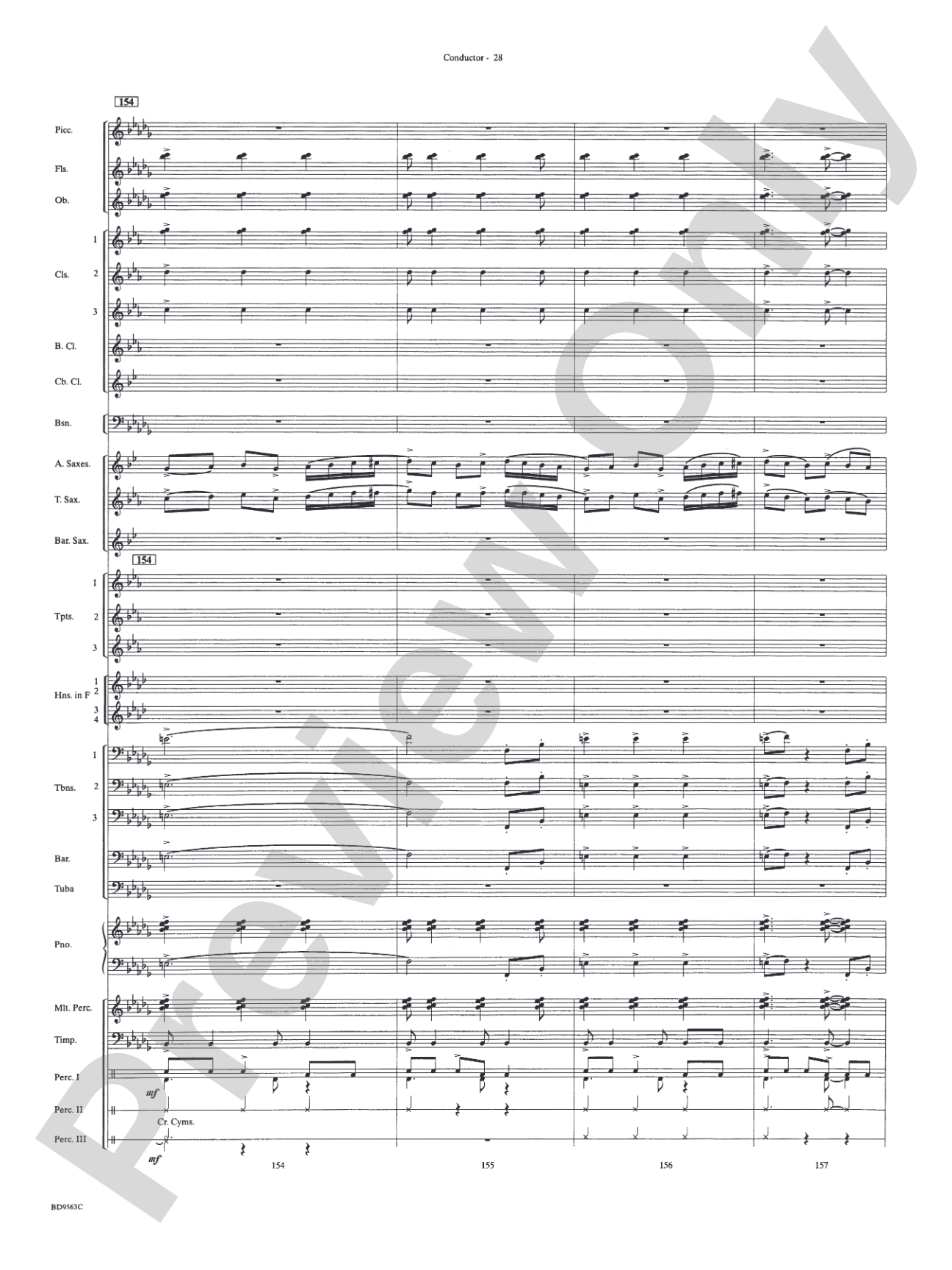
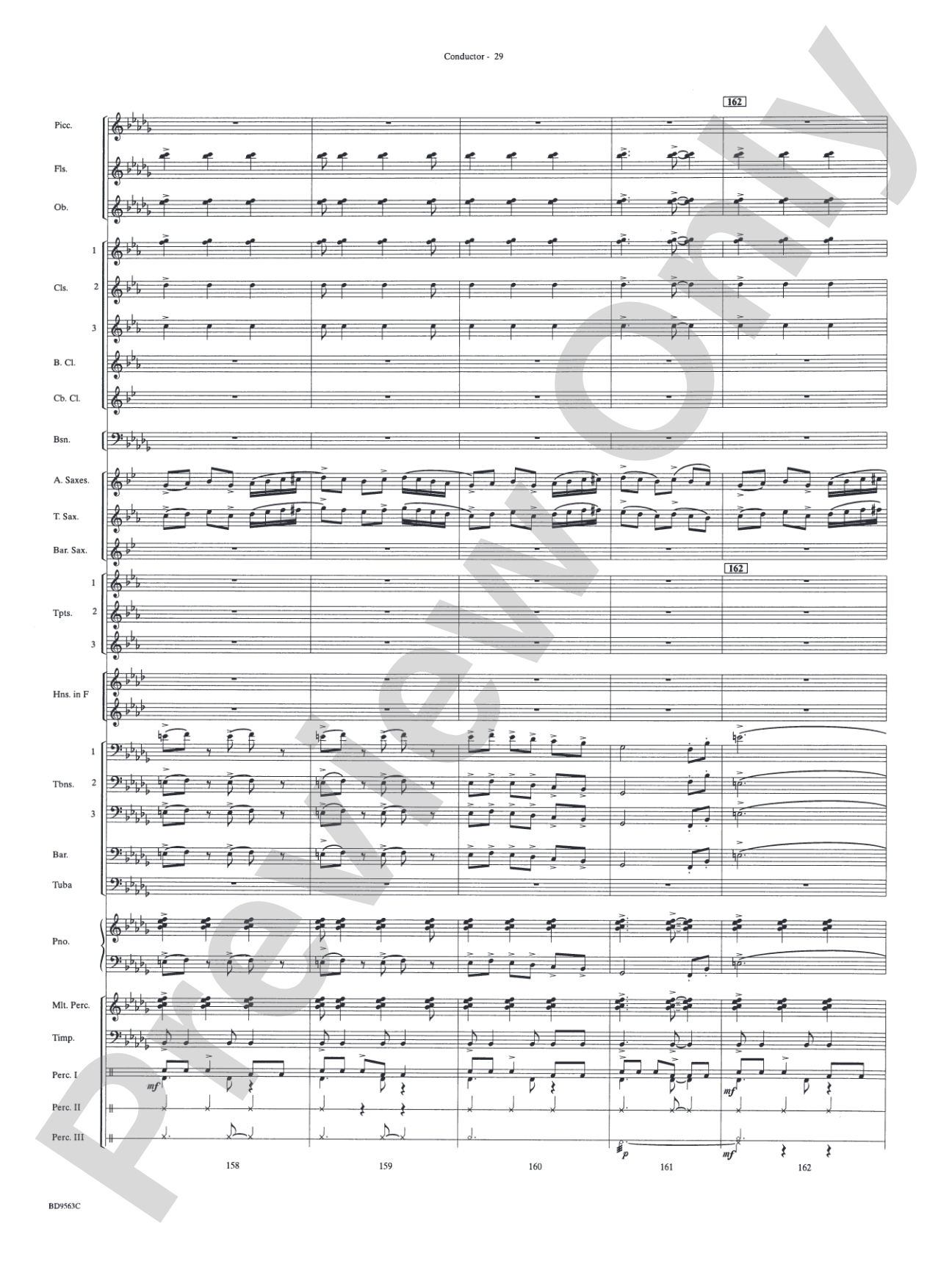
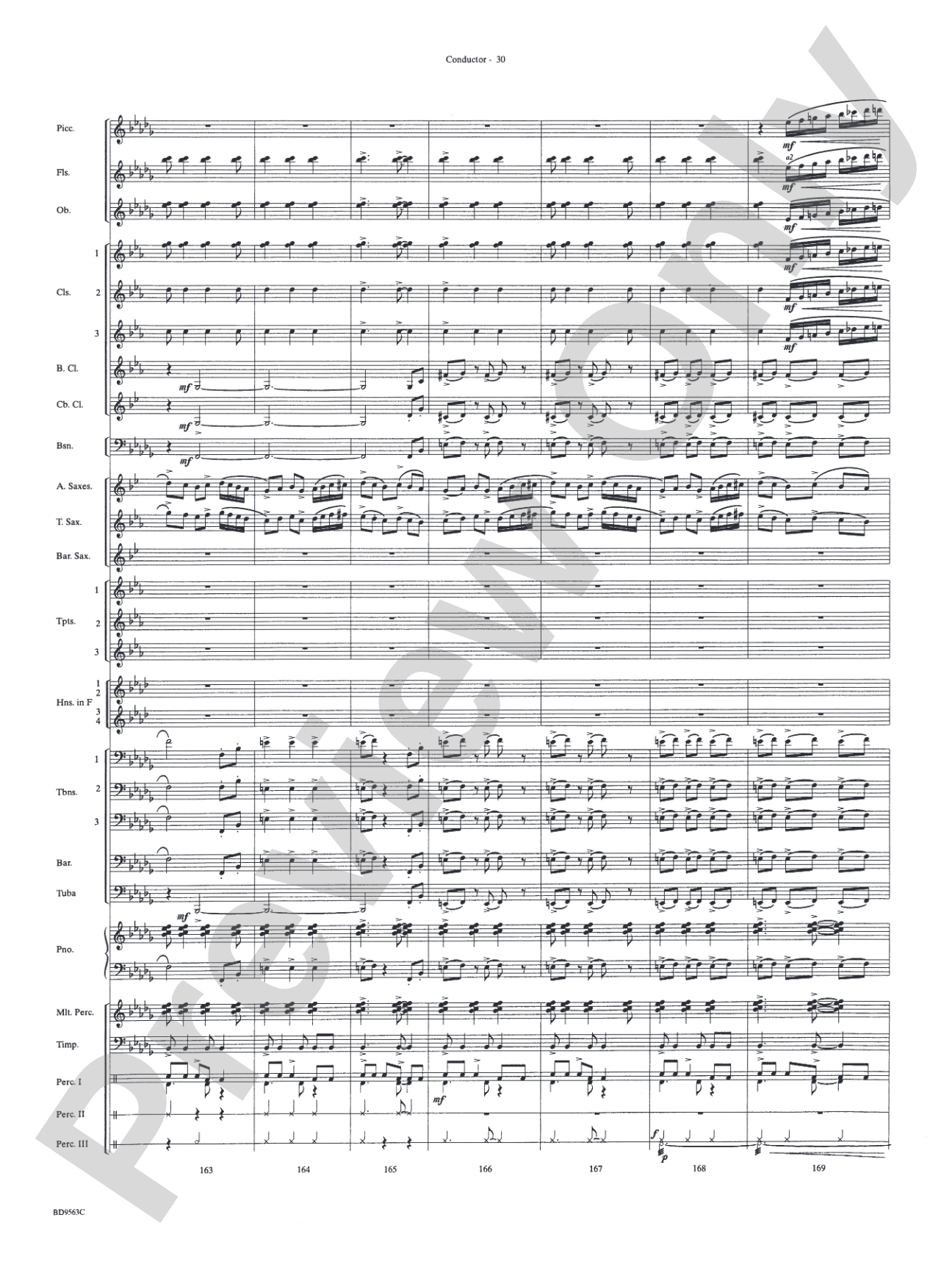
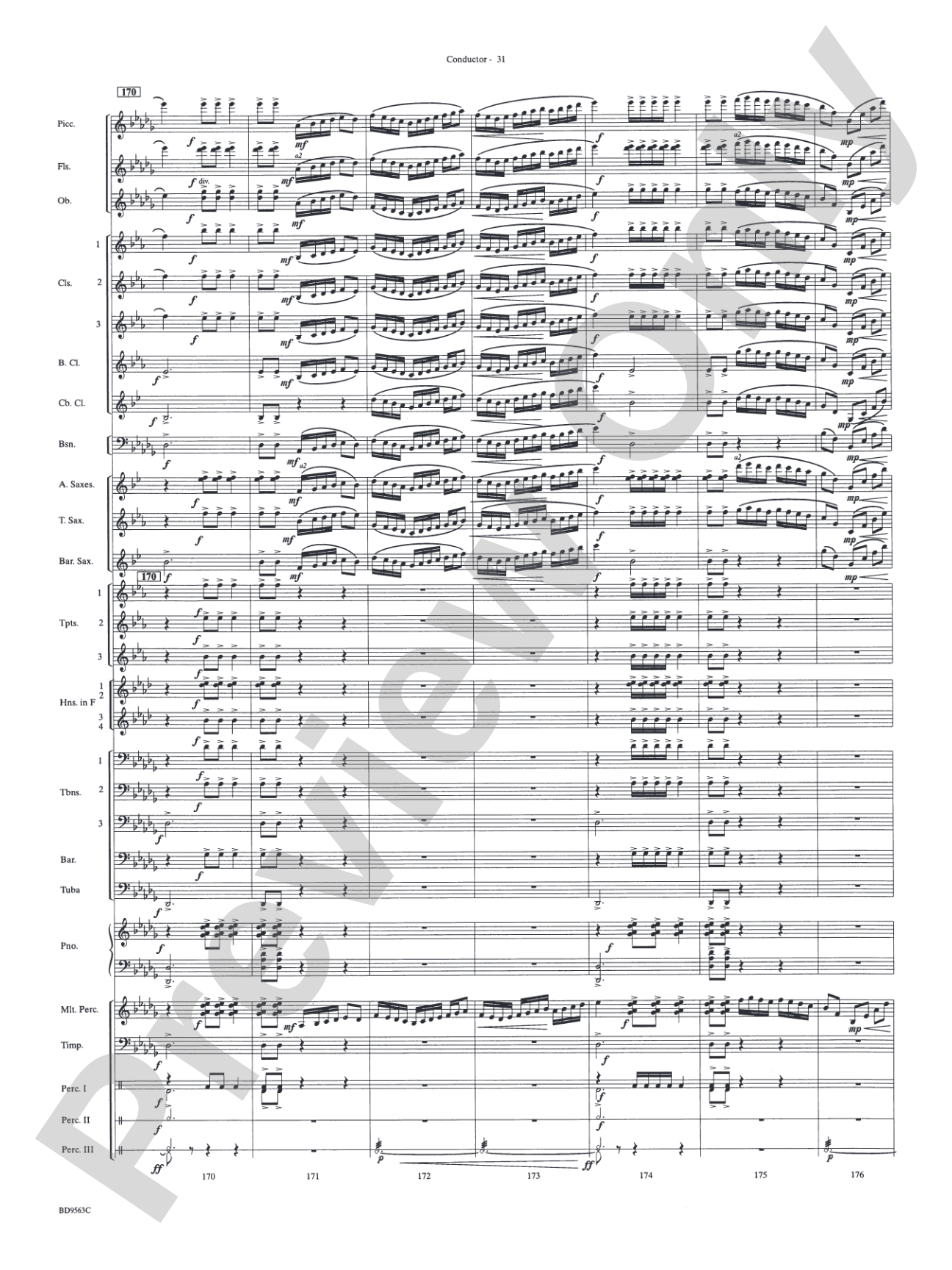
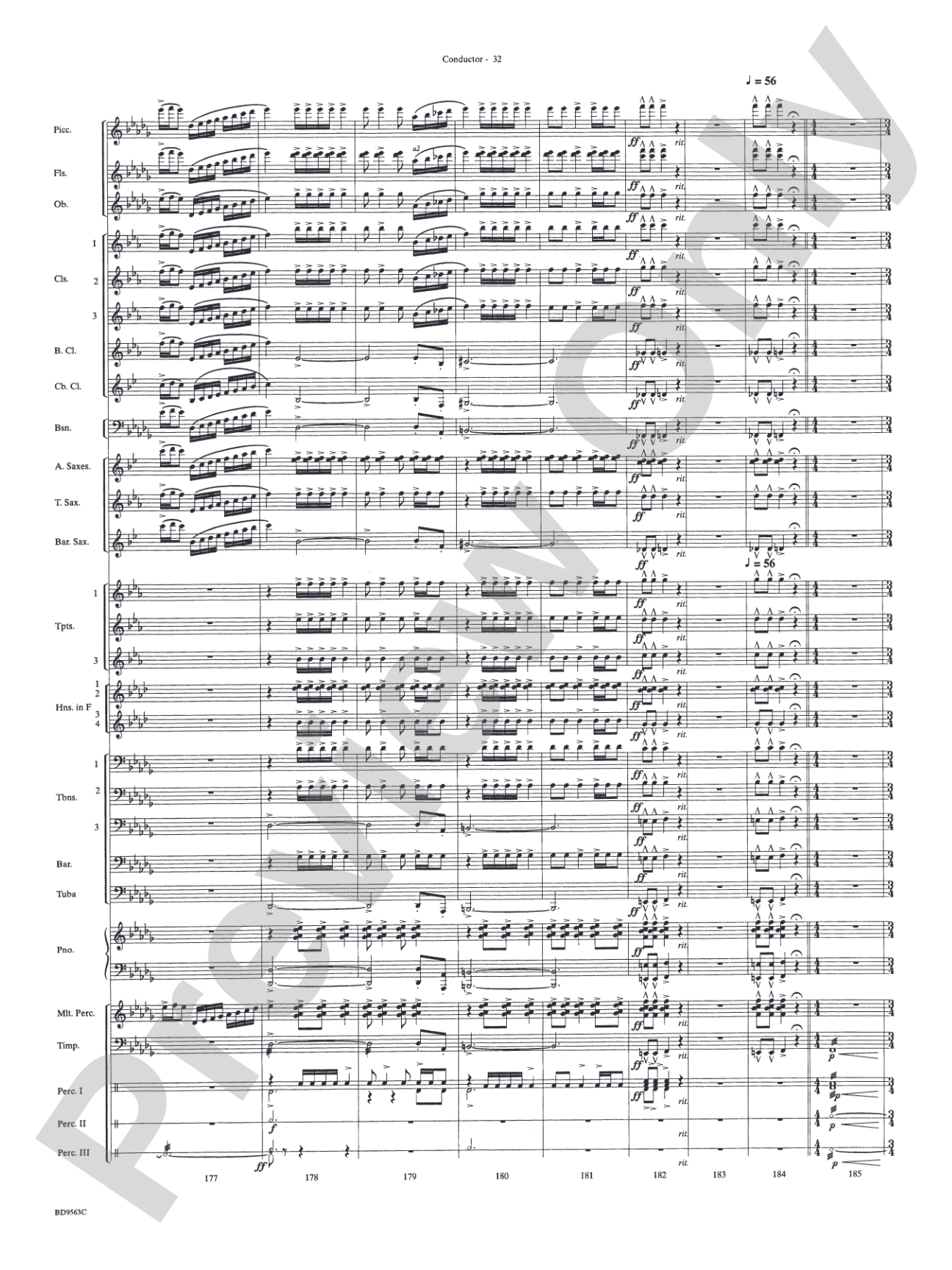
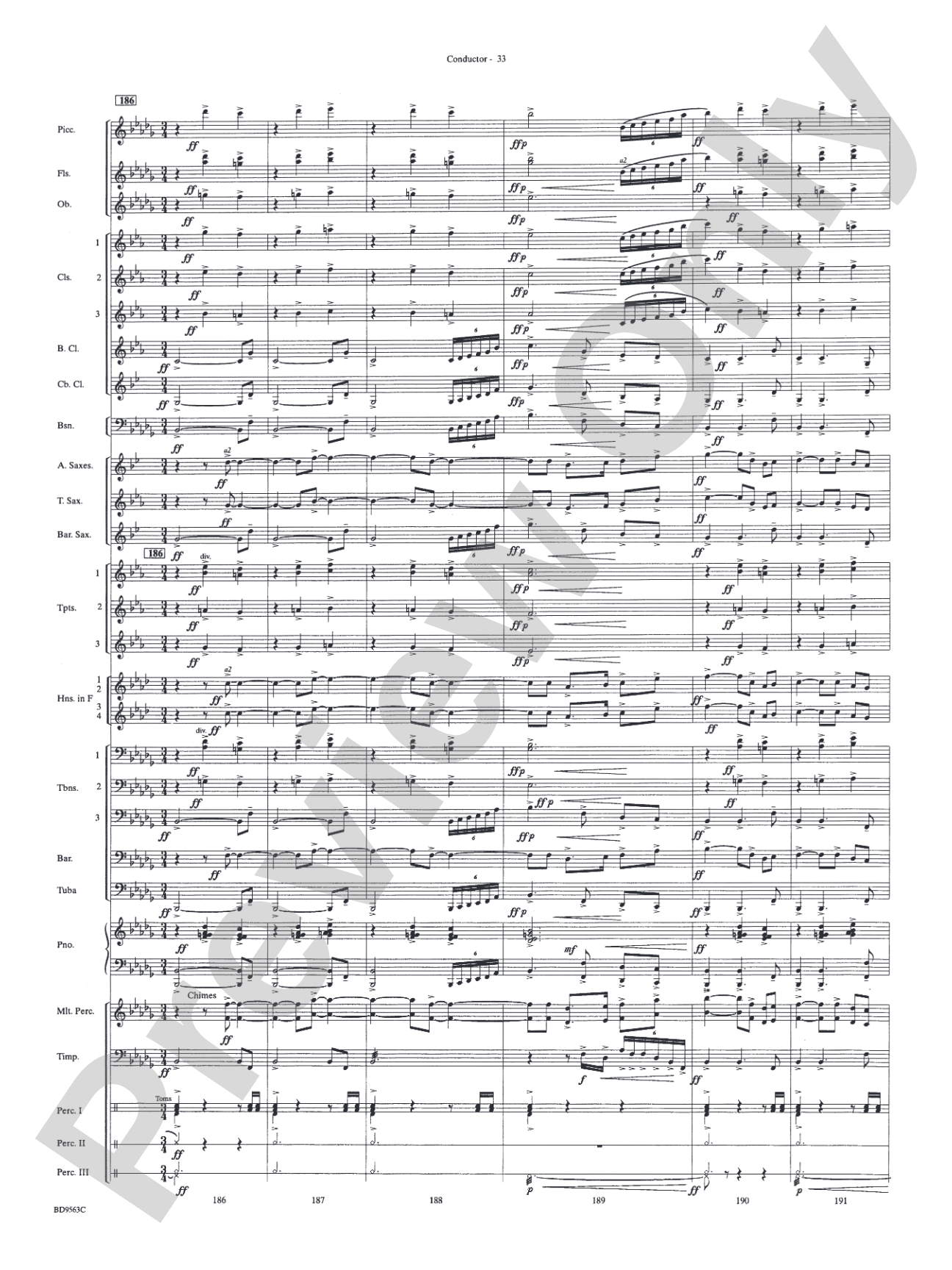
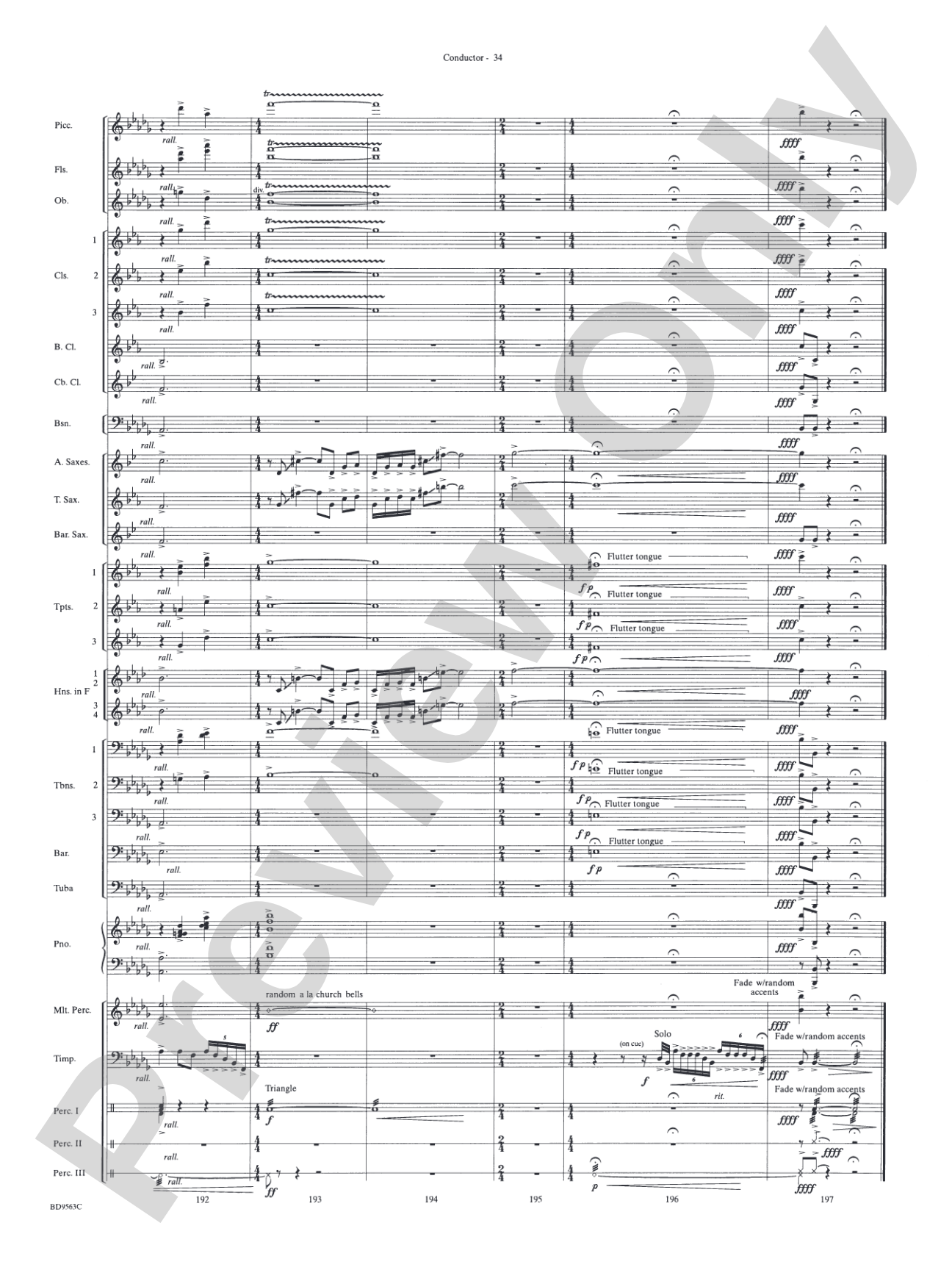
The Inferno is the first movement of Robert W. Smith's four-movement work The Divine Comedy based on Dante Alighieri's literary classic of the same name. Dante's vision of hell consists of nine concentric circles divided into four categories of sin. This first movement of the epic work uses visual imagery with huge blocks of sound and explosive winds and percussion. Colossal in scope! (7:20) (Movement four - The Ascension - BD01085) This title is available in MakeMusic Cloud.


Don't just read it, hear it, play along with it, and watch your students grow with it. In MakeMusic Cloud, The Inferno: Concert Band Conductor Score & Parts comes alive with professional accompaniment, adjustable tempo, and built-in practice tools that turn solo practice into real progress.
Open in the Player
Jump straight in and assign it today.
Start Your Free Trial
Open this title and explore the full library in minutes.
Sample Audio
1
Audio File
--:--
0:00
0:00
Sample Video
Additional Details
Series:
Belwin Classic Band
Publisher:
Alfred Music
Page Count:
322
SKU:
00-PK-0004356
More about this title
About the Composer: Robert W. Smith

Robert W. Smith has established himself as a defining voice in American concert band composition, with over 400 works published through Alfred Music and performed by ensembles across six continents. His education in music education from Troy State University and graduate study at the University of Miami shaped both his compositional craft and his deep understanding of what works in the rehearsal room.
Smith's symphonic cycles, The Divine Comedy and The Odyssey among them, have become repertoire standards, performed by high school and college bands alongside professional orchestras. Beyond the concert hall, his music has appeared in Olympic broadcasts, network television productions, and ceremonial events ranging from presidential state dinners to the opening of the Macy's Thanksgiving Day Parade. As a conductor and clinician, he brings this same versatility to ensembles across North America, Europe, Asia, and Australia.
Why we love this
The Inferno captures the visceral power of Dante's descent into the underworld through sheer orchestrational ambition. Smith constructs this movement as a showcase for what a Grade 5 ensemble can accomplish when given music that demands control, color, and dramatic restraint alongside those explosive moments. It's the kind of piece that unifies a band around a single artistic vision and leaves both performers and audiences genuinely moved.
What to expect
Colossal and uncompromising. The Inferno plunges the listener into a landscape of towering sonorities and relentless motion, where moments of eerie silence heighten the impact of sudden, overwhelming sound. The seven-and-a-half-minute journey feels both immediate and monumental.
Who it's for
This is essential repertoire for Grade 5 bands ready to tackle substantial concert works with dramatic depth. Conductors programming a single powerful centerpiece for a concert will find a piece that commands attention and challenges every section without requiring extreme virtuosity.
How to get the most out of it
- Establish the tempo during the opening section with absolute clarity; the ensemble needs to feel secure in the foundational pulse before layering in the dramatic wind and percussion blocks that define the movement.
- Balance the massive sonorities by sculpting individual voice lines within the full texture. Even in the loudest passages, woodwind and brass doublings need clarity so the architecture of Smith's writing remains audible.
- Shape phrases through dynamic architecture rather than relying on sudden attacks and cutoffs. This movement gains its impact through the deliberate build and release of tension across longer sections.
- Let the percussion parts breathe as their own musical layer. They're not merely punctuation; they're essential to the programmatic storytelling and deserve rehearsal time as a section before integration into the full band.
How to use it
Program The Inferno as the climactic work on a concert focused on narrative music or literary adaptations. Pair it with a gentler opening movement and a contrasting encore; its scope and intensity make it ideal as the final major work before bows. Conductors with access to multiple movements of The Divine Comedy can use this as an anchor for a thematic program exploring Smith's symphonic vision.
Skills your students will build
- Reading and executing large-scale dynamic architecture across extended passages
- Balancing independent voice lines within dense, multi-sectional textures
- Sustaining ensemble focus and intonation through long crescendos and diminuendos
- Responding to programmatic intent through color, phrasing, and rhythmic precision
- Managing rapid transitions between contrasting sonorities and textural blocks