
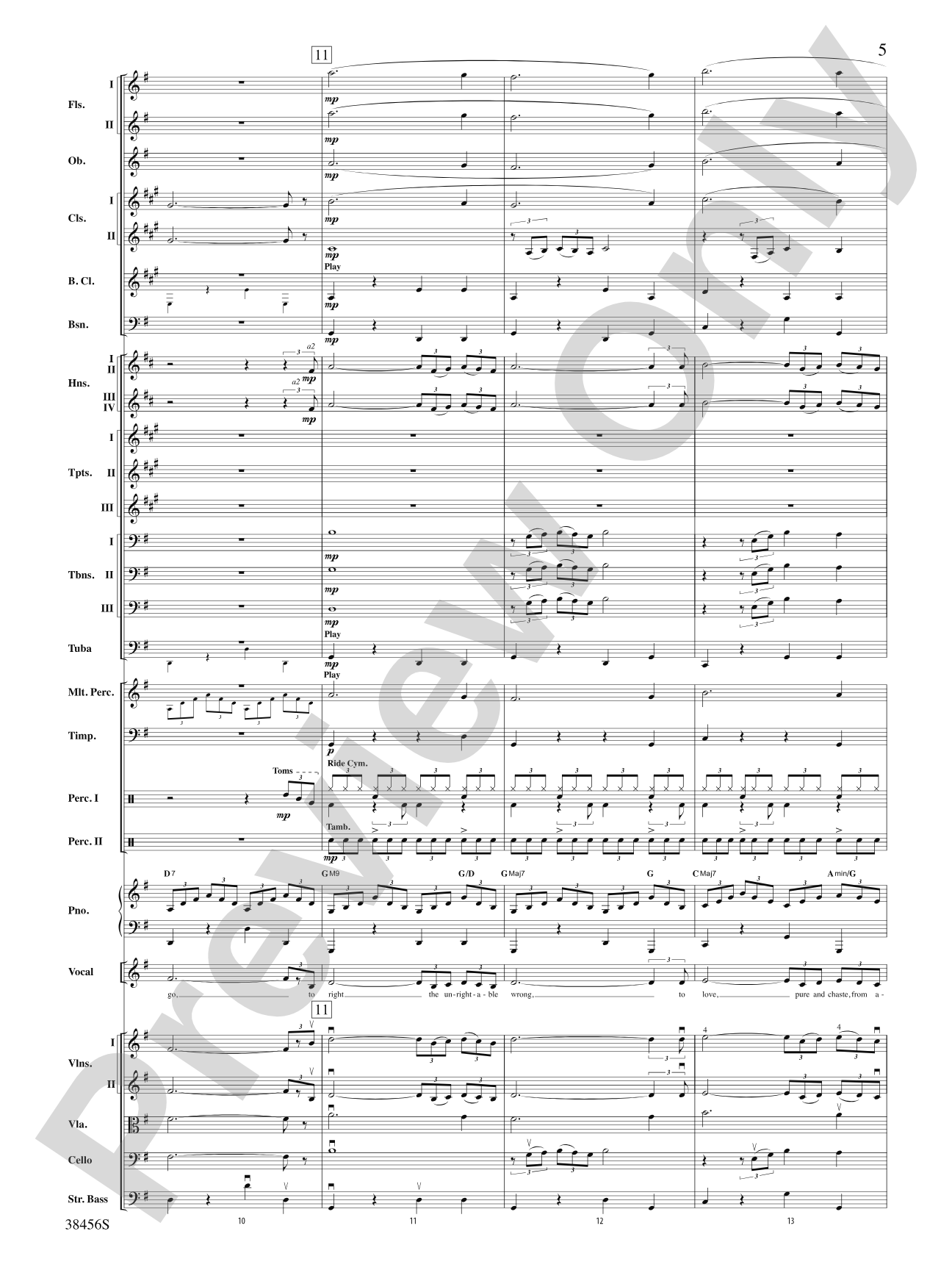
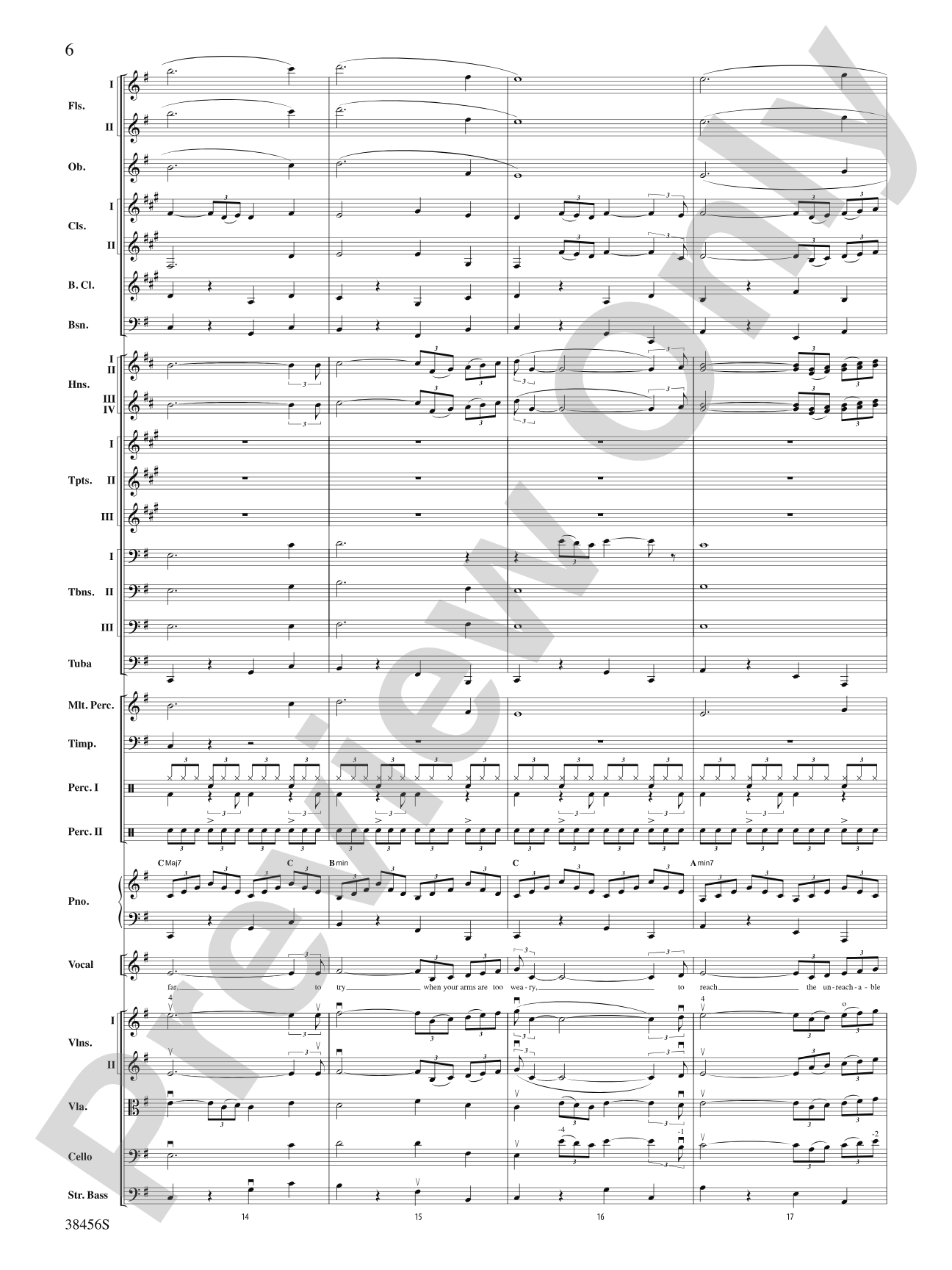
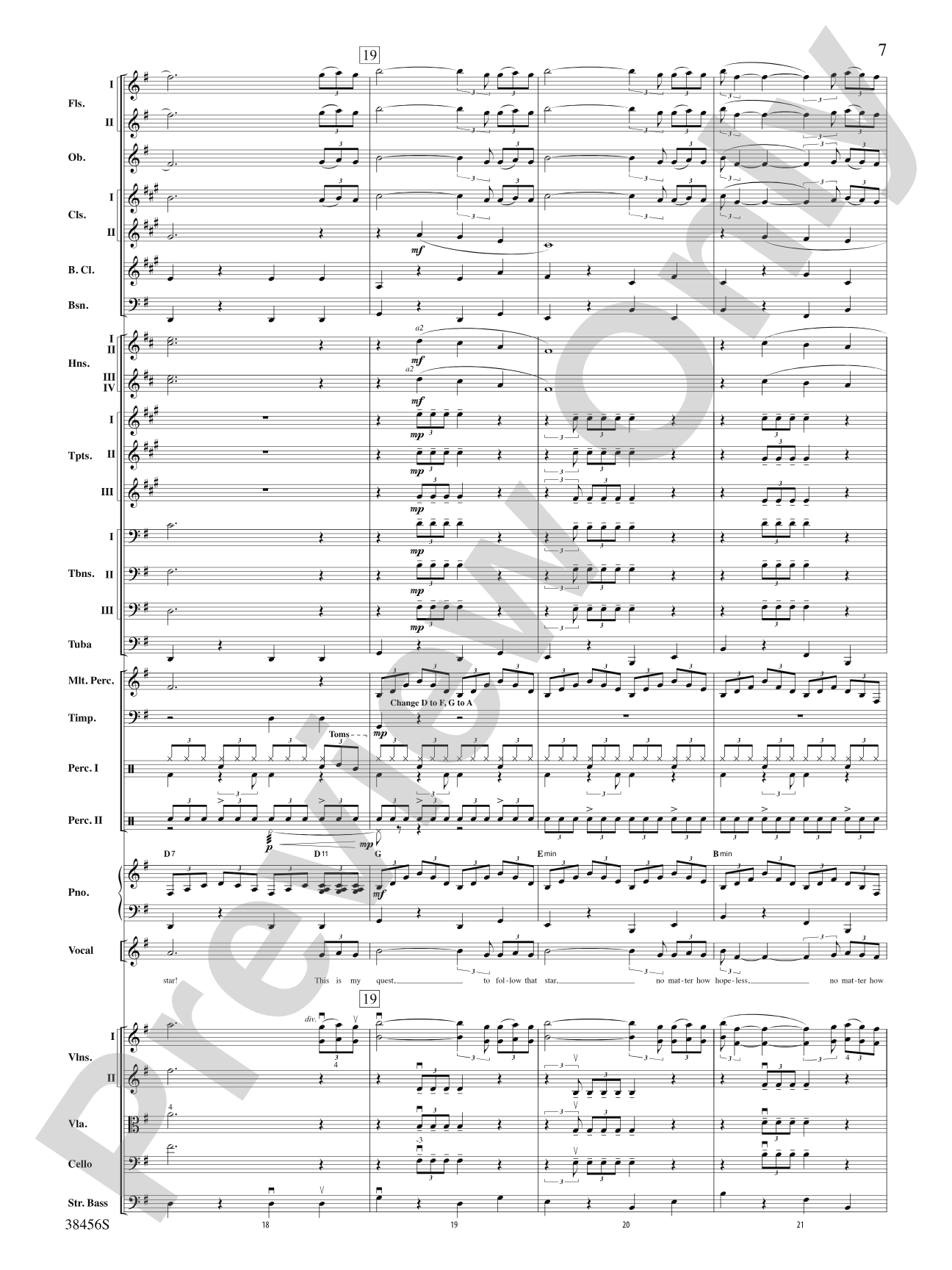
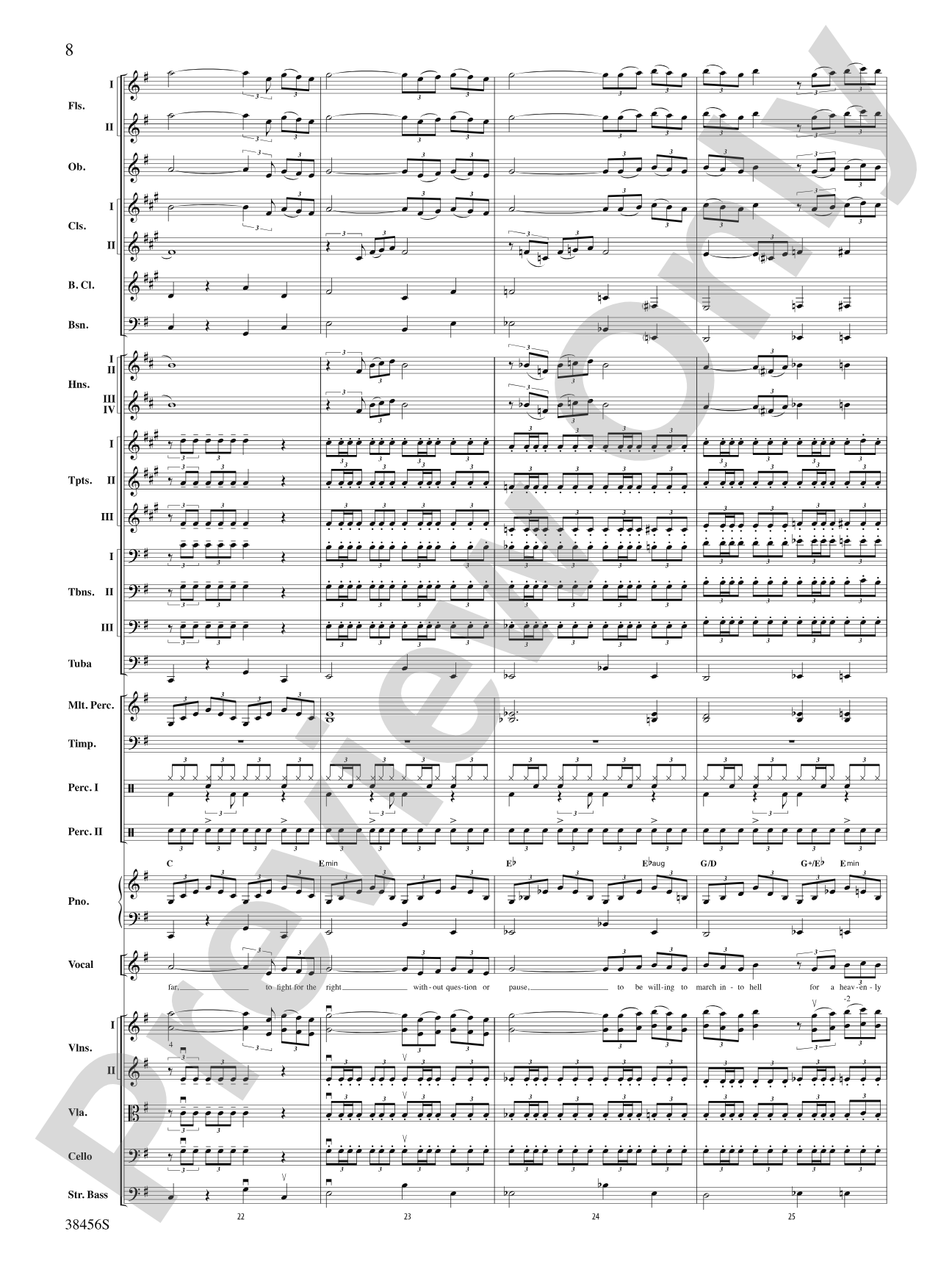
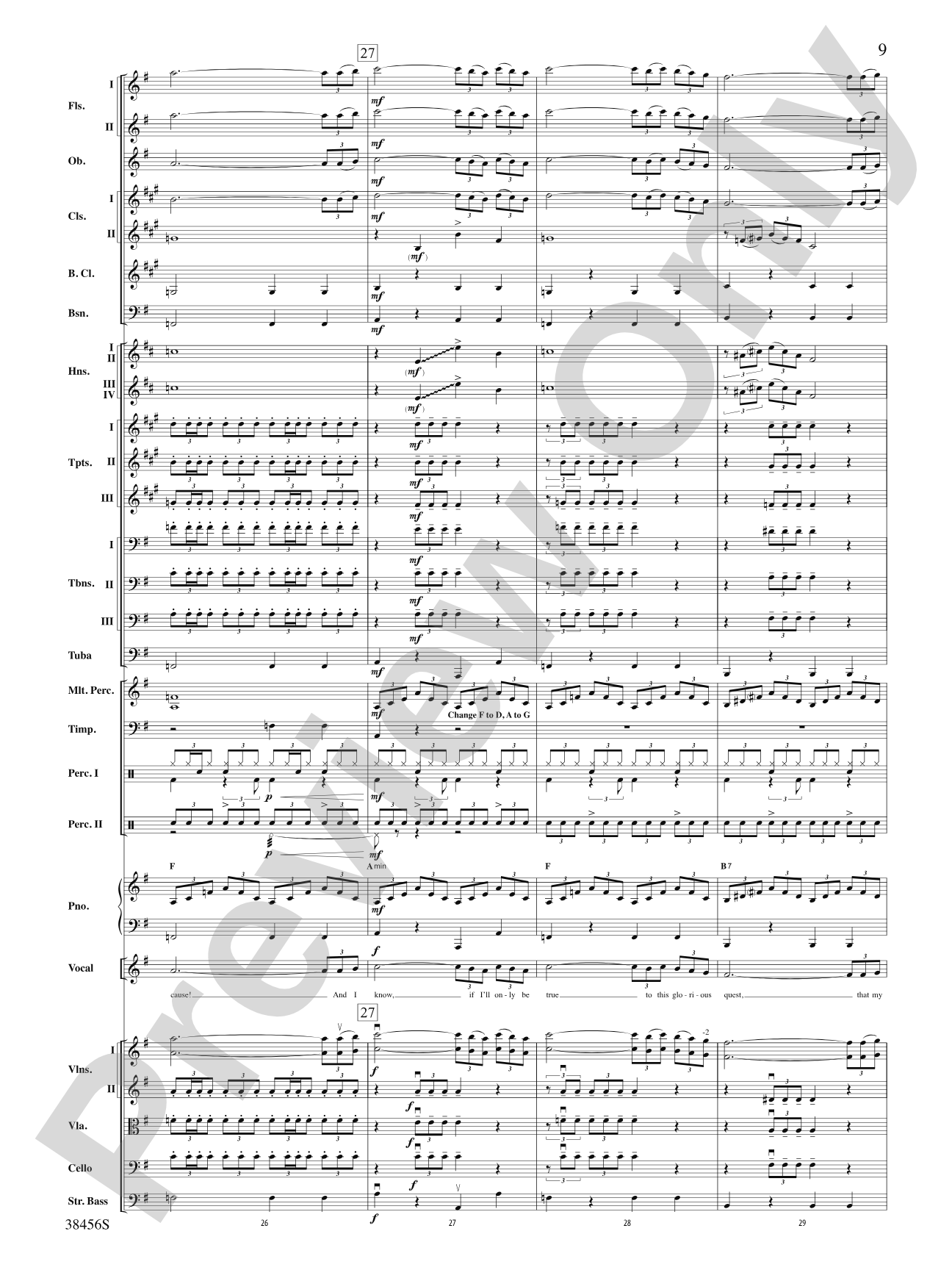
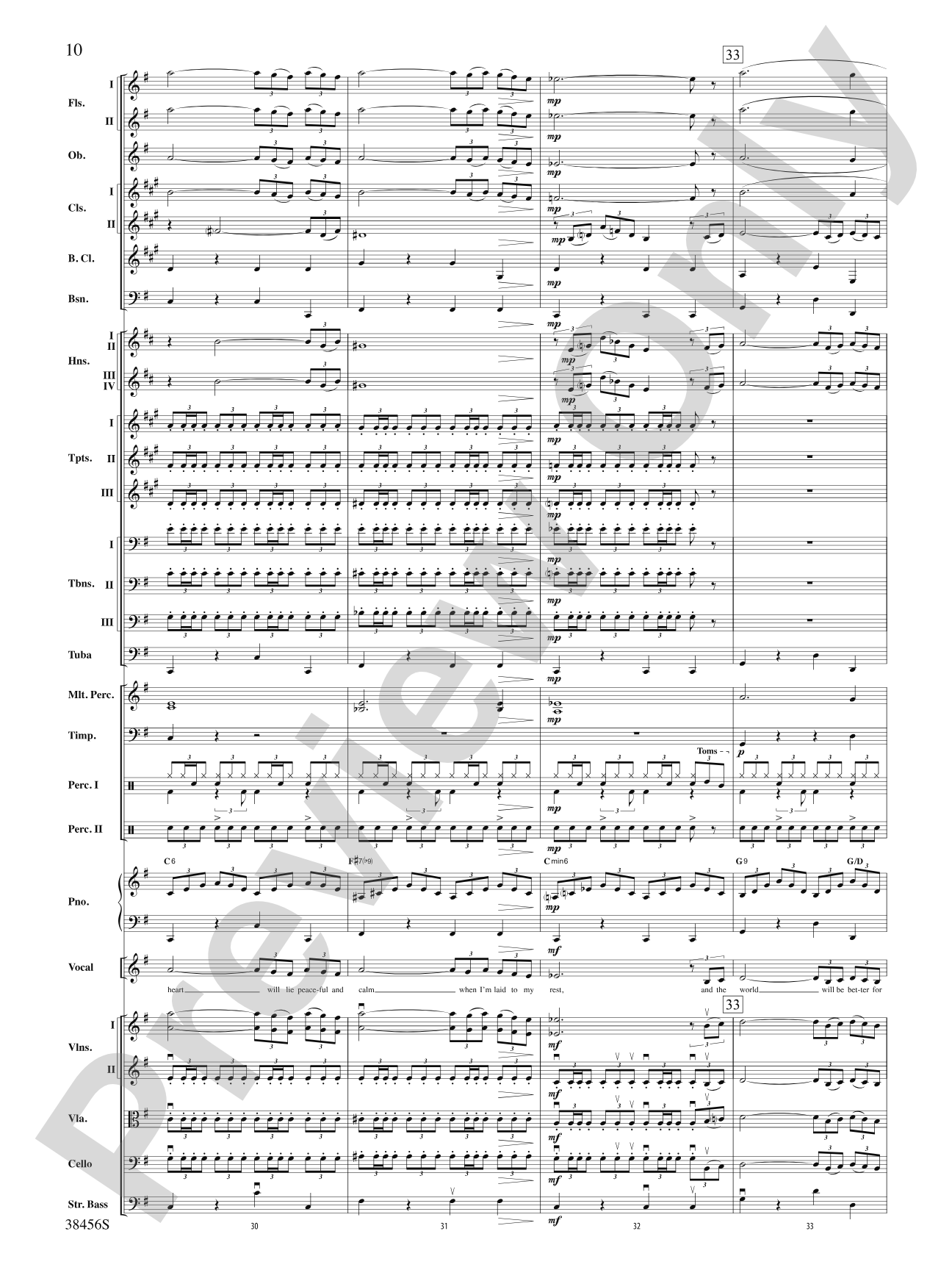
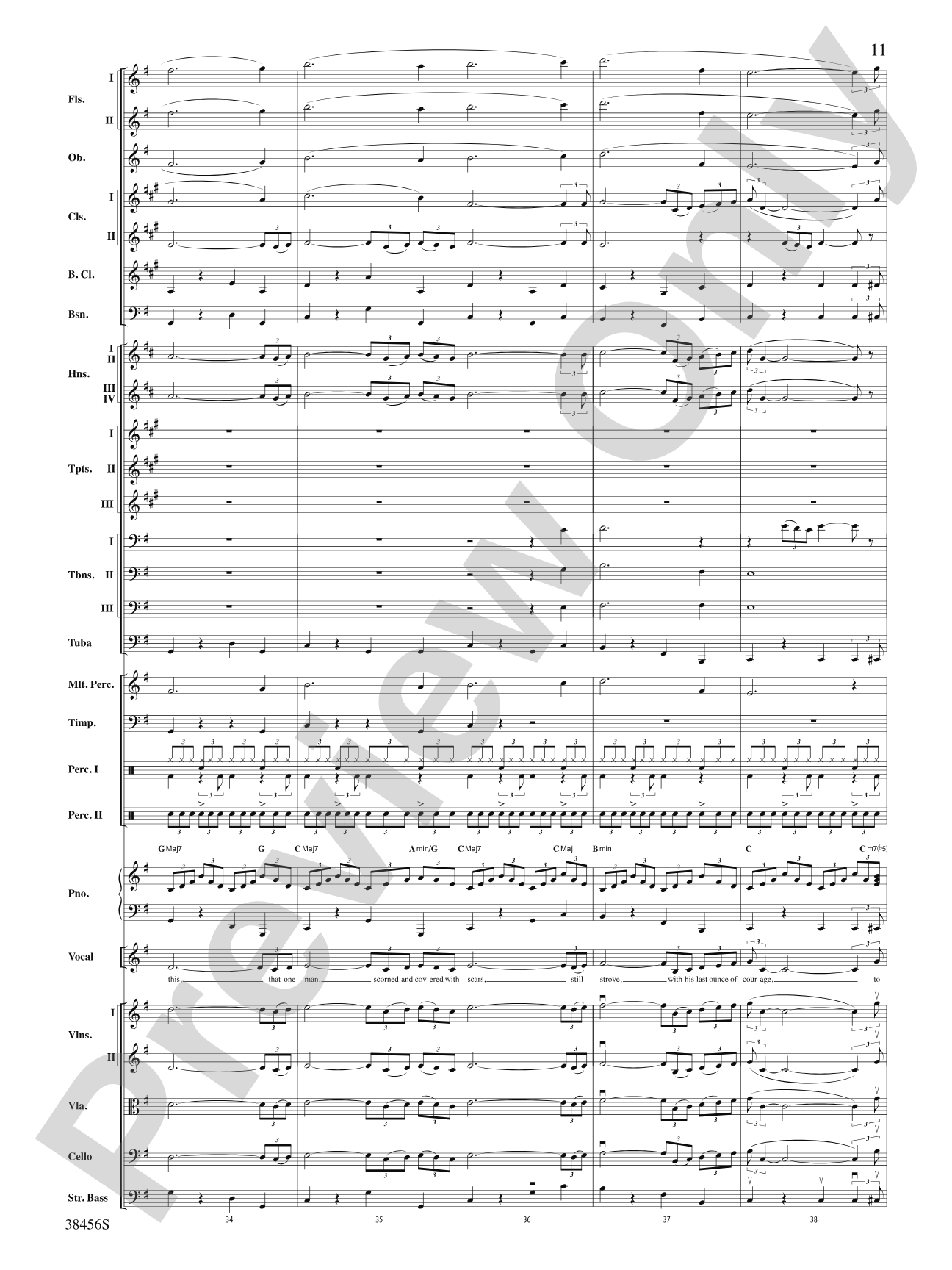
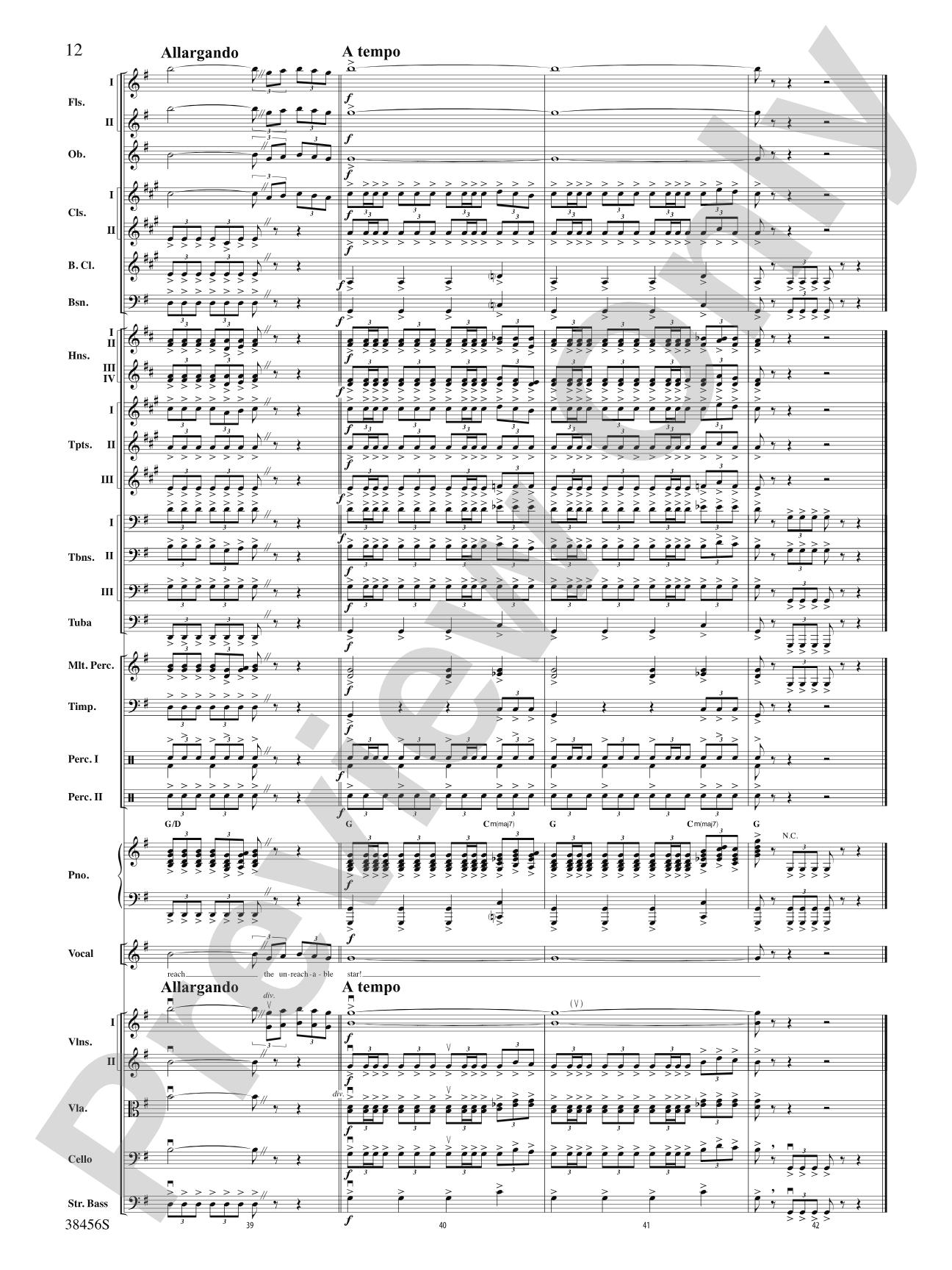

The Impossible Dream (from Man of La Mancha): Score
Words by Joe Darion, music by Mitch Leigh / arr. Victor López
Grade: 3.5
Item: 00-PR-0004514
$9.00
Pickup currently not available
Description
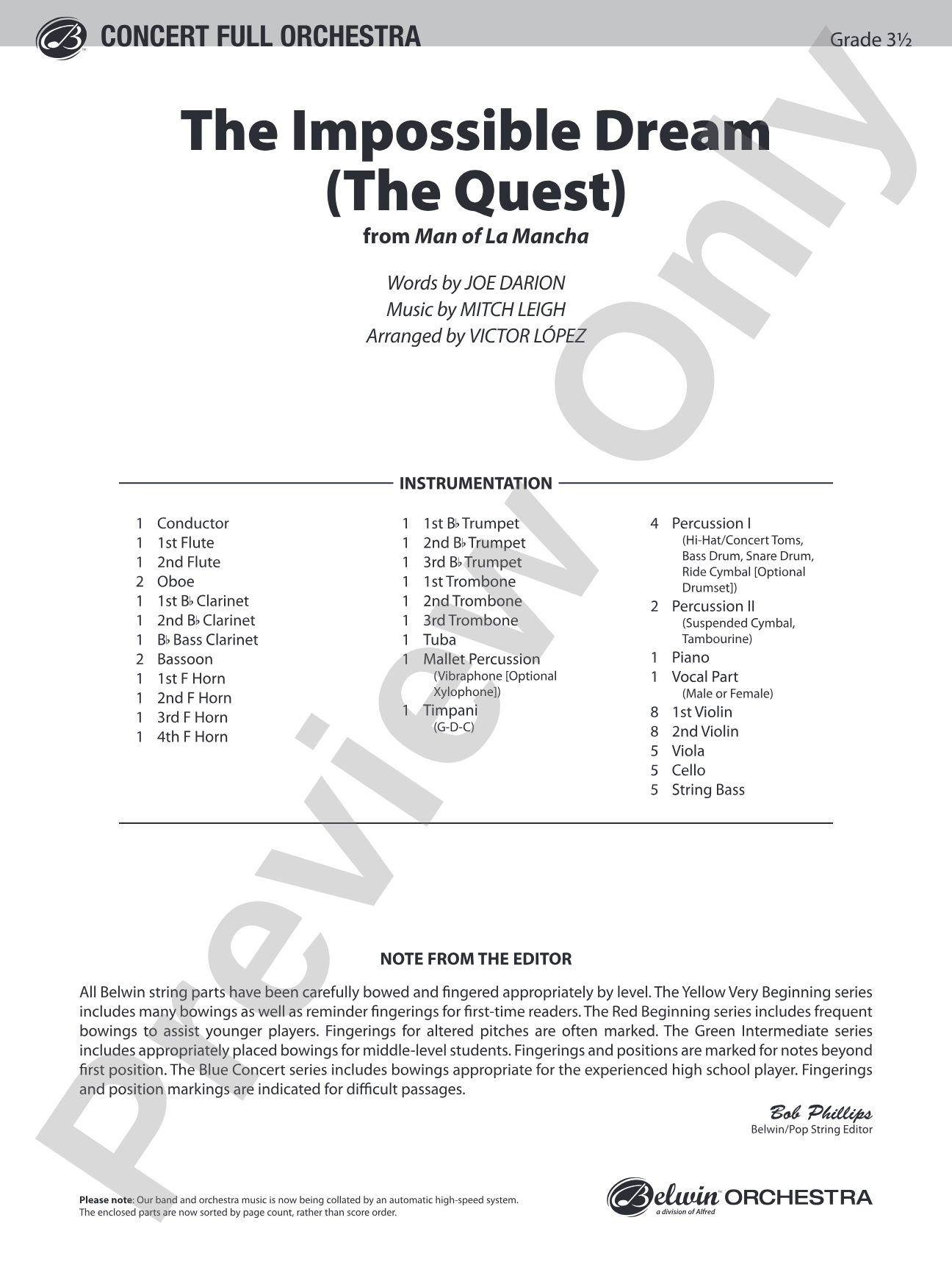
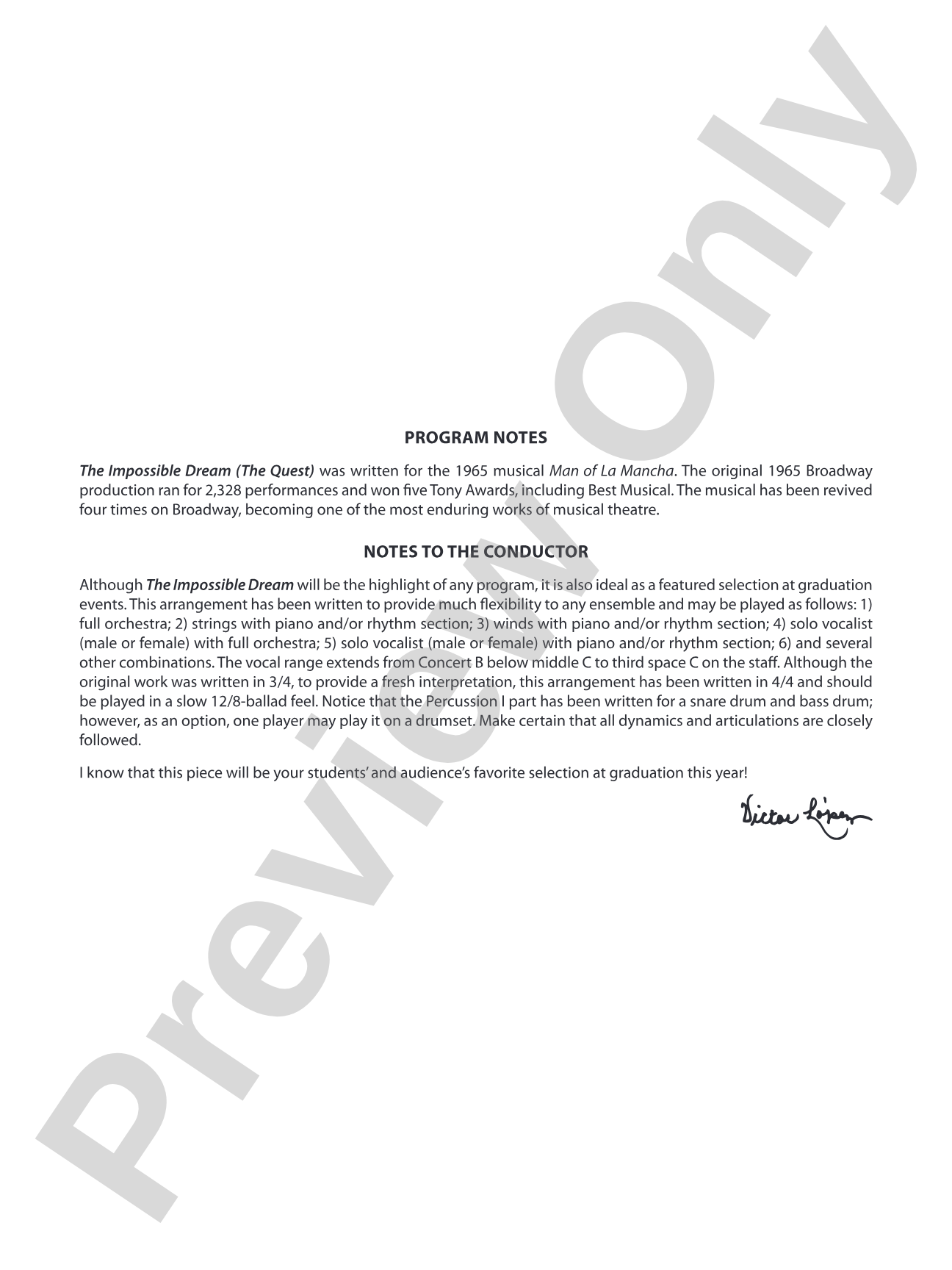
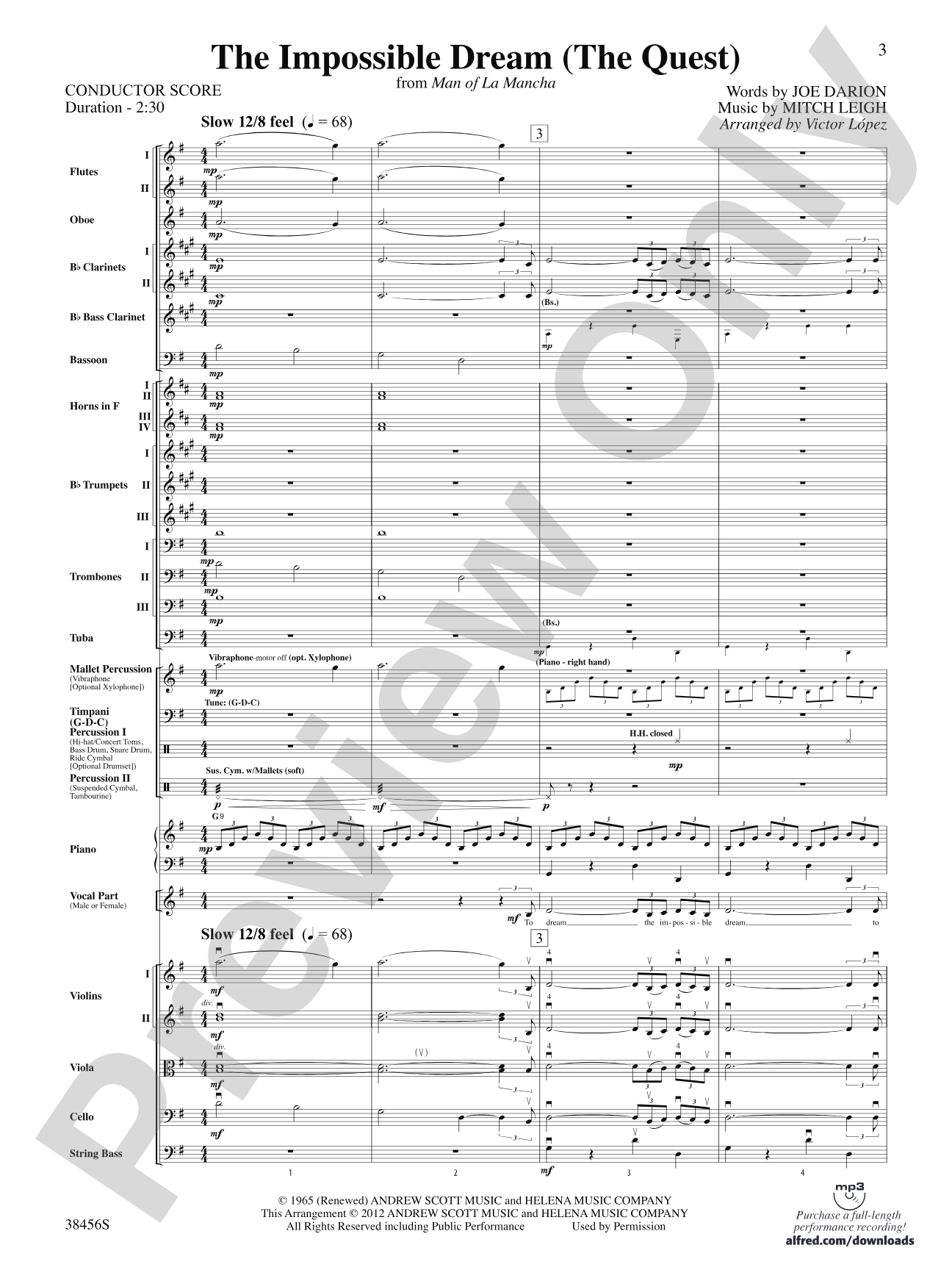
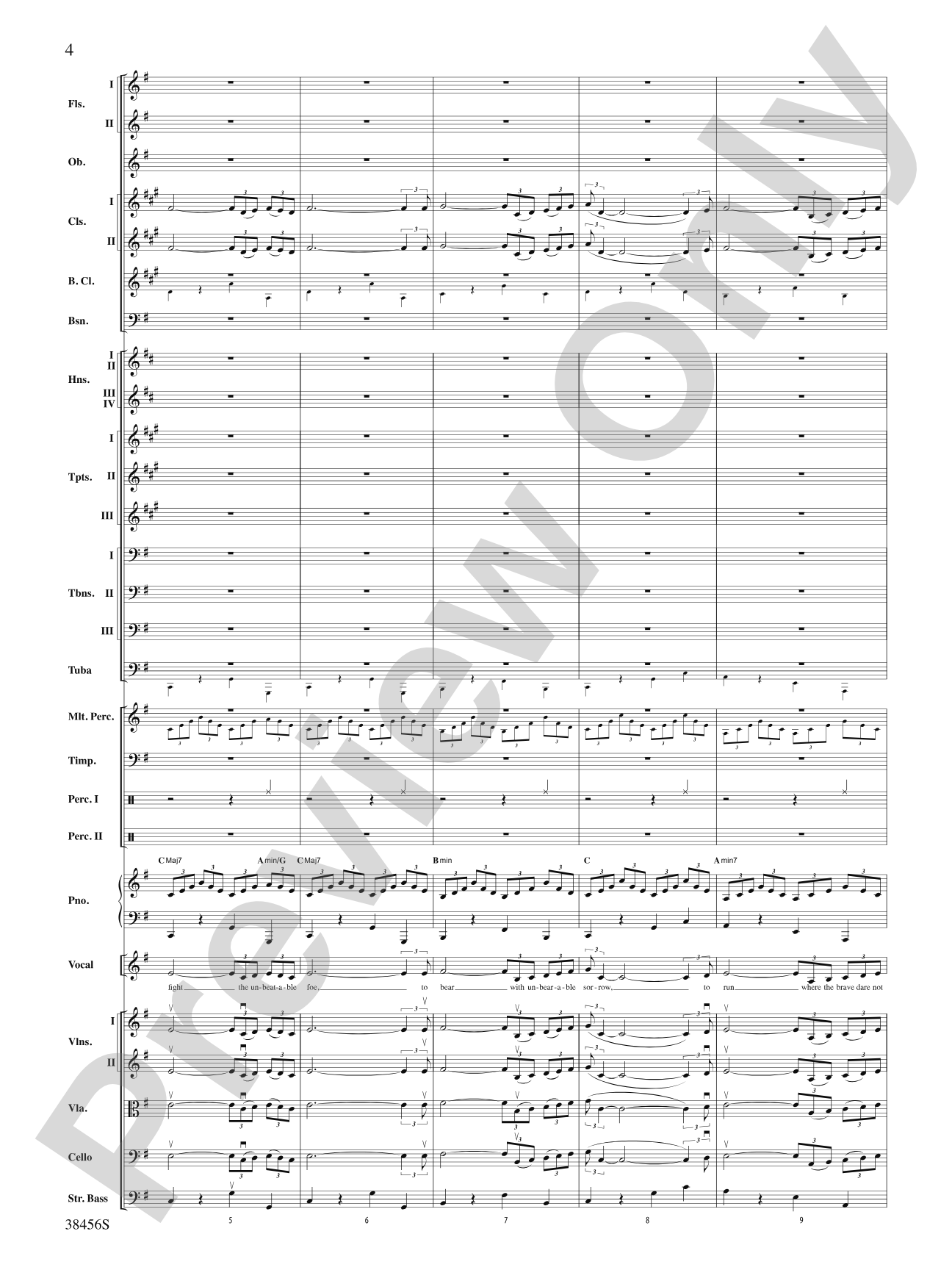
This fabulously flexible arrangement of the ever-inspirational song will be useful in many settings. It can be performed by full orchestra, string orchestra with piano and/or rhythm section, winds with piano, with soloists or without, and in other combinations! Keep this one forever!


Don't just read it, hear it, play along with it, and watch your students grow with it. In MakeMusic Cloud, The Impossible Dream (from Man of La Mancha): Score comes alive with professional accompaniment, adjustable tempo, and built-in practice tools that turn solo practice into real progress.
Open in the Player
Jump straight in and assign it today.
Start Your Free Trial
Open this title and explore the full library in minutes.
Sample Audio
1
Audio File
--:--
0:00
0:00
Sample Video
No sample videos found.
Additional Details
Series:
Pop Concert Full Orchestra
Publisher:
Alfred Music
Page Count:
124
SKU:
00-PR-0004514
More about this title
About the Composer: Mitch Leigh
Mitch Leigh composed the score for Man of La Mancha, the 1965 Broadway musical that became one of the most performed stage works in American theater. His music for the show earned him a Tony Award and an Academy Award nomination, establishing him as a major voice in musical theater composition. Leigh's gift for melody and his ability to write songs that transcend their theatrical origins have made his work a staple of educational and professional orchestras for decades.
Why we love this
Victor López's arrangement gives you genuine flexibility without sacrificing the emotional power of this iconic song. The Grade 3.5 orchestration sits perfectly between accessibility and musical substance, allowing ensembles at different developmental levels to sound fully realized. Directors program this because it works equally well as a concert opener, a showcase for student soloists, or a meaningful closer—and audiences respond every single time.
What to expect
The Impossible Dream carries an open-hearted idealism that feels both grand and intimate. López's arrangement preserves the song's inherent warmth while giving it orchestral depth, creating a sound that's hopeful and earnest without veering into sentimentality. It's the kind of piece that reminds listeners why they love live music.
Who it's for
This score and parts work for orchestras with full instrumentation, but they're equally valuable for programs running leaner ensembles. Whether you have a dedicated orchestra or you're pulling musicians from your band and choir, you'll find a configuration that works. Soloists from your upper chorus or strong student instrumentalists can carry the melody.
How to get the most out of it
- Balance the solo voice(s) with the orchestral texture rather than burying them; Leigh's melody is meant to soar, and López's arrangement supports that without overwhelming.
- Pay attention to the dynamic shape within phrases; resist the urge to conduct this as a single sustained crescendo, and instead shape it with the natural breathing of a vocalist.
- Lock the rhythm section (piano and/or percussion) early in rehearsals so winds and strings can settle into a secure harmonic foundation.
- Experiment with the different instrumentation combinations during rehearsal before deciding on your final voicing; the flexibility is there to serve your ensemble's strengths.
How to use it
This works beautifully as a concert centerpiece that showcases both your ensemble and a soloist; it also functions as a powerful finale that leaves audiences on an uplifting note. Consider pairing it with lighter concert fare to let the inspirational tone resonate, or place it strategically to provide emotional contrast within a longer program. The flexibility of instrumentation means you can perform it even if key players are absent.
Skills your students will build
- Balancing ensemble texture while supporting a featured soloist
- Playing with stylistic control in Latin and light concert idioms
- Reading and executing flexible instrumentation cues
- Shaping long melodic phrases with dynamic intent
- Coordinating rhythm section (piano, percussion, bass) as a cohesive unit