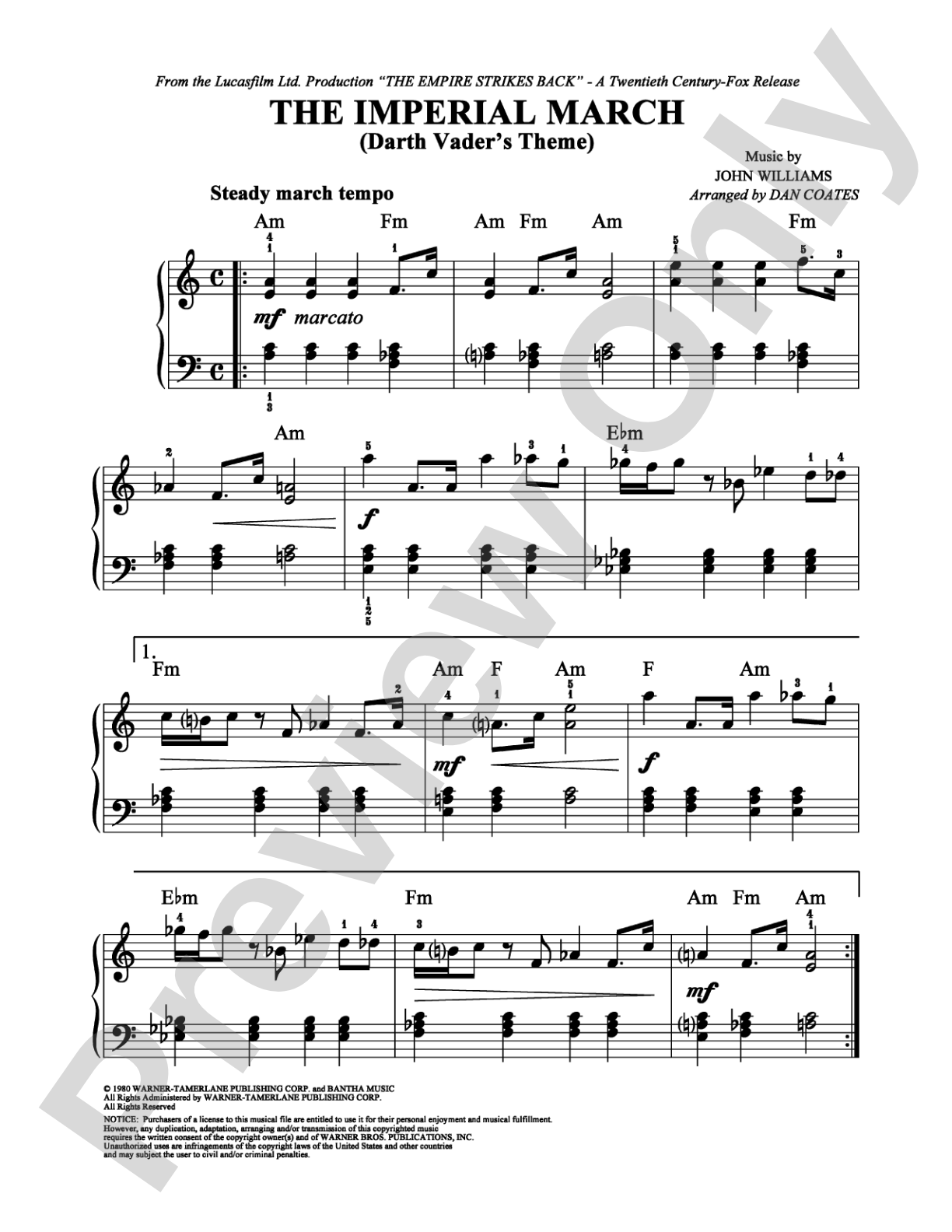
The Imperial March (Darth Vader's Theme): Easy Piano Digital Sheet Music

The Imperial March (Darth Vader's Theme): Easy Piano Digital Sheet Music

John Williams

Item: 00-PS-0006993

Digital Download
$3.99
Description

The Imperial March (Darth Vader's Theme): Easy Piano Digital Sheet Music isn't in MakeMusic Cloud just yet...but it could be. Let us know you'd like to see it, and you'll help shape what comes next. In the meantime, start a free trial and dive into thousands of interactive titles your students can play along with today.

Sample Audio
No sample audio found.
Sample Video
Additional Details
SKU: 00-PS-0006993

More about this title

About the Creator: John Williams

John Williams stands as one of the most prolific and celebrated film composers in cinema history. His work across decades of blockbuster franchises has made him a household name, and his ability to craft instantly recognizable themes that endure across generations remains unmatched in popular music.

The Imperial March represents Williams at his most iconic. Written for The Empire Strikes Back, this theme has become synonymous with one of cinema's most memorable villains. Its angular melody and relentless orchestration showcase Williams' gift for creating music that feels both operatic and utterly modern.

Why we love this

This arrangement captures the menace and grandeur of one of film's most iconic themes without overwhelming early pianists. Students recognize it instantly, which means they're motivated to work through the technical demands. It's a rare opportunity to build repertoire around music that matters to your students.

What to expect

Ominous and measured. The theme unfolds with the inevitability of a slow march, built on repeated figures that create hypnotic tension rather than frantic energy. It's theatrical and dramatic without requiring advanced technique.

Who it's for

Early pianists who are ready for simple two-hand coordination and want to play recognizable film music. This works beautifully for students between levels 1 and 2 who need motivation and a sense of accomplishment.

How to get the most out of it

  • Establish a steady, deliberate tempo from the opening. The march needs weight and control; rushing undermines the gravitas.
  • Shape the repeated figures with slight dynamic variation so the accompaniment doesn't feel mechanical. A whisper of crescendo into phrase peaks keeps interest alive.
  • Let the left hand sit solidly in the lower register. This is where the theme's darkness lives.

How to use it

Feature it in a themed recital celebrating film scores, or use it as a fun closer that engages students and audiences alike. It works equally well as a milestone piece for a student who's earned recognition of their growing independence at the keyboard.

Skills your students will build

  • Left-hand independence and steady accompaniment patterns
  • Maintaining even tone across repeated melodic figures
  • Balancing hands dynamically without losing rhythmic clarity
  • Sustaining focus through straightforward but extended passages

You May Also Like