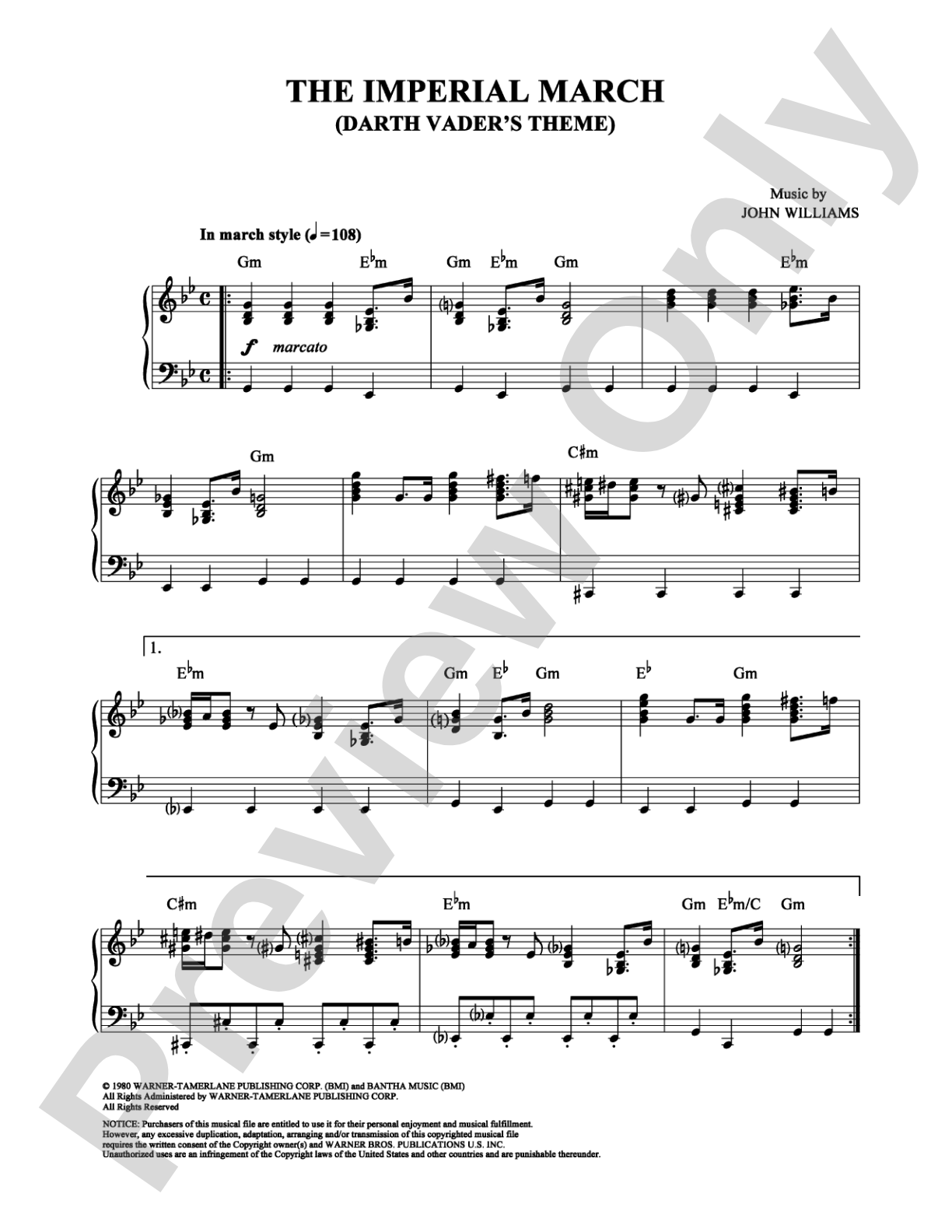
The Imperial March (Darth Vader's Theme): Piano Digital Sheet Music

The Imperial March (Darth Vader's Theme): Piano Digital Sheet Music

John Williams

Item: 00-PS-0000499

Digital Download
$3.99
Description

The Imperial March (Darth Vader's Theme): Piano Digital Sheet Music isn't in MakeMusic Cloud just yet...but it could be. Let us know you'd like to see it, and you'll help shape what comes next. In the meantime, start a free trial and dive into thousands of interactive titles your students can play along with today.

Sample Audio
No sample audio found.
Sample Video
Additional Details
SKU: 00-PS-0000499

More about this title

About the Creator: John Williams

John Williams stands as one of the most prolific and celebrated film composers of our time, with a career spanning over six decades. His ability to craft instantly recognizable themes that function as complete musical statements has made him essential listening for musicians across all levels and genres.

Why we love this

This theme commands immediate recognition and respect, making it an engaging choice for students who might otherwise resist classical piano study. The iconic nature of the material keeps players motivated through the learning process, and the dramatic character demands genuine musicianship rather than just technical execution.

What to expect

Ominous and relentless. The march unfolds with mechanical precision, building an atmosphere of dread through repetition and minor tonality rather than flashy technical display. Each phrase reinforces an inexorable forward momentum.

Who it's for

Intermediate piano students with enough technical foundation to manage sustained passages and coordination between hands will find this piece rewarding. It appeals to players drawn to popular film music and those looking to build confidence through repertoire they genuinely enjoy.

How to get the most out of it

  • Establish a rock-solid, unwavering tempo from the opening. The march loses its menace if the pulse wavers or rushes.
  • Voice the main theme clearly in whichever hand carries it, allowing accompaniment figures to recede slightly so the melody cuts through.
  • Lean into the minor key and sparse harmonic palette. Resist the urge to sentimentalize; let the darkness speak for itself.
  • Pay attention to dynamic markings and any articulation cues in your score. Precision in these details separates a memorable performance from a generic one.

How to use it

Include this in a recital featuring film and contemporary music alongside classical standards to demonstrate the range of piano literature. It works especially well as an encore or as part of a thematic program exploring dramatic or darker musical characters.

Skills your students will build

  • Maintaining steady tempo and pulse without relying on a metronome
  • Voice leading and melody isolation in two-hand textures
  • Dynamic control and articulation precision
  • Interpretation of minor tonality and creating dramatic atmosphere

You May Also Like