
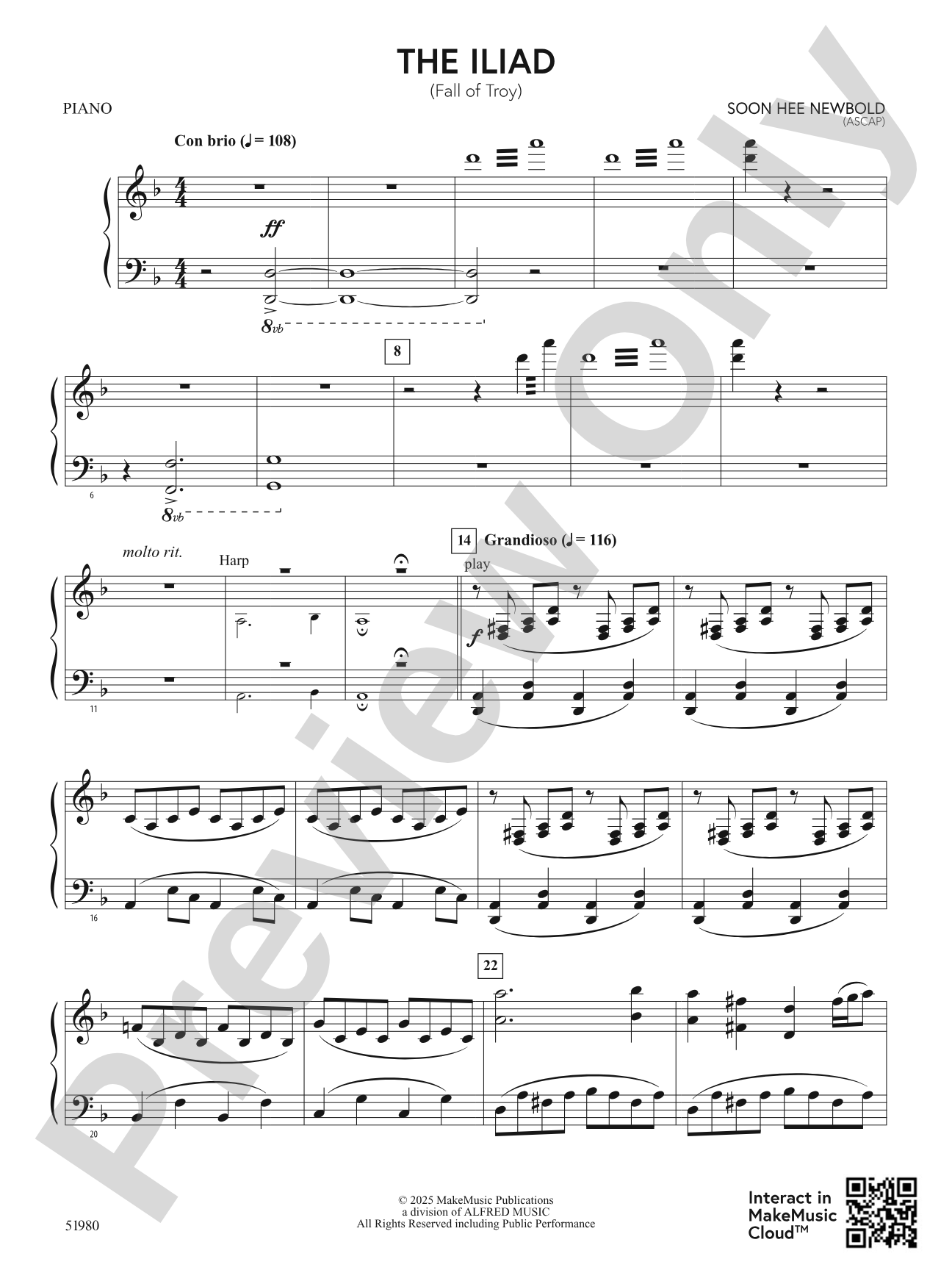
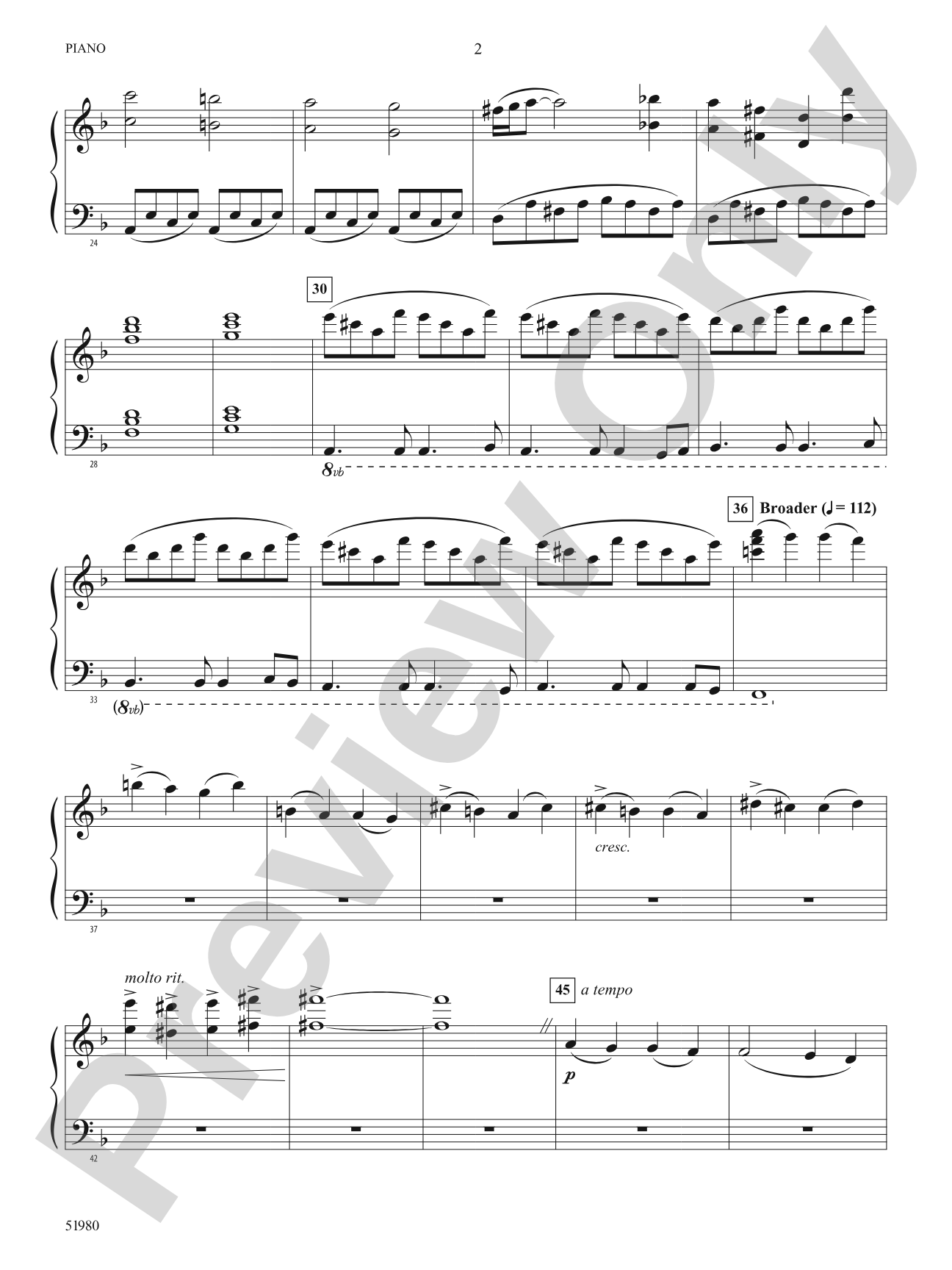

The Iliad: Piano Accompaniment
(Fall of Troy)
By Soon Hee Newbold
Grade: 4
Item: 00-PC-0019599_K
$7.99
Pickup currently not available
Description
This prequel and companion work to Soon Hee Newbold's The Odyssey is a powerful, cinematic work. The Iliad takes players through the battle scenes of the Trojan War and the story of the legendary Achilles. Harp and/or piano add another layer to this epic tone poem. Riveting! (5:45)


Don't just read it, hear it, play along with it, and watch your students grow with it. In MakeMusic Cloud, The Iliad: Piano Accompaniment comes alive with professional accompaniment, adjustable tempo, and built-in practice tools that turn solo practice into real progress.
Open in the Player
Jump straight in and assign it today.
Start Your Free Trial
Open this title and explore the full library in minutes.
Sample Audio
1
Audio File
--:--
0:00
0:00
Sample Video
No sample videos found.
Additional Details
Series:
MakeMusic Symphony Strings
Publisher:
MakeMusic Publications
SKU:
00-PC-0019599_K
More about this title
About the Composer: Soon Hee Newbold

Soon Hee Newbold began her musical training at five on piano, adding violin at seven, and went on to perform as a concert artist with professional ensembles worldwide. Her compositional voice draws richly from cultural and ethnic traditions encountered through extensive travel and lived experience across multiple continents.
Newbold's works span performance contexts from professional orchestras to elementary ensembles, heard in venues ranging from Carnegie Hall and the Kennedy Center to the Midwest Band and Orchestra Clinic and concert halls across the Netherlands, Belgium, Australia, Indonesia, Singapore, and China. Beyond concert music, she has composed for film and media projects in Hollywood, and regularly serves as a clinician and keynote speaker at major music education conferences.
Why we love this
Newbold crafts a cinematic arc that keeps young string players engaged across nearly six minutes of dramatic storytelling. The addition of harp and/or piano enriches the orchestration without overcomplicating the string writing, creating a sophisticated sound that Grade 4 ensembles can genuinely inhabit. Contest and festival adjudicators recognize strong programmatic writing that connects technical demands to emotional narrative.
What to expect
The piece plunges you into the visceral energy of the Trojan War, with string writing that captures both the chaos of battle and the gravitas of Achilles' legend. Harp swells and piano underscoring add orchestral shimmer and depth, transforming a string ensemble into something approaching symphony-sized scope.
Who it's for
String orchestras at the Grade 4 level who are ready to tackle substantial, multi-sectional works with genuine dramatic weight. This score serves orchestras preparing for festivals and competitions, as well as programs looking to expand beyond abstract forms into story-driven repertoire that builds musicianship alongside interpretation.
How to get the most out of it
- Balance the harp and/or piano accompaniment so these parts enhance rather than overshadow the string melody. Rehearse sections with both parts present to find the right blend for your hall's acoustics.
- Mark breath and phrasing points where the battle scenes shift in intensity. Newbold's orchestration changes will guide you, but explicit conductor cueing ensures the ensemble moves cohesively through tempo or dynamic transitions.
- Give yourself time to explore how the harp color sits with your string sound. If using piano instead, adjust the touch and voicing so it reads as an orchestral choice rather than a piano reduction.
- Record a rehearsal run-through at performance tempo to hear how well the narrative arc lands. This work's power comes from sustained dramatic momentum, not just technical execution.
How to use it
Program this as your centerpiece for a spring concert or festival appearance where narrative works make a strong impression. It pairs well alongside shorter character pieces or dances, allowing it to anchor the second half of a program while giving younger musicians exposure to extended concert programming.
Skills your students will build
- Sustaining dramatic intensity across extended forms (5+ minutes)
- Coordinating with auxiliary percussion and keyboard instruments in a string setting
- Responding to subtle orchestration changes that signal shifts in the narrative
- Building rhythmic precision during ensemble unison passages in fast sections
- Shaping phrasing in accompaniment figurations rather than melodic lines