
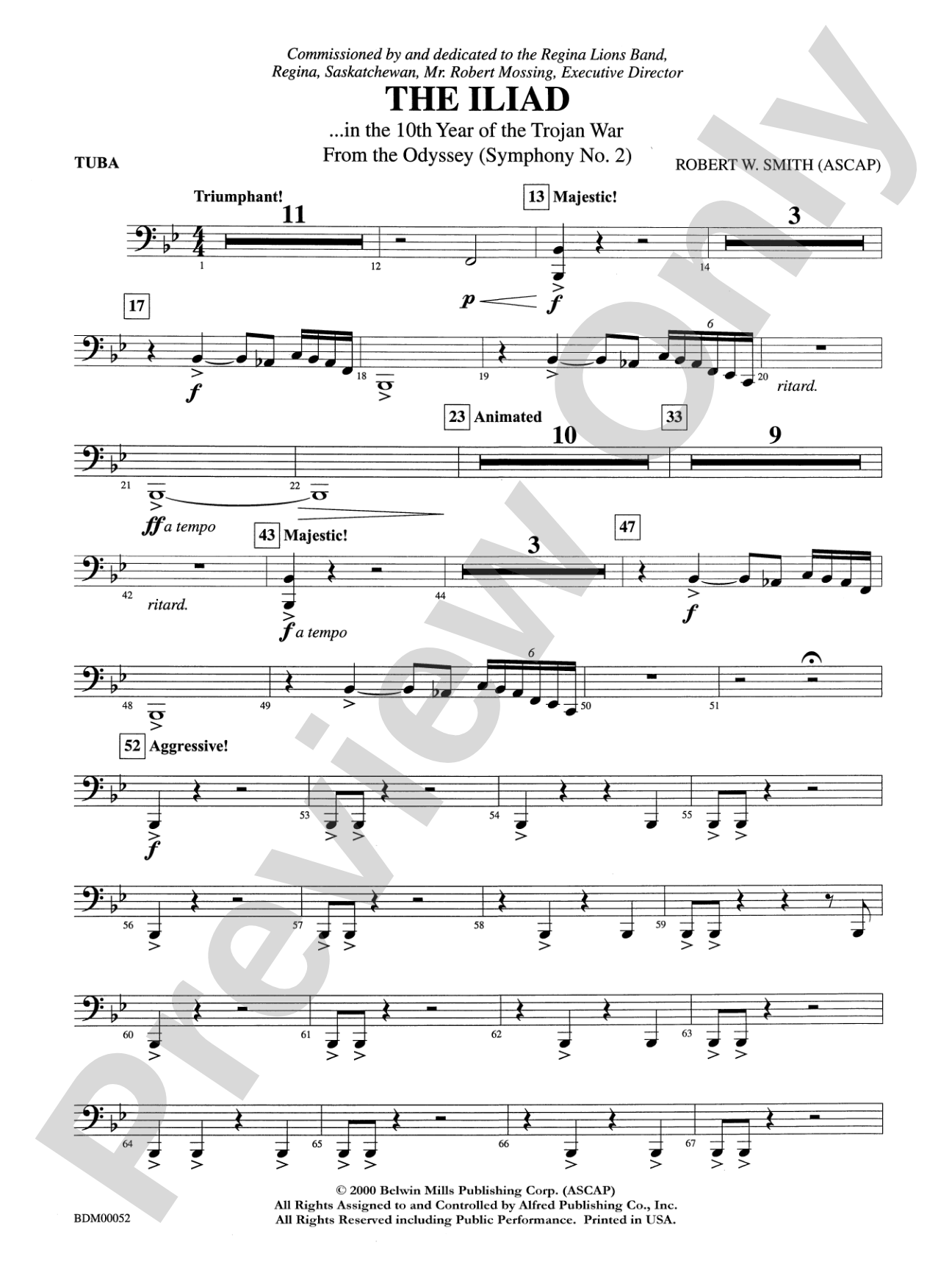

The Iliad (from The Odyssey (Symphony No. 2)): Tuba
By Robert W. Smith
Grade: 4 (Medium)
Item: 00-PC-0002132_TB1
$3.00
Pickup currently not available
Description
Calls to war are the prelude to this first movement of Robert W. Smith's Second Symphony for band, based on the classic story of 'The Odyssey'. You'll experience the squeaky wheels of the Trojan horse, the forest burning, and the sword fight amidst the distinguished regal melodies and energetic rhythms that drive to a conclusion. The ocean's presence is evident in the optional transition to the second movement, "The Winds of Poseidon" (BD9923). Much awaited, this work is monumental in nature. (7:44)


Don't just read it, hear it, play along with it, and watch your students grow with it. In MakeMusic Cloud, The Iliad (from The Odyssey (Symphony No. 2)): Tuba comes alive with professional accompaniment, adjustable tempo, and built-in practice tools that turn solo practice into real progress.
Open in the Player
Jump straight in and assign it today.
Start Your Free Trial
Open this title and explore the full library in minutes.
Sample Audio
1
Audio File
--:--
0:00
0:00
Sample Video
No sample videos found.
Additional Details
Series:
Belwin Symphonic Band
Publisher:
Alfred Music
Page Count:
384
SKU:
00-PC-0002132_TB1
More about this title
About the Composer: Robert W. Smith

Robert W. Smith stands among America's most performed composers for concert band and orchestra, with over 400 published works distributed primarily through Alfred Music. His catalog reflects both technical mastery and accessibility, earning performances across North America, Europe, Australia, and Asia. Smith holds degrees from Troy State University (Alabama) and the University of Miami, grounding his craft in formal training and educational philosophy.
Beyond the concert hall, Smith's music has appeared in televised events ranging from the Macy's Thanksgiving Day Parade to the Olympic Games, the Ringling Brothers circus, and Opening Day at Dodger Stadium. He conducts and teaches internationally, bringing firsthand knowledge of how music functions in performance contexts that matter to students and audiences alike.
Why we love this
Smith grounds this programmatic symphony in the visceral storytelling of Homer's epic, crafting moments that feel genuinely cinematic without losing musicianship. The Grade 4 scoring gives capable students real substance to sink their teeth into, with rhythmic precision and textural clarity that reward careful preparation rather than relying on page-turning complexity alone. A first movement this engaging sets your ensemble up perfectly to program either as a standalone concert showcase or as the gateway piece that flows into 'The Winds of Poseidon.'
What to expect
The opening cuts like a trumpet call to battle, urgent and clarion. You move through vivid scenes steeped in classical grandeur and orchestral sweep, from the grinding mechanics of wooden horse wheels to the crackle of flame and the clash of steel. Beneath the action runs an ocean current of harmonic sophistication that prevents the work from ever feeling shallow.
Who it's for
Directors programming a Grade 4 concert band seeking substantial, musically rewarding material that challenges students without overwhelming younger ensembles. Students who thrive on narrative and programmatic direction will find the Homer connection motivating, while musicians developing rhythmic independence and textural awareness gain real pedagogical ground.
How to get the most out of it
- Build the rhythmic foundation in the war call sections first. These ostinatos anchor every other voice, so lock them in before layering melody. The energy of the work depends on this precision.
- Mark the timbral shifts in your score where Smith transitions from the Trojan horse imagery to the forest burning to the sword fight. Each moment needs distinct character from your sections, not just louder or softer playing.
- Balance the 'regal melodies' against the energetic rhythmic material. These elements compete for attention, so rehearse them as counterpoint rather than treating one as accompaniment.
- If you plan to perform the optional transition into 'The Winds of Poseidon,' map out the harmonic and textural relationship between both movements early. The ocean imagery should feel continuous, not jarring.
How to use it
Program this as your centerpiece first movement at a festival concert or showcase where the full arc matters. The 7:44 duration gives you flexibility; it stands alone powerfully but also sets up a two-movement experience if your band can access and prepare 'The Winds of Poseidon' as a companion piece. Consider it early in a concert where your ensemble's energy can sustain the narrative without fatigue.
Skills your students will build
- Maintaining rhythmic precision in complex ostinato figures while other voices carry melody
- Shifting articulation and tone color to reflect programmatic content across distinct musical scenes
- Balancing forte passages without sacrificing intonation under pressure
- Reading and executing the conductor's interpretation of narrative tempo and character changes
- Ensemble awareness in texturally layered sections where multiple rhythmic ideas occur simultaneously