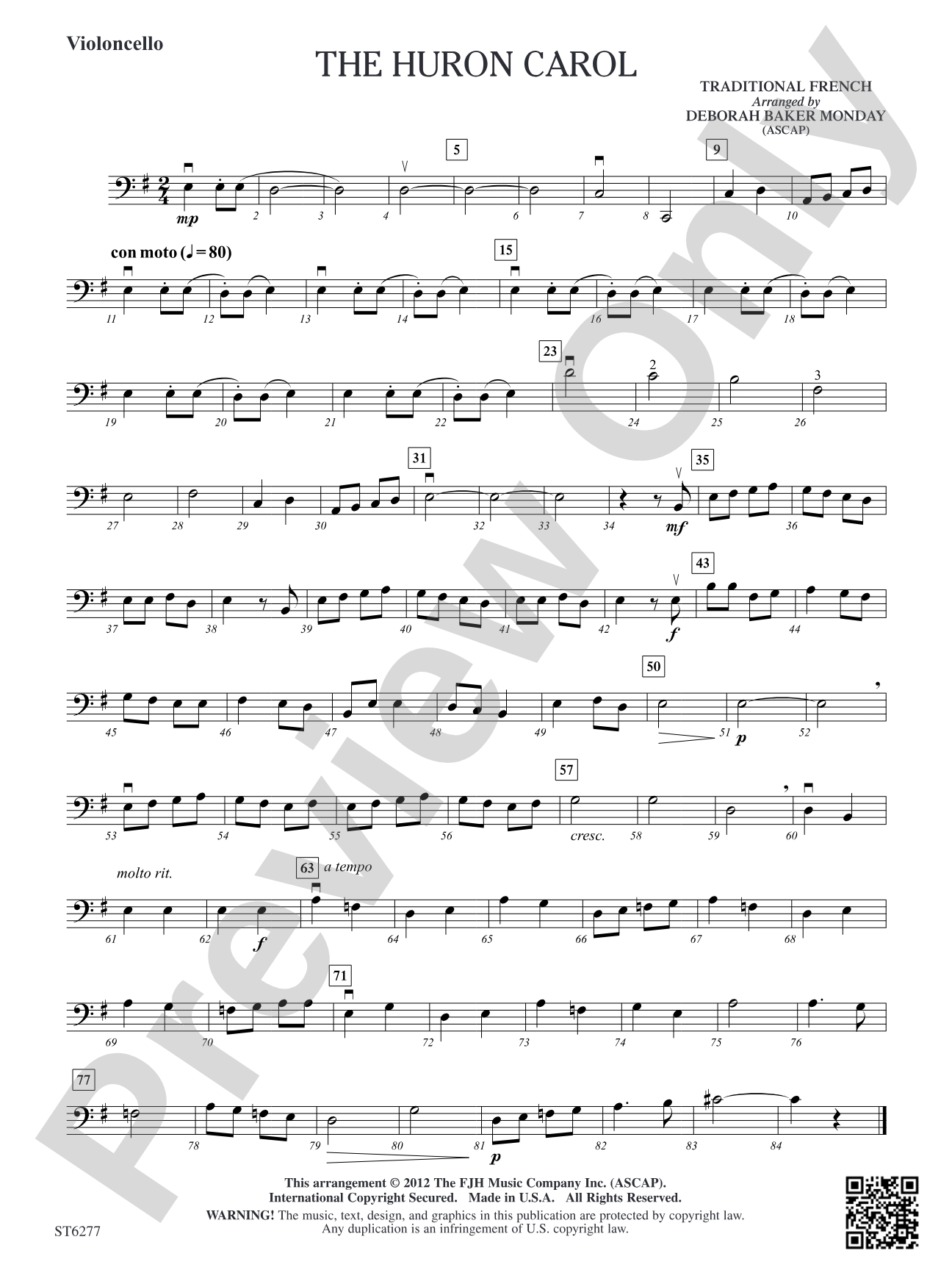
Add some contrast to your winter program with this haunting French folk tune, which also happens to be one of Canada's oldest Christmas songs. Drawing inspiration from the Hurons, an American tribe of the Iroquoian family, the work includes an optional percussion part that adds authenticity to the Gregorian-style melody. A wonderful departure that is an ideal addition to a winter or multicultural program.
Discover MakeMusic Cloud: thousands of interactive titles your students can play along with today.
Deborah Baker Monday spent 25 years directing the award-winning Logan City orchestra program before transitioning to guest conducting, clinician work, and teaching supervision. She holds a B.M.E. in string education from Florida State University and earned her M.M. in composition from the University of Alabama, where she also performed as principal bassist with regional orchestras.
Monday's dual expertise in performance and composition has generated over 130 published works across seven publishers, with a particular focus on educational string arrangements. Her contributions to string pedagogy have earned her recognition including the Utah ASTA Composition Competition (2006, 2011) and Outstanding Elementary Educator and Superior Accomplishment awards from UtahASTA and UtahMEA. She regularly presents at state and national conferences and serves as a clinician, conductor, and adjudicator.
Why we love this
Monday's arrangement respects the spiritual weight of this Huron carol while keeping the string writing lean and accessible for young players. The optional percussion part signals cultural authenticity without requiring it, giving you programming flexibility. At grade 1.5, it delivers real musical substance, not filler.
What to expect
The Huron Carol carries a quiet dignity, neither bright nor sentimental. Its melody unfolds with the simplicity of a centuries-old song, and Monday's arrangement honors that restraint, letting sparse harmonies and optional percussion invoke a ceremonial, timeless atmosphere.
Who it's for
String orchestras at the early intermediate level seeking winter repertoire that stands apart from conventional holiday fare. Directors programming multicultural or interfaith concerts will find this carol offers genuine musical interest without condescension to young ensembles.
How to get the most out of it
Let the Gregorian-style melody breathe. Young string players often rush hymn-like material out of nervousness; steady pacing at a moderate tempo will reveal the tune's haunting quality.
Balance the melody against supporting voices carefully. Mark dynamic layers in parts during sectionals so violins don't bury the viola or cello line that carries the tune.
If you include percussion, rehearse them separately first. The rhythm patterns anchor the piece; having that locked before full orchestra rehearsal saves time.
Shape phrases around lyrical contours, not bar lines. Even simple arrangements sing better when students understand where the melody breathes.
How to use it
Position this alongside one or two other holiday pieces to create contrast in tone and texture; its understated character balances brighter, more energetic selections. It works equally well in winter concerts, multicultural programs, or community events where you want to feature a lesser-known carol with educational and cultural resonance.
Skills your students will build
Sustaining tone quality over longer phrases at moderate dynamics
Reading unison and two-part textures with careful attention to balance
Phrasing hymn-like melodies expressively without over-romanticizing
Integrating optional percussion parts as supporting color rather than accompaniment
You May Also Like
Scan to Complete Your Purchase
Use your phone's camera to scan the code below
You'll log in on your phone and the order will be added to your account