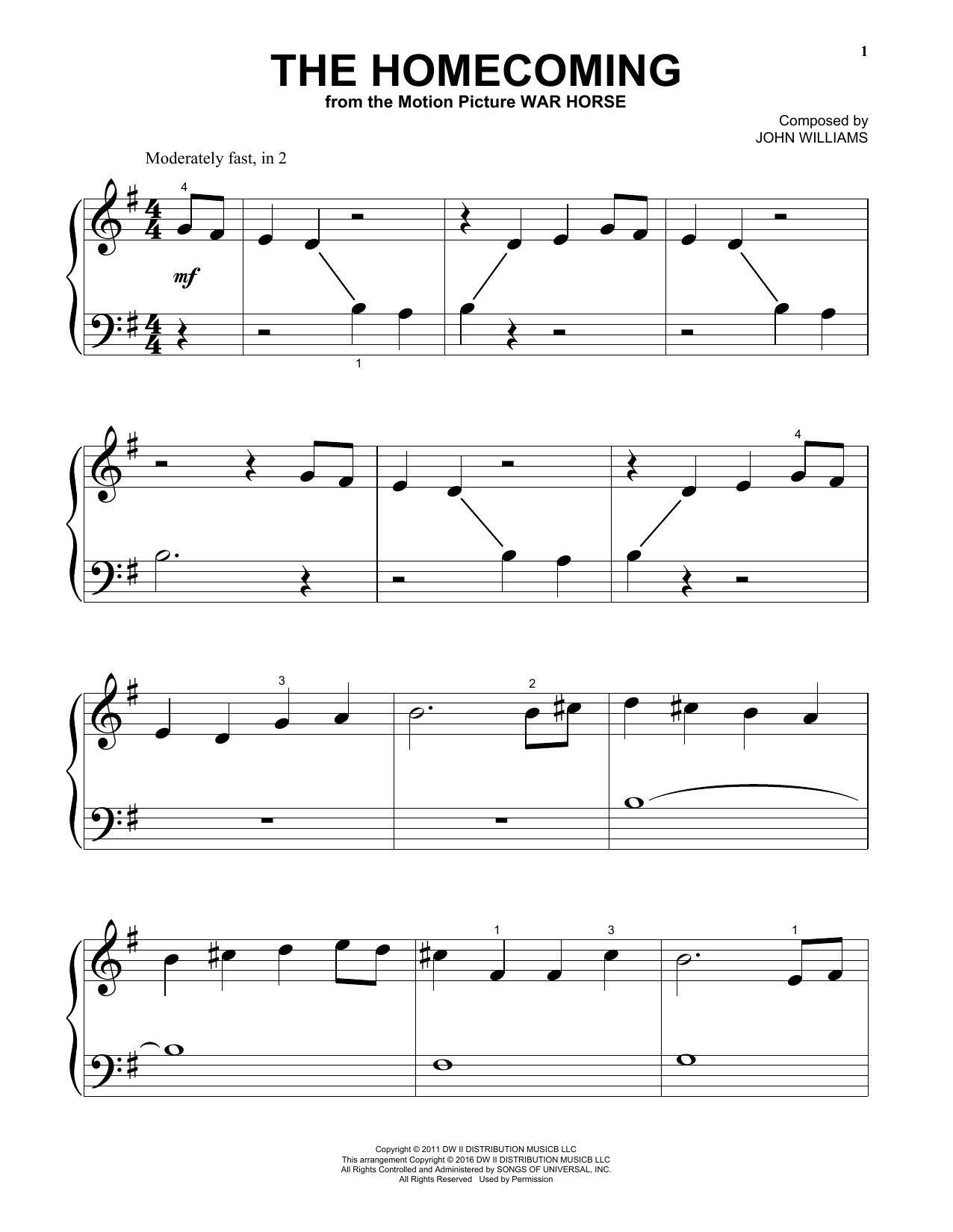
The Homecoming Sheet Music Preview

The Homecoming: Beginning Piano Solo

By John Williams

Item: 35-DS00359757

Digital Download
$4.99
Description

Discover MakeMusic Cloud: thousands of interactive titles your students can play along with today.

Sample Audio
No sample audio found.
Sample Video
Additional Details
Publisher: Hal Leonard
Page Count: 5
SKU: 35-DS00359757

More about this title

About the Composer: John Williams

John Williams stands as one of the most significant film composers of the modern era, with a career spanning over six decades and an unmatched catalog of iconic scores. His mastery of orchestration and melody has shaped the sound of American cinema, from Star Wars and Jaws to Harry Potter and Schindler's List, earning him five Academy Awards and countless Grammy nominations. Beyond the concert hall and screen, Williams has remained deeply committed to music education, understanding that accessible arrangements of his work introduce students to sophisticated compositional techniques and memorable musical storytelling.

Why we love this

Beginning students respond immediately to Williams' gift for melody, and this arrangement distills that gift into five pages of genuine musical substance. The piece teaches voice leading and harmonic awareness without overwhelming the student's reading skills, making it an ideal choice for recitals where you want young pianists to sound and feel accomplished.

What to expect

Warm and nostalgic, this piece carries the emotional pull of homecoming itself: the comfort of recognition paired with the bittersweet awareness of time passing. The melody unfolds with natural grace, inviting performers to discover the lyrical quality that defined Williams' most beloved work.

Who it's for

This solo reaches students in their first or second year of study who have solidified basic hand position and can read both staves with moderate fluency. It also appeals to adult hobbyists seeking an accessible entry point into film music and students preparing for recitals or competitions who want recognizable material with real compositional depth.

How to get the most out of it

  • Shape the melody with careful attention to phrasing; these familiar lines deserve the same sensitivity you'd apply to Bach.
  • Balance accompaniment textures so supporting voices don't overshadow the main line.
  • Experiment with tempo flexibility at phrase endings to deepen the emotional impact.
  • Pay attention to dynamic markings as compositional choices, not afterthoughts; they're integral to Williams' voice.

How to use it

Pair this with other film music arrangements at a student recital to create a recognizable thematic evening, or use it as a bridge piece between classical and contemporary repertoire in a mixed program. It works especially well for spring recitals where lighter, more accessible material complements more challenging selections.

Skills your students will build

  • Sustaining lyrical melody across phrase boundaries
  • Balancing right-hand voice independence with left-hand harmonic support
  • Reading and interpreting dynamic shaping in tonal music
  • Maintaining steady tempo while allowing expressive breathing at cadences

You May Also Like