
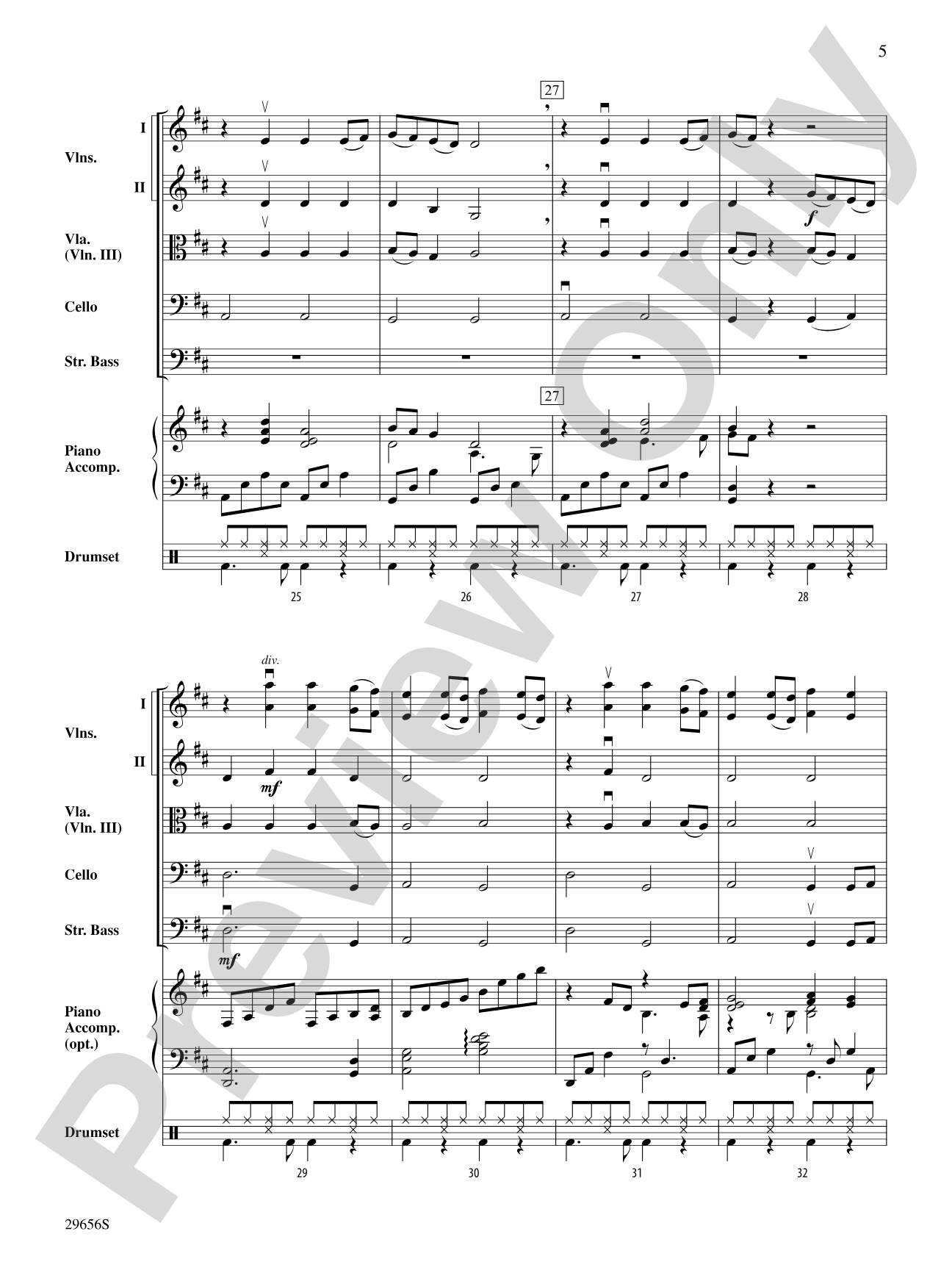
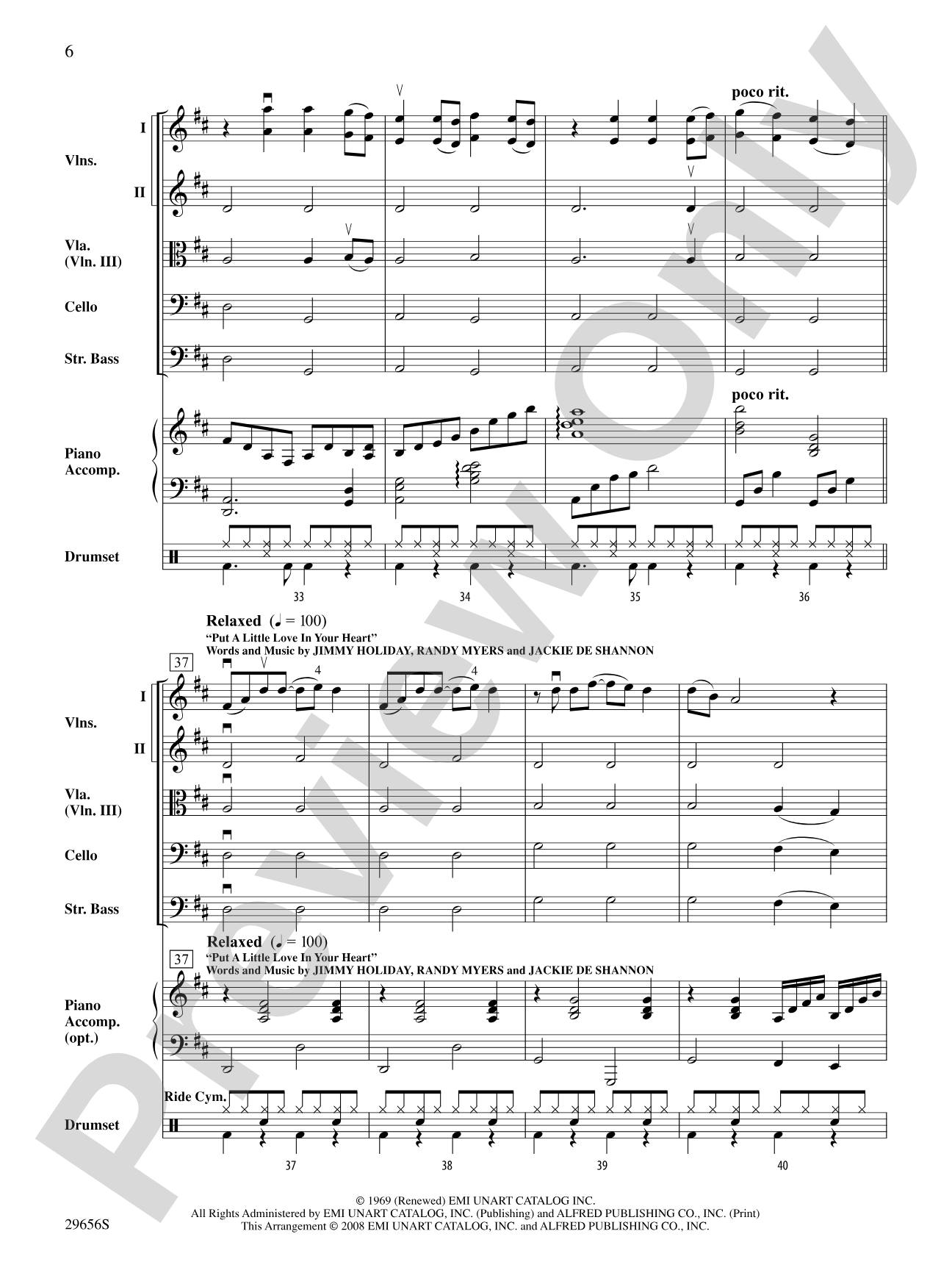
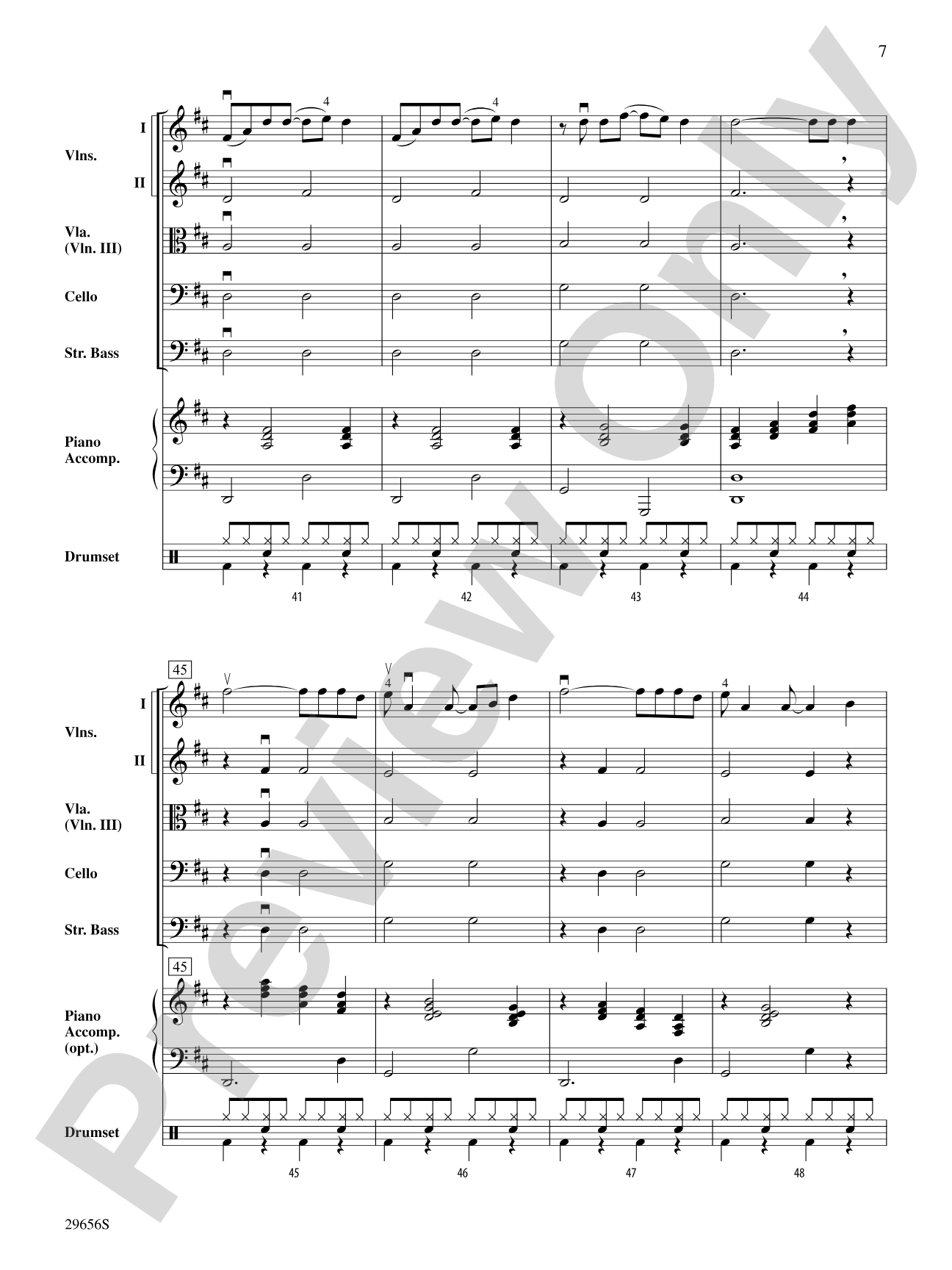
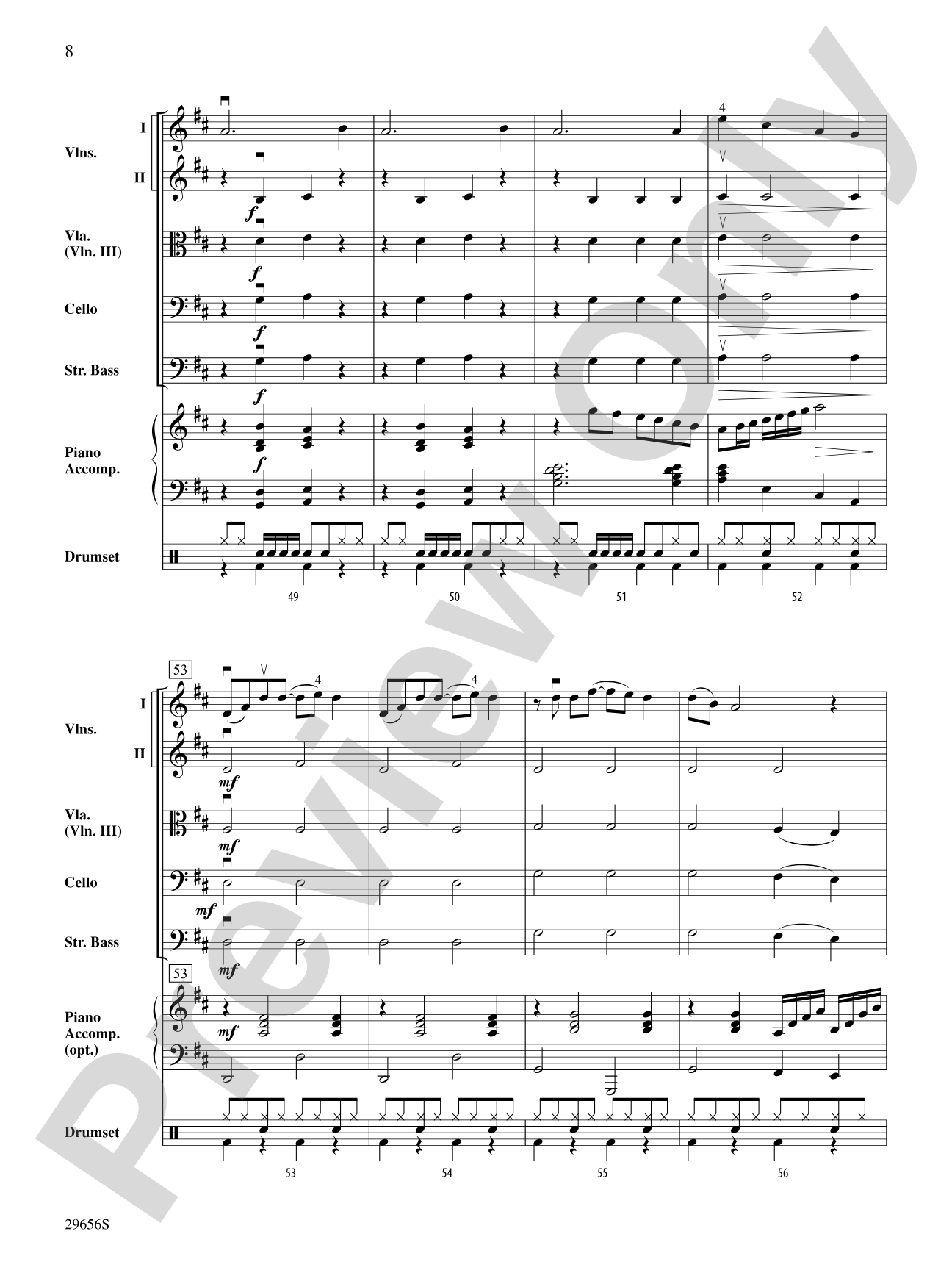
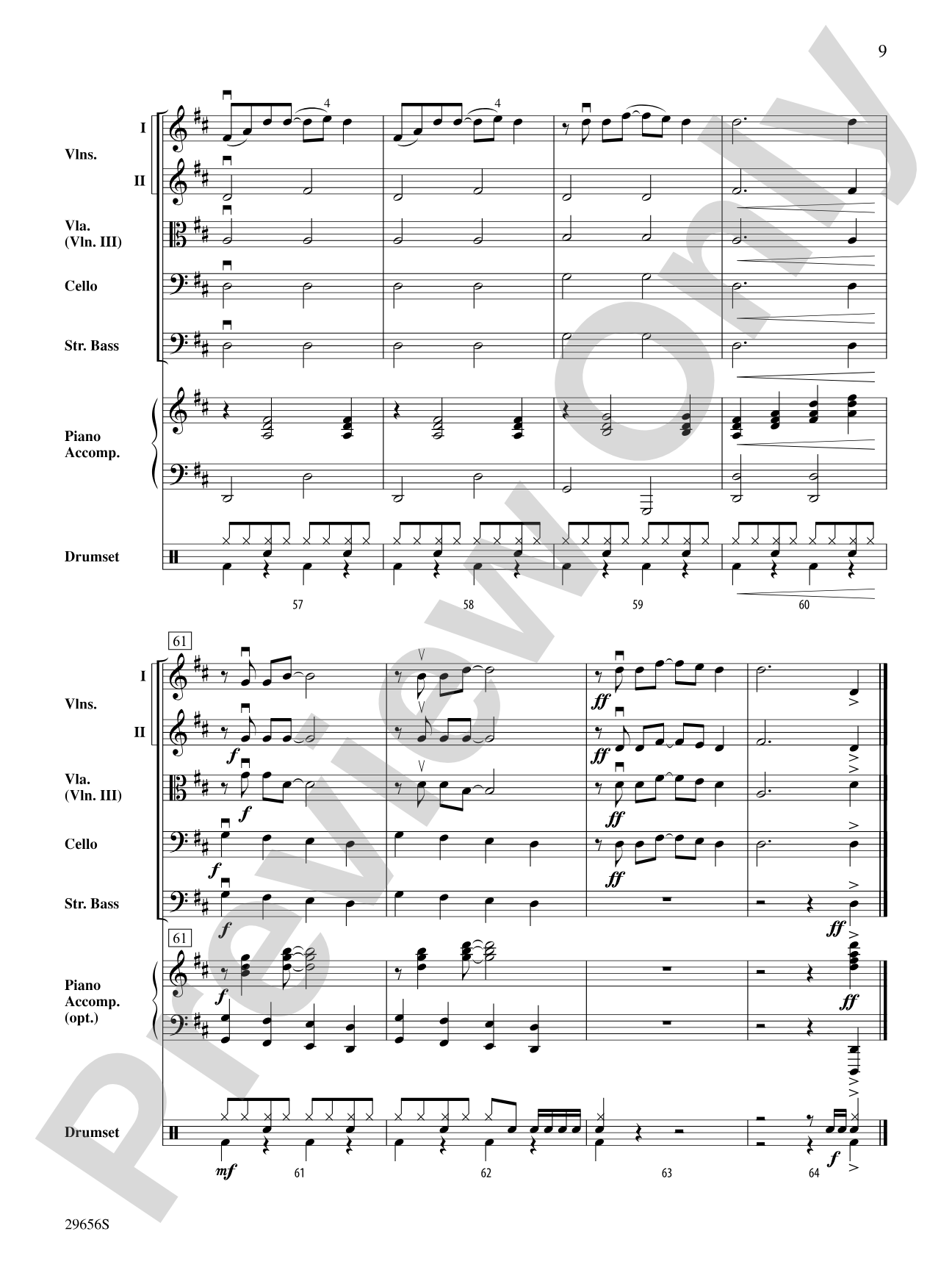




The Heart of It All: String Orchestra Conductor Score & Parts
Featuring: One Heart / Some Hearts / Put a Little Love in Your Heart
Arr. Douglas E. Wagner
Grade: 2
Item: 00-PK-0005450

$50.00
Pickup currently not available
Buy Extra Parts (Digital PDF Download)
| Product | Price | Quantity |
|---|---|---|
| The Heart of It All: Score | $9.00 | |
| The Heart of It All: 1st Violin | $5.99 | |
| The Heart of It All: 2nd Violin | $5.99 | |
| The Heart of It All: 3rd Violin (Viola [TC]) | $5.99 | |
| The Heart of It All: Viola | $5.99 | |
| The Heart of It All: Cello | $5.99 | |
| The Heart of It All: String Bass | $5.99 | |
| The Heart of It All: Piano Accompaniment | $5.99 | |
| The Heart of It All: Drums | $5.99 |
Parts Added to Cart!
Description
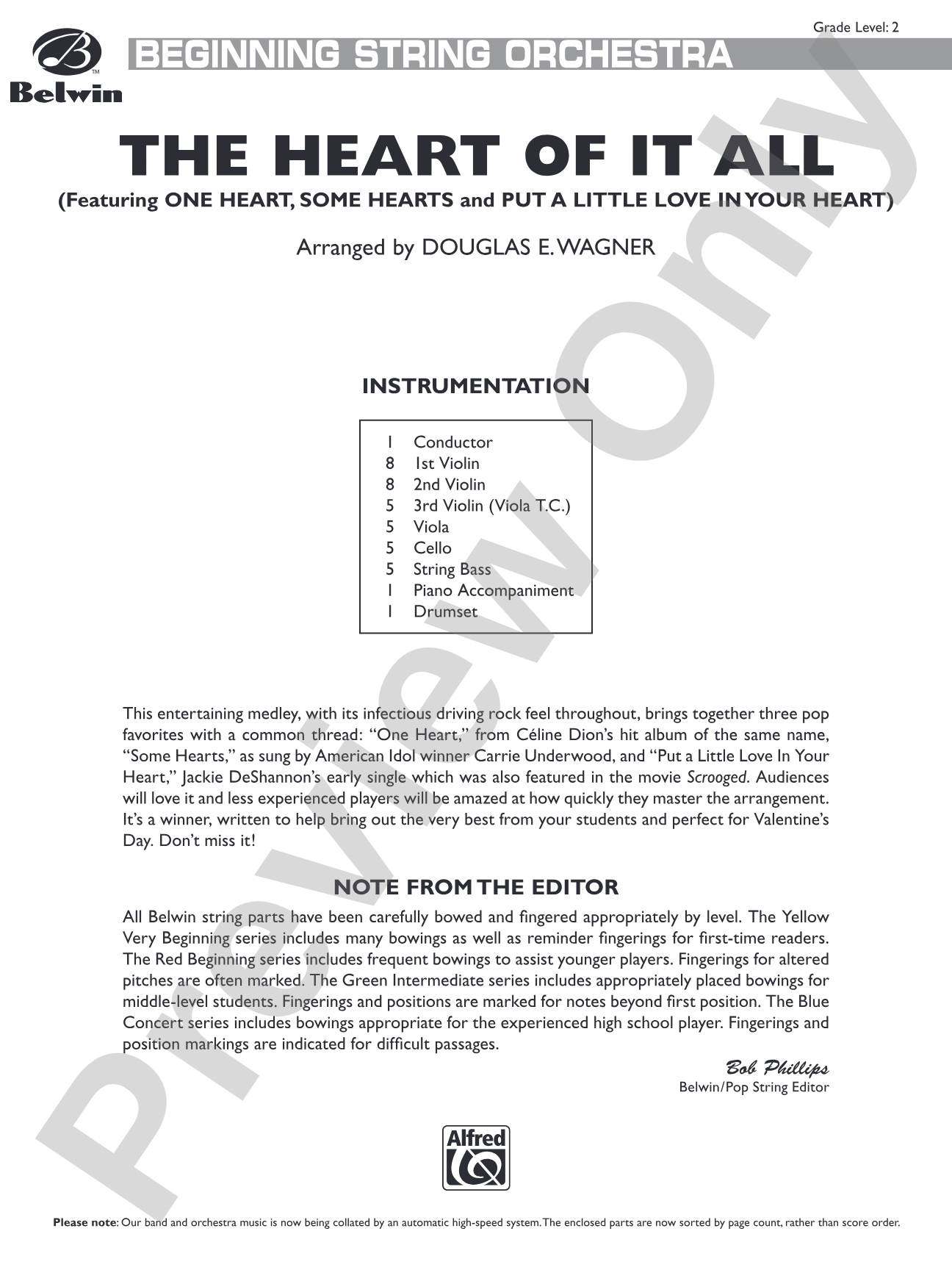
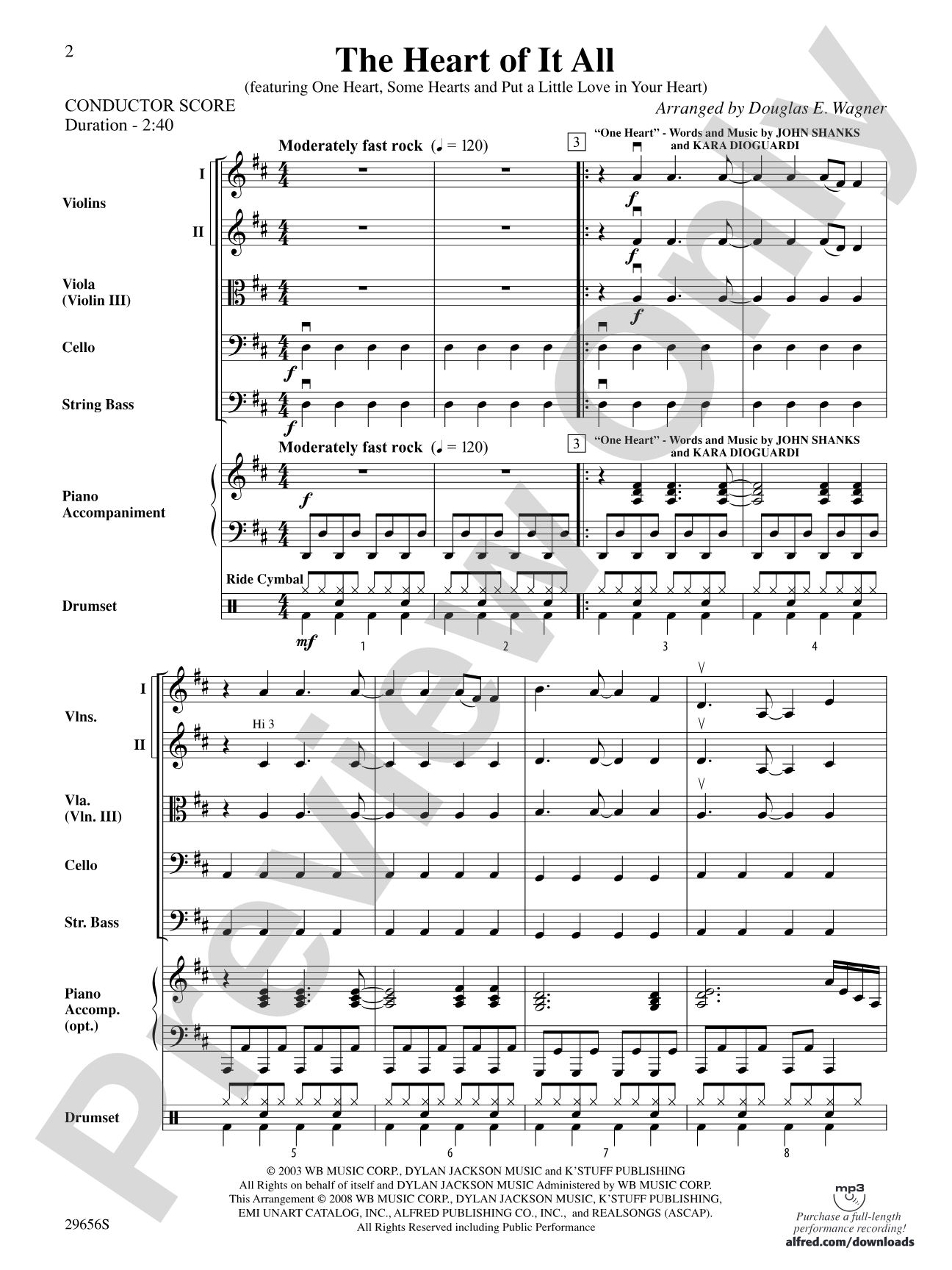
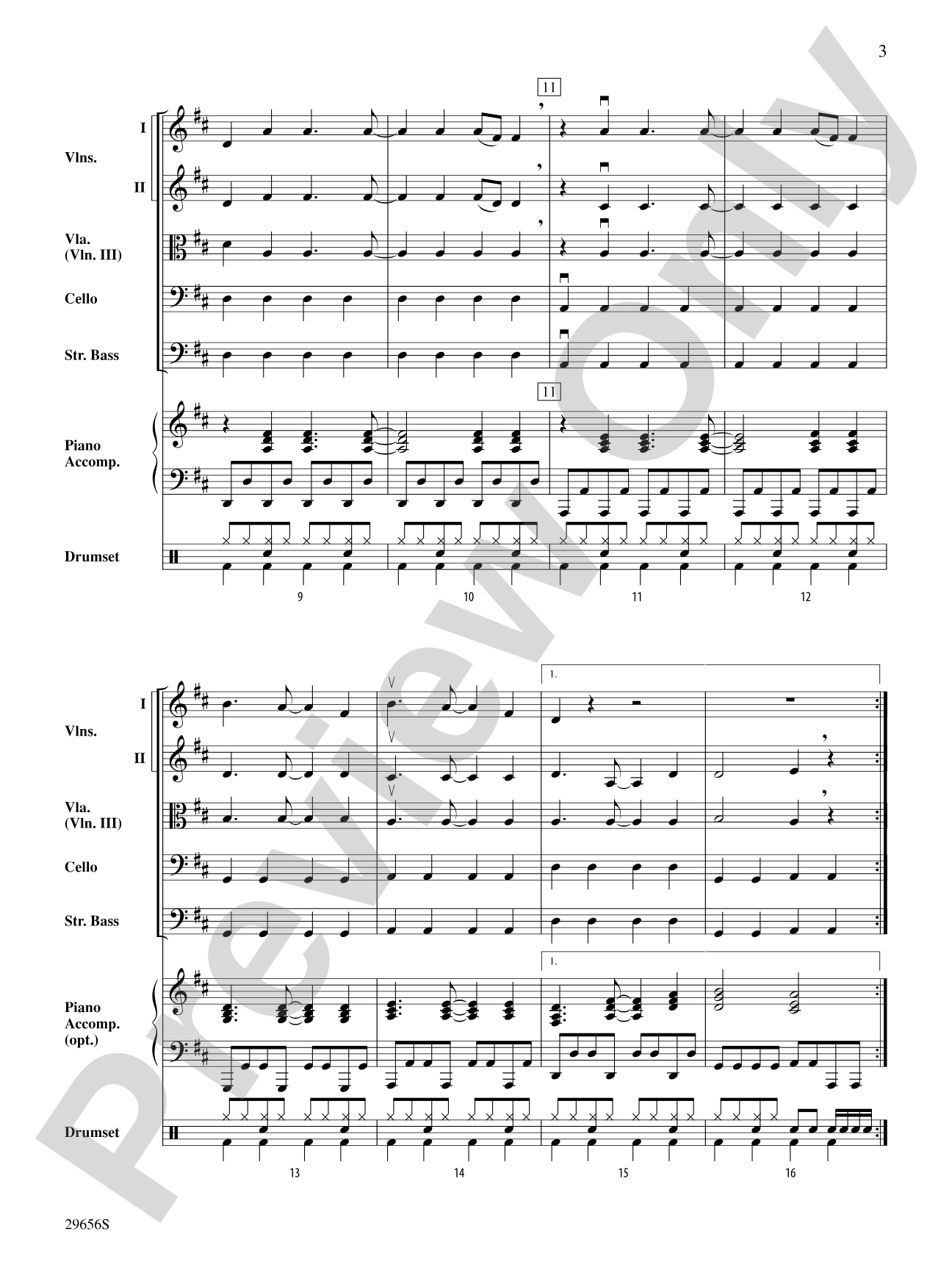
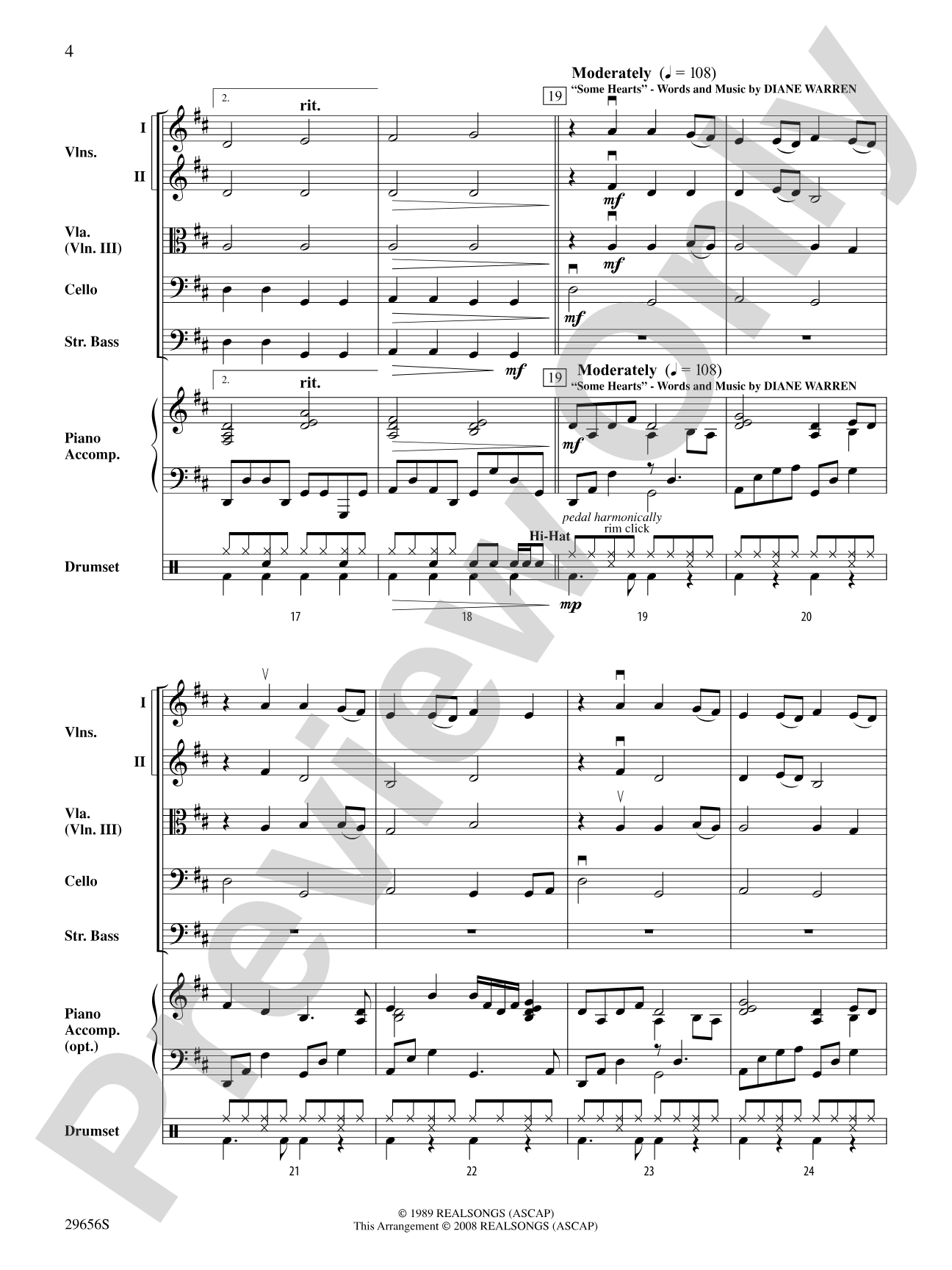
This entertaining medley, with its infectious driving rock feel throughout, brings together three pop favorites with a common thread: "One Heart," from Céline Dion's hit album of the same name, "Some Hearts," as sung by American Idol winner Carrie Underwood, and "Put a Little Love In Your Heart," Jackie DeShannon's early single which was also featured in the movie Scrooged. Audiences will love it and less experienced players will be amazed at how quickly they master the arrangement. It's a winner, written to help bring out the very best from your students and perfect for Valentine's Day. Don't miss it! (2:40)


Don't just read it, hear it, play along with it, and watch your students grow with it. In MakeMusic Cloud, The Heart of It All: String Orchestra Conductor Score & Parts comes alive with professional accompaniment, adjustable tempo, and built-in practice tools that turn solo practice into real progress.
Open in the Player
Jump straight in and assign it today.
Start Your Free Trial
Open this title and explore the full library in minutes.
Sample Audio
1
Audio File
--:--
0:00
0:00
Sample Video
No sample videos found.
Additional Details
Series:
Pop Beginning String Orchestra
Publisher:
Alfred Music
Page Count:
78
SKU:
00-PK-0005450
More about this title
About the Arranger: Douglas E. Wagner

Douglas E. Wagner studied composition and music education at Butler University and spent three decades as a high school music director before transitioning to full-time composition. Since 1973, he has published over 3,500 works across multiple genres: choral music for schools and churches, concert band, orchestra, handbell ensemble, organ, piano, and voice. His compositions have circulated globally, with more than seventeen million copies performed in concert halls, on broadcasts, and in educational settings worldwide.
Based in Indianapolis, Wagner has built a reputation for writing music that serves students at every level while maintaining musical integrity. His prolific output reflects a deep understanding of ensemble pedagogy, and his arrangements consistently balance accessibility with the capacity to engage both performers and audiences.
Why we love this
Wagner's arrangement harnesses the driving rock energy of these three recognizable songs without overwhelming Grade 2 players. The medley structure keeps performers engaged across 2 minutes 40 seconds of continuous momentum, and the orchestration allows less experienced violins and violas to contribute meaningfully rather than sitting on sustained notes. A string arrangement that sounds confident and polished on stage while remaining genuinely achievable in rehearsal is rare; this one delivers both.
What to expect
Infectious and buoyant, anchored by a rock-solid rhythmic foundation that carries you through three beloved melodies without a moment of drag. The infectious driving feel gives every student in the section something rhythmically engaging to play, and the familiar pop hooks make the whole ensemble sound instantly polished.
Who it's for
String orchestras working at the Grade 2 level who want contemporary material with broad appeal. Directors seeking a concert piece that energizes audiences while proving to younger or less confident players that they can execute a tight, professional-sounding arrangement will find real value here.
How to get the most out of it
- Establish a steady rock pulse in your conducting; let the rhythm section feel your beat before the strings come in, and maintain that driving tempo throughout all three songs without dragging into the transitions.
- Balance the melody across your violin sections so the pop hooks cut through without forcing. These songs are instantly recognizable, so clarity of line matters more than volume.
- Use the faster tempo as motivation for crisp articulation in the string parts; light bow strokes on the rock-style rhythmic figures will keep the energy tight and prevent muddiness.
- Rehearse the rhythmic unison passages (likely prominent in a rock medley) with particular attention to ensemble lock; slight lag between sections will dilute the driving quality that makes this arrangement work.
How to use it
Program this in a spring concert alongside more traditional classical repertoire to showcase your ensemble's versatility and connect with broader audience demographics. The Valentine's Day connection works perfectly for early February concerts, or use it as an energetic closer to any program where you want to send the audience home smiling.
Skills your students will build
- Reading and executing rhythmic unison in a driving rock style
- Maintaining ensemble pulse in a contemporary idiom
- Balancing part independence while supporting a clear melodic line
- Sustaining articulation accuracy at moderate to brisk tempos
- Understanding how familiar material translates to orchestral arrangement