
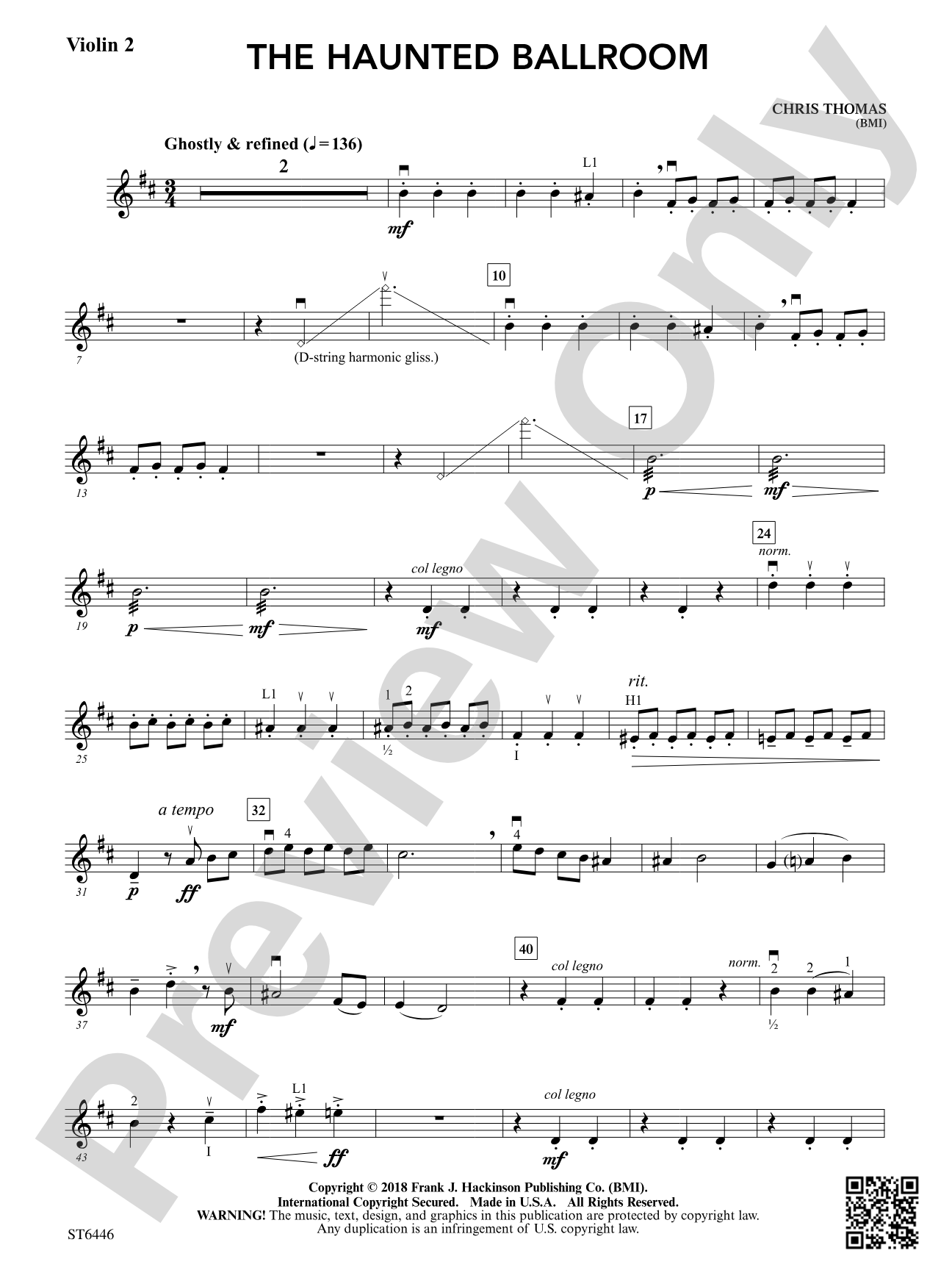

The Haunted Ballroom: Violin 2
By Chris Thomas
Grade: 3.5
Item: 98-PC-DST6446_VN2
$7.00
Pickup currently not available
Description
The stately spirits of soirees past appear, dancing the midnight waltz in the haunted ballroom. Dazzle your audience with this chilling, yet lighthearted tune; perfect for your fall and Halloween concerts. The piece offers a variety of fun chromatics, quirky col legno effects and harmonic glissandi. Certain to be a spooktacular addition to your next concert program!


Don't just read it, hear it, play along with it, and watch your students grow with it. In MakeMusic Cloud, The Haunted Ballroom: Violin 2 comes alive with professional accompaniment, adjustable tempo, and built-in practice tools that turn solo practice into real progress.
Open in the Player
Jump straight in and assign it today.
Start Your Free Trial
Open this title and explore the full library in minutes.
Sample Audio
1
Audio File
--:--
0:00
0:00
Sample Video
Additional Details
Series:
FJH String Orchestra
Publisher:
The FJH Music Company, Inc.
SKU:
98-PC-DST6446_VN2
More about this title
About the Composer: Chris Thomas

Chris Thomas composes for film, television, theme parks, and concert stages worldwide. His accolades include a Hollywood Music in Media Award, two second-place finishes at the American Prize in Composition, a Global Music Award, and the Gold Medal at the Park City Film Music Festival. His scores have accompanied Emmy-nominated films and The Woman Rebel, which earned an Academy Award shortlist nomination. He has orchestrated and conducted for major studios including Sony, ABC, FOX, CBS, and HBO.
Thomas's concert works have graced Carnegie Hall, the Sydney Opera House, and the Hollywood Bowl. His Symphony No. 1 (the Malheur Symphony) was the subject of his 2019 TED Talk. He has created music for attractions at Evermore Adventure Park, Knott's Berry Farm, The Void, Queen Mary Chill, Dreamland Theme Park in the UK, the Los Angeles Haunted Hayride, and numerous other installations. Learn more at www.christhomasmusic.com.
Why we love this
Thomas brings his theme park and film composition expertise to this Halloween novelty, crafting a piece that balances theatrical atmosphere with genuine musicianship. The col legno effects and harmonic glissandi give your string orchestra authentic technical challenges while keeping the vibe playful rather than heavy. This is the kind of crowd-pleaser that doesn't sacrifice orchestration quality for accessibility, making it genuinely fun to rehearse and perform.
What to expect
Picture a ghostly formal dance where spirits waltz through candlelit halls, half-remembered and ethereal. The stately waltz rhythm anchors the piece while col legno and glissandi create shimmering, otherworldly textures that drift between charm and spooky atmosphere. It's enchanting rather than scary, inviting audiences to smile at the musical playfulness even as the orchestration creates genuinely atmospheric soundscapes.
Who it's for
String orchestra directors looking for a Halloween program highlight that engages audiences without straining advancing high schoolers or advanced middle school orchestras. This works equally well as a concert novelty or festival entry, offering enough orchestrational sophistication to hold musicians' attention while remaining accessible at the 3.5 grade level.
How to get the most out of it
- Approach the col legno passages with precision and theatrical flair; these effects are most effective when executed cleanly and with clear articulation across the section.
- Shape the harmonic glissandi as expressive musical gestures, not just technical novelties. Allow time for the sound to bloom and settle naturally during these moments.
- Balance the chromatic figures between parts so no single voice overwhelms the harmonic color. These passages read as decorative shimmer rather than competing lines.
- Use the conductor score to establish clear visual cues for the special effects; your players will respond with confidence when they understand the dramatic intent behind each technical moment.
How to use it
This piece fits naturally into fall and Halloween concerts as either a show-stealing opening number or a charming second-half break from heavier repertoire. Consider pairing it with other programmatic works or concert novelties to create a thematic set, or let it stand alone as the evening's most theatrical moment. Its 3.5 difficulty sits comfortably in a mixed-level program featuring Grade 3 and 4 pieces.
Skills your students will build
- Col legno technique (bowing with stick rather than hair)
- Harmonic glissandi execution and intonation control during slides
- Chromatic passage work and voice leading through altered harmony
- Theatrical expression and dramatic pacing within a waltz meter
- Section balance and blend during special effects passages