
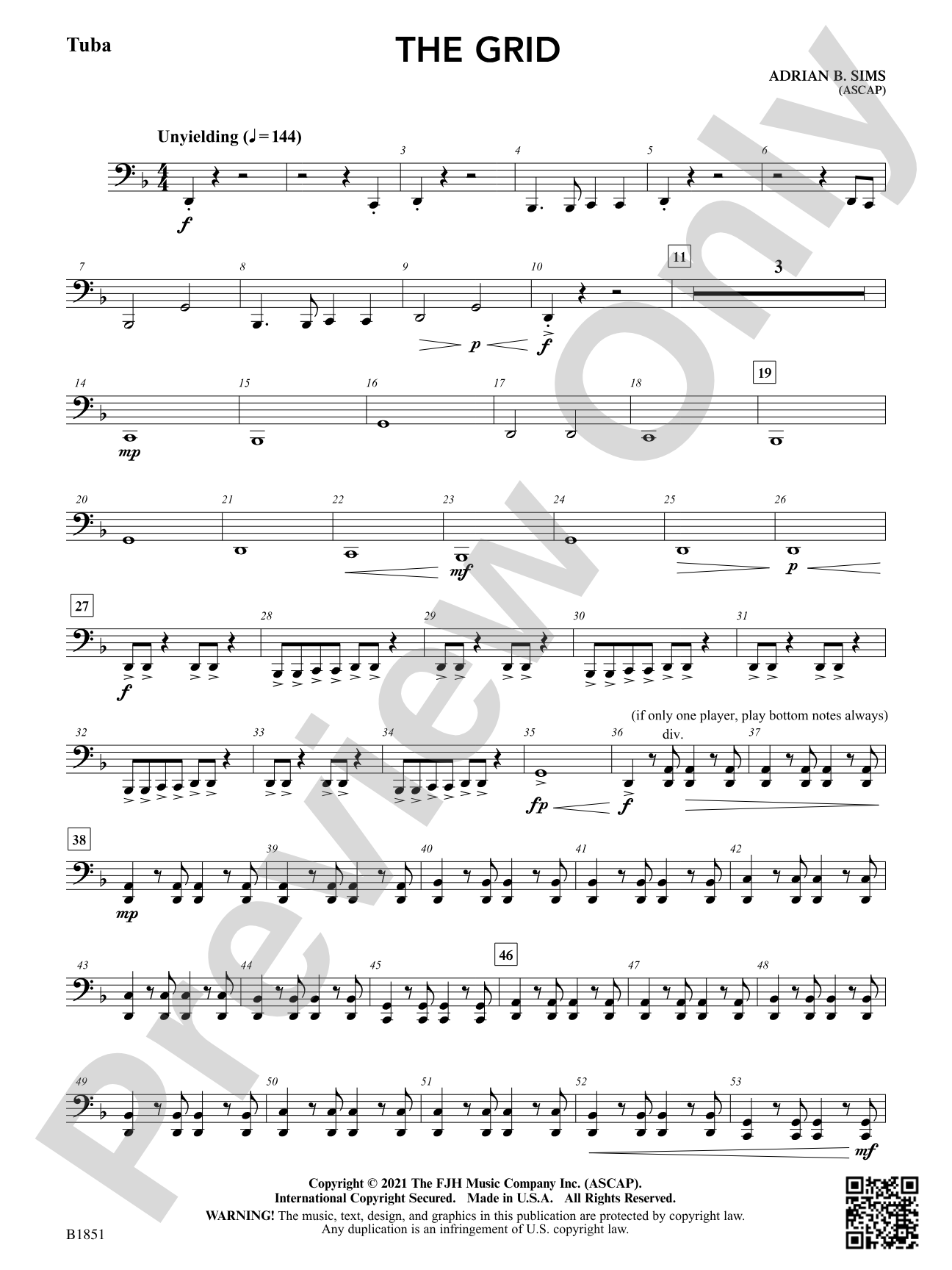

The Grid: Tuba
By Adrian B. Sims
Grade: 2
Item: 98-PC-DB1851_TB1
$7.00
Pickup currently not available
Description
Journey to the future with a work depicting the power network that brings energy to cities and towns around the world. The pulse of electrons can be felt as the rhythmic intensity continues to build, multiply and expand throughout various sections of the ensemble. A thrilling and innovative work that will inspire students and audiences alike!


The Grid: Tuba isn't in MakeMusic Cloud just yet...but it could be. Let us know you'd like to see it, and you'll help shape what comes next. In the meantime, start a free trial and dive into thousands of interactive titles your students can play along with today.
Request This Title
Tell us you want it.
Start Your Free Trial
Explore everything that's ready to play right now.
Sample Audio
1
Audio File
--:--
0:00
0:00
Sample Video
Additional Details
Series:
FJH Young Band
Publisher:
The FJH Music Company, Inc.
SKU:
98-PC-DB1851_TB1
More about this title
About the Composer: Adrian B. Sims

Adrian B. Sims is a composer, conductor, educator, and trombonist born in Seattle in 2000. His concert works have appeared at The Midwest Band and Orchestra Clinic and earned recognition on the Bandworld Top 100 List. He has won multiple composition awards, including honors from the Maryland Music Educators Association Young Composers Project and the Make Music Young Composers Contest, and regularly conducts performances of his own music in schools throughout Maryland.
As a trombonist, Sims performs with top ensembles at the University of Maryland, where he is pursuing a dual degree in Music Education and Composition. His playing experience spans pit orchestras, symphony orchestras, jazz bands, and concert bands. He has participated in the Maryland All-State Band multiple times and performed alongside the Baltimore Symphony Orchestra. His studies in composition at the University of Maryland are guided by Dr. Robert Gibson and have been shaped by mentorship from world-renowned composer Brian Balmages.
Why we love this
Sims crafts a piece that translates a tangible, relatable concept into compelling musical language. The rhythmic intensity and additive orchestration create genuine momentum and excitement, qualities that Grade 2 ensembles can actually execute rather than approximate. Directors appreciate works with clear dramatic arcs and contemporary inspiration that still land solidly within accessible ranges and scoring.
What to expect
Electric and propulsive. The rhythmic pulse mirrors the movement of current through a grid, building momentum as more voices join and the texture thickens. Energy accumulates rather than dissipates, creating the sensation of a system becoming increasingly alive and powerful.
Who it's for
Grade 2 concert bands ready to program something with contemporary appeal and genuine dramatic stakes. This works especially well for groups looking to add a programmatic, non-traditional piece to their repertoire without stepping into Grade 3 complexity.
How to get the most out of it
- Establish the pulse early in rehearsals. The piece relies on the driving rhythmic foundation, so lock in your section leaders and rhythm section before layering melodic elements.
- Build the dynamic levels gradually across the form. Resist the urge to jump to the full volume too soon; the accumulation of parts and intensity should feel inevitable, not arbitrary.
- Balance the energy between clarity and blend. As the texture multiplies, ensure individual sections remain audible within the ensemble texture so the layering strategy is felt by the audience.
- Shape the transitions between sections deliberately. The shifts that expand the sound need clear articulation and conductor preparation so students hear where the piece is heading.
How to use it
Place this in the second or third slot on a concert to take advantage of its contemporary energy and avoid burying it in a traditional classical sandwich. It pairs well with standard marches and lighter selections, offering programming contrast that appeals to younger audiences and demonstrates what modern band music can sound like.
Skills your students will build
- Executing layered, additive textures while maintaining individual part clarity
- Sustaining rhythmic intensity and pulse through repetitive, motivic figures
- Responding to dynamic and textural growth across an extended form
- Balancing ensemble sound as the number of simultaneous musical lines increases