
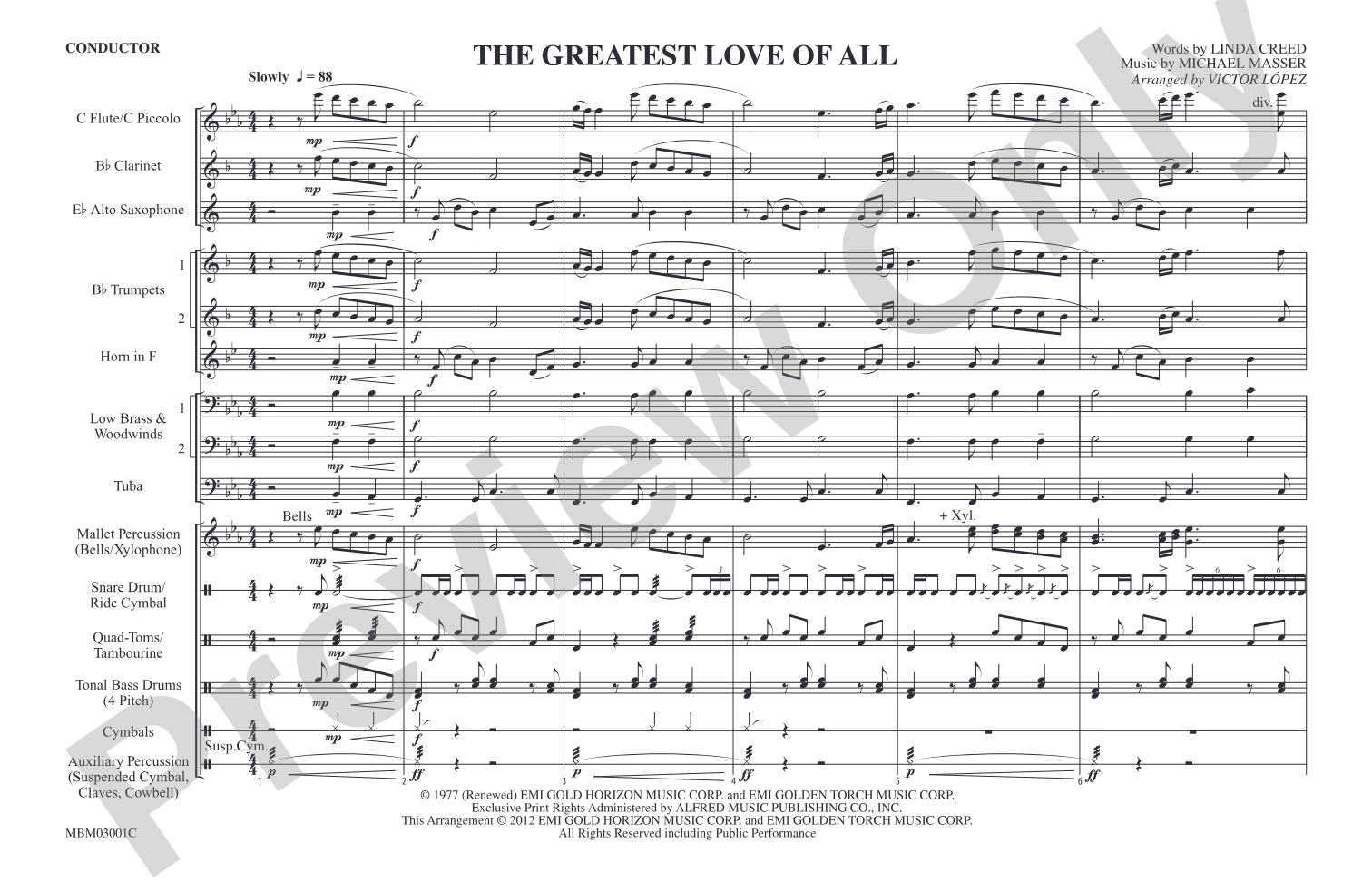
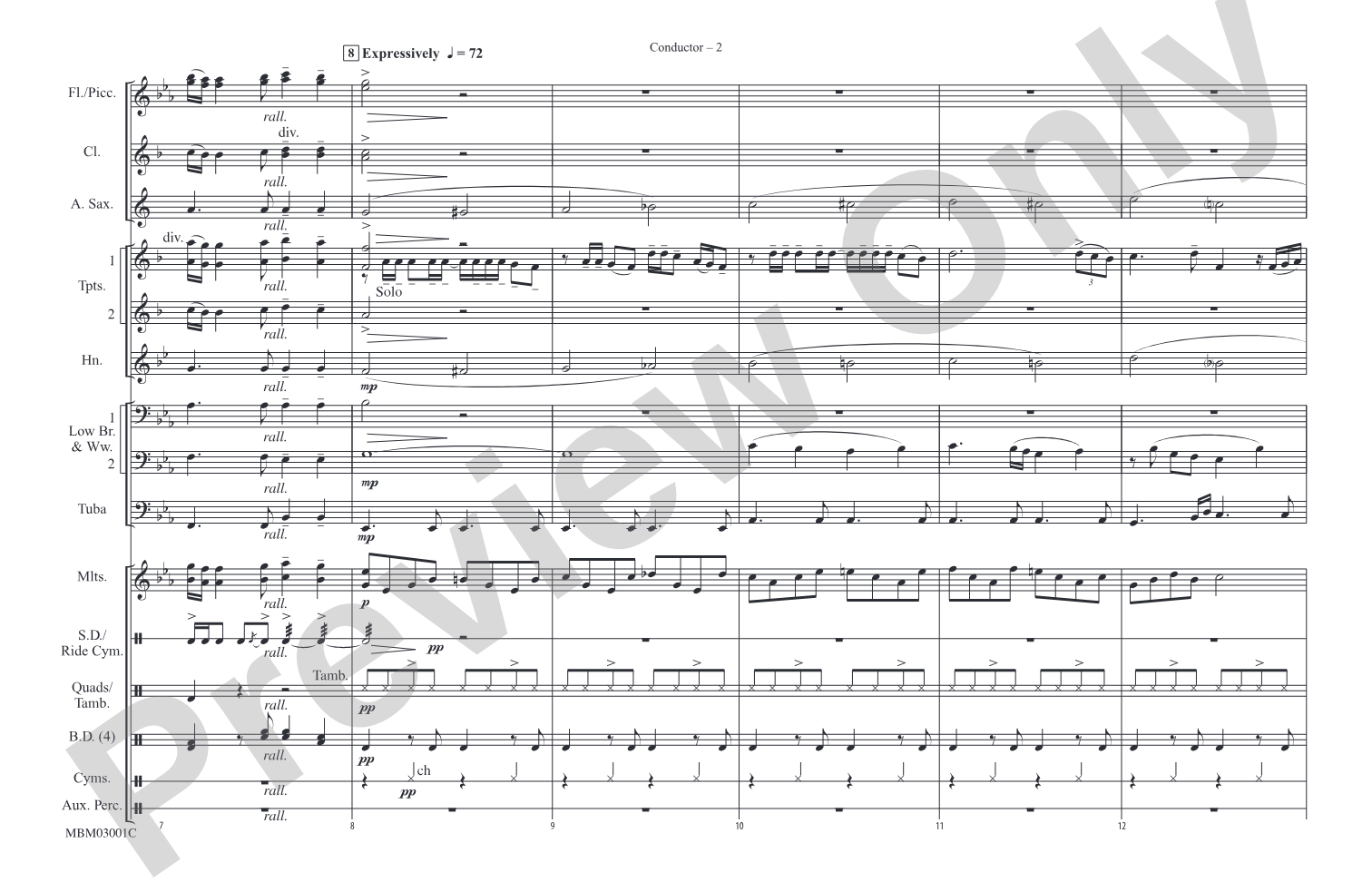
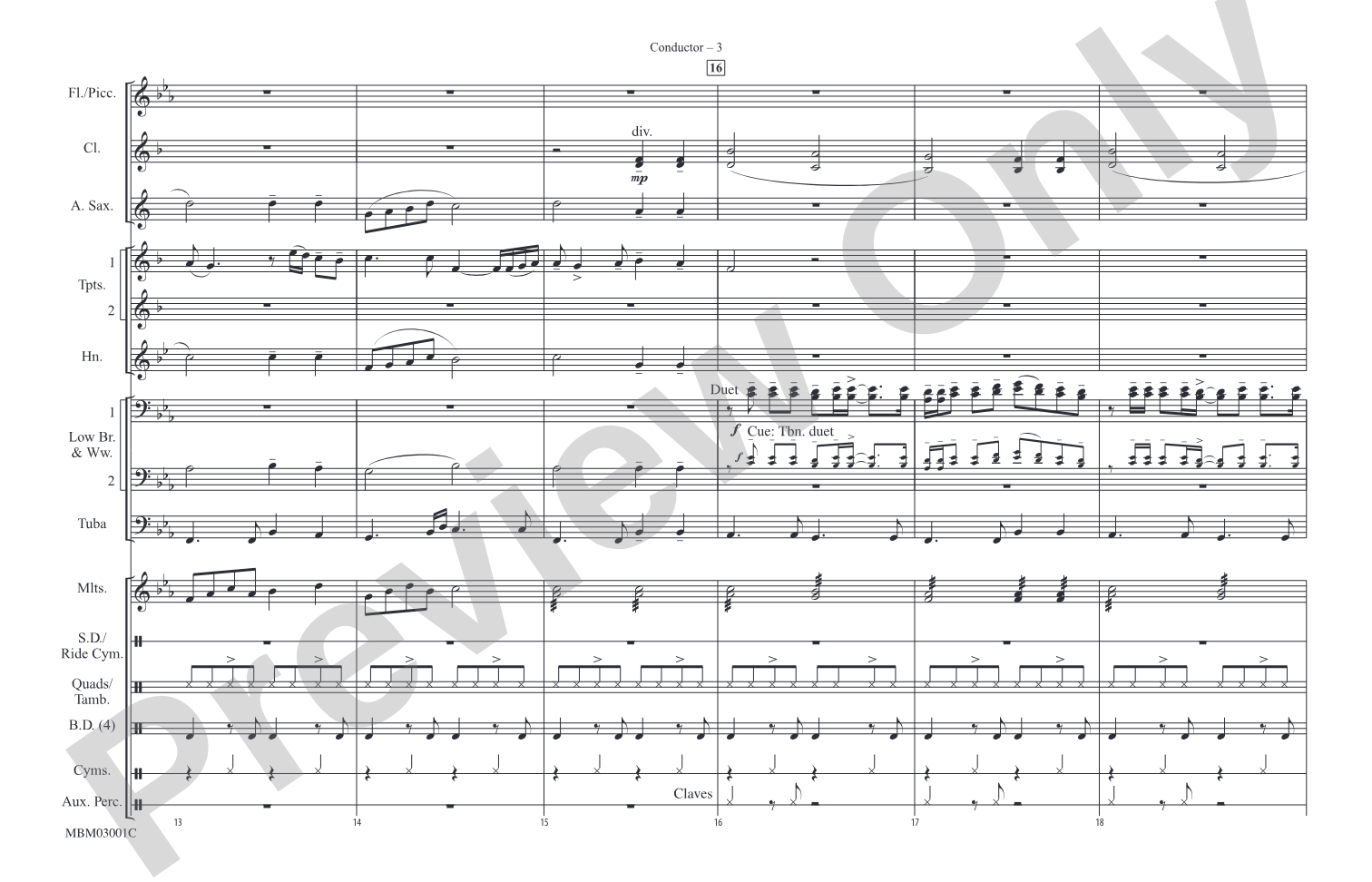
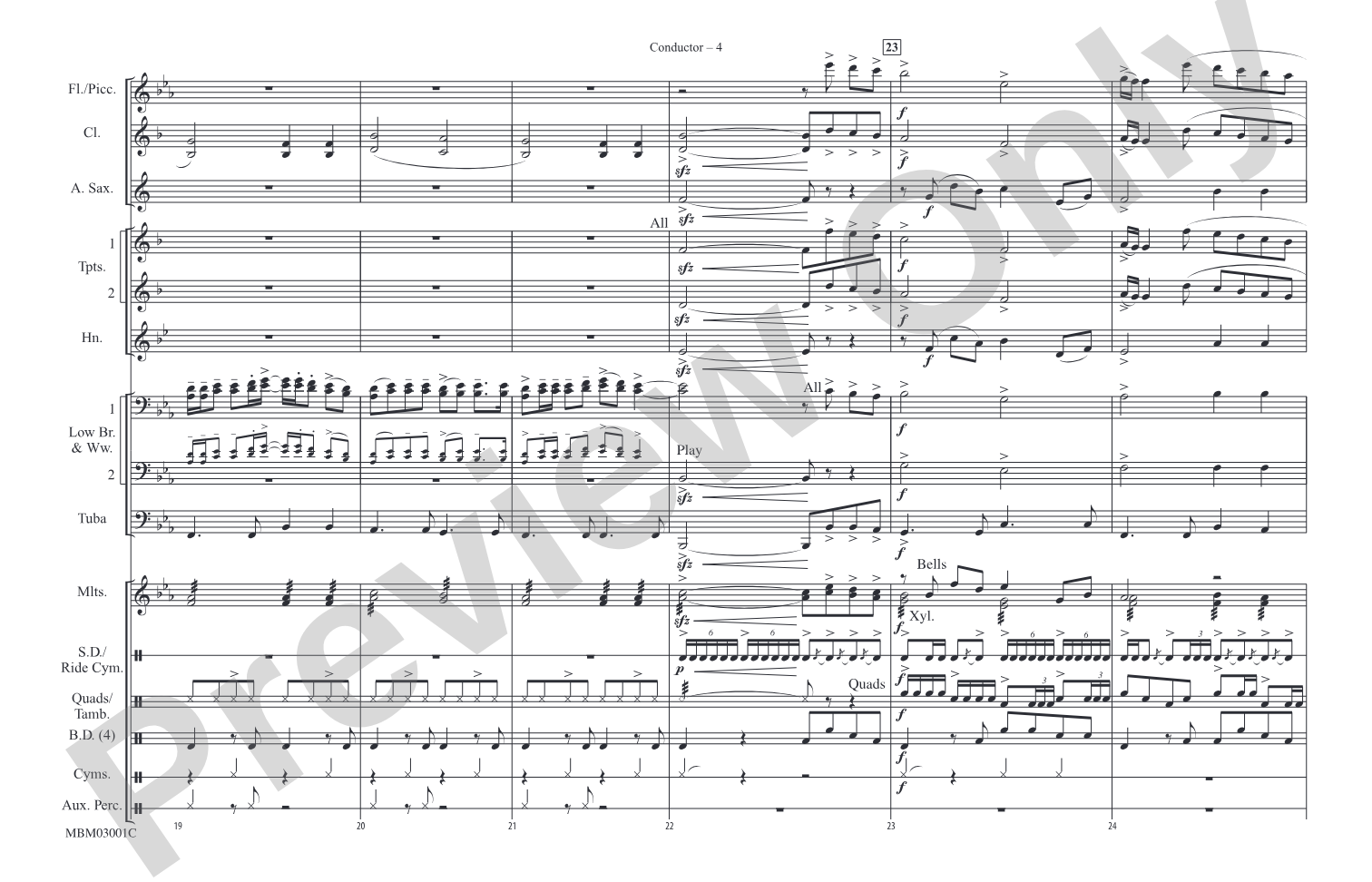
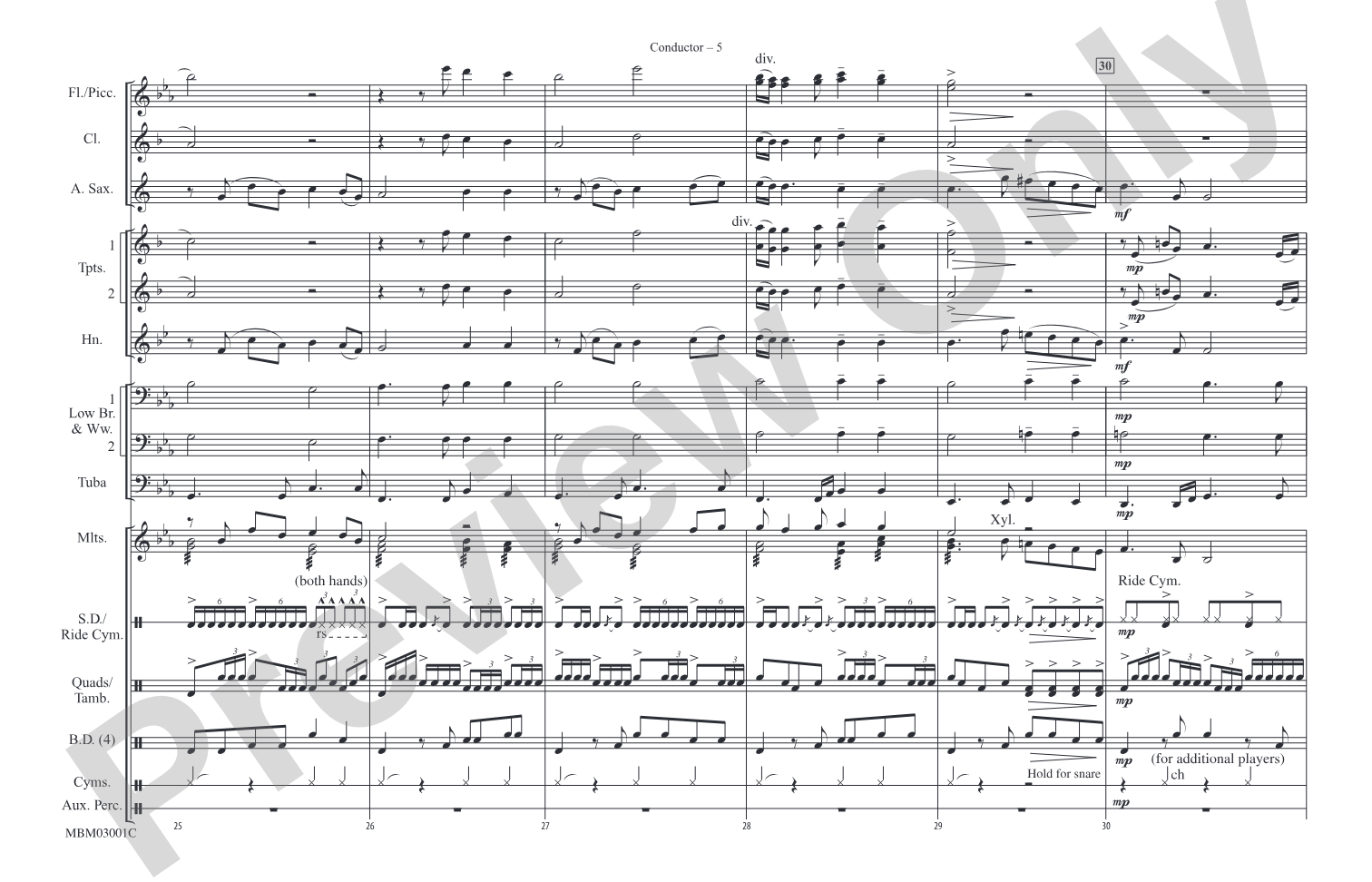
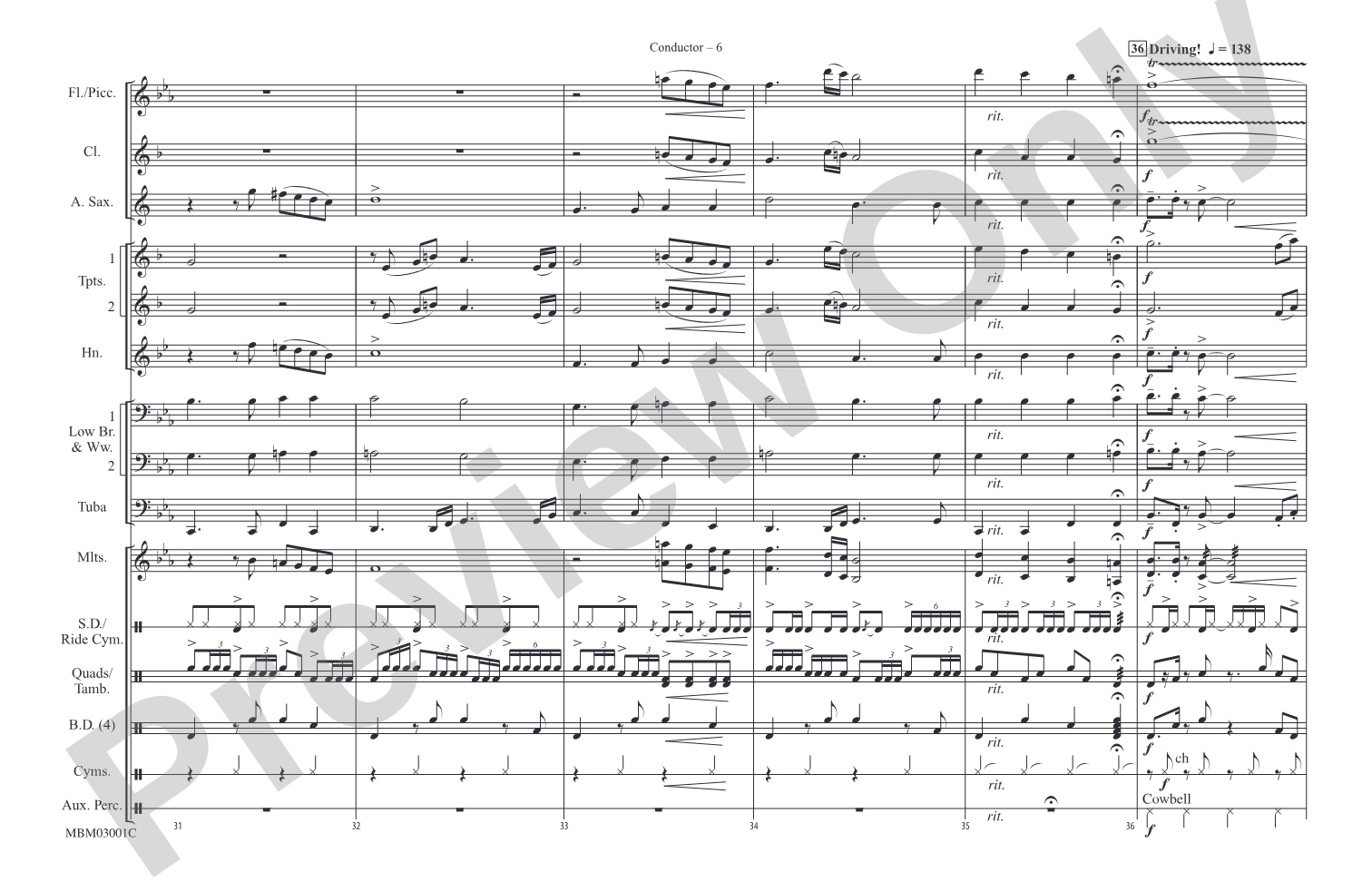
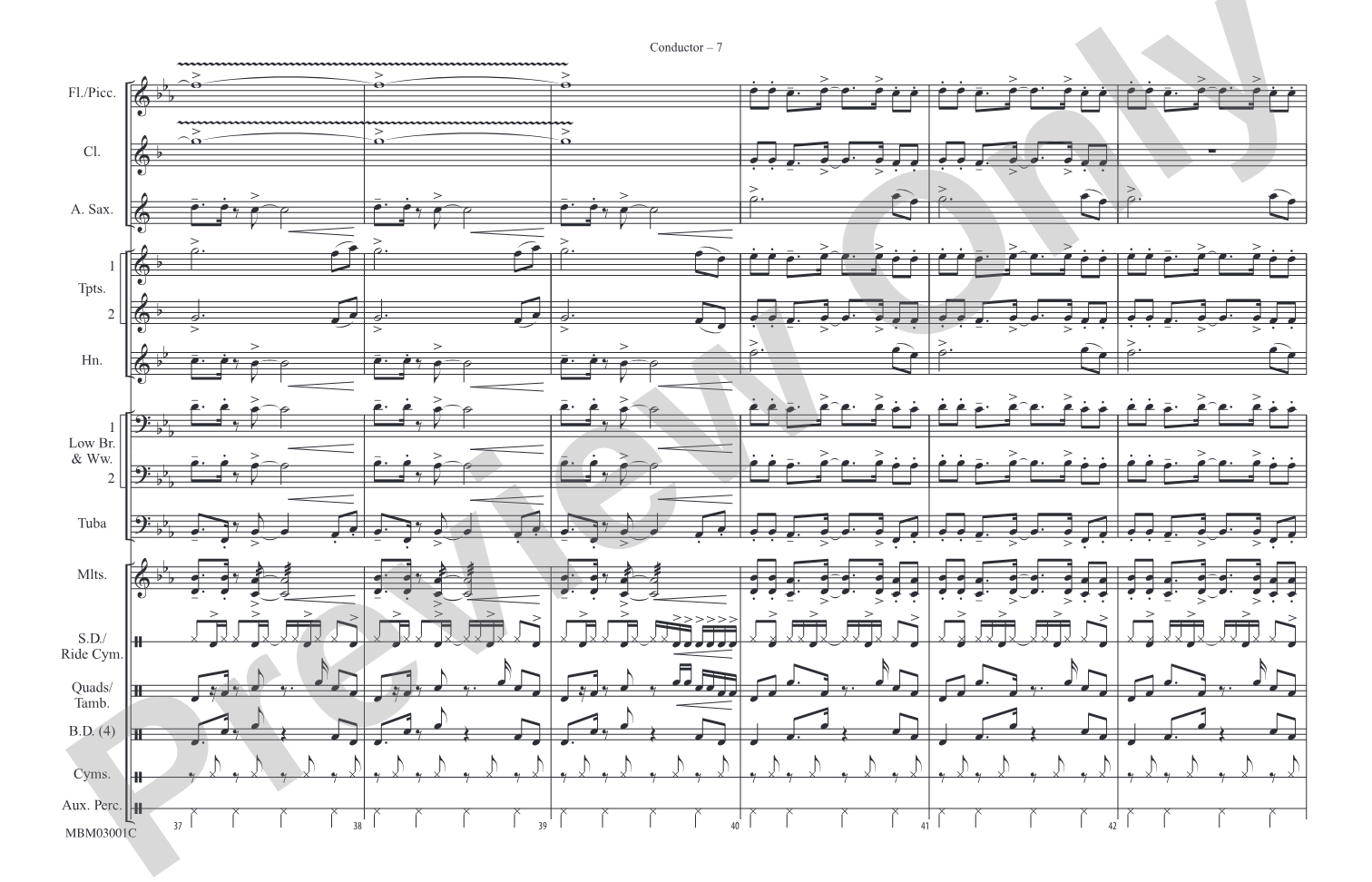
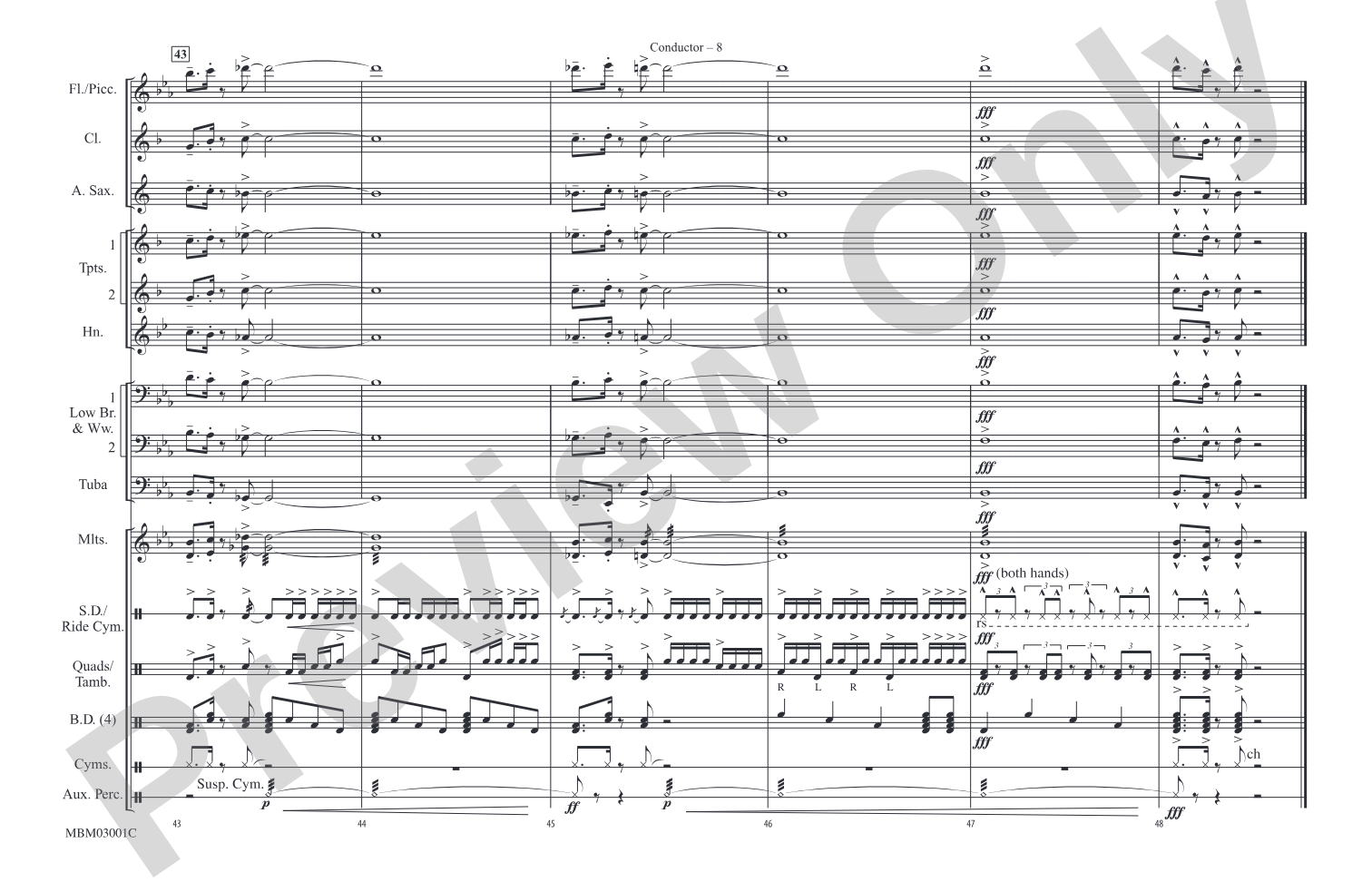

The Greatest Love of All: Score
Words by Linda Creed, music by Michael Masser / arr. Victor López
Grade: 2.5 (Medium Easy)
Item: 00-PR-0006571
$8.00
Pickup currently not available
Description
This poignant ballad made famous by Whitney Houston is now a spectacular closer. Victor López serves up a tasty combination of solos, duets, colorful harmonies, and a thrilling "up" ending. Beautiful!


Don't just read it, hear it, play along with it, and watch your students grow with it. In MakeMusic Cloud, The Greatest Love of All: Score comes alive with professional accompaniment, adjustable tempo, and built-in practice tools that turn solo practice into real progress.
Open in the Player
Jump straight in and assign it today.
Start Your Free Trial
Open this title and explore the full library in minutes.
Sample Audio
1
Audio File
--:--
0:00
0:00
Sample Video
No sample videos found.
Additional Details
Series:
Warner Bros. Marching Band
Publisher:
Alfred Music
SKU:
00-PR-0006571
More about this title
About the Composer: Michael Masser
Michael Masser is a legendary composer and producer whose work spans film, television, and popular music. His ability to craft emotionally resonant melodies has made him a cornerstone of contemporary songwriting, with compositions recorded by some of the world's most celebrated artists.
Masser's gift for melody serves music educators well. His songs translate beautifully across genres and ensembles because they're built on strong harmonic and emotional foundations that students can sink their teeth into.
Why we love this
Victor López's arrangement captures the emotional core of this beloved ballad while giving marching band the tools to deliver genuine impact. The strategic use of solos and duets within a medium-easy framework means your students get to shine without drowning in technical demands. The shift to an uplifting finale transforms a quiet moment into an unforgettable closer that audiences respond to immediately.
What to expect
A moment of vulnerability that builds into celebration. The opening sits in quiet, intimate territory where every note matters and the harmony breathes. As the piece unfolds, energy accumulates through layered solos and duets, creating a collective warmth before the final transformation. The ending breaks open with joy and affirmation.
Who it's for
Marching bands at the 2.5 level looking for a confident closer that connects with audiences emotionally. The arrangement works for ensembles with adequate solo voices (typically one or two strong players per part) and offers enough textural variety that it never feels thin, even with smaller instrumentation. This is ideal for bands wanting to program something contemporary and recognizable that doesn't require virtuosic technique.
How to get the most out of it
- Balance the featured solos and duets carefully in rehearsal. Have the full ensemble play softly underneath rather than dropping out entirely; this keeps the piece cohesive and gives soloists a supportive foundation.
- Shape the harmonic progression during the verses with subtle dynamic shaping in the accompaniment voices. Small rises and falls prevent the piece from feeling static.
- Prepare the transition into the "up" ending with intentional energy work. Mark the exact moment of lift-off in your score and rehearse that pivot point separately so the contrast lands cleanly.
- Let the melodic solos breathe. Resist the urge to push tempo forward during these moments; the ballad's power comes from space and clarity, not rush.
How to use it
Program this as your concert finale to send audiences home with genuine emotion and uplift. It pairs well with more traditional or classical works earlier in the program, offering a contemporary bridge that broader audiences recognize instantly. The combination of vulnerability and triumph makes it particularly effective for spring or end-of-year concerts where you want to celebrate the season and the group's growth together.
Skills your students will build
- Balancing solo voices within an ensemble texture
- Sustaining lyrical phrasing across longer melodic lines
- Dynamic control and shaping within a pop idiom
- Managing the energy shift from soft, introspective playing to full, driving sound
- Ensemble blend and vertical tuning within colorful harmonies