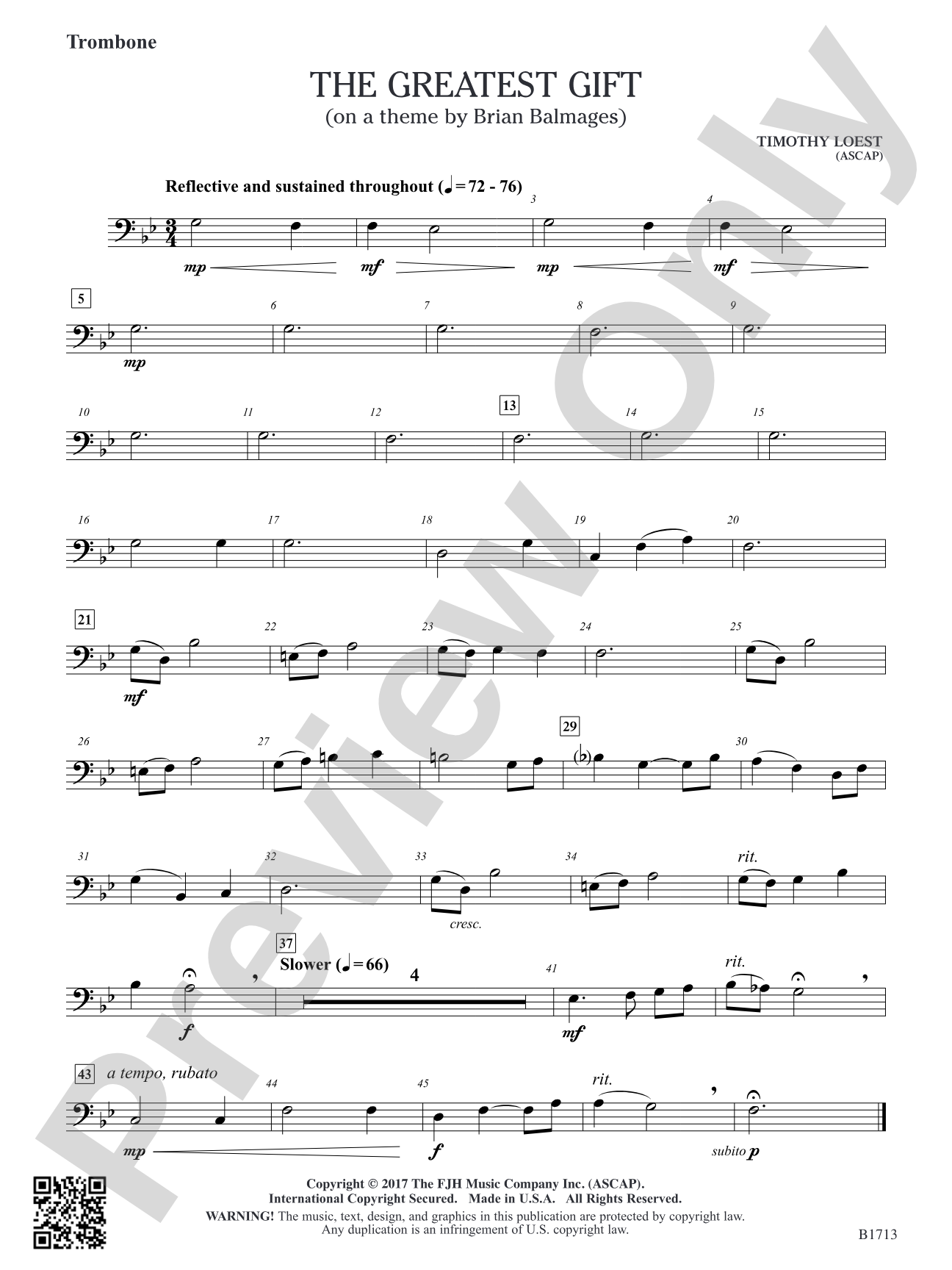
The Greatest Gift: Trombone Sheet Music Preview

The Greatest Gift: Trombone

By Timothy Loest

Grade: 1.5

Item: 98-PC-DB1713_TN1

Digital Download
$7.00
Description
Explore the unforgettable through memorable themes, extensive colors, lush harmonies and lyrical phrases that characterize this expressive work. Written for young musicians, this piece is equally at home with mature ensembles. Colorful and extremely musical, providing perfect contrast on your next program.

The Greatest Gift: Trombone isn't in MakeMusic Cloud just yet...but it could be. Let us know you'd like to see it, and you'll help shape what comes next. In the meantime, start a free trial and dive into thousands of interactive titles your students can play along with today.

Sample Audio
0:00
0:00
Sample Video
Additional Details
Series: FJH Developing Band
Publisher: The FJH Music Company, Inc.
SKU: 98-PC-DB1713_TN1

More about this title

About the Composer: Timothy Loest

Timothy Loest

Timothy Loest has shaped instrumental music education across three decades, moving comfortably between the classroom and the concert hall. His band compositions circulate globally, and his pedagogical fingerprints appear in several standard method series, including Measures of Success and Warm-ups and Beyond. His work earned Illinois's highest music education honor, the Cloyd Myers Memorial Award, in 2017, the same year Cloud Gate drew over 5,000 listeners to Chicago's Millennium Park.

Loest's music extends beyond the band room into television, with appearances on The Tonight Show Starring Jimmy Fallon, Good Morning America, and other major networks. He holds degrees from Illinois State University and Northwestern University, founded Fanfare Music Press in 2022 to champion quality band compositions, and continues to accept commissions. His accessibility as a composer rests on a foundation of genuine classroom experience at F.E. Peacock Middle School in Illinois, where he taught throughout his career.

Why we love this

Loest's gift lies in layering sophistication without complexity. The Greatest Gift balances melodic richness with genuine accessibility, allowing young ensembles to sound mature while still learning at a manageable technical level. It provides the kind of musical substance that develops ears and musicianship, not just technique.

What to expect

The Greatest Gift unfolds with genuine warmth and unhurried generosity. Lush harmonies and thoughtful orchestration create moments of unexpected depth, while lyrical phrasing invites musicians to sing through their instruments rather than simply playing the notes.

Who it's for

Grade 1.5 bands preparing contest or festival repertoire will find this piece rewarding; it offers musicality that impresses judges without demanding advanced technique. More mature ensembles seeking lighter, accessible concert programming will appreciate its melodic substance and emotional directness.

How to get the most out of it

  • Shape the lyrical phrases through dynamic arcs rather than strict allegiance to written markings; young musicians benefit from hearing how rubato and breathing points enhance lyricism.
  • Highlight the harmonic colors by keeping inner voices transparent; resist the temptation to swell all voices equally, instead letting the arrangement breathe between melody and support.
  • Balance melodic material across the ensemble so no single section dominates; this work rewards distributed leadership and teaches students to listen for texture beyond the top line.

How to use it

Program this as a concert centerpiece that demonstrates musicianship and band maturity without heavy technical demands. Its expressive, accessible character makes it ideal contrast alongside faster or more structurally complex works, anchoring a program around ensemble cohesion and singing tone.

Skills your students will build

  • Phrasing and dynamic shaping across longer melodic lines
  • Listening for harmonic color and balance in four-part writing
  • Sustaining tone quality and intonation during lyrical passages
  • Reading and responding to expressive markings and articulations

You May Also Like