
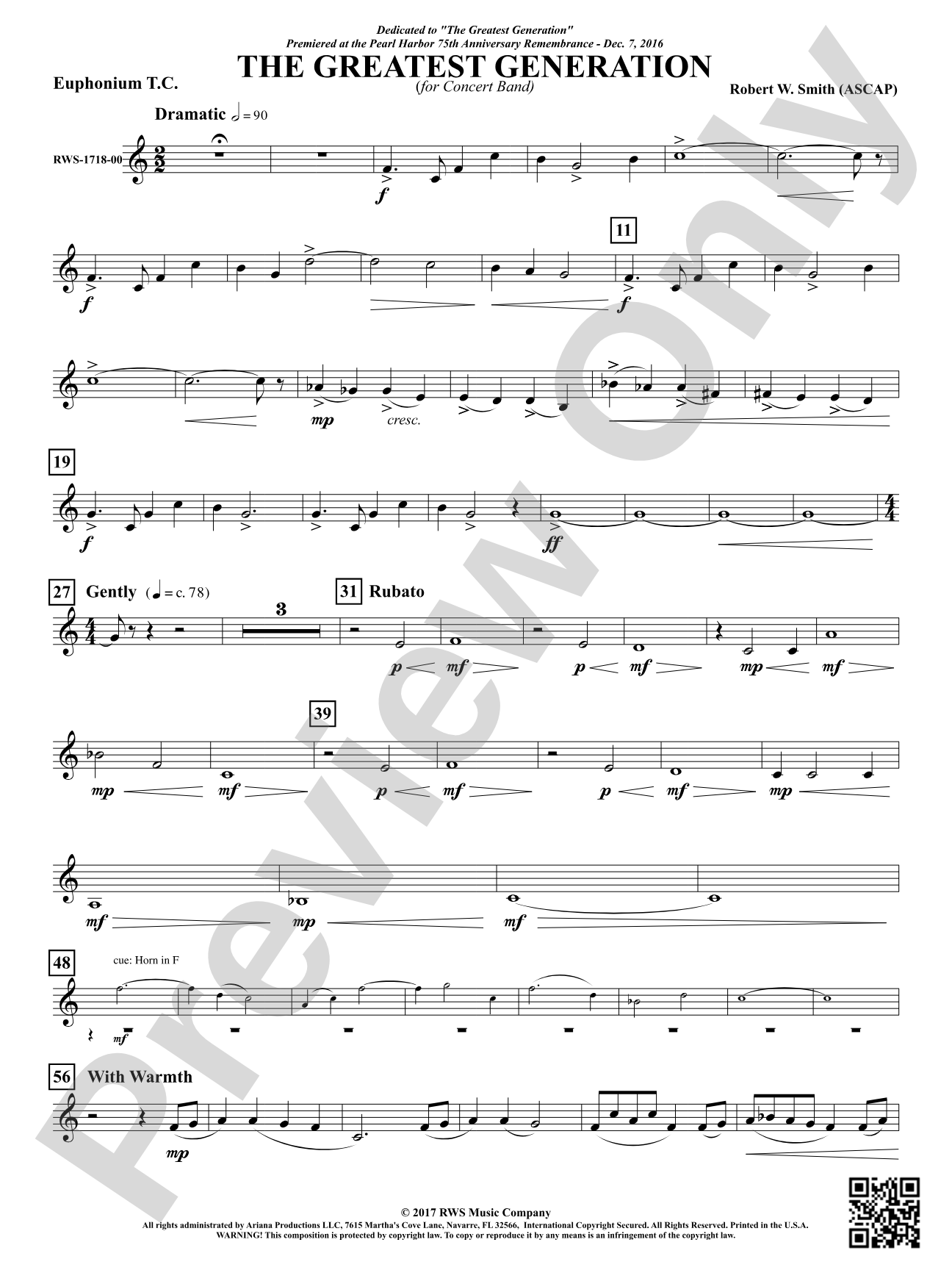

The Greatest Generation - For Concert Band: Baritone T.C.
For Concert Band
By Robert W. Smith
Grade: 3
Item: 98-PC-RWS1718_BTC1
$3.99
Pickup currently not available
Description
Written for the 75th Anniversary of Pearl Harbor and gathering of heroes from around the world in December of 2016, this stirring composition pays tribute to America's "Greatest Generation." Narrated by World War II and Normandy veteran Col. Arnald D. Gabriel, this is the perfect selection to honor those that have served in the armed forces past and present. This grade 3 setting is technically accessible for most concert bands and suitable for programming throughout the year.
Original Item#: RWS-1718-00


Original Item#: RWS-1718-00
The Greatest Generation - For Concert Band: Baritone T.C. isn't in MakeMusic Cloud just yet...but it could be. Let us know you'd like to see it, and you'll help shape what comes next. In the meantime, start a free trial and dive into thousands of interactive titles your students can play along with today.
Request This Title
Tell us you want it.
Start Your Free Trial
Explore everything that's ready to play right now.
Sample Audio
1
Audio File
--:--
0:00
0:00
Sample Video
No sample videos found.
Additional Details
Series:
RWS - Concert Band
Publisher:
RWS Music Company
SKU:
98-PC-RWS1718_BTC1
More about this title
About the Composer: Robert W. Smith

Robert W. Smith has established himself as one of America's most performed composers of concert band and orchestral music, with over 400 published works spanning both genres. His education includes a Bachelor's degree in Music Education from Troy State University and a Master's degree from the University of Miami. Smith's original compositions and arrangements have traveled globally, from concert halls across North America, Europe, Australia, and Asia to high-profile broadcasts and ceremonial events including the Macy's Thanksgiving Day Parade, the Olympic Games, and Opening Day at Dodger Stadium.
As both composer and clinician, Smith has conducted and taught throughout the United States, Canada, and internationally. His symphonic works, including The Divine Comedy and The Odyssey, have become touchstones in the repertoire, while pieces like The Tempest and his extensive catalog for developing ensembles serve as core programming choices for bands at all levels.
Why we love this
Smith crafts patriotic music that honors without relying on bombast or oversimplification. The Grade 3 accessibility here means your entire band can participate meaningfully in programming that matters, and the programmatic context (narrated by an actual Normandy veteran) transforms a concert piece into a genuine memorial moment. This is the kind of repertoire that reminds students why they're learning their instruments.
What to expect
Stirring and reverent, with clear melodic themes that speak to courage and sacrifice. The music builds from reflective moments to powerful statements of resolve, balancing emotional depth with accessibility so that even developing musicians can convey genuine respect and dignity.
Who it's for
Concert bands at the Grade 3 level seeking meaningful repertoire that serves both musical and commemorative purposes. This piece works especially well for directors who want to program substantive patriotic music that engages the entire band without excessive technical demands, and for ensembles looking to honor veterans or mark anniversaries of significant historical events.
How to get the most out of it
- Build the dynamic shape gradually through the piece rather than front-loading volume; this approach lets the patriotic themes emerge with earned impact and prevents fatigue in players holding longer lines.
- If using the narration, coordinate microphone and sound levels during rehearsals early on. Establish clear cues between the narrator and your conductor so the ensemble can breathe with the spoken text.
- Balance articulation across sections carefully during tutti passages. Grade 3 band sound often suffers from uneven attacks, so isolate the bass line and middle voices to lock rhythmic precision before adding upper voices.
- Pay attention to sustained harmonic changes in the accompaniment parts; many Grade 3 players focus only on their own line and miss the larger harmonic motion that gives the tribute its emotional weight.
How to use it
Program this as a centerpiece for Veterans Day, Memorial Day, or military appreciation concerts where its commemorative purpose becomes part of the larger event. It also serves as an effective mid-year concert selection that shifts audience attention to meaningful themes while demonstrating your band's growth in maturity and expression.
Skills your students will build
- Sustaining long tones with consistent tone quality
- Balancing ensemble sound across multiple sections
- Reading and maintaining harmonic relationships
- Executing dynamic control across a wider range
- Responding to programmatic and emotional context in performance