
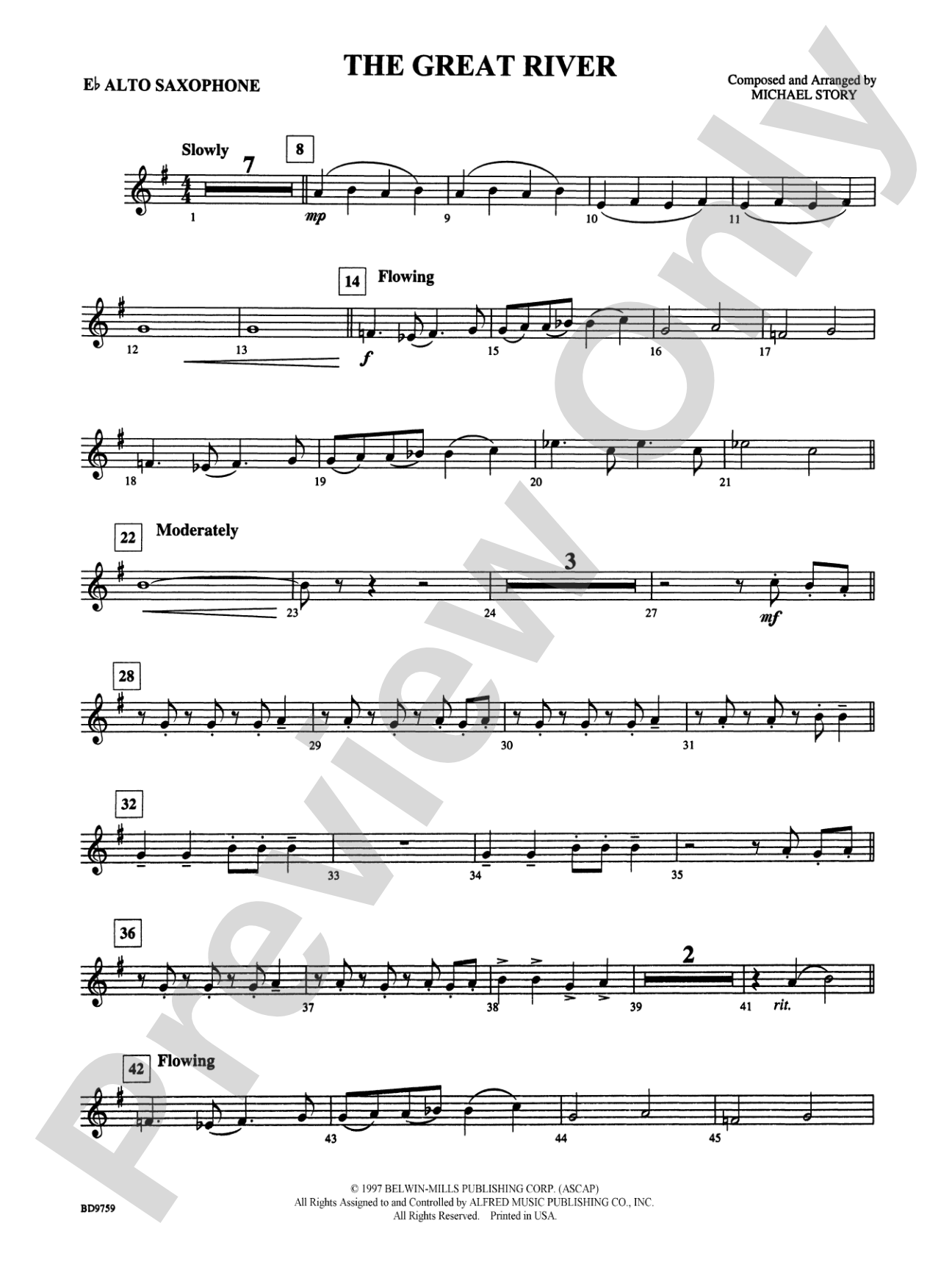

The Great River: E-flat Alto Saxophone
By Michael Story
Grade: 2 (Easy)
Item: 00-PC-0014658_AX1
$3.00
Pickup currently not available
Description
Our great nation was built north to south using the mighty Mississippi as the pathway. Using 1,800 miles of navigable waterway, the people and their commerce and culture moved freely. Come with us as we investigate this majestic river, from its beginnings as a small, clear stream in northern Minnesota to the great cities along its banks as it flows southward. You'll be charmed and fascinated by this marvelous scoring. (duration 4:24)


Don't just read it, hear it, play along with it, and watch your students grow with it. In MakeMusic Cloud, The Great River: E-flat Alto Saxophone comes alive with professional accompaniment, adjustable tempo, and built-in practice tools that turn solo practice into real progress.
Open in the Player
Jump straight in and assign it today.
Start Your Free Trial
Open this title and explore the full library in minutes.
Sample Audio
1
Audio File
--:--
0:00
0:00
Sample Video
No sample videos found.
Additional Details
Series:
Belwin Young Band
Publisher:
Alfred Music
Page Count:
226
SKU:
00-PC-0014658_AX1
More about this title
About the Composer: Michael Story
Michael Story has established himself as one of the most prolific and respected composers for young bands. His catalog spans hundreds of titles across all grade levels, and his music consistently appears on state solo and ensemble festivals, regional band competitions, and concert programs nationwide. Story's compositional voice balances accessibility with musical substance, creating pieces that challenge student musicians without overwhelming them and engage audiences with clear melodic intent and orchestration that brings out the strengths of developing ensembles.
Why we love this
Story crafts this river journey as a genuine narrative arc rather than a series of disconnected scenes. The scoring captures the Mississippi's scale and personality at different stages, giving your band a vehicle to explore dynamic contrast, textural variety, and storytelling through music without requiring advanced technical facility.
What to expect
The music unfolds with a sense of discovery and wonder. Lyrical passages give way to moments of power and movement as the band travels downstream; the orchestration invites listeners to imagine the river's changing geography and the human activity along its course. Throughout, the writing feels open and spacious, never cluttered, allowing each band member's contribution to be heard.
Who it's for
This score and parts set serves Grade 2 concert bands preparing for festival performance, classroom concerts, or contests where a substantial but accessible major work is needed. Directors seeking material that teaches musicianship and sectional balance while maintaining audience appeal will find reliable ground here.
How to get the most out of it
- Shape the opening section with a gentle dynamic arc; resist the temptation to blast through. The image of a small Minnesota stream requires restraint from the full ensemble, and a well-controlled warm tone in the woodwinds sets the tonal foundation for everything that follows.
- Mark the transitions between river sections in your score. Story uses textural shifts and key relationships to signal movement from one waterway moment to the next; conducting these clearly will help your band track the journey and give audiences a sense of intentional progression.
- Balance the melody lines between sections as the piece unfolds. Grade 2 arrangements often distribute themes across different instrumental families; practice runs that ensure one section doesn't overshadow another, especially when trumpets and saxophones carry similar material.
- Let the lower voices breathe. The bass line and trombone parts anchor the harmonic movement and add weight during the fuller sections; giving them room to project without rushing will strengthen the overall sonority.
How to use it
This piece works well as a centerpiece on a concert exploring American geography, history, or culture through music. At 4:24, it pairs naturally with shorter character pieces or with a contrasting march, giving your program shape without requiring an enormous time commitment. The narrative quality also makes it an effective choice for young band festivals where thematic programming is encouraged.
Skills your students will build
- Sustaining and shaping longer melodic lines across phrase boundaries
- Sectional balance and blend at varying dynamic levels
- Reading and executing textural changes and transitions
- Responding to conductor gestures that convey narrative and story progression
- Tuning unison and octave doublings in sustained passages