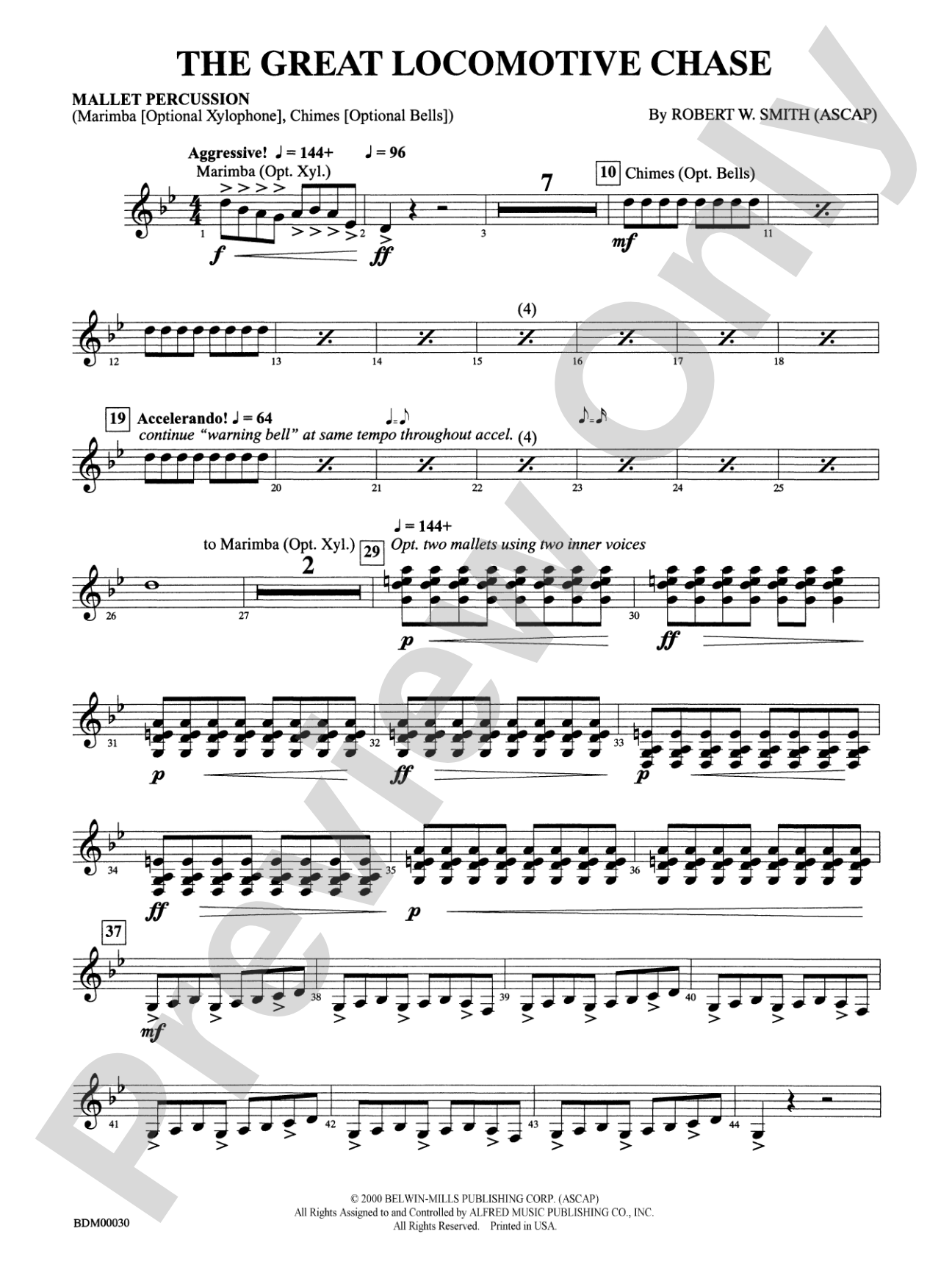
The Great Locomotive Chase: Mallets Sheet Music Preview

The Great Locomotive Chase: Mallets

By Robert W. Smith

Grade: 2 (Easy)

Item: 00-PC-0014667_M1

Digital Download
$3.00
Description
Inspired by the events surrounding the railway between Atlanta and Chattanooga during the early years of the Civil War, Robert W. Smith stages the train chase complete with fascinating textures and effects. Listeners become engulfed in the vivid sounds. You can almost smell the smoke. This is an exciting original concert opener or closer. All aboard! This title is available in MakeMusic Cloud.

Don't just read it, hear it, play along with it, and watch your students grow with it. In MakeMusic Cloud, The Great Locomotive Chase: Mallets comes alive with professional accompaniment, adjustable tempo, and built-in practice tools that turn solo practice into real progress.

Sample Audio
0:00
0:00
Sample Video
Additional Details
Series: Belwin Young Band
Publisher: Alfred Music
Page Count: 260
SKU: 00-PC-0014667_M1

More about this title

About the Composer: Robert W. Smith

Robert W. Smith

Robert W. Smith stands among the most frequently performed band composers in America, with over 400 published works spanning concert band, orchestra, and various ensemble settings. He holds degrees from Troy State University and the University of Miami, and his works have been performed across North America, Europe, Australia, and Asia. His symphonies The Divine Comedy and The Odyssey, along with acclaimed pieces like The Tempest, have become foundational works in the developing and advanced band repertoire.

Beyond the concert hall, Smith's music has reached audiences through television broadcasts, Olympic ceremonies, the Macy's Thanksgiving Day Parade, and major sporting events. He remains active as both a conductor and clinician, bringing his expertise to ensembles throughout the United States, Canada, and internationally.

Why we love this

Smith crafts a Grade 2 opener that delivers genuine drama without technical excess. The programmatic approach to the locomotive chase gives students a visceral reason to nail rhythmic precision and balance, making this an ideal choice for building ensemble awareness while keeping individual parts accessible. It's the kind of piece that reminds audiences why they came to the concert.

What to expect

Steam, urgency, and momentum build from the opening moments. The textures create an almost cinematic experience where you hear the industrial clang and rumble of the locomotive, feel the acceleration around curves, and sense the tension of the chase itself. Smith writes in a way that makes the band feel like they're part of the action rather than observing it from the audience.

Who it's for

Any concert band director seeking a Grade 2 selection that engages both young musicians and audiences with vivid storytelling and straightforward technical demands. The piece works equally well for first-year high school bands, strong middle school ensembles, and community bands looking for a memorable opener or closer that doesn't require advanced players.

How to get the most out of it

  • Establish the locomotive's rhythm as your foundational pulse early in rehearsals. Use a steady metronome click during the first run-throughs to lock the ensemble into the underlying drive before layering textures.
  • Shape the dynamic contours with intention. The vivid effects Smith writes depend on clear contrasts between sections; avoid letting the accelerations and peaks blur together through inattention to the score's dynamics.
  • Balance the sound effects and percussion colors carefully. Train imagery comes through texture as much as pitch, so ensure lower woodwinds and brass aren't covering the articulative details in the upper voices.
  • Consider a brief pause or cutoff before key moments of momentum. Silence can intensify the arrival of the next chase sequence and keep the narrative arc from flattening.

How to use it

The dramatic scope and accessible difficulty make this an excellent concert opener, especially when followed by contrasting lyrical or lighter fare. It also serves as a powerful closing statement for a program focused on American history or storytelling. Festival and contest settings benefit from the piece's strong energy and clear sense of musical purpose.

Skills your students will build

  • Rhythmic precision and synchronization across sections
  • Dynamic shaping and contrast management
  • Articulation clarity in fast-moving passages
  • Ensemble balance when multiple lines carry equal textural importance
  • Listening to and responding to a conductor's pacing of accelerations and climaxes

You May Also Like