
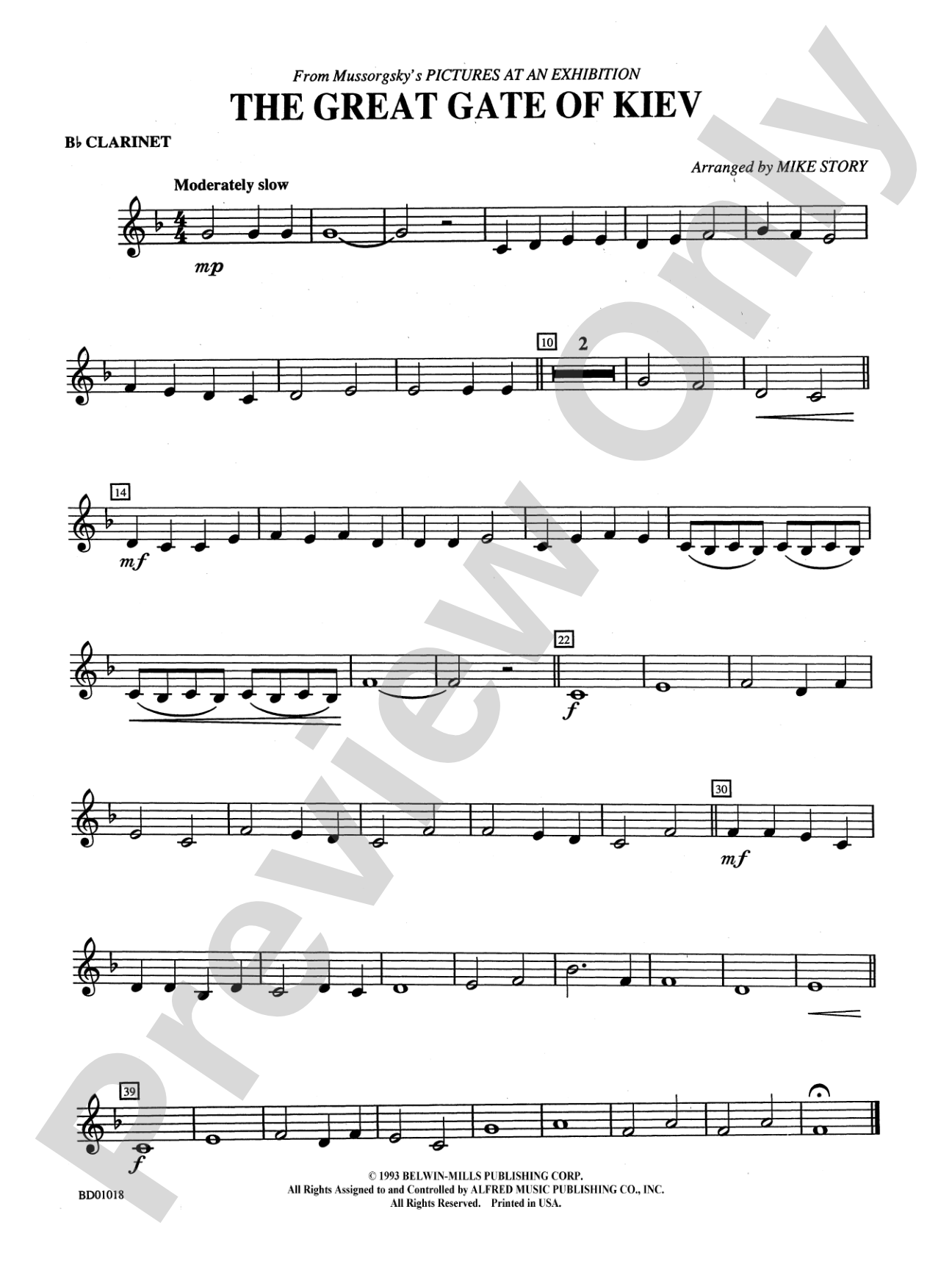

The Great Gate of Kiev (from Pictures at an Exhibition): 1st B-flat Clarinet
From Pictures at an Exhibition
By Modest Mussorgsky / arr. Mike Story
Grade: 1 (Very Easy)
Item: 00-PC-0014647_C1
$3.00
Pickup currently not available
Description
This famous work, the finale from Mussorgsky's Pictures at an Exhibition, has gone from the keyboard medium to an orchestral version arranged by Ravel, and now to a very easy concert band arrangement by Mike Story. The power and drama is all here in an easy-play form. This is a great program closer!


Don't just read it, hear it, play along with it, and watch your students grow with it. In MakeMusic Cloud, The Great Gate of Kiev (from Pictures at an Exhibition): 1st B-flat Clarinet comes alive with professional accompaniment, adjustable tempo, and built-in practice tools that turn solo practice into real progress.
Open in the Player
Jump straight in and assign it today.
Start Your Free Trial
Open this title and explore the full library in minutes.
Sample Audio
1
Audio File
--:--
0:00
0:00
Sample Video
No sample videos found.
Additional Details
Series:
Belwin Beginning Band
Publisher:
Alfred Music
Page Count:
100
SKU:
00-PC-0014647_C1
More about this title
About the Composer: Modest Mussorgsky
Modest Mussorgsky (1839-1881) was a Russian composer whose music broke sharply from European classical conventions. He worked outside the academic tradition, developing a distinctive harmonic language that prioritized raw emotional expression and nationalist themes over technical refinement. His willingness to challenge musical norms made him influential among later composers and educators seeking to move beyond rigid formal structures.
Pictures at an Exhibition stands as his most performed work. Composed as a solo piano suite in 1874, it was conceived as a journey through an art gallery, with each movement inspired by different paintings and drawings. The work's bold harmonies, vivid imagery, and episodic structure have made it endlessly adaptable to new instruments and ensembles, from Ravel's lush orchestration to accessible band arrangements.
Why we love this
The Great Gate of Kiev demands nothing from your ensemble except commitment and presence. Mike Story has stripped away the technical barriers without sacrificing the work's architectural grandeur or its unmistakable sense of arrival. For a Grade 1 band, this arrangement preserves what makes the original profound: the progression from quiet reflection to overwhelming triumph that feels earned, not contrived. Every musician on stage gets to play something that matters.
What to expect
A procession moving steadily forward, growing in confidence and power. What begins as a modest melodic gesture transforms into something monumental and inevitable, like watching a crowd gather and swell. There is ceremony here, and triumph, delivered through direct and uncluttered musical writing.
Who it's for
Beginning band directors seeking a finalé with genuine impact and music history weight. Students benefit from playing a recognized masterwork while staying within their technical range, building confidence and understanding that famous music doesn't require advanced virtuosity to matter.
How to get the most out of it
- Shape the opening processional with clear dynamic gradations; avoid jumping directly to full volume. Let the piece build its own momentum.
- Balance the melodic line across your band so the main theme sings above the harmonic foundation, particularly in the central fanfare sections.
- Resist rushing through the massive final statement. The power comes from precision and control, not tempo.
- Use the conductor score to identify key structural moments where sections need to lock together rhythmically, especially in the climactic passages.
How to use it
Close a concert with unmistakable authority. The piece works equally well in festival settings or spring concerts where you want the audience to leave knowing they heard something substantial. It pairs naturally with lighter or shorter works earlier in the program, serving as the anchor that ties the evening together.
Skills your students will build
- Shaping long phrases across multiple measures without losing forward momentum
- Balancing melody and harmony in a multi-sectional form
- Building and controlling volume through collaborative ensemble playing
- Executing clear style shifts from processional to fanfare to triumphant finale
- Reading a full conductor score while managing individual part responsibilities