
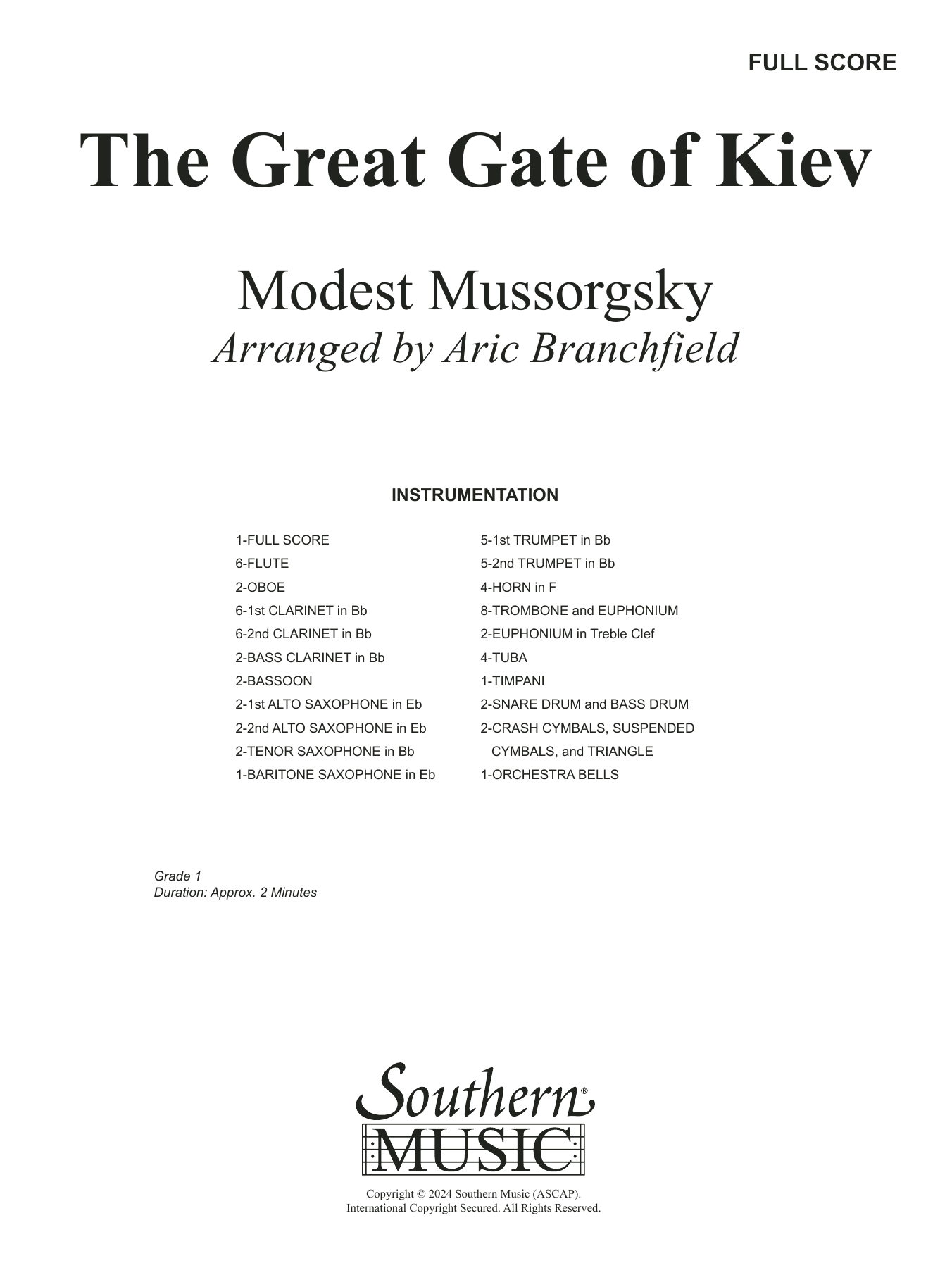

The Great Gate of Kiev (arr. Aric Branchfield): Concert Band Conductor Score & Parts
By Modest Mussorgsky / Arranged by Aric Branchfield
Grade: 1
Item: 35-PK01724053
$50.00
Pickup currently not available
Buy Extra Parts (Digital PDF Download)
Parts Added to Cart!
Description
It's never too early to introduce your students to great music. This outstanding addition to the beginning band repertoire is certain to be a hit with your students and audience. Clarinets remain below the break, first trumpet goes stepwise once to fourth line D.


The Great Gate of Kiev (arr. Aric Branchfield): Concert Band Conductor Score & Parts isn't in MakeMusic Cloud just yet...but it could be. Let us know you'd like to see it, and you'll help shape what comes next. In the meantime, start a free trial and dive into thousands of interactive titles your students can play along with today.
Request This Title
Tell us you want it.
Start Your Free Trial
Explore everything that's ready to play right now.
Sample Audio
No sample audio found.
Sample Video
No sample videos found.
Additional Details
Publisher:
Hal Leonard
SKU:
35-PK01724053
More about this title
About the Composer: Modest Mussorgsky
Modest Mussorgsky (1839-1881) was a Russian composer who rejected formal training in favor of self-directed study, creating music that prioritized emotional truth and national character over European convention. His willingness to break compositional rules made him controversial in his lifetime, but his boldness fundamentally shaped how we think about orchestral color and dramatic narrative in instrumental music.
Pictures at an Exhibition, the work from which The Great Gate of Kiev originates, stands as one of his masterpieces. Originally written for solo piano, its orchestral arrangement has become standard repertoire across levels. The piece showcases Mussorgsky's gift for translating visual and emotional imagery into sound, making it an ideal entry point for young musicians learning how concert music can tell a story.
Why we love this
This arrangement captures the monumental, processional character that makes the original so compelling while respecting the technical boundaries of developing musicians. Branchfield's orchestration gives every section something meaningful to play, preventing the typical Grade 1 problem of uneven engagement across the band. Your students will feel the architecture and grandeur of a genuinely important work, not a watered-down substitute.
What to expect
Processional and ceremonial, like a grand entrance unfolding with deliberate grandeur. The harmonic simplicity creates space for clear orchestration, allowing each section to hear its place in the ensemble while the overall arc builds from steady confidence toward triumphant affirmation.
Who it's for
Beginning band directors seeking repertoire that introduces students to genuinely important music without compromising pedagogical goals. The Grade 1 level makes it accessible for first and second year players while the source material guarantees musical substance that respects young musicians' intelligence.
How to get the most out of it
- Build the opening A section with steady, even tone in the low reeds and brass; this sets the foundation for the processional character the piece demands.
- Shape the dynamic swells carefully rather than rushing to the forte; let the crescendos feel inevitable, not sudden.
- Balance the trumpet line audibly but without letting it overwhelm the harmonic support underneath; this ensures the melody reads clearly without dominating.
- Practice the final fortissimo moment with the entire ensemble, drilling rhythmic precision so the closing lands with confidence rather than raggedness.
How to use it
Open a concert or place it strategically after lighter novelty pieces to anchor the program with something substantial and memorable. The moderate length and accessible difficulty make it suitable for a fall concert when fundamentals are still being solidified, yet its musical weight gives your audience something genuinely satisfying to experience.
Skills your students will build
- Sustained tone production and dynamic control in legato passages
- Reading whole note and half note values with consistent pulse
- Balancing individual lines within ensemble texture
- Understanding musical form and phrasing at the introductory level
- Responding to conductor cues for dynamic and tempo shape