The Grand Old Flag: 2nd B-flat Cornet Sheet Music Preview

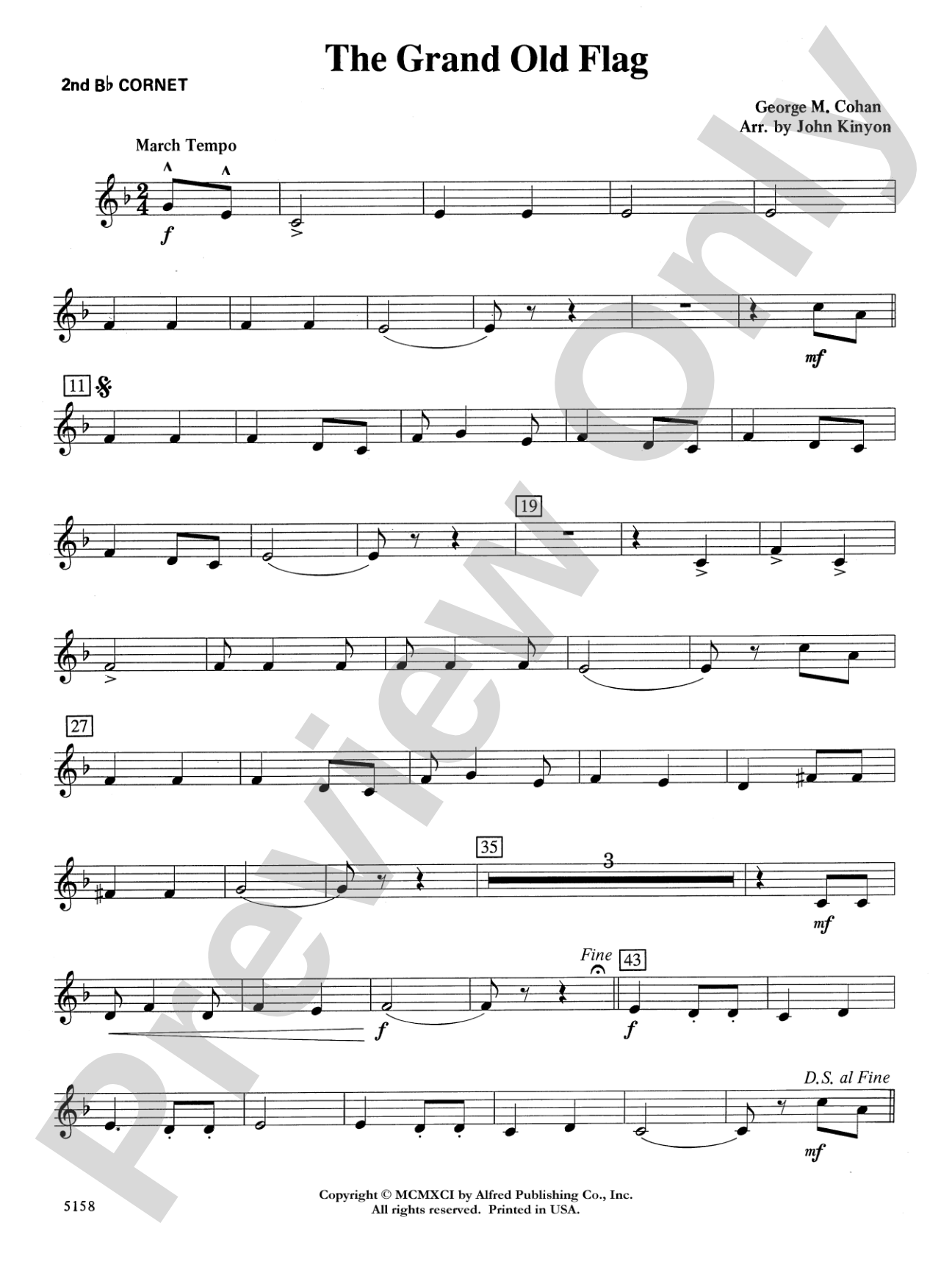
The Grand Old Flag: 2nd B-flat Cornet

By George M. Cohan / arr. John Kinyon

Grade: 1 (Very Easy)

Item: 00-PC-0001875_CO2

Digital Download
$3.00
Description
George M. Cohan's catchy melodies are popular with listeners of all ages and this simple but effective arrangement of 'You're a Grand Old Flag' perfectly captures his easy-going style. The eighth--quarter--eighth note rhythmic pattern provides a perfect vehicle for reinforcing lessons on syncopation. Your flute, cornet and percussion players will really shine with this splendid work! (Grade 1)

Don't just read it, hear it, play along with it, and watch your students grow with it. In MakeMusic Cloud, The Grand Old Flag: 2nd B-flat Cornet comes alive with professional accompaniment, adjustable tempo, and built-in practice tools that turn solo practice into real progress.

Sample Audio
No sample audio found.
Sample Video
Additional Details
Series: Mini Score Series
Publisher: Alfred Music
Page Count: 102
SKU: 00-PC-0001875_CO2

More about this title

About the Composer: George M. Cohan

George M. Cohan (1878-1942) shaped American popular music and theater during the early 20th century. Composer, lyricist, actor, and producer, Cohan wrote songs that became national standards, blending Irish-American vernacular with infectious melodies and straightforward harmonic language. His work defined the sound of American patriotic music and remains accessible to performers and audiences across generations.

Cohan's gift was writing music that felt immediate and singable. He understood how melodies stick in memory and how simple rhythmic patterns can carry emotional weight. For educators, his catalog offers rewarding repertoire at introductory levels, allowing young musicians to engage with genuine American popular idiom rather than pastiche or educational music designed only for teaching.

Why we love this

This arrangement gives Grade 1 ensembles genuine Americana without talking down to them. Cohan's melody is instantly recognizable and genuinely fun to play, which matters for early-level musicians building confidence. The syncopation embedded in the rhythmic pattern teaches important concepts through a song that already sounds finished and musical, not like a drill.

What to expect

Upbeat and buoyant, with the casual swagger of early 20th century American popular song. The syncopated rhythm gives it energy and personality while the melody stays accessible and warmhearted. There's no pretense here, just good-natured musicality that makes audiences smile.

Who it's for

Directors programming a Grade 1 concert band festival or summer patriotic concert. This works for bands just beginning to tackle syncopation and looking for a piece with immediate musical payoff. Ensembles of any size benefit from a straightforward arrangement that invites confident, stylistic playing.

How to get the most out of it

  • Treat the eighth-quarter-eighth pattern as a signature gesture, not a technical hurdle. Ensemble clarity on this rhythm pays dividends in phrasing and style.
  • Let the flute, cornet, and percussion soloists know they're carrying the character of the piece. Young players respond well to spotlight moments when the responsibility is clear.
  • Keep the tempo comfortable enough that the syncopation lands naturally. Rushing blurs the rhythm's distinctive shape.
  • Balance the melody against accompanimental parts so the tune comes through without drowning out Cohan's harmonic foundation.

How to use it

Program this for a summer concert celebrating American music, or pair it with other patriotic selections for a 4th of July concert. It sits comfortably alongside light classical marches and other early-level pops arrangements. The piece is substantial enough (102 pages suggests a full score and parts set) to be a concert highlight rather than a brief filler.

Skills your students will build

  • Reading and executing syncopated rhythms (eighth-quarter-eighth patterns)
  • Balancing melody and accompaniment in ensemble texture
  • Developing articulation clarity in a straightforward stylistic context
  • Solo playing with confidence in designated passages (flute, cornet, percussion features)
  • Recognizing and performing early 20th century American popular song style

You May Also Like