

The Grand Finale - Piano Duet (1 Piano, 4 Hands): Piano Duets & Four Hands
By Catherine Rollin
Level: Late Intermediate
Item: 00-PB-0000674
$5.50
Pickup currently not available
Related Items
The Grand Finale: Piano Duet (1 Piano, 4 Hands) Sheet |
$5.50
|
View |
Description
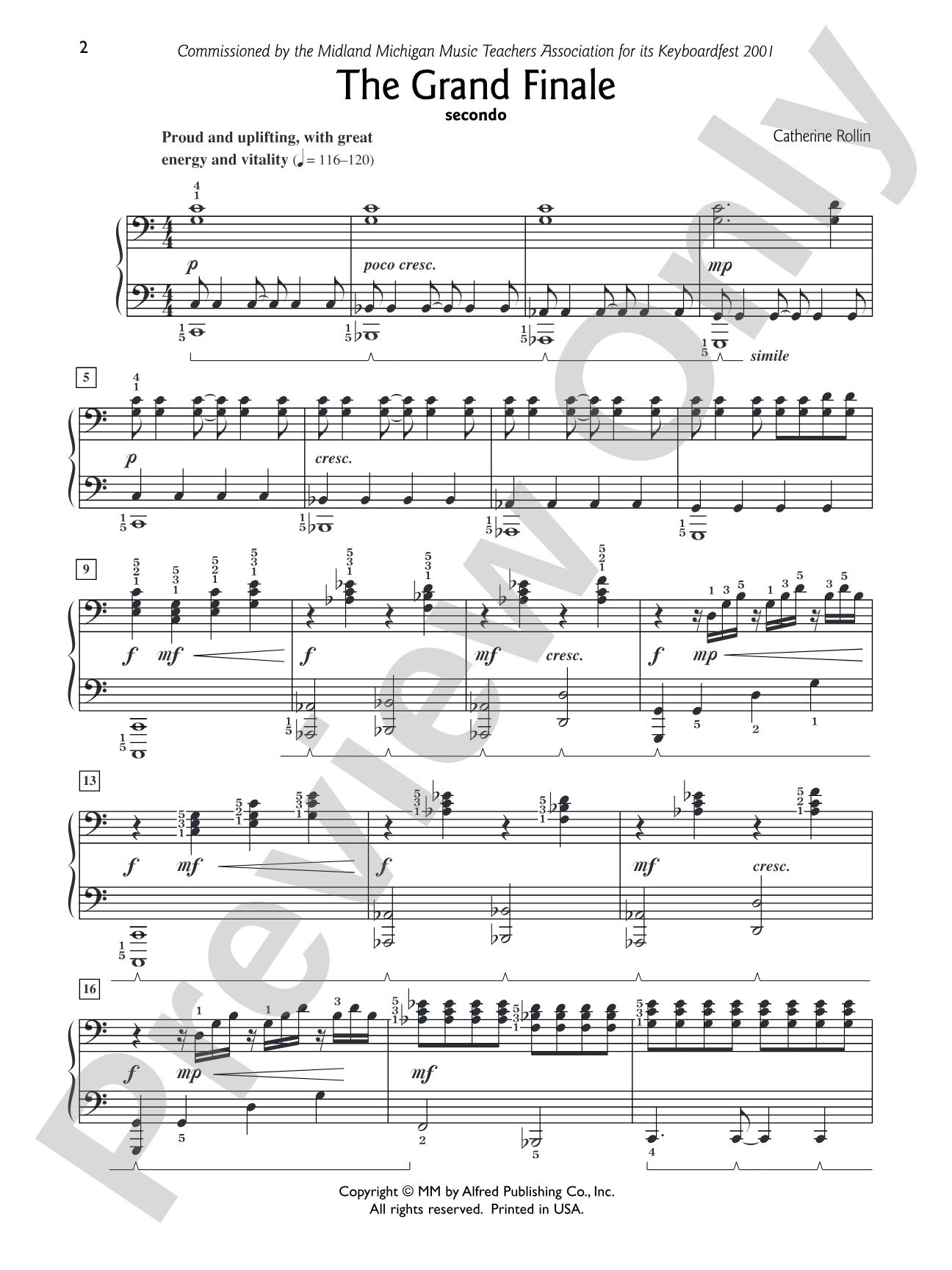
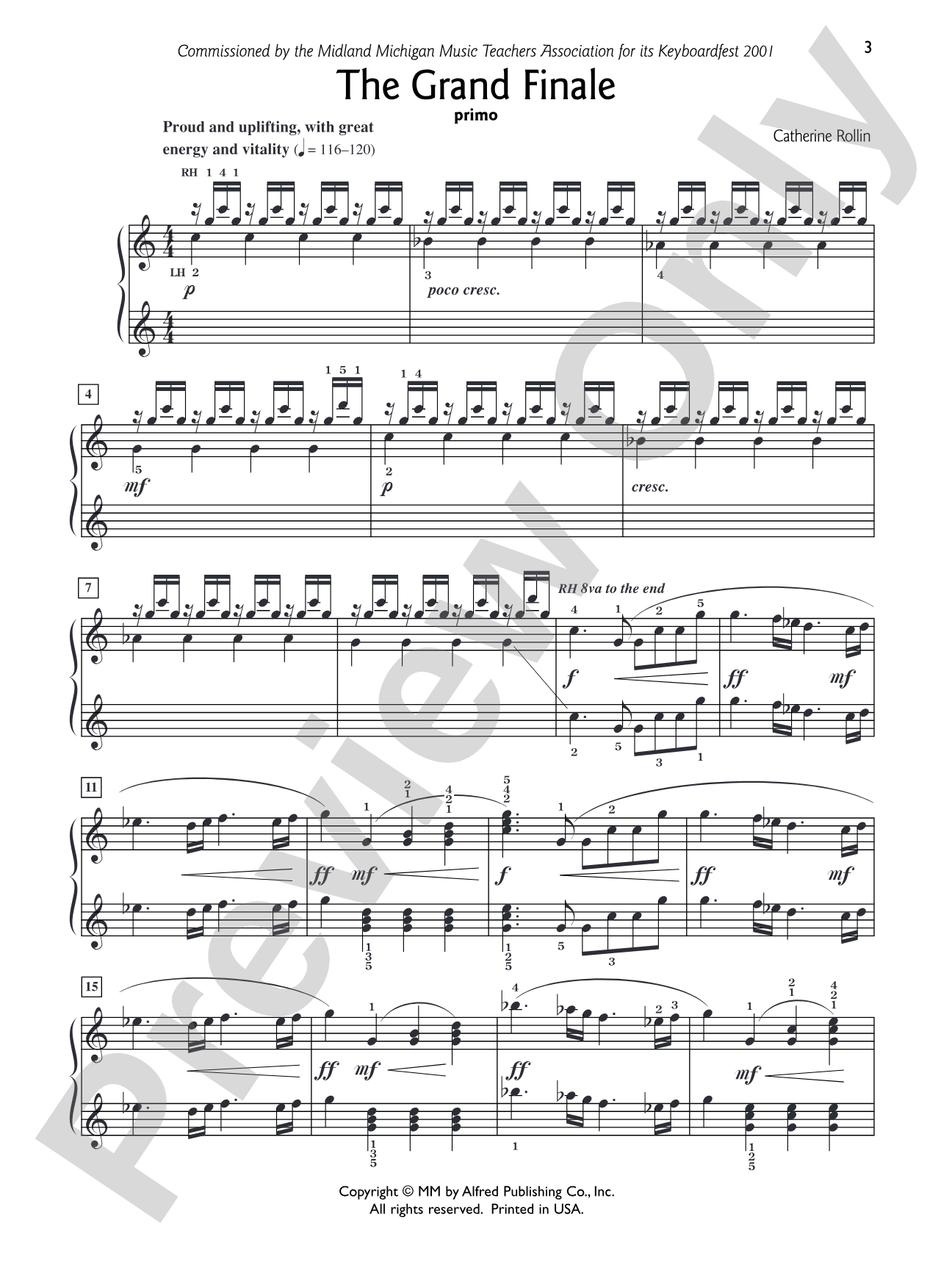
This fanfare-like, exciting piano duet is meant to sound "Proud and uplifting, with great energy and vitality," and the musical textures and dynamics of this composition will certainly deliver that kind of excitement! Written in C Major, 4/4 time, with block and arpeggiated chords, and many shifts in tempo, mood and dynamics. A Federation Festivals 2024-2028 selection.


The Grand Finale - Piano Duet (1 Piano, 4 Hands): Piano Duets & Four Hands isn't in MakeMusic Cloud just yet...but it could be. Let us know you'd like to see it, and you'll help shape what comes next. In the meantime, start a free trial and dive into thousands of interactive titles your students can play along with today.
Request This Title
Tell us you want it.
Start Your Free Trial
Explore everything that's ready to play right now.
Sample Audio
No sample audio found.
Sample Video
No sample videos found.
Additional Details
Series:
The Alfred Duet Series
Publisher:
Alfred Music
Page Count:
12
SKU:
00-PB-0000674
More about this title
About the Composer: Catherine Rollin

Catherine Rollin maintains an active dual career as both a performing pianist and a composition teacher whose students have won festival awards across multiple states. She holds degrees from the University of Michigan and Oakland University School of Performing Arts, and her commissions have come from prestigious organizations including MTNA, the Michigan Music Teachers Association, and Clavier Companion magazine. Her work has appeared regularly on National Federation of Music Clubs Festival bulletins, and she served as a judge for both the MTNA Student Composition Competition and the Lynn Freeman Olson Composition Contest.
Rollin's reach extends internationally through masterclasses and workshops conducted in over 200 cities across the United States, Canada, Japan, and Taiwan. Her ASCAP award-winning Museum Masterpieces series has been featured in multimedia concert presentations, and her commissioned trio Suite Detroit premiered at the 2018 MTNA national conference. The Steinway Society has recognized her contributions to music through a dual concert spotlight celebrating her work as both composer and pianist.
Why we love this
Rollin knows how to write for four hands on one instrument without sacrificing either player's musical identity or engagement. The constant textural variety and tempo shifts keep both performers invested throughout, and the fanfare character gives it the kind of ceremonial weight that concludes a program with genuine presence rather than just filling time.
What to expect
The piece opens with assertion and builds through layers of harmonic color, never settling into comfortable predictability. You feel the energy shift beneath your hands as the music moves between block and arpeggiated textures, and the overall effect is celebratory without being saccharine; this is pride earned, not borrowed.
Who it's for
Late intermediate pianists preparing for festival performances or concert encores will find this piece rewarding to prepare together. It works equally well for students building confidence in duet playing and for experienced pianists looking for a contemporary showpiece with real conviction.
How to get the most out of it
- Map out the tempo changes in advance and rehearse them as distinct sections. The mood shifts are intentional, so treat each one as a fresh moment rather than a continuous flow.
- Balance the block chords against the arpeggiated passages by adjusting pedal release; this clarifies the compositional texture and prevents muddiness in the lower register.
- Coordinate dynamic shifts between primo and secondo carefully during the energy peaks. One player pushing while the other pulls back will flatten the intended vitality.
- Record yourselves and listen for moments where the "proud and uplifting" character might slip into simply fast or loud. The emotional arc matters as much as the technical execution.
How to use it
Position this as the final selection on a student showcase or festival program where you want the audience to leave energized. It also serves beautifully as an introduction to duet literature for students transitioning from solo work, since the early intermediate repertoire at this level rarely offers this level of compositional sophistication and dramatic range.
Skills your students will build
- Coordinating tempo and dynamic changes between two performers at one keyboard
- Distinguishing between block and arpeggiated chord voicings and executing them with appropriate tonal clarity
- Managing the physical space and hand positioning required for shared upper and lower register passages
- Reading and executing rapid dynamic shifts across a 12-page score
- Developing interpretive choices that balance individual musical voice with ensemble cohesion