The Good Life Sheet Music Preview

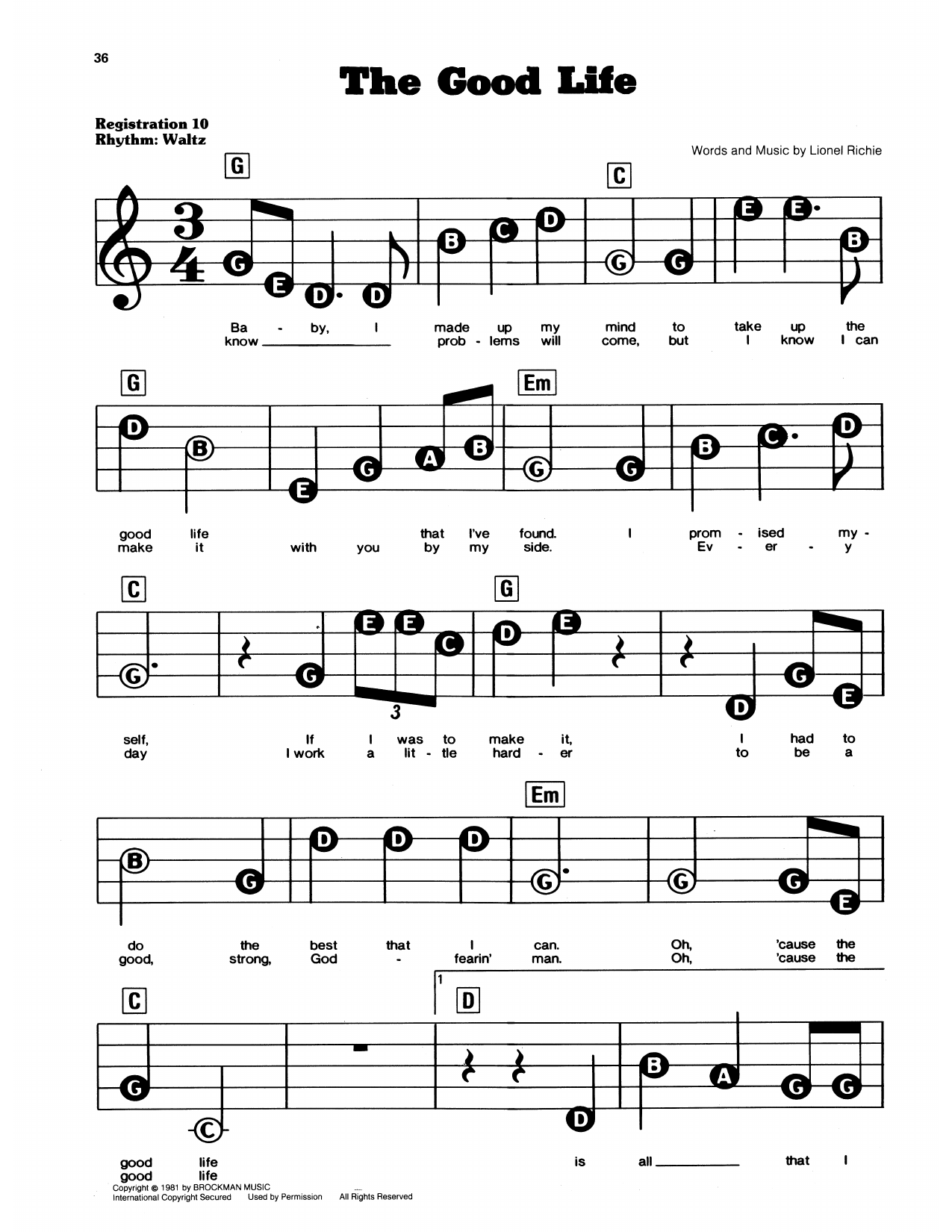
The Good Life: E-Z Play Today

As performed by Kenny Rogers

Item: 35-DS01910315

Digital Download
$4.99
Description

The Good Life: E-Z Play Today isn't in MakeMusic Cloud just yet...but it could be. Let us know you'd like to see it, and you'll help shape what comes next. In the meantime, start a free trial and dive into thousands of interactive titles your students can play along with today.

Sample Audio
No sample audio found.
Sample Video
Additional Details
Publisher: Hal Leonard
Page Count: 4
SKU: 35-DS01910315

More about this title

About the Artist: Kenny Rogers

Kenny Rogers became one of country music's most recognizable voices through his ability to craft deeply human narratives in song. His career spanned decades and crossed multiple genres, proving that authenticity and emotional directness could reach audiences far beyond traditional country radio. Rogers' songwriting sensibility emphasized storytelling and melody, making his work accessible to pianists and singers seeking material with genuine emotional weight.

Why we love this

Rogers' catalog offers pianists genuine singability without sacrificing musical substance. The arrangement respects both the melody and the harmonic language that made the original memorable, giving students material that sounds complete on keyboard while remaining true to the artist's intent.

What to expect

Warm, nostalgic, and reflective. The piece invites contemplation without demanding technical fireworks, allowing the player to focus on phrasing and emotional communication. There's a gentleness to the harmonic movement that feels like settling into a familiar space.

Who it's for

Piano students working toward fluency with contemporary songbook material will find this accessible yet musically satisfying. Teachers building repertoire that connects classical training to real-world listening will appreciate a tune that holds genuine cultural resonance.

How to get the most out of it

  • Lean into the rubato in the verse sections; country ballads breathe differently than classical pieces, and slight flexibility in tempo creates intimacy rather than sloppiness.
  • Balance the melody voice against the supporting harmonies so the tune emerges clearly without becoming thin or exposed.
  • Listen to the original recording to absorb the phrasing and emotional arc; Rogers' interpretive choices inform where and how to shape the music.

How to use it

This works well in recitals celebrating American songwriting or in studio classes exploring the intersection of popular music and classical technique. The four-page length makes it ideal for mid-program placement where a moment of reflection serves the overall arc of a concert.

Skills your students will build

  • Sustaining legato phrasing across longer melodic lines
  • Balancing independent melody and accompaniment voices
  • Interpreting swing and rubato in a contemporary context
  • Accompanying oneself as a vocalist would perform the piece

You May Also Like