The Golden Willow Tree Sheet Music Preview

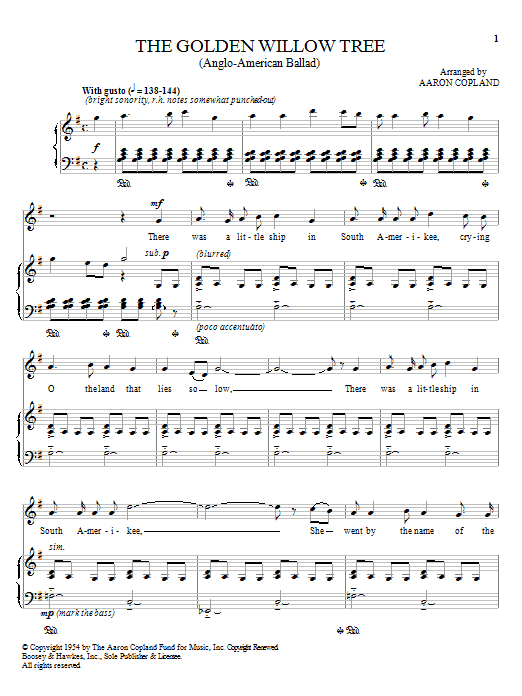
The Golden Willow Tree: Piano Vocal

By Aaron Copland

Item: 35-DS00128475

Digital Download
$5.99

One moment…

One moment…

Description

The Golden Willow Tree: Piano Vocal isn't in MakeMusic Cloud just yet...but it could be. Let us know you'd like to see it, and you'll help shape what comes next. In the meantime, start a free trial and dive into thousands of interactive titles your students can play along with today.

Sample Audio
No sample audio found.
Sample Video
Additional Details
Publisher: Hal Leonard
Page Count: 10
SKU: 35-DS00128475

More about this title

About the Composer: Aaron Copland

Aaron Copland (1900-1990) shaped American classical music by drawing directly from folk traditions, hymns, and popular song. His compositional voice emerged from a deep commitment to making concert music accessible without sacrificing artistic substance. Copland's songs occupy a unique space in vocal literature: they marry sophisticated harmonic language with melodies that feel inevitable and rooted in American soil, making them treasured by singers and pianists alike.

Why we love this

Copland's piano-vocal writing sits in a sweet spot for singers developing interpretive maturity. The accompaniment never overwhelms the voice, yet it carries distinctive harmonic color and structural logic that rewards careful attention. Programming this opens conversation about American art song and how folk idiom can coexist with sophisticated musical thinking.

What to expect

Quiet and contemplative, with the warmth of autumn light filtering through branches. The harmonic language feels both nostalgic and gently modern, creating space for the singer to color the text with their own reflection. There is an underlying stillness here; this is music for listening rather than spectacle.

Who it's for

Mezzo-sopranos and baritones building their art song repertoire will find this piece especially grateful. Pianists preparing vocal collaborations benefit from Copland's clear harmonic writing and straightforward rhythmic profile.

How to get the most out of it

  • Treat the piano part as a conversation partner rather than accompaniment. The interplay between voice and keyboard creates shape, so both players need to listen actively and respond to each other's phrasing.
  • Let the text breathe. Copland's settings honor the natural speech rhythms of American English, so resist the impulse to stretch phrases beyond what the words suggest.
  • Explore the harmonic color in the accompaniment. Copland often uses simple materials in unexpected ways, and singers who hear these details will find more emotional resonance in their interpretations.
  • Balance transparency with warmth in the vocal tone. These songs work best when the listener hears both intimacy and clarity, neither precious nor overstated.

How to use it

Pair this with other American art songs (Barber, Bernstein, or Gershwin) to build a concert exploring American vocal writing. It also works beautifully in a recital pairing classical and folk-influenced repertoire, bridging art song and Americana.

Skills your students will build

  • Balancing vocal line with piano accompaniment that carries harmonic substance
  • Interpreting text through Copland's harmonic language and orchestration color
  • Managing sustained singing over sparse, non-traditional harmonic movement
  • Collaborative listening between vocalist and pianist

You May Also Like